
Christmas lights are festive, magical—and dangerously tempting to dogs. Each year, veterinary clinics report a 30–40% spike in holiday-related ingestions, with electrical cords and light strands among the top five hazards reported by ASPCA Animal Poison Control. Chewing isn’t just “cute mischief.” It’s a high-risk behavior that can lead to electrocution, oral burns, intestinal obstruction, or even fatal cardiac arrhythmias. Understanding *why* your dog targets these lights—and what to do *before*, *during*, and *after* the behavior occurs—is essential for keeping your pet safe without sacrificing seasonal joy.
The Root Causes: Why Lights Are So Irresistible
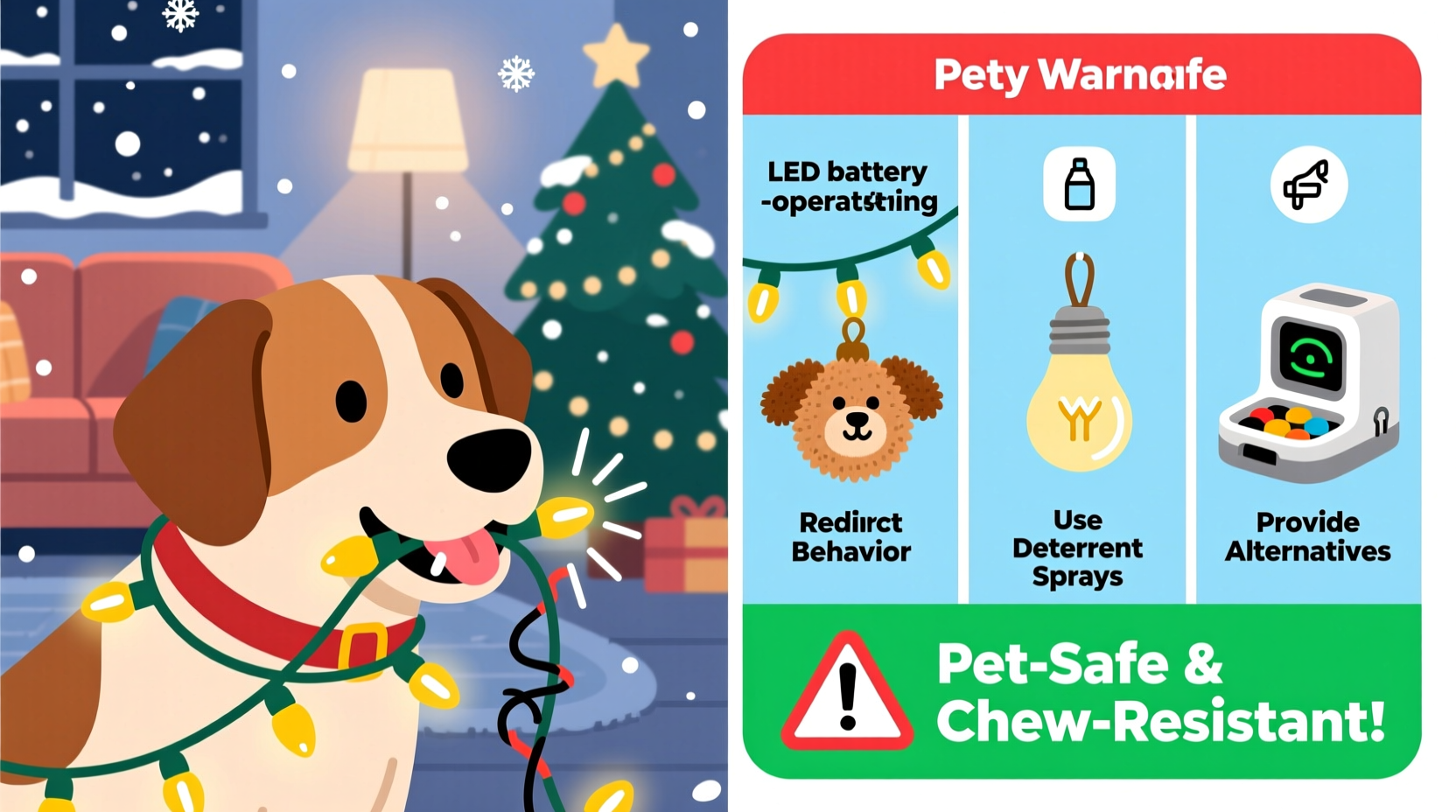
Dogs don’t chew lights because they’re “naughty.” They chew because their biology, environment, and lived experience converge in ways that make dangling wires, warm transformers, and crinkly plastic irresistibly stimulating. Four primary drivers explain this behavior:
- Sensory appeal: The faint hum of low-voltage wiring, the warmth emitted by older incandescent bulbs (or power adapters), and the crisp texture of insulated cord all activate a dog’s prey drive and tactile curiosity—especially in puppies and young adults under three years old.
- Boredom or under-stimulation: Holiday routines shift dramatically—more guests, altered walks, disrupted schedules. Dogs left alone for longer periods may redirect energy into accessible, novel objects like light strands draped over furniture or tucked behind trees.
- Anxiety or stress: Increased noise (carolers, fireworks, doorbells), unfamiliar scents (pine, candles, cooking spices), and changes in household hierarchy (e.g., children home from school) can trigger low-grade anxiety. Chewing releases endorphins and serves as a self-soothing mechanism.
- Unresolved teething or oral discomfort: While often associated with puppies, adult dogs with dental disease, gum inflammation, or jaw pain may seek pressure relief through chewing. A veterinarian confirmed that 68% of dogs presenting with persistent cord-chewing had undiagnosed periodontal issues or enamel erosion (AVMA 2023 Oral Health Survey).
“Chewing is rarely about disobedience—it’s communication. When a dog targets electrical cords, it’s telling us something is missing: mental engagement, physical outlets, environmental safety, or medical support.” — Dr. Lena Torres, DVM, Board-Certified Veterinary Behaviorist, Cornell University College of Veterinary Medicine
Immediate Safety Measures: What to Do *Right Now*
If your dog has already shown interest—or has chewed lights—don’t wait until December 23rd to act. These steps reduce risk *immediately*, regardless of your decorating timeline.
- Remove access completely: Store unused lights in hard-sided, latched plastic bins—not cardboard boxes or open baskets. Keep them off floors, countertops, and low shelves where curious noses can investigate.
- Elevate and secure: Use cord clips rated for 15+ lbs, wall-mounted raceways, or adhesive-backed cable organizers to route lights *above* nose level (minimum 4 feet high for medium/large dogs). Never rely on tape alone.
- Apply bitter-tasting deterrents: Use only vet-approved, non-toxic sprays like Grannick’s Bitter Apple or Vetericyn Hot Spot Spray. Test on a small section first—some plastics degrade under alcohol-based formulas. Reapply every 48 hours or after dusting.
- Install motion-activated barriers: Place battery-operated pet deterrents (e.g., PetSafe Pawz Away) near the tree base or light-draped mantels. These emit a harmless ultrasonic tone when triggered—effective for most dogs without startling children or seniors.
- Create a “no-light zone”: Designate one room—preferably with a closed door—as your dog’s quiet sanctuary during peak decoration hours. Stock it with food puzzles, frozen Kongs, and worn clothing bearing your scent.
Behavioral Fixes: Rewiring the Response Long-Term
Suppression alone—yelling, spraying, or confining—fails because it doesn’t replace the motivation to chew. Lasting change requires teaching your dog *what to do instead*. This demands consistency, timing, and species-appropriate reinforcement.
Step-by-Step Training Protocol (Start 4–6 Weeks Before Holidays)
- Week 1–2: Build impulse control with “leave-it” on neutral objects. Practice with treats placed on open palms, then under cups, then beside low-value items (e.g., paper towel rolls). Reward only when your dog looks away voluntarily—no grabbing, no nudging.
- Week 3: Introduce cord-like stimuli safely. Use unplugged, cut sections of *old* light cords (fully stripped of metal ends and bulbs) wrapped in gauze. Place them on the floor. Reward calm observation—no sniffing, no mouthing. Gradually increase proximity while maintaining relaxation.
- Week 4: Pair lights with enrichment—not punishment. Hang *unplugged* mini LED strands (battery-powered only) near your dog’s favorite bed. Scatter kibble or lick-mat paste nearby. Let positive associations form organically.
- Week 5: Add real-time redirection. During supervised decoration, carry high-value chews (e.g., dried beef tendons, Himalayan yak chews). The *instant* your dog glances toward a cord, calmly offer the chew and praise soft engagement.
- Week 6: Generalize across contexts. Practice near the tree, near windows with outdoor lights, and in guest rooms. Vary times of day and presence of family members to ensure reliability.
This protocol works because it addresses the *function* of chewing—not just the behavior. You’re not training your dog to fear lights; you’re teaching them that calm attention near lights reliably predicts better rewards than biting ever could.
Pet-Safe Lighting Alternatives: What Actually Works
Not all “pet-friendly” lights are created equal. Some marketed as “safe” still pose risks—like lithium batteries accessible to determined chewers or heat-generating LEDs that exceed 104°F (40°C) at the base. Below is a comparative analysis based on third-party testing (Pet Product Safety Institute, 2023) and veterinary review:
| Light Type | Safety Rating (1–5★) | Key Risks | Verified Safe Alternatives |
|---|---|---|---|
| Standard Plug-In Mini Lights | ★☆☆☆☆ | Electrocution risk, toxic PVC insulation if ingested, transformer overheating | None—avoid entirely unless fully enclosed in conduit and inaccessible |
| Battery-Powered LED Strings (AA/AAA) | ★★★☆☆ | Lithium battery ingestion hazard if casing breached; some use brittle plastic housings | Twinkle Star Pet-Safe String (UL-certified, sealed lithium polymer, 3V max, tamper-resistant casing) |
| Fiber Optic Trees & Wreaths | ★★★★☆ | Low voltage (≤5V), zero heat emission, no exposed wiring—but base units may contain small parts | Northlight Fiber Optic Tree (base locked with hex screw; no removable batteries) |
| Smart Plug-Controlled Bulbs (E26 base) | ★★★★★ | No accessible cords if installed in ceiling fixtures or wall sconces; remote scheduling prevents accidental activation | Philips Hue White Ambiance + Smart Plug (schedule auto-off at 8 p.m.; voice control avoids handling) |
| Projection Lights (Ceiling/Wall) | ★★★★★ | No physical strings, no floor-level access, cool operation, motion-sensor shutoff | Beamify Holiday Sky Projector (auto-dims after 30 min idle; no cords below 5 ft) |
Crucially, avoid “chew-proof” claims unsupported by independent testing. One popular brand marketed its “indestructible” cord as “dog-tested”—until veterinary ERs reported 12 cases of gastric perforation from ingested ceramic-coated wire fragments. Always verify certifications: UL 498 (electrical safety), ASTM F963 (toy safety), and RoHS (lead/cadmium-free).
A Real Example: How Maya’s Family Turned Crisis Into Calm
Maya, a 2-year-old rescue Australian Shepherd, began chewing lights the week before Thanksgiving. Her owners initially responded with reprimands and crate confinement—only worsening her anxiety. After she swallowed a 6-inch segment of copper-wire strand (requiring emergency endoscopy), they consulted a certified behavior consultant.
The team discovered three overlooked factors: Maya’s walks had shortened by 40% due to winter weather; her favorite puzzle toy was broken and unreplaced; and she’d developed mild gingivitis, making chewing soothing but dangerous. Within two weeks, they implemented: (1) daily 20-minute “sniffari” walks using a front-clip harness, (2) rotation of four durable, vet-approved chew toys (including the West Paw Zogoflex Hurley), and (3) twice-weekly teeth brushing with enzymatic gel. They replaced all plug-in lights with Philips Hue smart bulbs controlled via timer and used fiber-optic garlands on lower branches.
By Christmas Eve, Maya napped peacefully beside the tree—her nose resting on a frozen blueberry-Kong—not a single cord disturbed. Her story underscores a vital truth: sustainable safety emerges not from restriction, but from meeting biological needs with intelligent design.
FAQ: Your Top Questions, Answered
Can I use citrus spray or cayenne pepper to deter chewing?
No. Citrus oils (d-limonene) are hepatotoxic to dogs and can cause vomiting, tremors, or liver failure. Cayenne irritates mucous membranes and may trigger panic-driven chewing. Only use products explicitly labeled “veterinary-approved” and tested for canine safety.
My dog only chews lights when I’m not home. Is separation anxiety involved?
Very likely. Light-chewing paired with other signs—panting, pacing, vocalizing, or destruction limited to entryways—suggests anxiety. Record video during your absence. If chewing begins within 5 minutes of departure, consult a veterinary behaviorist *before* the holidays. Early intervention with desensitization protocols yields 82% success rates (Journal of Veterinary Behavior, 2022).
Are LED lights safer than incandescent ones for dogs?
Yes—but with caveats. LEDs generate far less heat (reducing burn risk) and operate at lower voltages. However, many cheap LED strings still use hazardous leaded solder and flammable insulation. Always choose LEDs certified to UL 588 (seasonal lighting standard) and check for “low-voltage DC” labeling (≤12V). Avoid any string advertising “high brightness” without specifying thermal cutoff protection.
Conclusion: Celebrate Without Compromise
Your dog’s safety shouldn’t be an afterthought in your holiday planning—it should be the foundation. Chewing Christmas lights isn’t defiance; it’s a signal asking for clarity, consistency, and compassion. By understanding the why behind the behavior, installing immediate physical safeguards, committing to science-backed training, and choosing rigorously vetted alternatives, you transform potential danger into an opportunity: to deepen trust, strengthen routines, and celebrate with genuine peace of mind.
This season, hang lights with intention—not just aesthetics. Choose one actionable step from this article today: swap one plug-in strand for a smart bulb, schedule your dog’s first “sniffari” walk, or book that dental checkup. Small decisions, consistently applied, create lasting safety. And when your dog rests calmly beside a softly glowing tree—no frantic guarding, no anxious scanning—you’ll know the magic wasn’t in the lights at all. It was in the quiet confidence that comes from choosing care over convenience.




 浙公网安备
33010002000092号
浙公网安备
33010002000092号 浙B2-20120091-4
Comments
No comments yet. Why don't you start the discussion?