
Christmas lights are festive, warm, and full of holiday magic—until your dog grabs a strand in their mouth, crunches down on the cord, and sends a jolt of panic through your chest. This isn’t just a nuisance; it’s a serious safety hazard. Dogs don’t understand electricity, insulation ratings, or UL certification—they see dangling, crinkly, slightly warm, motion-triggered objects that smell faintly of plastic, dust, and maybe even your own skin oils from handling. Chewing on lights can lead to electrocution, oral burns, internal lacerations from wire fragments, or life-threatening gastrointestinal obstructions. Yet punishing the behavior rarely works—and often worsens anxiety or erodes trust. The real solution lies not in scolding, but in understanding canine motivation, modifying the environment with empathy, and redirecting natural instincts in ways that honor your dog’s biology and emotional needs.
Why dogs target Christmas lights: more than just mischief
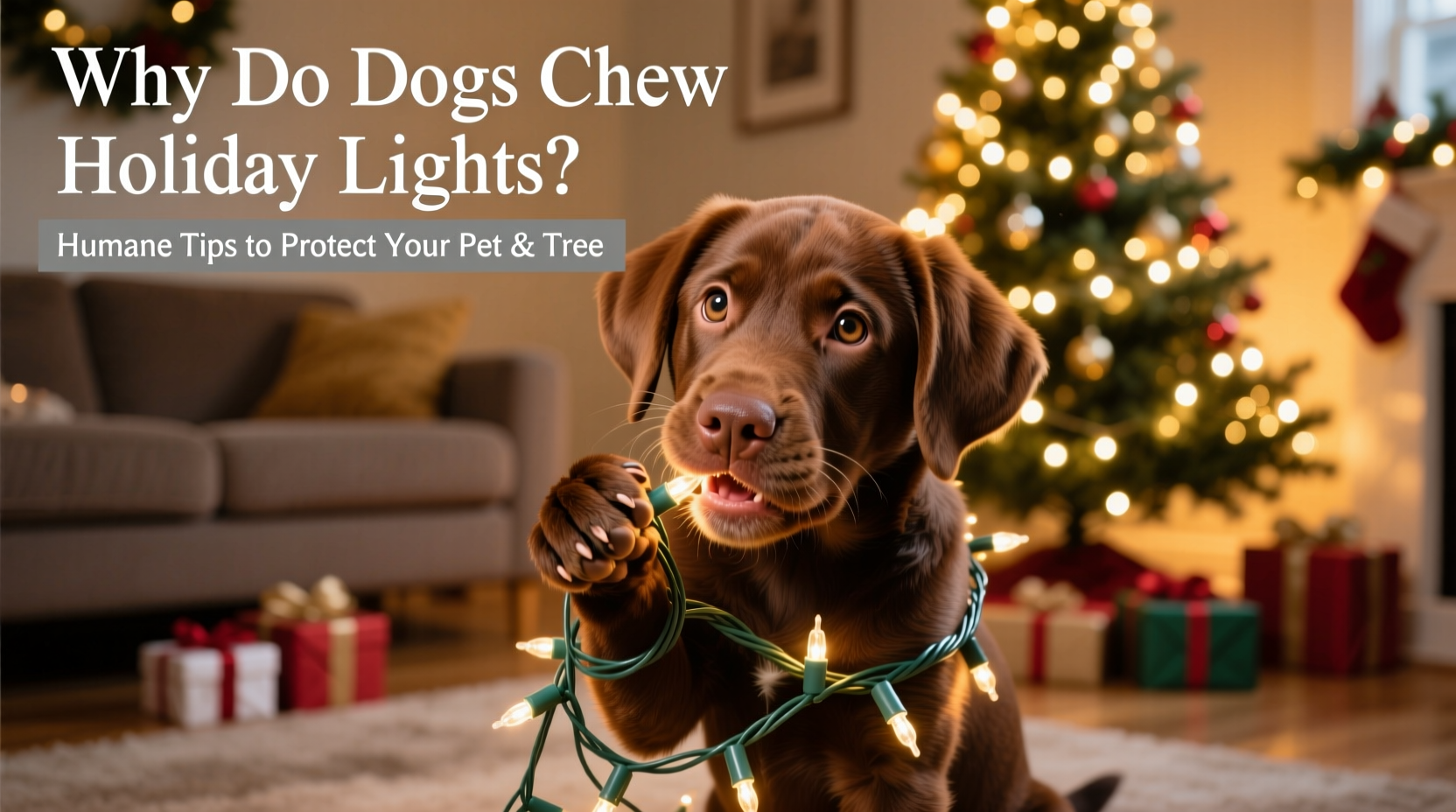
Dogs don’t chew lights “to be bad.” Their behavior is driven by a confluence of developmental, sensory, and environmental factors—many intensified during the holiday season. Puppies under 6 months old are actively teething; their gums ache, and chewing releases endorphins that soothe discomfort. Adult dogs may chew due to boredom, especially when household routines shift—visitors come and go, schedules change, walks get shorter in cold weather, and mental stimulation drops. But there’s another layer: novelty. Christmas lights introduce new textures (smooth plastic, flexible rubber coating), sounds (subtle hums, faint crackles from older strands), movement (swaying from drafts or vibrations), and even scent (dust accumulation, storage odors, or residual oils). For a dog whose world is experienced primarily through mouth, nose, and ears, these stimuli are irresistible.
Stress also plays a critical role. The holidays bring unpredictable noise (doorbells, carols, fireworks-like pops from wrapping paper), crowded spaces, unfamiliar people, and disrupted sleep patterns—all of which elevate cortisol levels. Some dogs cope by engaging in repetitive oral behaviors, much like humans biting nails or tapping fingers. And for dogs with separation anxiety or resource-guarding tendencies, lights strung near entryways or trees may become inadvertent focal points during periods of heightened vigilance.
Immediate safety: what to do *right now*
If your dog has already bitten into a light strand—or if you’ve caught them mid-chew—act swiftly but calmly. First, unplug the entire string at the wall outlet. Never yank the cord from your dog’s mouth while it’s live; this risks delivering current through your body or causing them to bite down harder from fear. Instead, gently but firmly offer a high-value chew (like a frozen KONG stuffed with peanut butter) as a trade, then remove the lights entirely. Inspect your dog’s mouth for cuts, burns, or embedded wire fragments. Even minor oral trauma can become infected within hours. Call your veterinarian immediately if you notice drooling, reluctance to eat, swelling, or visible wounds.
Next, audit every inch of your light display. Replace any damaged cords—even those without visible breaks—as internal fraying compromises insulation. Use only UL-listed, indoor-rated lights (avoid older C7/C9 bulbs with exposed metal bases). Keep all plugs, power strips, and extension cords elevated, secured with cord clips, and hidden behind furniture or inside PVC conduit. Never run cords under rugs (heat buildup risk) or across high-traffic floor paths where they’re easily stepped on and damaged.
A humane, step-by-step prevention plan
Effective prevention requires consistency—not perfection—and combines management, enrichment, and training. Follow this evidence-informed sequence over 7–10 days:
- Day 1–2: Full environmental control. Remove all accessible lights. Store them in sealed plastic bins in a closet your dog cannot enter. This eliminates rehearsal of the behavior while you build alternatives.
- Day 3–4: Introduce structured chew alternatives. Rotate three types of safe, long-lasting chews daily: a food-stuffed puzzle toy (e.g., Toppl filled with wet food and frozen), a durable rubber chew (like a GoughNut or West Paw Zogoflex), and a supervised raw meaty bone (size-appropriate, never cooked). Offer one for 15 minutes, twice daily, *before* your dog shows signs of restlessness.
- Day 5–6: Teach “leave it” with low-distraction lights. Place an unplugged, coiled light strand on the floor. Hold a treat behind your back. When your dog sniffs the lights, say “leave it” once, then immediately show the treat. Reward calm disengagement—not just looking away. Repeat 10x/day in 2-minute sessions. Never test the cue near live lights until fluency is achieved.
- Day 7–8: Gradual re-introduction with barriers. Hang lights *only* on surfaces your dog cannot reach—e.g., above eye level on a tall tree, or behind a baby gate. Use cord shorteners and adhesive clips to eliminate sagging or swaying ends.
- Day 9–10: Reinforce alternative behaviors. Every time your dog chooses a designated chew toy over investigating lights, mark it with a quiet “yes” and deliver a small treat. Pair light-hanging activities with calm, focused games (like “find-it” scent work using kibble hidden in a muffin tin).
What works—and what doesn’t: a practical do’s and don’ts table
| Action | Do | Don’t |
|---|---|---|
| Chew alternatives | Offer species-appropriate, size-matched chews (e.g., elk antler for strong chewers, soft rubber for seniors). Rotate textures weekly to maintain interest. | Give rawhide, cooked bones, or synthetic “treat sticks” containing xylitol, propylene glycol, or excessive salt. |
| Training cues | Use positive reinforcement to teach “leave it,” “drop it,” and “go to mat.” Keep sessions under 90 seconds. | Yell, spray with water, or use shock/ultrasonic deterrents. These increase fear and erode your dog’s ability to read safety cues. |
| Environmental setup | Mount lights on walls using removable adhesive hooks; route cords inside baseboard raceways; use battery-operated LED lights for lower-risk zones (e.g., mantels). | Tape cords to floors, drape lights over low furniture, or rely solely on bitter apple sprays (ineffective for many dogs and can irritate mucous membranes). |
| Stress reduction | Provide a quiet, den-like retreat space (covered crate or partitioned corner) with white noise during parties. Maintain consistent walk times—even 10 minutes helps regulate nervous systems. | Force interaction with guests, skip walks due to weather, or confine your dog for hours without enrichment. |
Real-world insight: how Maya’s family resolved chronic light-chewing
Maya adopted Leo, a 2-year-old German Shepherd mix, in early November. Within days, he’d shredded two sets of mini-lights—first from the base of the tree, then from the stair railing. Frustrated, she tried bitter spray, citronella collars, and time-outs—all ineffective. A veterinary behaviorist observed Leo’s pattern: he chewed *only* between 4–6 p.m., always after Maya returned from work and before dinner. His tail was low, his ears were pinned, and he’d pant while circling the tree. The behavior wasn’t about lights—it was displacement activity triggered by anticipatory anxiety around mealtime transitions.
The solution combined structure and compassion. Maya began feeding Leo’s dinner at precisely 5:15 p.m. daily—and started a 5-minute “settle routine” beforehand: leash him, walk slowly to his mat, ask for a “down-stay,” and reward stillness with tiny chicken slivers. She hung lights exclusively above 6 feet, used battery-powered fairy lights on the lower tree tiers, and gave him a frozen peanut butter Kong at 4:45 p.m. every day. Within six days, Leo stopped approaching the tree altogether. By Christmas Eve, he’d learned to lie quietly on his mat while guests admired the lights—no treats required, just calm presence.
“Dogs chew lights because something is missing—not because they’re broken. It’s almost always a signal: ‘I need more predictability, more oral engagement, or more help managing my feelings.’ Address the signal, not the symptom.” — Dr. Sarah Lin, DVM, DACVB, Veterinary Behaviorist & Author of Calm Canine, Confident Home
Frequently asked questions
Can I use citrus spray or hot sauce to deter chewing?
No. While some dogs avoid strong smells, many ignore them entirely—or develop tolerance within days. Citrus oils can cause skin irritation, vomiting, or liver stress if ingested repeatedly. Hot sauce poses real gastrointestinal risks and may condition your dog to associate the tree area with pain, increasing anxiety. Humane deterrents focus on removing opportunity and enriching alternatives—not aversive experiences.
My dog only chews lights when I’m not home. Is this separation anxiety?
Possibly—but not necessarily. Record video to assess behavior: Does your dog pace, whine, or destroy other items? Or do they calmly approach the lights, chew for 2–3 minutes, then nap? The latter suggests boredom or habit; the former indicates true anxiety. Either way, the fix starts with environmental management (removing access) and adding predictable mental work—like scatter-feeding meals or rotating puzzle toys—before progressing to formal separation training.
Are LED lights safer than traditional incandescent strands?
Yes—significantly. LEDs operate at much lower voltages (typically 12V vs. 120V), generate far less heat (reducing burn risk), and use thicker, more durable insulation. Battery-powered LED strings eliminate cord-related hazards entirely. However, no light is “chew-proof”: wires can still cause intestinal blockages or oral injury. Always prioritize physical barriers and supervision over relying on technology alone.
Conclusion: protect joy—not just wires
Your dog’s urge to chew Christmas lights isn’t defiance. It’s communication—in the language of teeth, tongue, and instinct. By responding with observation instead of outrage, with structure instead of punishment, and with compassion instead of correction, you transform a seasonal hazard into an opportunity: to deepen your bond, refine your understanding of canine needs, and create a holiday environment where both you and your dog feel safe, seen, and settled. This isn’t about perfect decor—it’s about shared peace. Start tonight. Unplug one strand. Fill one KONG. Sit quietly beside your dog for five minutes without distraction. Notice how their breathing slows. That’s the first real ornament you’ll hang this season—the quiet, steady glow of mutual trust.




 浙公网安备
33010002000092号
浙公网安备
33010002000092号 浙B2-20120091-4
Comments
No comments yet. Why don't you start the discussion?