
Christmas trees are festive, fragrant, and full of visual intrigue—but for many dogs, they’re also irresistible chew targets. You might return from the kitchen to find pine needles scattered across the floor, a branch snapped in half, or your dog proudly gnawing on a bough like it’s a holiday trophy. While it’s easy to dismiss this as “just puppy behavior” or seasonal mischief, persistent chewing on tree branches signals deeper behavioral, physiological, or environmental needs. This isn’t about discipline—it’s about decoding canine communication. Dogs don’t chew to spite you; they chew to cope, explore, soothe, or survive. Understanding the *why* transforms reactive scolding into thoughtful, compassionate intervention.
The Science Behind the Snap: Why Branches Are So Tempting
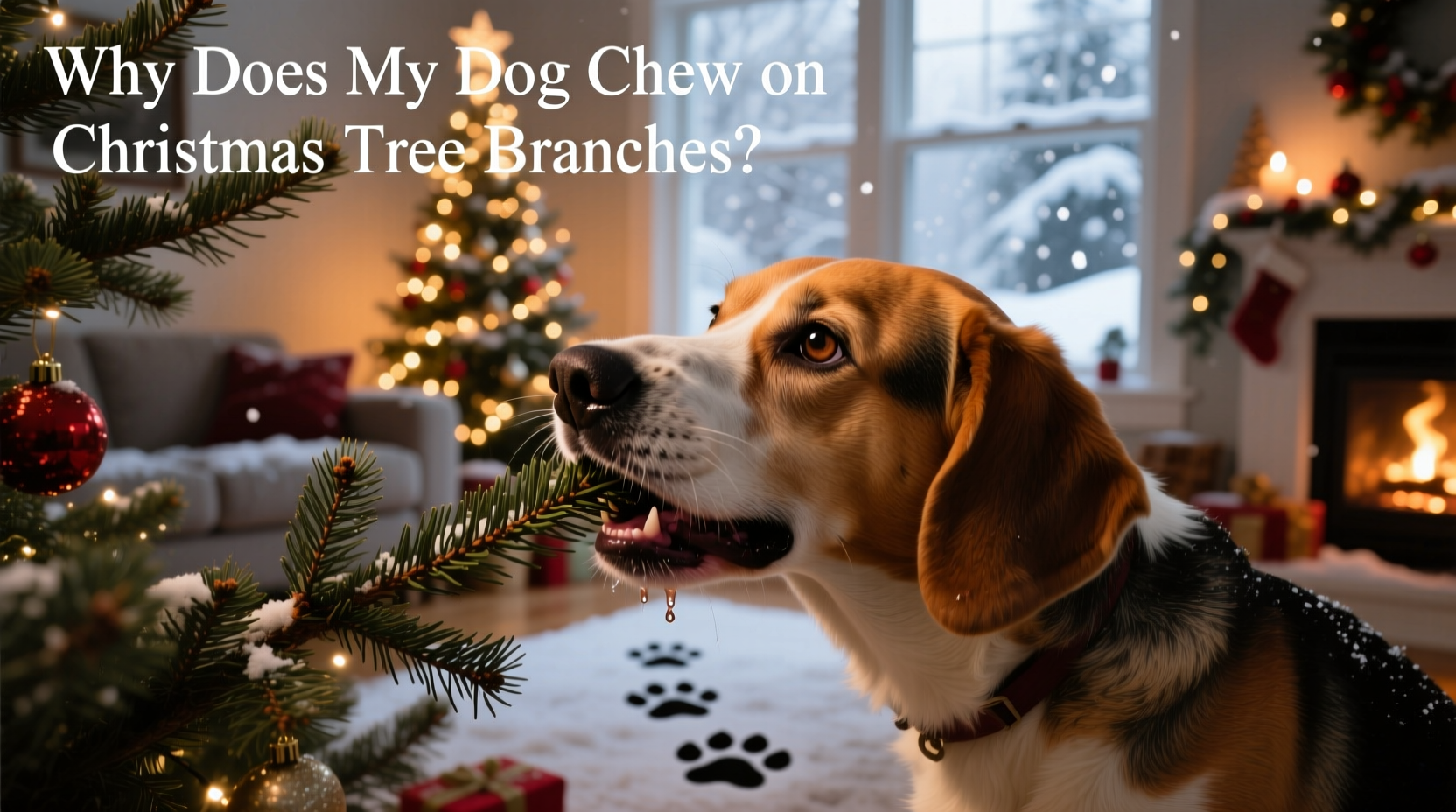
Dogs experience the world primarily through scent, taste, and texture—and a fresh-cut Christmas tree delivers a multisensory overload. The sharp, resinous aroma of pine or fir triggers olfactory curiosity. The slightly bitter, tannin-rich sap offers novel flavor feedback. And the fibrous, springy texture provides ideal resistance for jaw exercise—especially valuable for dogs with unmet oral needs.
From an ethological perspective, chewing is a hardwired behavior rooted in survival. Wild canids chew bones to access marrow, strip meat, and wear down teeth. Domestic dogs retain this instinct, but without natural outlets—like sustained prey-chasing or carcass processing—their chewing energy redirects toward available objects. A Christmas tree, standing tall and aromatic in the center of home life, becomes both novelty and opportunity.
Neurologically, chewing stimulates the release of endorphins and lowers cortisol. For anxious or under-stimulated dogs, the act itself serves as self-soothing—akin to human fidgeting or nail-biting. When paired with holiday disruptions—guests, altered schedules, new sounds, or even increased household stress—chewing intensifies as a coping mechanism.
Five Core Behavioral Drivers (and What They Really Mean)
Chewing on tree branches rarely stems from a single cause. Most cases involve overlapping motivations. Recognizing which drivers dominate helps tailor effective interventions.
- Oral Development & Teething: Puppies under 7 months often chew to relieve gum discomfort during tooth eruption. Branches offer firm, cool pressure—but unlike safe chew toys, they pose splinter and toxicity risks.
- Boredom & Under-Stimulation: Dogs left alone for long stretches during holiday prep may resort to tree chewing out of sheer lack of alternatives. This is especially common in high-energy breeds or dogs whose routines have been disrupted.
- Anxiety & Environmental Stress: The holidays introduce unpredictability: loud music, unfamiliar people, rearranged furniture, and even changes in light patterns. Chewing becomes a displacement behavior—a way to regain control when feeling overwhelmed.
- Attention-Seeking (Reinforced by Response): If a dog has previously received attention—even negative attention like shouting or chasing—after approaching the tree, that behavior becomes reinforced. The bark of “No!” registers as interaction, not correction.
- Nutritional or Medical Factors: Rare but critical: pica (compulsive eating of non-food items) can indicate underlying issues like nutrient deficiencies, gastrointestinal distress, or thyroid imbalances. Persistent, indiscriminate chewing—including dirt, fabric, or wood—warrants veterinary evaluation.
Evidence-Based Solutions: What Works (and What Doesn’t)
Scolding, water sprays, or citrus-sprayed branches may suppress chewing temporarily—but they rarely address root causes and can increase anxiety or erode trust. Effective strategies combine environmental management, behavioral enrichment, and consistent reinforcement of alternatives.
| Solution Category | What Works | Why It’s Effective | Risk of Ineffectiveness |
|---|---|---|---|
| Prevention | Physical barrier (e.g., low-profile metal pet gate, freestanding tree corral), secure anchoring, elevated stand with smooth base | Removes access without confrontation; respects dog’s need for safety and predictability | Barriers must be escape-proof—curious dogs test boundaries daily |
| Enrichment | Daily 15-minute puzzle feedings, frozen KONGs with pumpkin & peanut butter (xylitol-free), scent games using torn paper towels with food scraps | Redirects oral energy and satisfies foraging instincts; builds confidence through problem-solving | One-time toys lose appeal—rotate weekly and match difficulty to skill level |
| Training | “Leave-it” with high-value rewards (e.g., boiled chicken), “go to mat” for calm presence near tree, clicker-marked disengagement | Teaches voluntary choice and impulse control; strengthens human-dog cooperation | Must be practiced *away* from the tree first—adding distraction too soon sets dog up to fail |
| Environmental Calming | White noise machine near tree area, pheromone diffuser (Adaptil), consistent pre-holiday routine maintenance (same walk times, feeding schedule) | Reduces baseline stress so dog has mental bandwidth for learning—not just reacting | Calming aids support but don’t replace behavioral work; effectiveness varies by individual |
| Medical Collaboration | Veterinary check-up if chewing is sudden, intense, or accompanied by drooling, vomiting, lethargy, or stool changes | Rules out pain, dental disease, or metabolic imbalance driving pica | Delaying assessment risks worsening condition; never assume “it’s just Christmas stress” |
Mini Case Study: Luna, a 3-Year-Old German Shepherd Mix
Luna began chewing lower branches of her family’s Fraser fir within 48 hours of setup. Her owners initially responded with verbal corrections and moved her crate farther from the living room—only for Luna to start digging at the carpet near the tree stand. A behavior consultation revealed three key factors: First, Luna’s daily off-leash hiking had been reduced by 70% due to winter weather. Second, her “quiet time” routine was disrupted by overnight holiday guests. Third, she’d recently lost her favorite rope toy to shredding—and no replacement had been offered.
The intervention focused on re-establishing predictability: walks were replaced with 20-minute indoor scent work sessions using birch oil on cotton swabs; a durable, hollow rubber toy filled with kibble and frozen yogurt was introduced at dawn and dusk; and a low wooden barrier (painted to match the floor) created a 3-foot “no-chew zone” around the tree base. Within five days, Luna stopped approaching the tree. By Day 12, she’d learned to lie calmly on her mat while family decorated—earning quiet praise and a lick of plain yogurt. No punishment was used. Instead, every alternative behavior was reinforced with immediacy and consistency.
“Chewing isn’t defiance—it’s information. When a dog chooses a pine branch over their bed, they’re telling us something is missing in their world: safety, stimulation, structure, or satisfaction.” — Dr. Sarah Lin, DACVB, Board-Certified Veterinary Behaviorist
A Step-by-Step Holiday Prep Plan for Dog Owners
Begin preparation *before* the tree arrives. Prevention built into your routine prevents escalation.
- Week 3 Before Tree Arrival: Audit your dog’s daily enrichment. Add one new puzzle feeder or scent game. Note duration and engagement level.
- Week 2: Introduce and practice “leave-it” and “go to mat” in low-distraction areas. Reward generously for 3-second holds—gradually extend to 15 seconds.
- Week 1: Set up physical barriers in the intended tree location. Let your dog investigate the empty space—reward calm exploration. Begin using white noise or Adaptil if stress signs are present.
- Tree Delivery Day: Keep your dog in another room during setup. Once secured and anchored, allow supervised, brief visits (2–3 minutes) with high-value treats for ignoring the tree.
- Days 1–7: Maintain strict supervision near the tree. Redirect *before* chewing begins—offer a frozen KONG or initiate a short training session. Log incidents: time, trigger, your response, dog’s reaction.
- Ongoing: Rotate chew toys weekly. Replace worn items immediately. Never leave your dog unsupervised near the tree—even after progress appears solid.
FAQ: Addressing Common Concerns
Is pine toxic to dogs?
Fresh pine needles and sap contain oils (e.g., terpenes) that can irritate a dog’s mouth, stomach, and intestines—causing drooling, vomiting, or diarrhea. While small ingestions rarely cause severe toxicity in healthy adult dogs, needles pose a choking hazard and risk intestinal puncture. Fir and spruce are generally less irritating than pine, but no conifer branch is safe for regular chewing. Always consult your veterinarian if ingestion occurs.
Can I use bitter apple spray on the tree?
Not recommended. Bitter apple is ineffective on most dogs once novelty wears off—and spraying it on live branches may damage foliage or create airborne irritants. More importantly, it treats the symptom (chewing) without addressing the driver (boredom, anxiety, etc.). Focus instead on enriching your dog’s world and managing access.
My dog only chews when I’m not home. What should I do?
This strongly suggests separation-related anxiety or boredom. Avoid punishment upon return—it increases confusion and stress. Install a pet camera to observe behavior. If your dog chews only during your absence, prioritize gradual desensitization to departures, provide long-lasting chews *before* you leave (not after), and consider consulting a certified separation anxiety trainer. Do not rely solely on barriers—they prevent damage but not distress.
Conclusion: Beyond the Branches—Building a Calmer, Safer Holiday
Your dog’s chewing on Christmas tree branches isn’t a holiday nuisance to be suppressed—it’s a meaningful signal asking for understanding, consistency, and care. When you respond with science-backed insight instead of frustration, you deepen your bond and foster resilience in your dog. You teach them that their needs matter—and that safety, stimulation, and calm coexist in your shared home. This season, choose patience over punishment, enrichment over exclusion, and observation over assumption. Anchor your approach in compassion, not convenience. Your dog doesn’t need a perfect tree—they need a predictable, supportive world. And that, truly, is the most enduring gift you can give.




 浙公网安备
33010002000092号
浙公网安备
33010002000092号 浙B2-20120091-4
Comments
No comments yet. Why don't you start the discussion?