
Every year, as families gather and homes fill with holiday cheer, one unexpected guest often crashes the festivities: a dog with a sudden obsession for chewing on fake Christmas tree branches. If you’ve found yourself picking plastic pine needles out of your dog’s mouth or waking up to a mangled tree skirt, you’re not alone. This common but frustrating behavior stems from a mix of instinct, boredom, and environmental triggers. The good news? With understanding and consistent action, you can redirect your dog’s attention and preserve both your decorations and peace of mind.
Understanding the Root Causes of Chewing Behavior
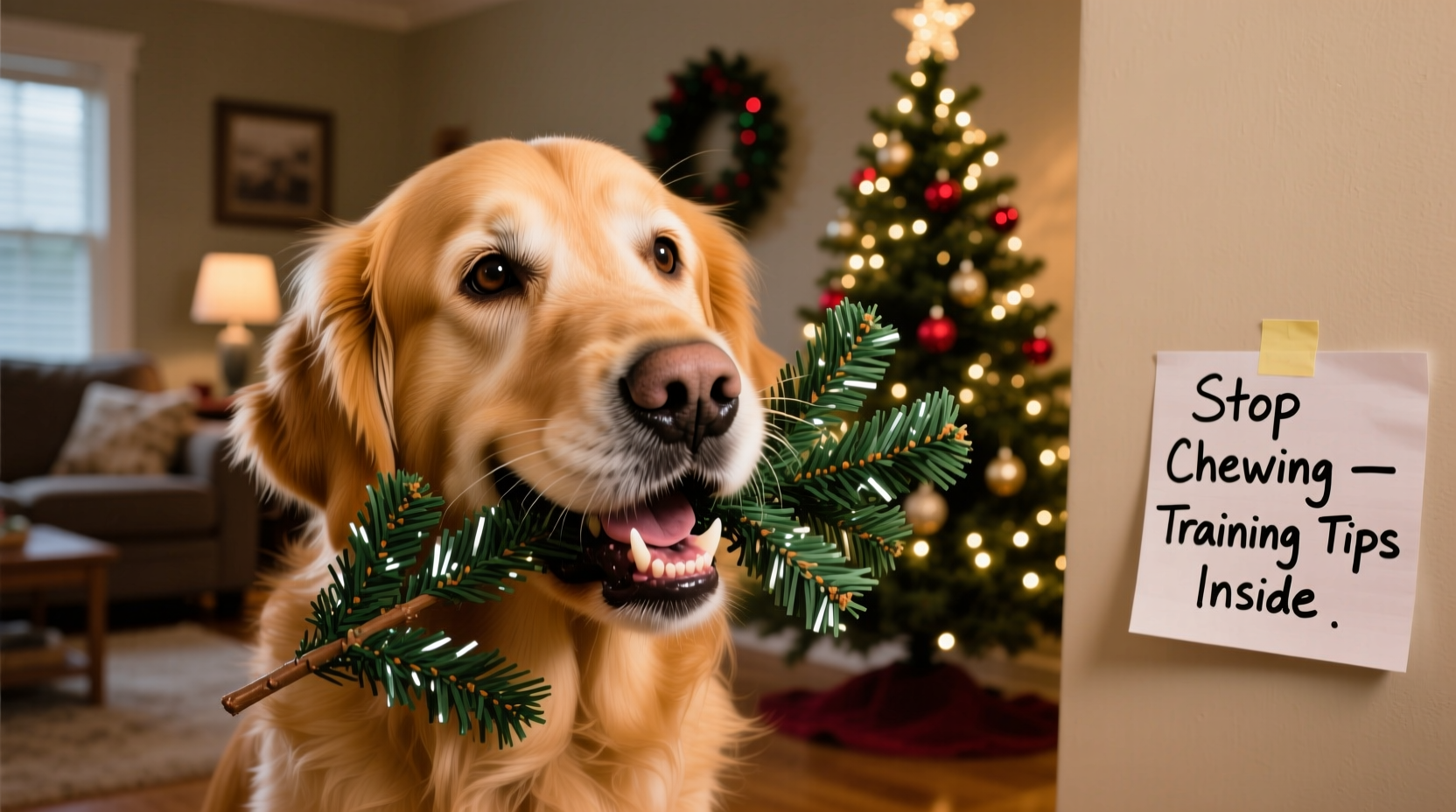
Dogs don’t chew on artificial trees out of spite or malice. Their actions are driven by biological and psychological needs that, when unmet, manifest in destructive behaviors. Fake trees, despite being foreign objects, can resemble real foliage—triggering curiosity, especially in younger or more playful dogs.
One primary reason is teething. Puppies between 3 and 6 months old experience discomfort as their adult teeth emerge. Chewing provides relief, and the crinkly texture of PVC branches can feel satisfying under their gums. But even adult dogs may chew due to anxiety, particularly during the holidays when routines shift, guests arrive, and new sounds and smells flood the home.
Boredom is another major contributor. Dogs left alone for long periods without stimulation may turn to chewing as a form of self-entertainment. A fake tree, standing prominently in the living room and surrounded by enticing lights and ornaments, becomes an irresistible target. The movement of reflections off tinsel or blinking lights can mimic prey-like motion, further stimulating a dog’s hunting instincts.
Additionally, some dogs simply enjoy the sensory feedback. The crackling sound, the resistance of bending branches, and the novelty of the object all contribute to its appeal. Without proper alternatives, your dog sees no difference between a $200 artificial tree and a chew toy.
“Destructive chewing during the holidays is rarely about disobedience—it’s about unmet needs. Address the cause, not just the symptom.” — Dr. Lena Peterson, DVM, Canine Behavior Specialist
Immediate Steps to Prevent Further Damage
If your dog has already started targeting the tree, swift intervention is crucial. Waiting too long can reinforce the behavior, making it harder to correct later. Begin by securing the tree in a way that limits access without resorting to punishment.
Use a sturdy tree stand and anchor it to the wall or ceiling with fishing line or a commercial tree stabilizer. This prevents tipping if your dog nudges or jumps at it. Then, create a physical barrier. Baby gates or exercise pens (x-pens) placed around the tree work well, especially in homes with high-traffic areas. This allows family members to enjoy the tree while keeping your dog at a safe distance.
Next, eliminate temptation. Remove any low-hanging ornaments, tinsel, or edible-looking decorations. These items aren’t just appealing—they’re dangerous if ingested. Tinsel can cause intestinal blockages, and broken ornament shards pose choking hazards. Store spare ornaments and garlands out of reach.
Long-Term Strategies to Redirect Chewing Instincts
Preventing access is only half the solution. To truly stop the behavior, you must provide acceptable outlets for your dog’s natural urge to chew. This requires a combination of enrichment, training, and consistency.
Begin by evaluating your dog’s daily routine. Are they getting enough physical exercise? A tired dog is less likely to engage in destructive behaviors. Aim for at least one long walk or play session per day, adjusted for breed and energy level. High-energy breeds like Border Collies or Australian Shepherds may need two or more sessions plus mental challenges.
Mental stimulation is equally important. Puzzle toys, snuffle mats, and treat-dispensing balls keep dogs engaged and reduce idle time. Rotate toys weekly to maintain novelty. When your dog shows interest in the tree, calmly redirect them to a designated chew toy. Praise and reward them for choosing the right object—positive reinforcement strengthens desired behaviors far more effectively than scolding.
Consider crate training or using a dog-proofed room when supervision isn’t possible. This isn’t punishment; it’s a safety measure. Equip the space with durable chew toys, water, and a comfortable bed. Over time, your dog learns that certain areas are off-limits and that appropriate chewing leads to rewards.
Step-by-Step Guide to Tree-Safe Holidays
- Assess Risk Level: Evaluate your dog’s history with chewing, anxiety, and curiosity. Puppies and rescue dogs are higher risk.
- Secure the Tree: Anchor it firmly and use a gate or barrier to restrict access.
- Modify the Environment: Remove tempting decorations and apply pet-safe deterrents to lower branches.
- Provide Alternatives: Offer multiple chew toys, especially ones filled with treats or peanut butter (xylitol-free).
- Supervise and Redirect: When your dog approaches the tree, calmly guide them to a toy and reward engagement.
- Build Positive Associations: Feed meals or give chews near the tree zone—but only when the dog ignores the tree itself.
- Gradually Increase Freedom: Once your dog consistently avoids the tree, slowly reduce barriers over 2–3 weeks.
Common Mistakes That Make the Problem Worse
Well-meaning owners often unintentionally reinforce unwanted behaviors. One of the most common errors is reacting emotionally when catching a dog in the act. Yelling or chasing may seem effective, but to a dog, it can read as play or attention—exactly what they wanted. Instead, use a calm “leave it” command and redirect.
Another mistake is providing inconsistent boundaries. Allowing your dog near the tree sometimes but not others creates confusion. Rules must be clear and applied by everyone in the household. Children, in particular, may inadvertently encourage interaction by playing near the tree with the dog.
Using physical punishment or aversive tools like shock collars is not only unethical but counterproductive. These methods increase fear and anxiety, potentially escalating destructive behaviors or leading to aggression.
Finally, neglecting basic needs sets the stage for problems. An under-exercised, under-stimulated dog will seek ways to burn energy—often in ways we don’t appreciate. Prevention starts long before the tree goes up.
| Do’s | Don’ts |
|---|---|
| Use bitter sprays on tree base | Scold or shout when chewing occurs |
| Rotate chew toys weekly | Leave dog unsupervised near tree |
| Anchor tree to wall | Use tinsel or edible decorations |
| Offer puzzle feeders during downtime | Punish after the fact (dog won’t connect cause) |
| Practice “leave it” command regularly | Assume adult dogs don’t chew (many do!) |
Real-Life Example: How the Thompson Family Saved Their Holiday
The Thompsons adopted Max, a 5-month-old Labrador mix, in November. Excited to include him in their first Christmas together, they set up their usual 7-foot artificial tree in the living room. Within hours, Max began mouthing the lowest branches. By day three, he’d pulled down three ornaments and stripped a section of foliage.
Initially, they tried verbal corrections and moving him away, but the behavior continued. After consulting their vet, they implemented a structured plan: they blocked off the tree with a baby gate, introduced a frozen Kong filled with yogurt and blueberries, and began daily obedience sessions focusing on “leave it” and “drop it.”
They also started taking Max on longer evening walks to tire him out before holiday gatherings. Within a week, his interest in the tree dropped significantly. By Christmas Eve, he could sit calmly nearby while the family opened presents—with only occasional glances at the now-boring plastic branches.
“We realized he wasn’t being bad—he was just a puppy with too much energy and not enough guidance,” said Sarah Thompson. “Once we gave him better options, everything changed.”
FAQ: Common Questions About Dogs and Fake Trees
Can chewing on fake tree branches make my dog sick?
Yes. While PVC isn’t highly toxic, ingesting fragments can cause gastrointestinal upset, vomiting, or blockages. Sharp pieces may damage the throat or intestines. Always monitor your dog and contact your vet if you suspect ingestion.
Is it okay to let my dog sniff the tree under supervision?
Yes, limited, supervised exploration is fine—and even healthy. It satisfies curiosity and reduces obsessive interest. Just ensure no small parts are loose and use commands to end the session calmly.
Will crate training help prevent tree chewing?
Yes, especially when you’re unable to supervise. A well-trained dog views the crate as a safe den. Pair it with a long-lasting chew or food puzzle to build positive associations.
Final Checklist: Dog-Proof Your Christmas Tree
- ✅ Anchor the tree securely to prevent tipping
- ✅ Install a physical barrier (gate or pen)
- ✅ Remove tinsel, edible decorations, and fragile ornaments
- ✅ Apply pet-safe deterrent spray to lower branches
- ✅ Provide multiple chew toys and rotate them weekly
- ✅ Practice “leave it” and “drop it” commands daily
- ✅ Increase exercise and mental stimulation during the holidays
- ✅ Supervise interactions or confine your dog when needed
Conclusion: Enjoy the Holidays Without Sacrificing Peace of Mind
Your dog’s fascination with a fake Christmas tree isn’t a flaw in their character—it’s a signal that something in their environment or routine needs adjustment. By addressing the underlying causes of chewing and offering better alternatives, you can protect your holiday decor and strengthen your bond with your pet. The goal isn’t perfection overnight, but progress through patience and consistency. This season, take proactive steps to create a joyful, safe space for both your family and your furry companion.




 浙公网安备
33010002000092号
浙公网安备
33010002000092号 浙B2-20120091-4
Comments
No comments yet. Why don't you start the discussion?