
It’s a familiar holiday scene: strings of twinkling lights go up, carols play softly in the background—and your usually confident dog slips under the couch, retreats to the laundry room, or freezes with wide eyes at the sight of a single LED strand. This isn’t “just being dramatic.” It’s a genuine stress response rooted in canine neurobiology, visual processing differences, and environmental sensitivity. While festive lights bring joy to humans, they can trigger fear, confusion, or even pain in dogs—especially older dogs, those with noise or light sensitivities, or rescue animals with unknown histories. Understanding *why* this happens—and implementing compassionate, evidence-informed interventions—is the first step toward helping your dog experience the season with calm instead of avoidance.
The Science Behind the Hiding: Why Lights Trigger Fear
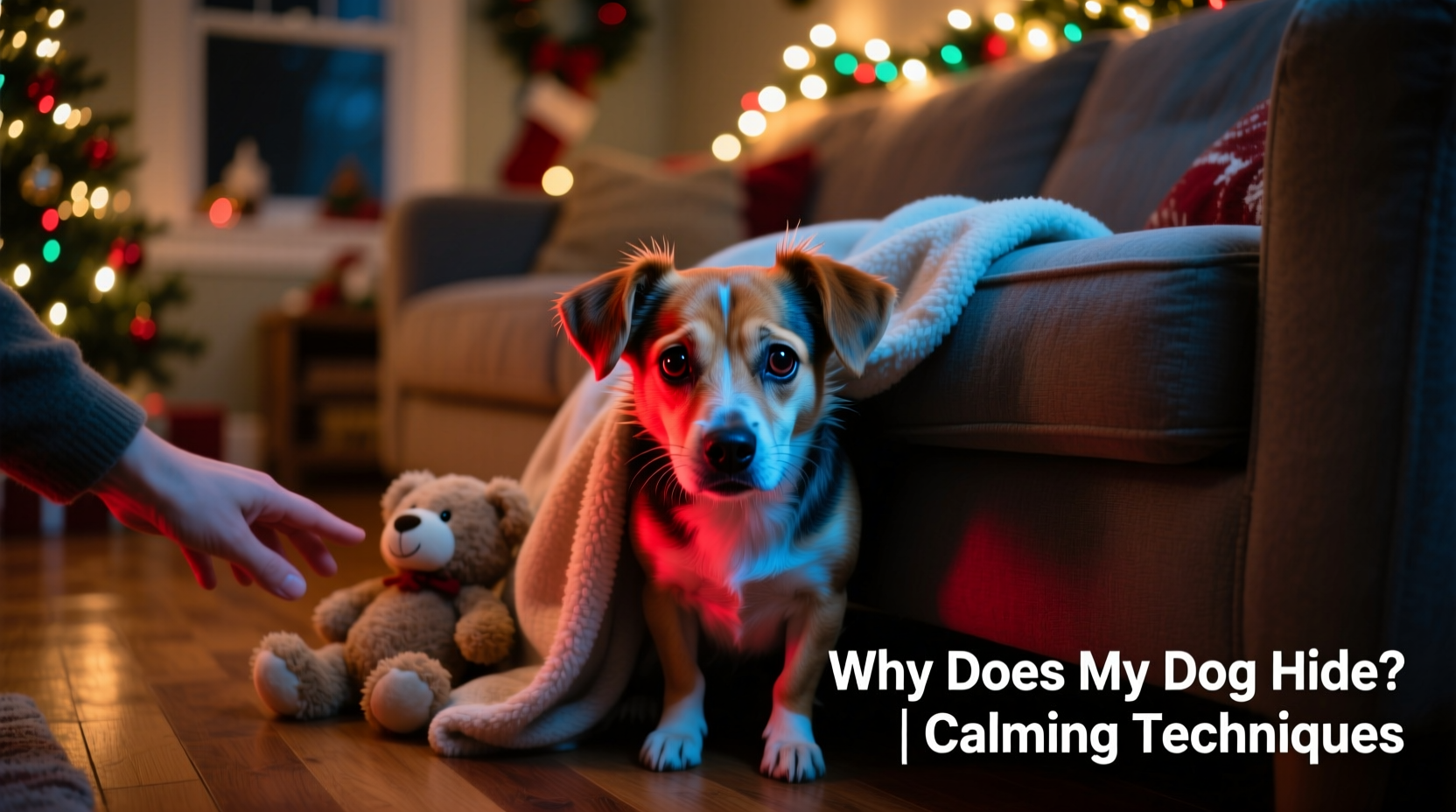
Dogs perceive light differently than humans. Their retinas contain a higher density of rod photoreceptors—cells optimized for low-light vision—but they also have a reflective layer behind the retina called the tapetum lucidum. This layer enhances night vision but also amplifies light intensity and can cause glare, halos, or prolonged afterimages. When modern LED lights pulse rapidly (often at frequencies imperceptible to humans—50–120 Hz), many dogs detect this flicker as a strobing, disorienting effect. Neurologist Dr. Karen Overall explains: Flickering light doesn’t just look odd to dogs—it can activate neural pathways associated with seizure activity in sensitive individuals, or trigger a primal startle reflex that predates domestication.
Additional contributing factors include:
- Associative learning: If a dog once startled at a light flash during a thunderstorm or firework display, they may generalize that fear to all bright, intermittent lights.
- Age-related changes: Senior dogs often develop cognitive dysfunction or vision impairments (e.g., nuclear sclerosis), making fluctuating light patterns harder to interpret and more alarming.
- Sound-light coupling: Many plug-in light sets emit faint buzzing, high-frequency whines, or intermittent relay clicks—sounds dogs hear clearly but humans miss.
- Loss of control: Hiding is an adaptive, self-protective behavior. When a dog feels overwhelmed and cannot escape the stimulus, retreat becomes their most reliable coping strategy.
Immediate Calming Techniques (First 72 Hours)
When hiding has already become a pattern, interrupt the cycle with gentle, non-punitive support. Avoid forcing your dog into lit areas or “reassuring” with high-pitched baby talk—which can inadvertently reinforce fear by signaling that something dangerous is happening.
- Create a designated quiet zone: Choose a room or corner away from windows and main lighting displays. Equip it with a cozy bed, familiar blanket, and a worn article of your clothing (for scent comfort). Keep the door slightly ajar so your dog can enter and exit freely.
- Use white noise or calming audio: Play species-appropriate music (e.g., Through a Dog’s Ear) or consistent ambient sound (a fan, gentle rain recording) to mask erratic light-associated sounds and reduce auditory triggers.
- Offer low-arousal enrichment: A frozen KONG filled with low-sodium broth and mashed banana, or a lick mat smeared with plain yogurt and pumpkin, engages the oral fixation system—a natural anxiety regulator in canines.
- Practice “touch-free” presence: Sit quietly nearby—not staring, not reaching—while reading or knitting. Your calm, predictable energy helps lower their physiological stress response without pressure.
- Introduce scent-based grounding: Dab a cotton ball with diluted lavender or chamomile essential oil (never apply directly to skin; consult your vet first) and place it near—but not inside—their safe space. Canine olfaction directly modulates limbic system activity.
Long-Term Desensitization & Counterconditioning Protocol
True resolution requires rewiring the emotional association—not suppressing the behavior. This 4-week, progressive plan uses veterinary behavior principles to replace fear with neutrality or even positive anticipation. Consistency matters more than speed; skip steps if your dog shows signs of stress (panting, pacing, refusal to eat).
| Week | Goal | Key Actions | Duration per Session |
|---|---|---|---|
| 1 | Neutral exposure | Place unplugged lights in a visible location. Reward calm observation with high-value treats (boiled chicken, freeze-dried liver) every 3–5 seconds—even if your dog glances briefly. | 3x daily × 2 minutes |
| 2 | Controlled activation | Plug in lights *outside* the house (e.g., porch) while your dog is indoors. Reward relaxed behavior. Gradually move lights closer—first to a closed window, then to a hallway doorway. | 2x daily × 3–5 minutes |
| 3 | Low-intensity indoor exposure | Use only 1–2 strands of warm-white, non-blinking LEDs. Place them 10+ feet from your dog’s safe zone. Increase duration gradually. | 1x daily × 5–8 minutes |
| 4 | Contextual integration | Turn on lights while engaging in low-stress activities (gentle brushing, hand-feeding meals). Never pair lights with excitement (e.g., greeting guests) until full confidence is established. | Ongoing maintenance |
“Desensitization fails when owners rush the process. Dogs don’t ‘get over’ fear—they learn safety through repetition, choice, and predictability. Every time you honor their retreat, you build trust that makes future progress possible.” — Dr. Sophia Yin, DVM, MS, Veterinary Behaviorist (deceased), whose protocols remain foundational in humane training.
Real-World Case Study: Luna, a 5-Year-Old German Shepherd Mix
Luna was adopted at age 2 from a rural shelter with no known history. Each December, she’d vanish for hours when her owner strung lights on the front porch—despite loving walks and showing zero aggression or generalized anxiety. Her owner assumed it was “just the season.” After consulting a certified veterinary behaviorist, they discovered Luna flinched at the high-pitched hum of the transformer (measured at 18 kHz—well within canine hearing range). The solution involved three simultaneous adjustments: replacing the transformer with a silent DC adapter, moving the lights to the backyard fence (away from her primary path), and using the desensitization protocol above. Within 10 days, Luna began approaching the lit fence curiously. By Week 4, she’d rest beside the back door watching the lights—tail thumping gently. Crucially, her owner never forced proximity; they let her choose engagement. Her recovery wasn’t about eliminating the stimulus—it was about restoring her sense of agency.
What NOT to Do: Common Missteps That Worsen Anxiety
Well-intentioned actions can unintentionally reinforce fear or erode trust. Avoid these pitfalls:
- Dragging or carrying your dog toward the lights — This removes their ability to flee, escalating panic and damaging your bond.
- Using punishment or correction — Yelling, leash jerks, or spray bottles associate *you*, not the lights, with threat.
- Overlooking concurrent stressors — Holiday visitors, unfamiliar scents, or disrupted routines compound light sensitivity. Address the whole environment—not just one trigger.
- Assuming “calm” means resolved — A dog who stops hiding may be freezing (a more severe stress response) or shutting down. Watch for subtle signals: whale eye, tucked tail, stiff posture.
- Skipping veterinary evaluation — Pain (e.g., arthritis aggravated by cold floors near windows), vision loss, or early cognitive decline can mimic or intensify light sensitivity.
FAQ: Addressing Key Concerns
Can I use CBD oil or anxiety wraps for light sensitivity?
Evidence remains limited. While some dogs respond positively to broad-spectrum CBD (with zero THC), quality control varies widely, and interactions with medications are possible. Anxiety wraps like Thundershirts show mixed results in controlled studies—some dogs find pressure calming; others feel trapped. Always discuss supplements or devices with your veterinarian first. They’re supportive tools—not substitutes for behavioral intervention.
My dog only hides from colored lights, not white ones. Why?
Colored LEDs often emit narrower, more intense wavelengths. Blue and violet light (common in cool-white and multicolor strings) has higher photon energy and can appear unnaturally bright or “jarring” to dogs’ dichromatic vision. Warm-white LEDs (2700K–3000K) closely mimic natural sunset light and are generally better tolerated. Opt for non-blinking, warm-white, low-flicker options whenever possible.
Will this get worse as my dog ages?
Not inevitably—but vigilance increases. Age-related vision changes (cataracts, glaucoma, retinal degeneration) can heighten light sensitivity. Proactive management—like maintaining consistent lighting in hallways, avoiding sudden transitions from dark to bright rooms, and continuing low-stimulus enrichment—supports neurological resilience. Early intervention in younger years builds lifelong coping capacity.
Conclusion: Building Calm, Not Just Coping
Your dog’s instinct to hide isn’t disobedience or stubbornness—it’s communication. It says, “This feels unsafe, and I need space to regulate.” Responding with patience, scientific understanding, and consistent compassion transforms seasonal stress into an opportunity for deeper connection. You don’t need to eliminate the lights to protect your dog’s peace. You need to honor their nervous system, adjust your environment with intention, and meet them where they are—not where you wish they were. Start small: tonight, dim one lamp and sit quietly with your dog in their safe zone. Notice their breath. Offer silence. That moment of shared calm is where real healing begins.




 浙公网安备
33010002000092号
浙公网安备
33010002000092号 浙B2-20120091-4
Comments
No comments yet. Why don't you start the discussion?