
Every year, as families gather and homes transform into festive wonderlands, a common but often overlooked moment occurs: the family dog retreats. Perhaps it’s under the bed, behind the couch, or quietly slips into the laundry room the moment the Christmas tree appears. While this behavior might seem quirky or even dramatic, it’s rarely about being “grumpy” or “antisocial.” For many dogs, the arrival of the holiday tree signals a cascade of sensory overload, environmental disruption, and anxiety triggers that can be deeply unsettling.
Dogs are creatures of routine and keenly attuned to changes in their environment. The introduction of a large evergreen tree—complete with blinking lights, dangling ornaments, unfamiliar scents, and altered household rhythms—can overwhelm even the most confident pet. Understanding the root causes of this hiding behavior is the first step toward creating a more inclusive and calming holiday season for your four-legged family member.
The Sensory Overload of the Holiday Season
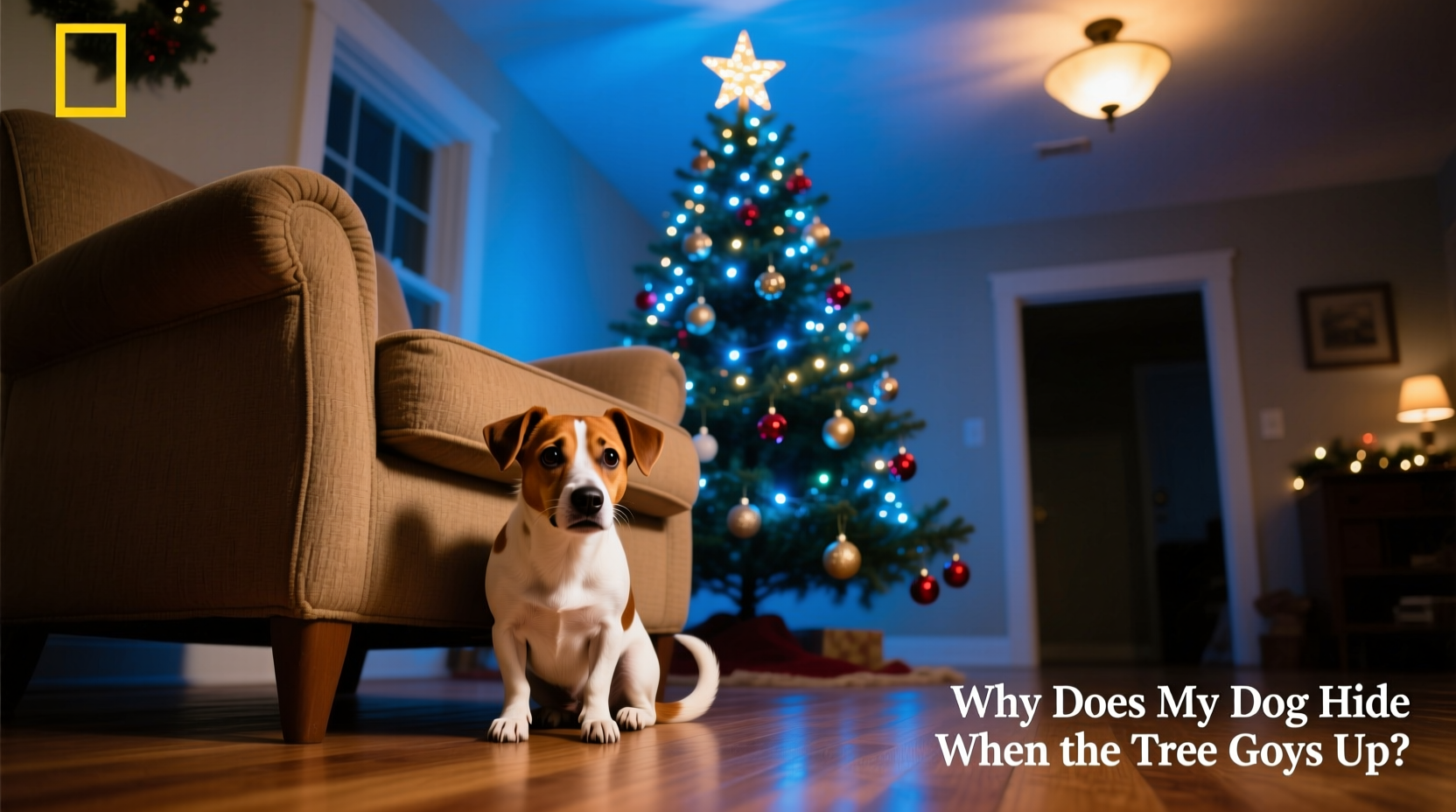
A Christmas tree isn’t just a decoration to a dog—it’s a multisensory event. From the moment it arrives, a dog’s world shifts dramatically. The scent of pine or fir is strong and foreign, especially if artificial trees or sprays are used. These odors can be overpowering to a species with up to 300 million olfactory receptors (compared to humans’ mere 6 million). Even subtle changes in air quality due to tree preservatives or firewood nearby can trigger stress responses.
Visual stimulation adds another layer. Twinkling lights, reflective ornaments, and flickering candles create erratic movement patterns that can confuse or alarm dogs. Unlike humans, dogs perceive motion and light differently—their vision prioritizes detecting movement over detail, which means flashing lights may appear strobe-like or disorienting. Some dogs may interpret these effects as unpredictable threats, prompting instinctive avoidance.
Hearing also plays a role. Holiday music, increased foot traffic, doorbells, and excited children all contribute to higher noise levels. A dog that normally enjoys quiet routines may find the constant chatter and sudden laughter overwhelming. When combined with the visual and olfactory changes brought by the tree, the cumulative effect can push even well-socialized dogs into self-protective isolation.
Changes in Routine and Territory
Beyond sensory input, dogs are highly sensitive to shifts in daily structure and spatial boundaries. The placement of a Christmas tree often occupies a central living area previously used for lounging, playing, or resting. This territorial disruption can cause confusion or insecurity. If the dog’s favorite sleeping spot is now blocked by tinsel-laden branches, they may feel displaced—not just physically, but emotionally.
Add to this the change in routine: guests arriving, altered feeding times, or delayed walks due to holiday preparations. Dogs thrive on predictability. When their expectations are repeatedly disrupted, anxiety can build silently until it manifests in behaviors like hiding, panting, or clinginess.
It's also worth noting that some dogs don’t hide out of fear per se, but as a coping mechanism. Hiding provides control in an uncontrollable situation. By retreating to a known safe space—under a bed, in a crate, or in a quiet back room—they regain a sense of autonomy. This behavior is not defiance; it’s self-regulation.
“Dogs don’t misbehave when they hide—they’re communicating distress. Our job is to listen, not correct.” — Dr. Karen London, Veterinary Behaviorist
Common Triggers Associated with Christmas Trees
While every dog is different, certain elements of the Christmas tree setup consistently act as stressors. Recognizing these can help owners mitigate risks before they escalate.
| Trigger | Why It Affects Dogs | How to Minimize Impact |
|---|---|---|
| Ornaments | Shiny, dangling objects resemble prey; noise from clinking can startle | Use lightweight, soft ornaments on lower branches; avoid glass or metal near dog level |
| Lights | Flickering mimics unpredictable movement; cords pose chewing hazards | Secure cords with covers; use LED lights with steady glow instead of twinkling modes |
| Tree Scent | Natural resins or artificial fragrances may irritate respiratory systems | Ensure good ventilation; consider unscented artificial trees if reactions persist |
| Water Bowl (in stand) | May contain chemicals, bacteria, or algaecides harmful if ingested | Cover the reservoir with a secure lid or mesh guard |
| Increased Activity | Crowds, loud voices, and fast movements elevate stress hormones | Create a quiet retreat zone away from main festivities |
Step-by-Step: Helping Your Dog Adjust to the Christmas Tree
With patience and proactive planning, you can help your dog adapt to the seasonal changes without resorting to punishment or forced exposure. Follow this timeline to ease the transition:
- Week 1: Prepare the Environment
Set up a quiet sanctuary—a crate, bedroom, or corner with familiar bedding, toys, and water. Make sure it’s accessible year-round so it doesn’t feel like banishment during the holidays. - Day of Setup: Controlled Introduction
Assemble the tree while your dog is outside or in another room. Once complete, let them approach on their own terms. Do not force interaction. Use treats or praise only if they show curiosity, never to lure them closer if they resist. - Days 2–3: Positive Association Training
Pair the tree area with positive experiences. Feed meals nearby, play calm games, or offer stuffed Kongs within sight of the tree—but never inside the immediate perimeter. Gradually decrease distance over several days. - Ongoing: Supervised Access & Boundaries
Use baby gates or pens to create safe viewing zones. Prevent jumping or pawing at ornaments with gentle redirection. Reward calm behavior with quiet praise or treats. - Holiday Gatherings: Manage Stress Proactively
Before guests arrive, ensure your dog has had exercise and mental stimulation. Offer a long-lasting chew or puzzle toy in their safe space. Let them opt out of social interactions freely.
Real Example: Max, the Rescue Terrier
Max, a 4-year-old Jack Russell Terrier mix adopted from a rural shelter, had always been energetic but generally confident. His owners, the Thompsons, were surprised when, during his second Christmas with them, he refused to enter the living room after the tree went up. Instead, he spent most of each day curled beneath the kitchen table, only emerging when the house was quiet.
At first, they assumed he was being “stubborn.” But after consulting a veterinary behaviorist, they realized several factors were at play: the tree was placed directly where Max used to nap on sunny afternoons; the new fiber-optic star emitted a faint humming sound; and the shiny red balls resembled tennis balls he once fought over with another dog—an experience linked to past anxiety.
Working with a trainer, the Thompsons relocated the tree slightly, switched to matte ornaments, turned off the humming star, and began feeding Max’s dinners near the decorated area with high-value treats. Within five days, Max was lying on his bed just ten feet from the tree. By Christmas Eve, he briefly sniffed a low-hanging pinecone ornament before returning to his spot—calm, present, and no longer hiding.
This case illustrates how seemingly minor details can have outsized impacts on a dog’s emotional state—and how small adjustments can lead to meaningful recovery.
Checklist: Holiday-Ready Dog Environment
- ✅ Designate a quiet, accessible retreat space with bedding and water
- ✅ Cover tree water reservoir to prevent ingestion of toxins
- ✅ Secure electrical cords with protective tubing or cord organizers
- ✅ Use unbreakable, non-toxic ornaments below dog height
- ✅ Avoid tinsel and stringy garlands (choking/intestinal blockage risk)
- ✅ Maintain regular feeding, walking, and bedtime routines
- ✅ Introduce tree gradually with positive reinforcement
- ✅ Monitor for signs of stress: lip licking, yawning, trembling, avoiding eye contact
- ✅ Consider calming aids like pheromone diffusers or anxiety wraps if needed
- ✅ Educate guests not to force interaction with the dog
Frequently Asked Questions
Is it normal for my dog to hide only around the Christmas tree?
Yes, it’s quite common. The tree introduces multiple novel stimuli at once—smell, sight, sound, and space changes—that aren’t present at other times of year. As long as the behavior resolves once the tree is removed and your dog returns to normal habits, it’s likely situational rather than clinical anxiety.
Should I punish my dog for hiding or growling near the tree?
No. Punishment will increase fear and may suppress warning signs, leading to sudden aggression. Instead, respect their need for space and work on gradual desensitization. Growling is communication, not defiance.
Can I train my dog to love the Christmas tree?
Not necessarily “love,” but you can help them tolerate or accept it. Focus on neutrality rather than enthusiasm. The goal is coexistence, not forced celebration. Some dogs will never enjoy the tree—and that’s okay. Their comfort matters more than photo opportunities.
Final Thoughts: Compassion Over Tradition
The holiday season is meant to be joyful—for everyone in the household, including the quiet observer at the edge of the room. When a dog hides at the sight of the Christmas tree, they aren’t rejecting tradition; they’re responding honestly to a world that suddenly feels less predictable. As pet owners, we have the power to balance festivity with empathy.
By recognizing the legitimacy of canine stress, making thoughtful modifications, and prioritizing safety over aesthetics, we create a home where both humans and animals can thrive during the holidays. Let this year be the one where the tree isn’t just beautiful—but inclusive.




 浙公网安备
33010002000092号
浙公网安备
33010002000092号 浙B2-20120091-4
Comments
No comments yet. Why don't you start the discussion?