
The holiday season brings joy, warmth, and festive decorations—but for many dog owners, it also introduces unexpected challenges. One of the most common: a dog that won’t stop chewing on Christmas tree branches. Whether your pup is nibbling at pine needles or dragging entire limbs across the living room, this behavior can be frustrating, destructive, and even dangerous. Understanding the root causes behind this habit is the first step toward stopping it. More importantly, implementing practical, humane behavioral strategies ensures both your dog’s well-being and your holiday peace of mind.
Dogs don’t chew tree branches out of spite or mischief. Their actions are driven by instinct, curiosity, boredom, or unmet needs. The good news? With consistency, environmental management, and positive reinforcement, you can redirect this behavior effectively—without resorting to punishment or stress-inducing tactics.
Understanding Why Dogs Chew Tree Branches
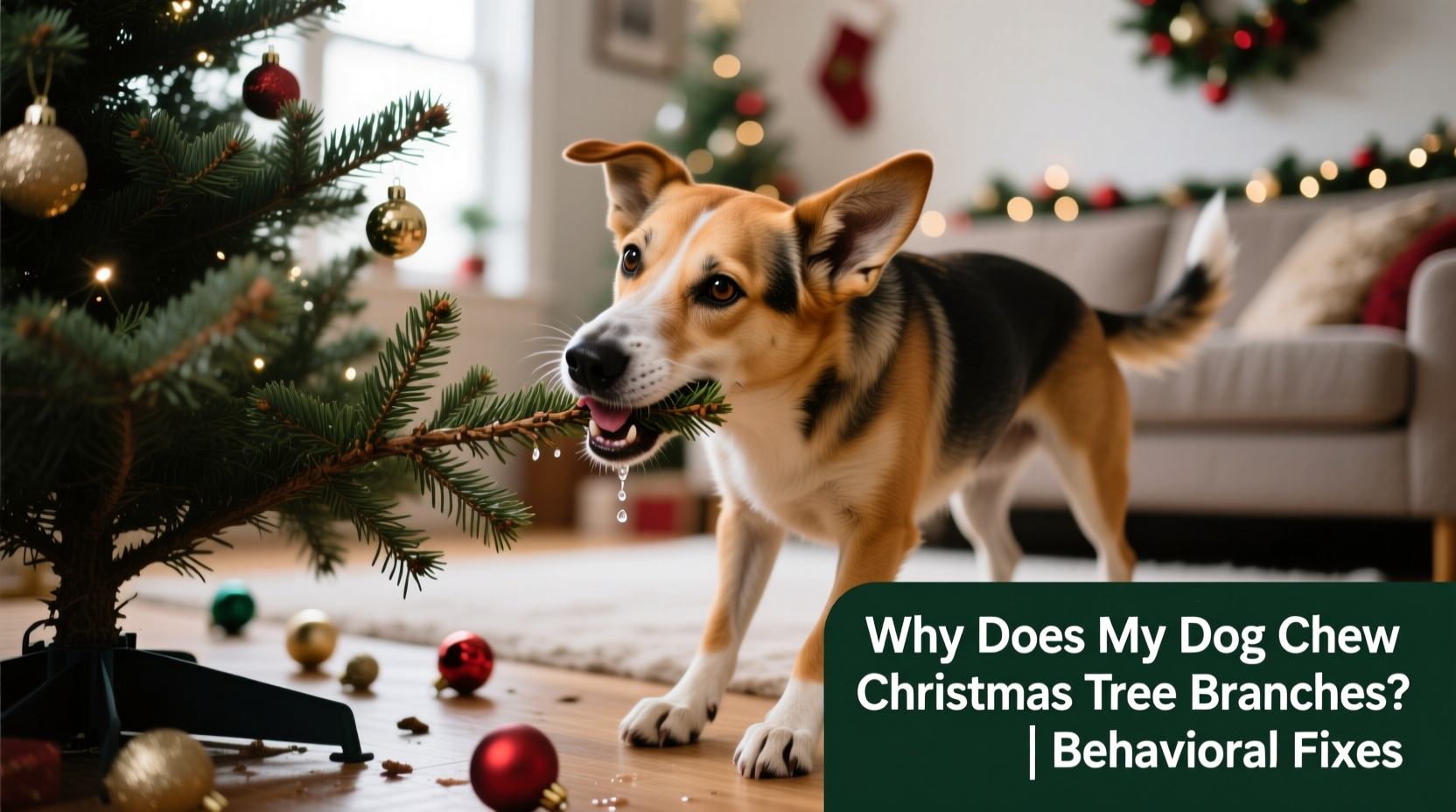
Chewing is a natural canine behavior. In the wild, dogs gnaw on bones, bark, and plant matter as part of foraging and dental maintenance. Domesticated dogs retain these instincts, but their environment shapes how those impulses are expressed. A Christmas tree presents an irresistible combination of novel scent, texture, and movement—especially if it's real and freshly cut.
Several key factors drive this behavior:
- Scent attraction: Fresh evergreens emit strong terpenes and resins that are highly stimulating to a dog’s sensitive nose. To a dog, the tree may smell like a forest full of interesting wildlife traces.
- Boredom or under-stimulation: Holiday routines often shift, walks may shorten due to weather, and guests increase household activity. This unpredictability can leave dogs feeling anxious or understimulated, leading them to seek outlets like chewing.
- Teething (in puppies): Puppies between 3–8 months experience discomfort as adult teeth emerge. Chewing relieves gum pressure, and soft pine branches can feel soothing.
- Attention-seeking: If chewing elicits a reaction—even scolding—the dog may repeat the behavior to gain interaction.
- Exploratory behavior: Dogs investigate the world through their mouths. A new object in the home, especially one elevated and surrounded by shiny objects, becomes a prime target for oral exploration.
It’s important to recognize that while the behavior may seem trivial, ingesting pine needles or sap can lead to gastrointestinal irritation, vomiting, or intestinal blockages. Tinsel, ornaments, and electrical cords add further risks. Addressing the behavior isn’t just about preserving decor—it’s about safety.
Behavioral Fixes That Actually Work
Effective intervention combines prevention, redirection, and training. The goal isn’t to suppress natural behaviors but to guide them appropriately. Below are proven strategies grounded in animal behavior science.
1. Environmental Management: Make the Tree Inaccessible
Prevention starts with physical barriers. You wouldn’t leave a toddler unsupervised near a hot stove—and similarly, a curious dog should not have unrestricted access to a tempting tree.
- Use a baby gate or playpen to cordon off the tree area.
- Place the tree in a corner or room with limited foot traffic to reduce temptation.
- Secure the tree stand tightly to prevent tipping if your dog leans or pulls.
If barrier use isn’t feasible, consider using a tree skirt made of rigid materials (e.g., metal or thick fabric) that discourage digging or pawing.
2. Redirect with Appropriate Chewing Alternatives
Dogs need to chew. The solution isn’t to eliminate the behavior but to redirect it. Provide high-value chew toys that satisfy the same sensory needs as tree branches.
“Dogs thrive on predictability and appropriate outlets. When we give them acceptable alternatives, they’re far less likely to seek inappropriate ones.” — Dr. Karen Becker, Integrative Veterinarian and Canine Behavior Advocate
Choose durable rubber toys (like Kongs), nylon bones, or frozen treats filled with peanut butter (xylitol-free). Rotate toys weekly to maintain novelty and interest.
3. Use Positive Reinforcement Training
Train a reliable “leave it” command using reward-based methods:
- Hold a treat in a closed fist and let your dog sniff.
- When they back away or stop nudging, say “leave it” and immediately reward with a different treat from your other hand.
- Practice with low-value items, then gradually increase difficulty (e.g., placing a treat on the floor).
- Once mastered indoors, apply the cue near the tree—but only when your dog is calm and not actively chewing.
Never punish mid-chew. Instead, interrupt calmly (“Hey!”), redirect to a toy, and reward disengagement. Over time, your dog learns that ignoring the tree leads to better outcomes.
4. Increase Mental and Physical Stimulation
A tired dog is a well-behaved dog. During the holidays, maintain or increase your dog’s routine exercise and mental enrichment.
- Add extra short walks or indoor play sessions (e.g., fetch, hide-and-seek with treats).
- Use puzzle feeders or snuffle mats to slow down mealtime and stimulate problem-solving.
- Practice obedience drills or trick training for 10 minutes daily to build focus and impulse control.
Dogs that receive adequate stimulation are less likely to engage in compulsive or attention-seeking behaviors.
Step-by-Step Plan: First 7 Days with the Tree
Implementing a structured approach in the first week dramatically reduces long-term issues. Follow this timeline:
| Day | Action | Goal |
|---|---|---|
| Day 1 | Set up the tree behind a baby gate. Supervise all interactions. Introduce chew toys nearby. | Establish boundaries and associate the tree area with positive alternatives. |
| Day 2–3 | Practice “leave it” near the barrier. Reward calm behavior with treats and praise. | Build positive associations and reinforce impulse control. |
| Day 4–5 | Gradually reduce barrier use during supervised sessions. Redirect any interest in branches immediately. | Test reliability of training in low-risk conditions. |
| Day 6–7 | Allow brief unsupervised access only if no chewing occurs. Reintroduce barrier if setbacks happen. | Assess progress and adjust strategy as needed. |
This phased method builds trust and consistency. If your dog succeeds by Day 7, you can begin decorating with confidence. If not, continue with the barrier and retrain—there’s no rush.
Common Mistakes That Make It Worse
Even well-meaning owners can unintentionally reinforce unwanted behavior. Avoid these pitfalls:
- Yelling or scolding: This can increase anxiety or turn tree-chewing into a high-arousal game. Dogs often interpret loud tones as participation, not correction.
- Inconsistent rules: Allowing chewing when you're not looking but punishing it when you are teaches confusion, not compliance.
- Using aversive sprays without training: Bitter apple or citrus sprays may deter some dogs, but without teaching an alternative behavior, the dog may simply shift to another destructive outlet.
- Leaving the tree unattended too soon: Jumping straight to full access sets your dog up for failure. Patience prevents setbacks.
Mini Case Study: Bella, the Curious Beagle
Bella, a 14-month-old beagle, began chewing her family’s Christmas tree within hours of setup. Her owners initially responded by shouting and removing her, but she returned each time guests were distracted. After three days, she ingested several pine needles and vomited twice.
They consulted a certified dog trainer who recommended a four-part plan:
- Install a mesh playpen around the tree.
- Introduce a rotating set of stuffed Kongs and deer antlers for chewing.
- Train “leave it” using high-value chicken treats.
- Implement two 15-minute training sessions daily focused on focus and settling.
Within five days, Bella showed zero interest in the tree. By Christmas Eve, the barrier was removed, and she passed multiple unsupervised tests. Her owners credited consistency and redirection—not punishment—as the keys to success.
Checklist: Dog-Safe Holiday Tree Setup
Before turning on the lights, run through this checklist to minimize risk:
- ✅ Secure the tree to a wall or ceiling to prevent tipping
- ✅ Use a barrier (gate, pen, or decorative fence) around the base
- ✅ Remove or secure fragile, toxic, or ingestible ornaments (tinsel, glass balls, edible garlands)
- ✅ Keep electrical cords out of reach or covered with cord protectors
- ✅ Place water basin out of reach or cover it (stagnant water can harbor bacteria and fertilizers)
- ✅ Stock a rotation of durable chew toys near the tree zone
- ✅ Train and practice “leave it” and “drop it” commands prior to setup
- ✅ Schedule extra walks and mental games during the first week
FAQ: Common Questions About Dogs and Tree Chewing
Is pine toxic to dogs?
Fresh pine is mildly toxic. Ingestion can cause stomach upset, vomiting, or drooling due to oils and resins. Severe reactions are rare but possible, especially with large amounts or sharp needles causing internal scratches. Artificial trees pose choking and obstruction risks from plastic pieces.
Can I use essential oils to deter my dog?
No. Many essential oils (including citrus, tea tree, and pine) are toxic to dogs, especially if licked off fur or paws. Deterrents should be pet-safe and vet-approved. Stick to commercial bitter sprays labeled non-toxic.
What if my dog only chews when we’re asleep?
Nighttime chewing suggests separation anxiety or lack of routine. Consider crating your dog safely at night or keeping the tree in a separate, gated room. Ensure your dog has a comfortable bed, chew toy, and access to water.
Conclusion: Peaceful Holidays Start with Proactive Care
Your dog’s fascination with the Christmas tree isn’t defiance—it’s communication. They’re expressing needs for stimulation, security, or guidance. By addressing the behavior with empathy, structure, and science-backed techniques, you create a safer, calmer environment for everyone.
The holidays don’t have to mean constant vigilance or damaged decor. With thoughtful preparation, consistent training, and realistic expectations, you and your dog can enjoy the season together—without sacrificing your tree or your sanity.




 浙公网安备
33010002000092号
浙公网安备
33010002000092号 浙B2-20120091-4
Comments
No comments yet. Why don't you start the discussion?