
Waking up to a warm, wet tongue on your cheek is a familiar experience for many dog owners. While some find it endearing, others may wonder: Why does my dog insist on licking my face first thing in the morning? This seemingly simple gesture is rooted in a complex blend of instinct, social bonding, and learned behavior. Understanding the motivations behind this ritual can deepen the connection between you and your pet while ensuring that affection remains safe and mutually enjoyable.
Dogs communicate primarily through body language, and licking is one of their most expressive tools. Whether it’s a quick nudge or a prolonged session, facial licking upon waking isn’t random—it carries meaning shaped by biology, domestication, and individual personality. By exploring the science and psychology behind this behavior, we can appreciate its role in canine-human relationships and learn how to respond appropriately.
The Evolutionary Roots of Licking Behavior
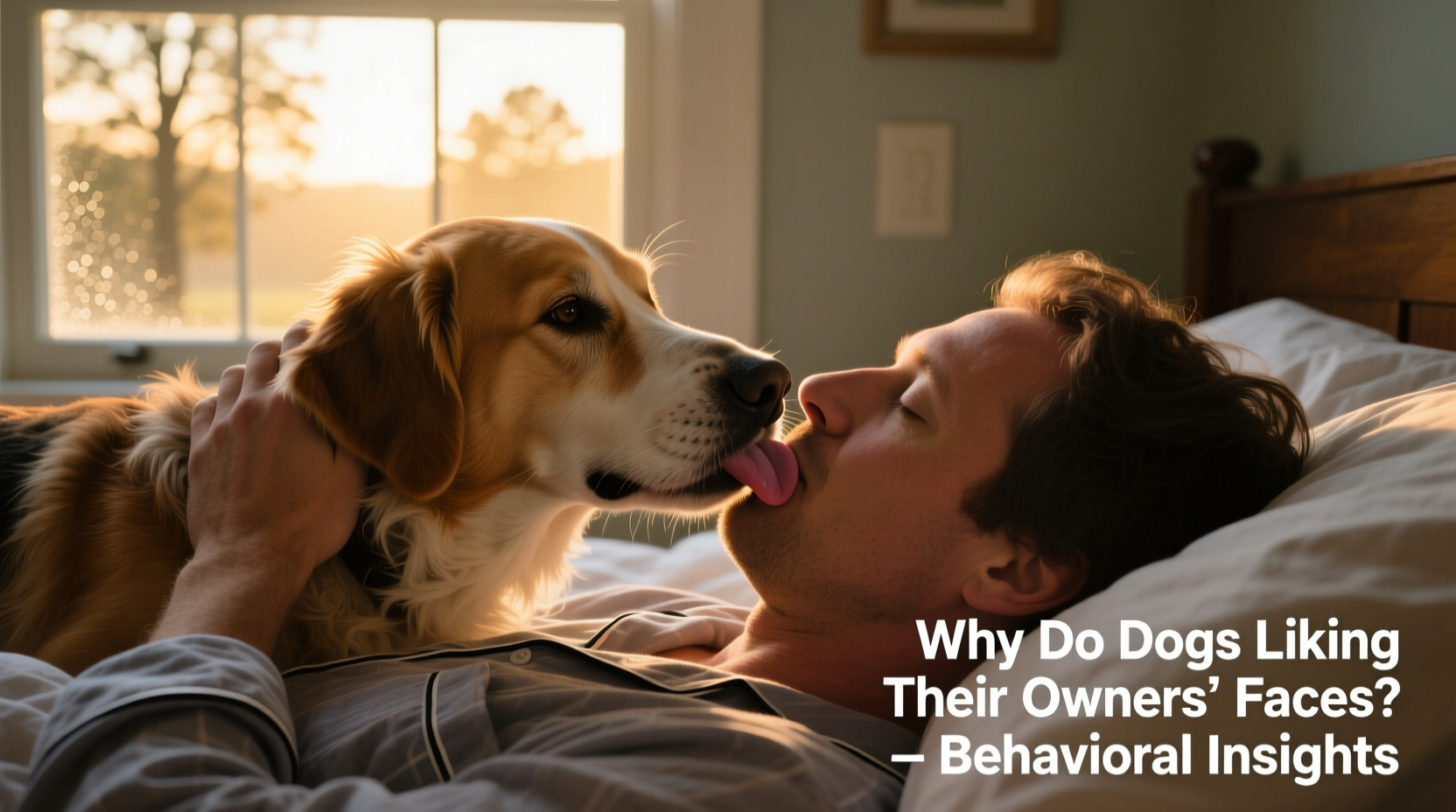
In the wild, canines use licking as a fundamental form of social interaction. Puppies instinctively lick their mother’s mouth to stimulate regurgitation—a vital feeding mechanism in species where adults pre-digest food for their young. This behavior establishes an early link between licking and nourishment, care, and submission.
As dogs evolved alongside humans, these primal gestures were repurposed within domestic settings. Adult dogs no longer rely on regurgitated meals, but the act of licking persists as a sign of respect, appeasement, and affiliation. When your dog licks your face in the morning, they may be tapping into deep-seated instincts, treating you as a trusted pack member deserving of deference or attention.
Moreover, licking helps reinforce social bonds. In wolf packs, subordinate members often groom dominant ones as a way to maintain harmony. Similarly, your dog might view you as the leader of the household and use licking to reaffirm their place in the social structure—especially after a period of separation during sleep.
“Licking is a multi-functional behavior in dogs. It serves communicative, affiliative, and even stress-reducing purposes.” — Dr. Sarah White, Certified Animal Behaviorist
Sensory Motivations: Taste, Smell, and Routine
Morning face licking also has practical sensory triggers. Overnight, your skin accumulates sweat, oils, and microscopic food particles from dinner residue if you didn’t wash thoroughly before bed. To a dog with 300 million olfactory receptors (compared to our mere 6 million), your face is a rich source of information—and flavor.
Salt from dried perspiration, remnants of toothpaste, or even the faint scent of lotion can make your face particularly appealing at dawn. Dogs explore the world through taste and smell, so a quick lick is their way of “reading” your condition and gathering data about your health, mood, and recent activities.
Additionally, routine plays a significant role. If your dog has learned that licking your face leads to positive outcomes—such as being let out, fed, or receiving affection—they will repeat the behavior. This operant conditioning turns a biological impulse into a strategic morning ritual designed to initiate interaction.
Emotional Significance: Affection, Attention, and Anxiety
Beyond instinct and sensation, licking is deeply emotional. For many dogs, licking releases endorphins—natural brain chemicals that promote calmness and pleasure. This self-soothing aspect explains why some dogs engage in excessive licking when anxious, bored, or seeking comfort.
Early morning hours can be emotionally charged for pets. After several hours apart—even just across the room—your dog may feel a surge of attachment upon seeing you awake. Licking becomes a physical expression of joy, reassurance, and reconnection. It’s their version of saying, “I’m glad you’re here,” or “Let’s start the day together.”
However, context matters. A gentle, brief lick differs significantly from persistent, obsessive licking. The latter could indicate underlying anxiety, especially if accompanied by pacing, whining, or other signs of distress. In such cases, the behavior may not be about bonding but rather an attempt to manage internal discomfort.
| Behavior Pattern | Interpretation | Action Step |
|---|---|---|
| Occasional, soft licking with wagging tail | Sign of affection and greeting | No intervention needed; reciprocate positively |
| Frequent, intense licking with restlessness | Possible anxiety or overstimulation | Redirect with commands or toys; consult vet if chronic |
| Licking only certain people or avoiding eye contact | Submission or fear-based response | Build confidence through positive reinforcement training |
| Licking followed by nudging toward door/food bowl | Learned demand behavior | Establish consistent morning routine to reduce pressure |
Health Considerations: When Licking Warrants Caution
While generally harmless, face licking can pose health risks, especially for immunocompromised individuals, infants, or those with open wounds. Canine mouths harbor bacteria such as *Capnocytophaga canimorsus* and *Pasteurella*, which—though rarely harmful to healthy adults—can lead to infections under specific conditions.
Furthermore, excessive licking may signal medical issues. Dogs sometimes obsessively lick people or objects due to gastrointestinal discomfort, dental pain, or neurological imbalances. If your dog suddenly increases licking frequency or targets specific areas (like your hands or feet) more than usual, a veterinary checkup is advisable.
On the flip side, your own health may influence your dog’s behavior. Some owners report increased licking during pregnancy, illness, or hormonal changes. There is growing evidence that dogs can detect subtle biochemical shifts through scent, potentially prompting them to investigate or comfort more intensely.
“There are documented cases of dogs detecting seizures, low blood sugar, or even cancer through odor changes. Morning licking might occasionally reflect a dog responding to physiological cues we aren't aware of.” — Dr. Lena Patel, Veterinary Ethologist
A Real-Life Example: Max and the 6 A.M. Ritual
Consider Max, a four-year-old Border Collie mix owned by Sarah, a software engineer in Portland. Every morning without fail, Max jumps onto the bed at 6:02 a.m., circles twice, and begins licking Sarah’s face until she opens her eyes. At first, Sarah found it sweet. But after weeks of disrupted sleep, she grew frustrated.
She consulted a certified dog trainer who observed Max’s behavior and asked about their evening routine. It turned out Sarah always fed Max breakfast right after waking. The trainer explained that Max had linked face licking with mealtime activation. His precision timing wasn’t coincidence—it was conditioned learning.
Sarah adjusted her approach: She began using a timed feeder set for 7 a.m. and trained Max to sit quietly beside the bed upon waking. When he refrained from licking, she rewarded him with praise and access to his automated meal. Within two weeks, the face-licking stopped, replaced by calm waiting. The bond remained strong, but the intrusive habit faded.
This case illustrates how affectionate behaviors can become reinforced through unintentional rewards. With insight and consistency, even deeply ingrained routines can be reshaped.
Managing Morning Licking: A Step-by-Step Guide
If you’d like to modify or redirect your dog’s morning licking, follow this structured approach:
- Observe the pattern: Note when the licking occurs, how long it lasts, and what typically follows (e.g., feeding, play, going outside).
- Break the reinforcement cycle: Avoid giving attention—positive or negative—immediately after licking. Instead, wait for calm behavior before engaging.
- Introduce an alternative greeting ritual: Train your dog to perform a different action upon waking, such as touching a paw or sitting patiently.
- Use environmental cues: Place a favorite toy near the bed so your dog picks it up instead of approaching your face.
- Adjust feeding schedules: If meals follow waking closely, consider using a timed feeder to decouple licking from food delivery.
- Practice consistency: Ensure all household members respond the same way to prevent mixed signals.
- Reinforce desired behavior: Reward calm interactions with treats, petting, or verbal praise.
Checklist: Is Your Dog’s Morning Licking Normal?
- ✅ Occurs only briefly upon waking
- ✅ Accompanied by relaxed body language (loose tail wag, soft eyes)
- ✅ Stops when redirected or ignored
- ✅ No signs of obsession or compulsion
- ✅ Doesn’t interfere with your comfort or hygiene
- ✅ Not associated with aggression or hyperactivity
If all boxes are checked, the behavior is likely benign and rooted in affection. If several items raise concern, consider consulting a veterinarian or animal behavior specialist.
Frequently Asked Questions
Is it safe for my dog to lick my face in the morning?
For most healthy adults, occasional face licking poses minimal risk. However, avoid allowing dogs to lick around the mouth, nose, or eyes, especially if you have cuts or a weakened immune system. Regular dental care for your dog reduces bacterial load and improves safety.
Why does my dog only lick me and not other family members?
This usually reflects a stronger emotional bond or differential reinforcement. Your dog may see you as their primary caregiver or have learned that you respond more readily to licking. It can also depend on scent profiles—each person emits unique odors based on diet, hormones, and skincare products.
Can I train my dog to stop licking my face?
Yes. Use positive reinforcement to teach an incompatible behavior (like sitting or fetching a toy). Be patient and consistent. Sudden suppression without replacement may cause frustration or anxiety. Gradual shaping works best.
Conclusion: Understanding Builds Connection
Your dog’s morning face lick is far more than a quirky habit—it’s a window into their mind. Whether driven by ancient instincts, sensory curiosity, emotional attachment, or learned expectations, this behavior reflects the depth of your relationship. Rather than dismissing it as mere nuisance or blind affection, take time to interpret what your dog is trying to convey.
By applying behavioral insights, maintaining health awareness, and fostering respectful boundaries, you can preserve the warmth of canine love while ensuring both you and your pet thrive. Small actions—like adjusting routines, offering alternatives, or simply acknowledging your dog’s presence calmly—can transform a disruptive moment into a meaningful exchange.




 浙公网安备
33010002000092号
浙公网安备
33010002000092号 浙B2-20120091-4
Comments
No comments yet. Why don't you start the discussion?