
When you walk through the door after a long day, there's nothing quite like the enthusiastic welcome from your dog—often capped off with an eager lick to the face. While some pet owners find it endearing, others may wonder: Why does my dog do this? Is it love? A sign of submission? Or simply a habit picked up over time? The answer lies in a blend of biology, social behavior, and emotional connection. Dogs don’t communicate with words, but their actions speak volumes. Face licking is one of the most common—and meaningful—behaviors dogs use to interact with their humans.
This seemingly simple gesture carries layers of meaning shaped by evolution, domestication, and individual temperament. Understanding why your dog engages in this behavior can deepen your bond and help you respond appropriately—whether that means welcoming the gesture or gently redirecting it for hygiene or comfort reasons.
The Evolutionary Roots of Licking
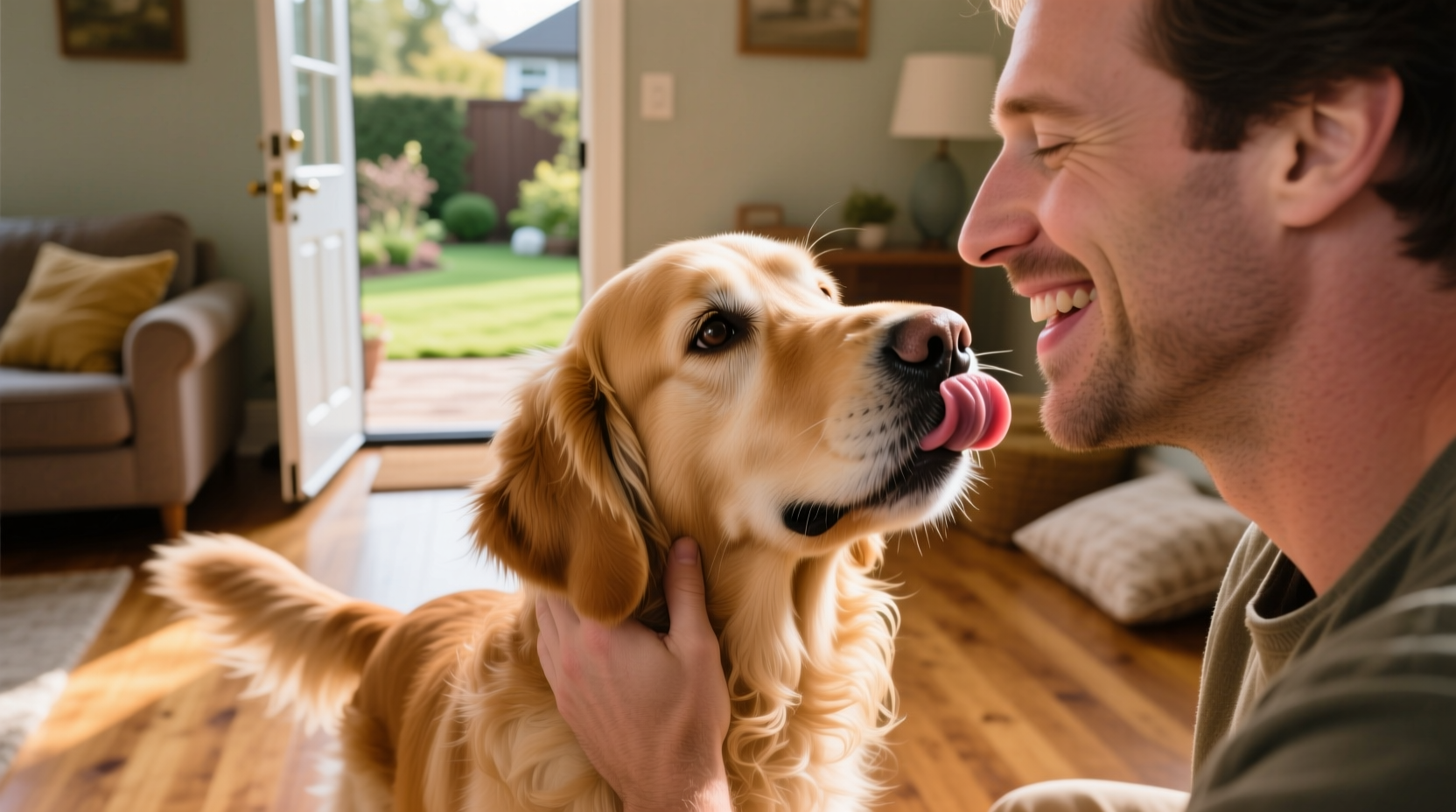
Dog behaviors often trace back to their wild ancestors. In wolf packs, subordinate members would lick the mouths of dominant wolves as a sign of deference and respect. This act was especially common when younger wolves returned to the den after hunting or exploring. It served both as a greeting and a way to solicit food—since adult wolves would regurgitate meals for pups. Over generations of domestication, this instinctual behavior evolved into a broader social signal.
Modern dogs still retain this ancestral impulse. When your dog licks your face upon your return, they may be acknowledging you as the leader of the pack. More than dominance, though, it’s about reinforcing social bonds. Your presence triggers a cascade of emotions—relief, excitement, affection—and licking becomes a physical outlet for those feelings.
“Licking is a multi-functional behavior in canines. It can express submission, solicit attention, or serve as a calming signal—all rooted in their social heritage.” — Dr. Karen Becker, DVM, Integrative Veterinary Specialist
Emotional Expression and Bonding
Your dog doesn’t just recognize you—they feel deeply connected to you. Studies have shown that when dogs see their owners, their brains release oxytocin, the same “love hormone” that strengthens bonds between parents and children. This neurochemical response explains why your arrival prompts such an intense reaction.
Licking is one of the primary ways dogs express affection. Just as humans might hug or kiss loved ones, dogs use their mouths and tongues to connect physically. The act of licking releases endorphins in your dog’s brain, creating a sense of calm and pleasure. For them, it’s not just about greeting you—it’s about reaffirming their attachment.
In households where dogs are treated as family members, this emotional dependency grows stronger. Your scent, voice, and routine become central to their sense of safety. When you’re gone, even for a short time, your dog may experience mild separation anxiety. The moment you return, licking serves as both a celebration and a reassurance that everything is back in order.
Communication Through Scent and Taste
Dogs experience the world primarily through smell and taste. Your face carries a wealth of information: traces of food, sweat, lotions, and natural skin secretions all contribute to your unique scent profile. When your dog licks your face, they’re gathering data about where you’ve been, what you’ve eaten, and how you’re feeling.
Human skin produces pheromones and salt from sweat, which many dogs find appealing. Some researchers believe dogs are drawn to the salty taste of human skin, especially after physical activity. Additionally, residual toothpaste, lip balm, or even the faint aroma of coffee on your breath can pique your dog’s curiosity.
This sensory investigation isn’t just about flavor—it’s also a form of communication. By tasting your skin, your dog confirms your identity and checks for any changes in your health or mood. Changes in body chemistry due to stress, illness, or hormonal shifts can subtly alter your scent, and your dog may detect these shifts before you do.
What Your Dog Might Be \"Reading\" From Your Skin
| Scent Component | Possible Meaning to Dog |
|---|---|
| Salt from sweat | Sign of physical activity or stress |
| Food residue | Curiosity about your diet or desire to share |
| Facial oils | Familiarity and emotional comfort |
| Medications or creams | Unusual taste prompting investigation |
| Stress-related pheromones | Detection of anxiety or fatigue |
Learned Behavior and Positive Reinforcement
While instinct plays a major role, learned behavior also shapes your dog’s tendency to lick your face. If you’ve ever laughed, petted, or spoken warmly when your dog licked you, you’ve unintentionally reinforced the action. Dogs are masters at reading human reactions, and they quickly learn which behaviors earn attention—even if that attention includes scolding.
For example, a dog who licks your face and sees you smile or say “I love you too!” will associate licking with positive outcomes. Even negative reactions like pushing them away can be stimulating to an excitable dog, inadvertently encouraging repetition. This creates a feedback loop: the more they lick and get a reaction, the more likely they are to repeat it.
Children often encourage face licking by giggling or reaching out, making it especially common in homes with young kids. Over time, the behavior becomes a conditioned response to your arrival.
How to Assess Whether Licking Is Reinforced
- Observe your reaction each time your dog licks your face.
- Note whether you respond with touch, voice, or eye contact.
- Determine if your dog stops when ignored or escalates when corrected.
- Test consistency: try withholding attention for a week and observe changes.
Health and Hygiene Considerations
While face licking is generally harmless, it’s important to consider hygiene, especially for infants, elderly individuals, or people with compromised immune systems. A dog’s mouth contains bacteria such as *Pasteurella*, *Salmonella*, and *Capnocytophaga*, which can pose risks if transferred to open wounds or mucous membranes.
Regular dental care for your dog reduces bacterial load. Brushing their teeth, providing dental chews, and scheduling professional cleanings can make shared spaces safer. Additionally, washing your face after close contact minimizes potential exposure.
If your dog licks excessively—not just upon greeting but throughout the day—it could indicate an underlying issue. Compulsive licking may stem from anxiety, boredom, or medical conditions like gastrointestinal discomfort or skin allergies. In such cases, consult a veterinarian or animal behaviorist.
When Licking May Signal a Problem
- Licking continues for minutes at a time without pause
- Dog appears anxious or restless while licking
- Licking spreads to objects, floors, or self (e.g., paws)
- New onset in an older dog with no prior history
“Excessive licking should never be dismissed as just ‘personality.’ It can be a cry for help—either behavioral or medical.” — Dr. Sophia Yin, Veterinary Ethologist
Real-Life Example: The Case of Max and the Morning Greeting
Take Max, a three-year-old Golden Retriever living in suburban Chicago. Every morning, his owner Sarah leaves for work around 8 a.m. Max spends the day with a pet sitter, playing in the yard and napping. At 6 p.m., the moment Sarah unlocks the front door, Max sprints to her, jumps slightly, and gives her several quick licks on the cheek.
Sarah initially found it sweet, but over time, she began to worry—was Max stressed during the day? Was he trying to tell her something was wrong? She consulted a dog trainer, who observed the interaction. The trainer noted that Max’s body language was relaxed: wagging tail, soft eyes, and no signs of whining or pacing. After Sarah arrives, Max quickly settles down and follows her to the kitchen.
The conclusion? Max’s licking wasn’t a sign of distress—it was a joyful ritual. He had learned that licking brought immediate attention and affection. The trainer suggested Sarah greet Max calmly, wait for him to sit, then offer pets and praise. Within two weeks, Max still greeted her enthusiastically—but now with a polite sit instead of face licks.
This case illustrates how normal, healthy behaviors can be reshaped with consistency and understanding.
Step-by-Step Guide to Managing Face Licking
If you’d prefer your dog not to lick your face, here’s a practical approach to gently modify the behavior:
- Stay Calm Upon Arrival: Avoid immediate eye contact or verbal greetings. Wait until your dog is calm before engaging.
- Redirect Attention: Carry treats or a toy. As soon as you enter, toss a treat to the ground or invite your dog to perform a known command like “sit” or “shake.”
- Reinforce Alternative Behaviors: Reward calm actions—sitting, lying down, or going to a mat—with praise and treats.
- Consistency Is Key: Ensure all household members follow the same rules. Mixed signals confuse dogs and delay progress.
- Use a Leash or Barrier if Needed: For highly excitable dogs, keep them on a short leash or behind a baby gate for the first minute after entry.
- Gradual Desensitization: Practice short departures and returns to reduce over-excitement associated with your comings and goings.
Frequently Asked Questions
Is it safe for my dog to lick my face?
For most healthy adults, occasional face licking poses minimal risk. However, avoid allowing dogs to lick open wounds, eyes, or mouths. Individuals with weakened immune systems should exercise caution. Regular veterinary care and oral hygiene for your dog reduce potential hazards.
Does face licking mean my dog is submissive?
It can. In canine social structures, licking is often a sign of respect toward higher-ranking individuals. However, in domestic settings, it’s usually combined with affection and excitement. The context—body language, tail position, ear orientation—helps determine whether submission, joy, or both are at play.
My dog never used to lick me—why start now?
Sudden changes in behavior can stem from increased attention-seeking, environmental changes, or even health issues. If your dog recently began licking excessively, consider recent life changes (new pet, move, schedule shift) and consult your vet to rule out medical causes.
Final Thoughts: Embracing the Gesture—On Your Terms
Your dog’s face lick is more than a quirky habit—it’s a complex expression of love, loyalty, and instinct. It bridges the gap between species, allowing your dog to communicate in the only way they know how. While some may choose to discourage the behavior for hygiene or personal preference, understanding its roots fosters empathy and strengthens your relationship.
You don’t have to accept every lick to appreciate the sentiment behind it. With patience and consistent training, you can guide your dog toward greetings that feel comfortable for both of you—without diminishing the depth of your connection.




 浙公网安备
33010002000092号
浙公网安备
33010002000092号 浙B2-20120091-4
Comments
No comments yet. Why don't you start the discussion?