
When you walk through the door after a long day, your dog greets you with wagging tail, excited barks—and often, an insistent tongue on your bare feet. While this behavior might seem odd or even annoying, foot licking is rarely random. Dogs are highly perceptive animals, and their actions are almost always rooted in instinct, emotion, or communication. Understanding why your dog licks your feet so persistently when you return home can deepen your bond and reveal important insights into their mental and emotional state.
This article explores the science and psychology behind canine foot-licking behavior. From scent detection to social bonding, we’ll decode what your dog is trying to tell you—and how to respond appropriately if the behavior becomes excessive or problematic.
The Scent Connection: Your Feet Are a Canine Encyclopedia
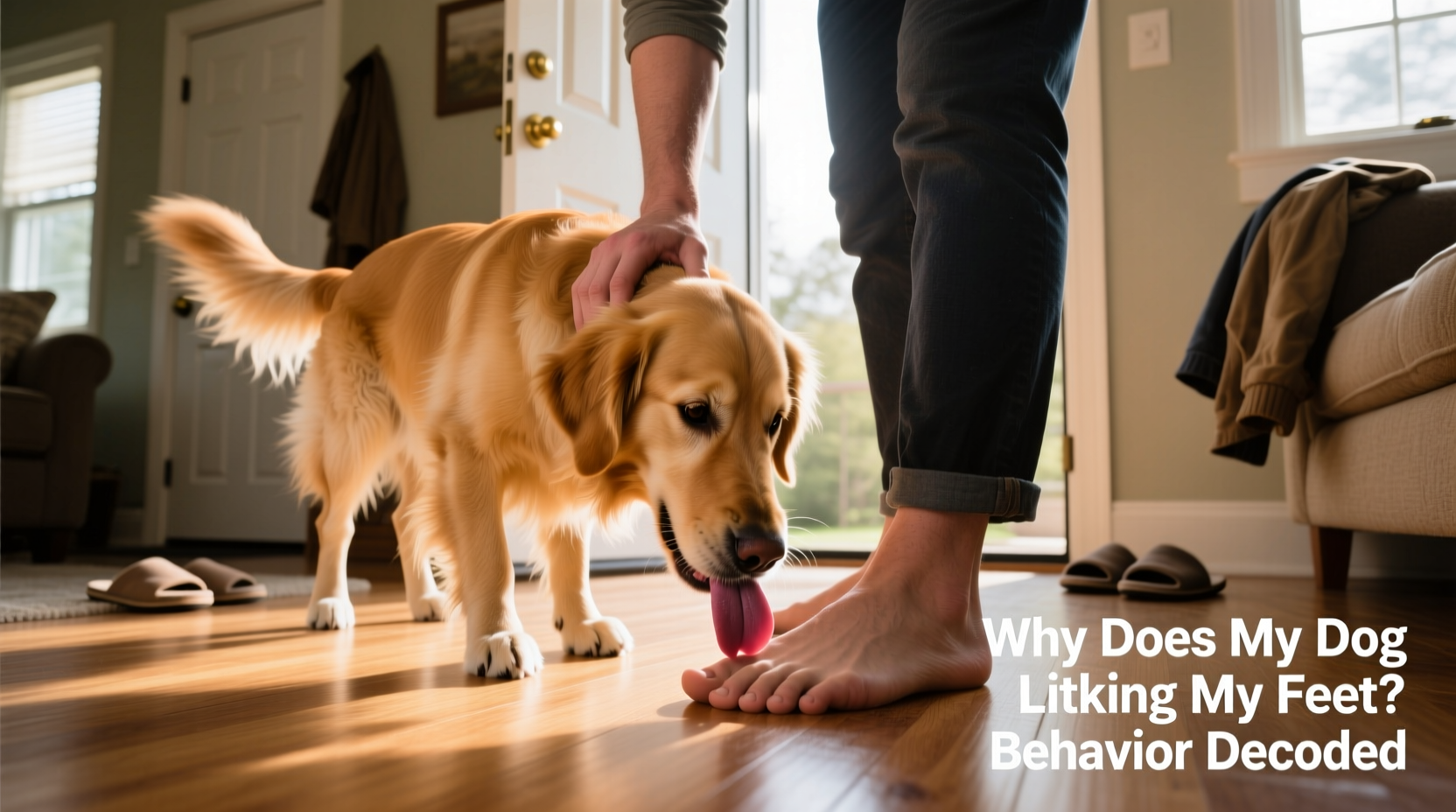
Dogs experience the world primarily through smell. Their olfactory system is up to 100,000 times more sensitive than humans’. Every time you step outside, your shoes and skin absorb a complex cocktail of environmental scents—grass, pavement, other people, animals, food, and more. When you return home, your feet become walking scent profiles.
Licking allows dogs to gather detailed information about where you’ve been, who you’ve interacted with, and even your emotional state. Saliva helps dissolve odor molecules, making them easier to analyze via the vomeronasal organ (also known as Jacobson’s organ), located in the roof of the mouth. This organ specializes in detecting pheromones and chemical signals.
This investigative behavior is especially common in breeds with strong scent-tracking instincts, such as Beagles, Bloodhounds, and Basset Hounds. But even toy breeds like Pomeranians or Chihuahuas use licking as a way to “read” your daily journey.
Emotional Bonding and Social Submission
Beyond gathering information, licking plays a crucial role in canine social dynamics. In puppyhood, young dogs lick their mother’s face to encourage regurgitation of food—a survival behavior that evolves into a gesture of affection and respect. As adults, dogs extend this behavior to humans as a sign of trust, submission, and emotional connection.
When your dog licks your feet upon your return, they’re not just saying “hello”—they’re reaffirming their place in the social hierarchy and expressing relief that you’ve returned safely. This act strengthens the human-dog bond and reduces anxiety associated with separation.
“Licking is one of the most fundamental forms of nonverbal communication in dogs. It’s both a calming signal and a social glue.” — Dr. Patricia McConnell, Animal Behaviorist
In multi-pet households, dominant animals may allow subordinates to lick them as a peacekeeping gesture. Similarly, your dog may view you as the leader and use licking to acknowledge your role while seeking reassurance.
Attention-Seeking and Habit Formation
If your dog learns that licking your feet results in laughter, petting, or verbal interaction—even negative reactions like pushing them away—they may repeat the behavior to gain attention. Dogs thrive on consistency and feedback; any response reinforces the action in their mind.
Over time, this can evolve into a compulsive habit, especially if the dog experiences mild anxiety or boredom. Some dogs develop ritualistic licking patterns, particularly during transitions like arrivals or departures. What begins as natural curiosity can become a learned behavior reinforced by unintentional human responses.
Signs That Licking Has Become a Habit
- Licking occurs even when feet are covered or inaccessible
- Your dog appears frustrated or persistent when stopped
- Licking escalates when ignored or redirected
- They follow you from room to room waiting for access
Medical and Psychological Triggers
While most foot licking is harmless, persistent or sudden changes in licking behavior can indicate underlying health issues. Excessive licking may stem from:
- Anxiety or stress: Separation anxiety, noise phobias, or changes in routine can trigger displacement behaviors like licking.
- OCD-like tendencies: Some dogs develop compulsive licking due to genetic predisposition or lack of stimulation.
- Nutritional deficiencies: Low levels of certain minerals or fatty acids may increase oral fixation.
- Skin conditions or infections: If your feet have fungal traces (e.g., athlete’s foot), the taste or smell may attract repeated licking.
A veterinary evaluation is recommended if your dog shows signs of distress, hair loss from self-licking, or obsessive focus on specific body parts (including yours).
Mini Case Study: Max, the Anxious Terrier Mix
Max, a 4-year-old Jack Russell Terrier mix, began intensely licking his owner’s feet every evening after she started working late. Initially dismissed as affection, the behavior escalated—he would whine if denied access and pace anxiously until allowed to lick. A behaviorist observed that Max only licked when his owner wore her work shoes, which carried scents from her office building and public transit.
Further assessment revealed separation-related anxiety. The licking served as a self-soothing mechanism. With a combination of desensitization training, scheduled enrichment activities, and a consistent greeting routine (involving a chew toy upon arrival), Max’s licking decreased by 80% within six weeks.
How to Respond: Practical Steps for Managing Foot Licking
You don’t need to eliminate licking entirely—it’s a natural behavior—but managing its frequency ensures it doesn’t become overwhelming or reinforce unwanted patterns. Here’s a step-by-step approach:
- Observe the context: Note when and how the licking occurs. Is it immediate upon entry? Only with bare feet? After certain activities?
- Stay neutral at greeting: For the first 30–60 seconds, avoid eye contact or touching. Let your dog settle before engaging. This reduces overexcitement.
- Redirect with a cue or object: Offer a high-value chew toy or treat-dispensing puzzle immediately upon arrival. Train a “go to mat” command to create space.
- Reinforce calm behavior: Reward your dog only after they’ve settled down and stopped licking. Use verbal praise or gentle petting.
- Wipe your feet: Use unscented wipes or wash your feet before interacting. This reduces odor appeal without punishing your dog.
| Behavior | Likely Cause | Recommended Response |
|---|---|---|
| Short, gentle licks once | Affection, greeting | Accept warmly, then redirect |
| Persistent, rapid licking | Anxiety, overstimulation | Stay calm, create distance, offer toy |
| Licking only certain footwear | Scent attraction (food, other animals) | Clean shoes, change shoes indoors |
| Licking accompanied by pacing | Separation stress | Consult trainer, establish routine |
| Refusal to stop when asked | Habit reinforcement | Consistent redirection, no attention |
Checklist: Healthy Licking Management
- ✅ Observe licking patterns for one week
- ✅ Remove strong external scents (e.g., wipe shoes/feet)
- ✅ Introduce a “greeting routine” with a toy or treat
- ✅ Avoid yelling or pushing—use calm redirection
- ✅ Consult a vet if licking is obsessive or new
- ✅ Increase mental stimulation during the day
Frequently Asked Questions
Is it safe for my dog to lick my feet?
In most cases, yes—provided your feet are clean and free of open wounds, fungal infections, or toxic lotions. Human skin can carry bacteria harmful to dogs if ingested in large amounts, and some topical medications are poisonous. Regular hygiene minimizes risks.
Could foot licking be a sign of hunger?
Indirectly, yes. While dogs aren’t typically licking because they’re hungry, the salt and sweat on your skin can be appealing, especially if meals are irregular. Ensure your dog is fed on a consistent schedule and has access to fresh water.
Should I discourage all licking?
No. Occasional, consensual licking is a healthy form of communication. The goal isn’t suppression but balance. Discourage compulsive or intrusive licking while allowing your dog to express affection in appropriate ways.
Conclusion: Listening Beyond the Lick
Your dog’s constant foot licking isn’t just a quirky habit—it’s a window into their sensory world, emotional needs, and social instincts. Whether driven by curiosity, comfort, or connection, this behavior reflects a deep-seated desire to engage with you. By understanding the motivations behind it, you can respond with empathy rather than frustration.
Instead of viewing foot licking as a nuisance, consider it a conversation—one conducted in scent, touch, and instinct. With mindful observation and consistent routines, you can nurture a healthier dynamic where affection is expressed respectfully and boundaries are honored.




 浙公网安备
33010002000092号
浙公网安备
33010002000092号 浙B2-20120091-4
Comments
No comments yet. Why don't you start the discussion?