
Coming home to a wagging tail and a wet tongue on your feet is a familiar scene for many dog owners. While some find it endearing, others may wonder why their dog chooses this particular greeting ritual. Foot licking isn’t random—it’s a form of communication rooted in biology, instinct, and emotional connection. Understanding the underlying motivations can deepen your bond with your pet and help you determine whether the behavior is harmless or requires gentle redirection.
The Canine Communication Behind Licking
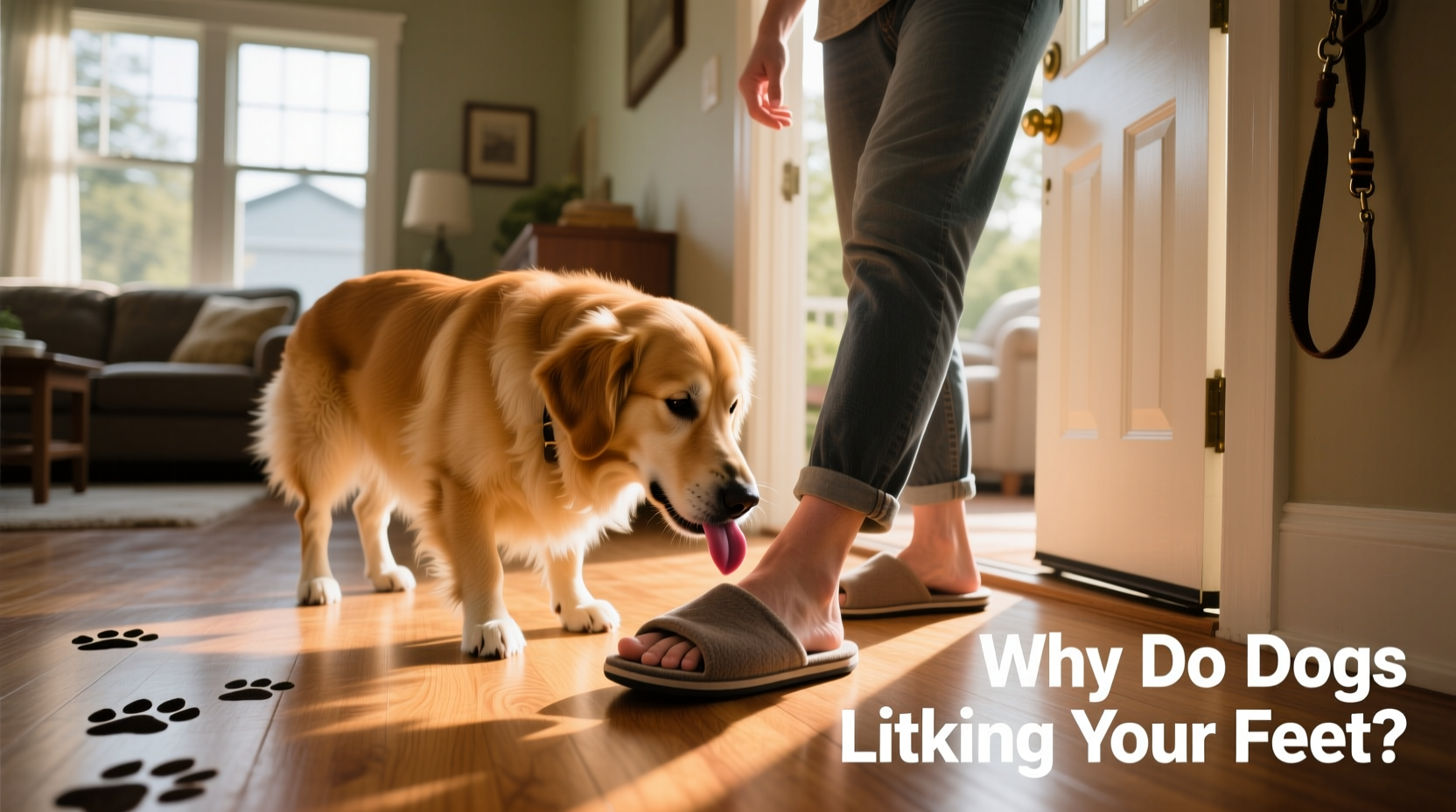
Dogs use licking as a primary method of gathering information and expressing emotion. Unlike humans, who rely heavily on verbal language, dogs interpret the world through scent, touch, and taste. When your dog licks your feet after you return home, they’re not just showing affection—they’re engaging in a complex sensory and social exchange.
In the wild, puppies lick their mother’s face to stimulate regurgitation of food—a survival-driven behavior. Over time, this action evolved into a broader social signal. Adult dogs lick each other to show submission, appeasement, or affiliation. When directed at humans, licking often serves similar purposes: reinforcing social bonds, seeking attention, or calming anxiety.
Your feet, in particular, carry a wealth of olfactory data. Sweat, lotions, dirt from outside, and even residual scents from other people or animals are all detectable to your dog’s powerful nose. By licking your feet, your dog is essentially “reading” where you’ve been and what you’ve encountered—like checking your social media feed through taste and smell.
Common Reasons Your Dog Licks Your Feet
Several interrelated factors contribute to this behavior. Most are natural and benign, but context matters. Here are the most frequent explanations:
- Affection and bonding: Licking releases endorphins in dogs, creating a pleasurable sensation that reinforces attachment. It’s their way of saying, “I’m happy you’re back.”
- Greeting ritual: Just as humans hug or shake hands, dogs develop personalized greetings. Foot licking may be your dog’s signature welcome.
- Taste and scent curiosity: Feet accumulate salt from sweat, traces of food (if barefoot near eating areas), and environmental odors—all intriguing to a dog’s palate.
- Attention-seeking: If licking gets a reaction—laughter, scolding, or even pushing them away—your dog may repeat it to engage you.
- Anxiety or stress relief: Some dogs lick compulsively when stressed. Returning owners can trigger excitement or separation-related tension, and licking serves as a self-soothing mechanism.
- Medical or nutritional triggers: In rare cases, excessive licking may indicate nutrient deficiencies, skin conditions, or gastrointestinal issues that increase licking urges.
When Behavior Crosses the Line
Occasional foot licking is normal. However, if your dog becomes obsessive—refusing to stop, focusing only on feet, or showing signs of distress when prevented—it may signal an underlying issue. Excessive licking can lead to skin irritation on your feet and may reflect anxiety, boredom, or even pain in the dog.
“Licking is a multifaceted behavior in dogs. While often innocent, persistent or intense licking should prompt owners to assess environment, routine, and health.” — Dr. Lena Torres, Veterinary Ethologist
Understanding the Scent Factor
Your feet are like scent libraries to your dog. Each step you take exposes your skin to bacteria, fungi, chemicals, and organic matter. Combined with sweat, which contains urea, ammonia, and lactic acid, your feet become a rich source of biological information.
Dogs have up to 300 million olfactory receptors (humans have about 6 million) and a specialized organ called the vomeronasal organ that detects pheromones. When your dog licks your feet, they’re not just tasting—they’re analyzing chemical signals that tell them about your emotional state, health, and recent activities.
For example, stress increases cortisol levels, which can alter your sweat composition. Dogs can detect these changes and may respond with comforting behaviors like licking. Similarly, hormonal shifts during illness or pregnancy may be noticeable to a perceptive dog.
| Scent Component | What Dogs Detect | Possible Interpretation |
|---|---|---|
| Salt & sweat | Electrolyte balance, activity level | Owner has been active or stressed |
| Bacteria (e.g., Staphylococcus epidermidis) | Microbial profile | Familiarity, health status |
| Residual food particles | Flavor compounds | Novel or appealing taste |
| Cosmetic products (lotions, soaps) | Chemical signatures | Change in routine or product use |
Real-Life Scenario: Max the Labrador
Consider Max, a three-year-old Labrador Retriever. Every evening, the moment his owner Sarah walks in, Max rushes to lick her feet—even through socks. At first, Sarah found it sweet. But when he began ignoring commands and persistently nipping at her ankles, she grew concerned.
A veterinary behaviorist observed that Max’s licking intensified after Sarah started working longer hours. The behavior wasn’t about taste; it was a coping mechanism for separation anxiety. By licking, Max regained a sense of control and reestablished connection. The solution wasn’t punishment, but structured engagement: a five-minute play session immediately upon arrival, followed by a chew toy to occupy his mouth.
Within two weeks, the foot licking decreased by over 80%. Max still greets Sarah enthusiastically, but now with a toy in his mouth instead of his tongue on her toes.
How to Respond: A Step-by-Step Guide
If foot licking bothers you or seems excessive, don’t scold your dog. Instead, reshape the behavior using positive reinforcement. Follow this timeline to encourage healthier alternatives:
- Day 1–3: Observe and record. Note when and how intensely your dog licks. Is it brief or prolonged? Does it happen only when you return, or also during downtime?
- Day 4–7: Introduce a replacement behavior. As you walk in, immediately offer a high-value treat or favorite toy. Praise your dog for interacting with it instead of your feet.
- Week 2: Add structure. Begin a consistent greeting routine: remove shoes, wash hands, then initiate play. This delays access to feet and redirects focus.
- Week 3–4: Reinforce consistently. Never reward licking with attention—even negative reactions reinforce the behavior. Stay calm and redirect every time.
- Ongoing: Monitor and adjust. If licking resumes, reassess for changes in routine, stress, or health issues.
Do’s and Don’ts of Managing Foot Licking
| Do’s | Don’ts |
|---|---|
| Redirect with toys or treats | Yell or push your dog away |
| Wash your feet if strong odors attract licking | Ignore sudden increases in licking frequency |
| Provide mental stimulation throughout the day | Use bitter sprays without consulting a vet |
| Consult a professional if behavior escalates | Assume it’s always just affection |
When to Seek Professional Help
While most foot licking is harmless, certain red flags warrant evaluation by a veterinarian or certified animal behaviorist:
- Licking that causes skin damage (to you or the dog)
- Obsessive focus on feet or other body parts
- Signs of anxiety: pacing, panting, trembling when you prepare to leave
- Sudden onset after a life change (new pet, move, loss)
- Licking accompanied by vomiting, diarrhea, or lethargy
Compulsive licking can sometimes indicate medical conditions such as Cushing’s disease, hypothyroidism, or gastrointestinal discomfort. Blood work and behavioral assessment can rule out physical causes.
Frequently Asked Questions
Is it safe for my dog to lick my feet?
In most cases, yes—provided your feet are clean and free of open wounds or fungal infections. However, avoid letting your dog lick cracked skin or athlete’s foot lesions, as bacteria can transfer both ways. Regular foot hygiene minimizes risk.
Can I train my dog to stop licking my feet?
Absolutely. Use positive reinforcement to teach alternative behaviors. Reward your dog for sitting calmly or fetching a toy when you arrive. Consistency over 2–4 weeks typically leads to lasting change.
Does foot licking mean my dog is dominant?
No. Licking is generally a submissive or affiliative gesture, not a sign of dominance. Dominant dogs are more likely to block space, stare, or growl—not lick. Misinterpreting licking as dominance can lead to inappropriate corrections that damage trust.
Final Thoughts: Embracing the Quirks of Canine Love
Your dog’s foot licking is more than a quirky habit—it’s a window into their mind and heart. Whether driven by love, curiosity, or comfort, this behavior reflects a deep-seated need to connect. Rather than suppressing it entirely, consider what it reveals about your dog’s emotional world.
With patience and understanding, you can shape the behavior to suit your household while preserving the bond it represents. Small adjustments—like offering a toy, washing your feet, or establishing a greeting ritual—can make a big difference without diminishing affection.




 浙公网安备
33010002000092号
浙公网安备
33010002000092号 浙B2-20120091-4
Comments
No comments yet. Why don't you start the discussion?