
Dog owners often notice odd behaviors after mealtime—chasing tails, spinning in circles, or suddenly becoming obsessed with a patch of carpet. One common but puzzling habit is couch licking right after eating. While occasional licking might seem harmless, consistent post-meal couch licking can signal underlying issues ranging from digestive discomfort to behavioral compulsions. Understanding why this happens is key to addressing it effectively. This article breaks down the most likely causes, backed by veterinary insight, and offers practical solutions to help your dog feel better and break the habit.
Common Reasons Dogs Lick the Couch After Eating
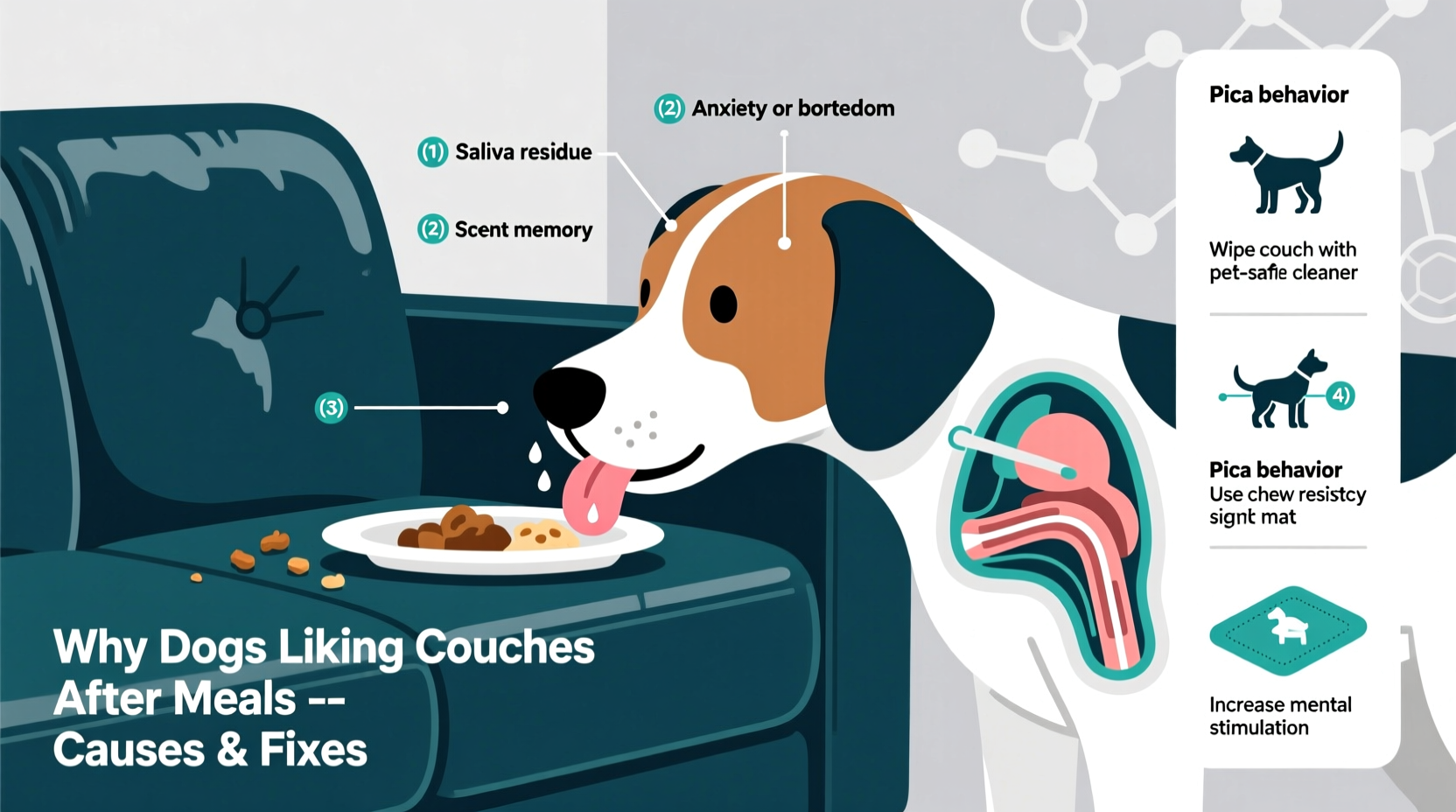
Couch licking after meals isn't random. It’s usually a response to an internal or external trigger. Dogs use licking as a self-soothing mechanism, a way to cope with discomfort, or even as a learned behavior that brings attention or reward. Below are the most frequent explanations for this behavior.
1. Digestive Discomfort or Nausea
One of the primary reasons dogs lick non-food surfaces after eating is gastrointestinal distress. Excess saliva production, acid reflux, or mild nausea can prompt a dog to lick fabric, which may help soothe their throat or stimulate swallowing. This is especially common in dogs fed low-quality kibble, those with food sensitivities, or animals who eat too quickly.
Veterinarians often associate excessive licking with conditions like inflammatory bowel disease (IBD), pancreatitis, or delayed gastric emptying. In some cases, the act of licking increases dopamine levels, temporarily making the dog feel better despite physical discomfort.
2. Behavioral or Compulsive Habits
Licking can become a compulsive behavior, particularly if it started during a stressful period and was never addressed. Dogs under stress—due to separation, changes in routine, or environmental factors—may develop repetitive actions like couch licking as a coping strategy. Over time, the brain reinforces this loop: stress triggers licking, which releases calming endorphins, making the dog more likely to repeat it.
This pattern is similar to human habits like nail-biting. Once established, it can persist even after the original stressor is gone. Post-meal timing may simply be when the dog has downtime and feels most vulnerable, making it a habitual “reset” moment.
3. Nutritional Deficiencies or Imbalanced Diet
A diet lacking essential nutrients such as B vitamins, zinc, or digestive enzymes may drive a dog to seek out alternative sources of stimulation or micronutrients. Fabric licking, though futile, may stem from a primal urge to compensate for what’s missing in their food. Some experts also link pica-like behaviors (eating non-food items) to malabsorption issues or poor-quality ingredients.
Grain-free diets, while popular, have come under scrutiny for potentially contributing to dilated cardiomyopathy (DCM) and digestive irregularities. If your dog’s food contains high levels of legumes or potatoes, it may be worth reevaluating its nutritional profile with a vet.
4. Residual Food Smells on Furniture
Sometimes, the cause is simpler than expected: your dog smells lingering food particles on the couch. Even if you don’t see crumbs, scent molecules can remain embedded in fabric fibers. Dogs have up to 300 million olfactory receptors—compared to about 6 million in humans—so what seems clean to you may still smell like a snack bar to them.
This is especially true in homes where people eat on the couch or where pets are allowed near dining areas. The licking becomes a conditioned response: after eating, the dog seeks out familiar food odors to “finish” the meal.
5. Dental or Oral Discomfort
Mouth pain—such as from gum disease, tooth decay, or oral tumors—can lead dogs to excessively lick surfaces. The motion may provide temporary relief by stimulating saliva flow or distracting from localized pain. Since eating puts pressure on the jaw and teeth, discomfort may only emerge or worsen post-meal, prompting the dog to lick the couch in search of comfort.
Look for additional signs: bad breath, dropping food, chewing on one side of the mouth, or pawing at the face. These could indicate dental issues requiring professional care.
“Excessive licking of non-food surfaces, especially after meals, should never be dismissed as just a quirk. It’s often the earliest sign of gastrointestinal or behavioral distress.” — Dr. Laura Bennett, DVM, Veterinary Behaviorist
How to Identify the Root Cause
Pinpointing why your dog licks the couch requires careful observation and, in some cases, diagnostic testing. Start by ruling out medical issues before assuming it's purely behavioral.
Step-by-Step Evaluation Process
- Record the behavior: Note when licking occurs, how long it lasts, and whether it happens every time after eating or only occasionally.
- Check for physical symptoms: Look for vomiting, diarrhea, weight loss, lethargy, or changes in appetite.
- Inspect the couch: Smell the area your dog targets. Vacuum thoroughly and observe if the behavior decreases.
- Switch feeding routines: Try smaller, more frequent meals or slow-feeders to reduce bloating and indigestion.
- Visit the vet: Request blood work, fecal exams, and possibly abdominal ultrasound to rule out GI disorders.
If no medical cause is found, consider behavioral evaluation. A certified veterinary behaviorist can help determine if anxiety, boredom, or OCD-like tendencies are driving the licking.
Possible Solutions and Simple Fixes
Once you’ve identified the likely cause, targeted interventions can reduce or eliminate the behavior. Many fixes are straightforward and require minimal cost or effort.
Dietary Adjustments
- Switch to a highly digestible, limited-ingredient diet if food sensitivities are suspected.
- Avoid fillers like corn, soy, and artificial preservatives.
- Add probiotics or digestive enzymes to support gut health.
- Feed smaller portions 2–3 times daily instead of one large meal.
Environmental Modifications
- Use washable couch covers and launder them weekly with unscented detergent.
- Ban eating on furniture to eliminate food odor buildup.
- Redirect your dog immediately after meals with a chew toy or puzzle feeder.
- Provide a designated post-meal relaxation zone with a bed or mat.
Behavioral Training Techniques
Interrupt and redirect the licking behavior using positive reinforcement. When your dog starts licking the couch, calmly say “Let’s go” and guide them to a chew toy or mat. Reward them for engaging with the appropriate item. Consistency is crucial—every household member must respond the same way.
For anxious dogs, desensitization and counter-conditioning can help. Pair calm post-meal periods with treats, gentle petting, or soft music to create a relaxed association with digestion time.
Do’s and Don’ts: Quick Reference Table
| Do’s | Don’ts |
|---|---|
| Observe licking patterns and duration | Ignore persistent or worsening licking |
| Consult your vet if licking lasts more than 5 minutes post-meal | Scold or punish your dog for licking—it may increase anxiety |
| Use bitter-tasting sprays on couch corners (pet-safe) | Use strong chemical cleaners that leave residue |
| Offer safe chewing alternatives like bully sticks or rubber toys | Leave your dog unsupervised right after meals if licking is frequent |
| Keep a post-meal activity log for vet visits | Assume it’s “just a habit” without ruling out medical causes |
Real-Life Example: Max the Labrador’s Turnaround
Max, a 4-year-old Labrador Retriever, began obsessively licking the corner of his owner’s sofa shortly after dinner. His owner initially dismissed it as quirky behavior. But over time, the sessions grew longer—sometimes lasting 15 minutes—and Max started avoiding eye contact afterward, appearing drained.
After a vet visit, blood tests revealed elevated liver enzymes and borderline pancreatitis. Max was switched to a low-fat, hydrolyzed protein diet. His owners also began giving him a stuffed Kong filled with pumpkin and yogurt immediately after meals. Within three weeks, the licking stopped completely. Follow-up scans showed improved pancreatic function.
This case highlights how a seemingly behavioral issue can have a serious medical root—and how simple dietary and environmental changes can make a dramatic difference.
Prevention Checklist
To stop couch licking before it becomes ingrained, follow this actionable checklist:
- ✅ Schedule an annual vet checkup including blood panels
- ✅ Switch to a premium, species-appropriate dog food
- ✅ Clean furniture regularly with enzyme-based cleaners
- ✅ Provide mental stimulation with puzzle toys post-meal
- ✅ Establish a consistent feeding and walking routine
- ✅ Train a “go to your mat” command for post-meal downtime
- ✅ Monitor for early signs of nausea or stress
Frequently Asked Questions
Is couch licking after meals dangerous for my dog?
Occasional licking is unlikely to cause harm, but chronic licking can lead to gastrointestinal upset, worn tooth enamel, or ingestion of fabric fibers. More importantly, it may mask an underlying condition that worsens if untreated. Persistent licking (more than a few minutes daily) warrants a vet visit.
Can anxiety really cause my dog to lick the couch?
Yes. Anxiety triggers compulsive behaviors in dogs just as it does in humans. Dogs may lick to self-soothe because the repetitive motion releases endorphins. Common triggers include separation, loud noises, or changes in household dynamics. Addressing the source of stress—through training, environmental enrichment, or in severe cases, medication—is essential.
Will bitter sprays stop my dog from licking the couch?
Bitter-tasting deterrents can be effective short-term tools, especially when combined with redirection. However, they don’t address the root cause. If your dog is licking due to nausea or anxiety, the spray may only suppress the symptom. Use it as part of a broader strategy, not a standalone fix.
Final Thoughts and Next Steps
Dog licking the couch after meals isn’t something to brush off. While it may start as a minor habit, it can escalate into a compulsive behavior or indicate a hidden health problem. The good news is that most causes are manageable with timely intervention. Start by observing your dog’s patterns, improving their diet, and cleaning potential odor sources. If the behavior persists, don’t hesitate to consult your veterinarian. Early action can prevent long-term issues and improve your dog’s quality of life.




 浙公网安备
33010002000092号
浙公网安备
33010002000092号 浙B2-20120091-4
Comments
No comments yet. Why don't you start the discussion?