
Dogs communicate in ways that don’t always make sense to us. One such puzzling behavior is obsessive couch licking—where your dog repeatedly licks the same spot on the sofa for minutes at a time, seemingly without cause. While occasional licking might be harmless, persistent or compulsive behavior can signal underlying physical, emotional, or environmental issues. Understanding why your dog engages in this habit is the first step toward addressing it effectively.
This article explores the most common reasons behind obsessive couch licking in dogs, from medical conditions to behavioral triggers. You’ll also find actionable solutions, expert insights, and practical steps you can take to help your pet feel more balanced and comfortable at home.
Medical Causes Behind Obsessive Licking
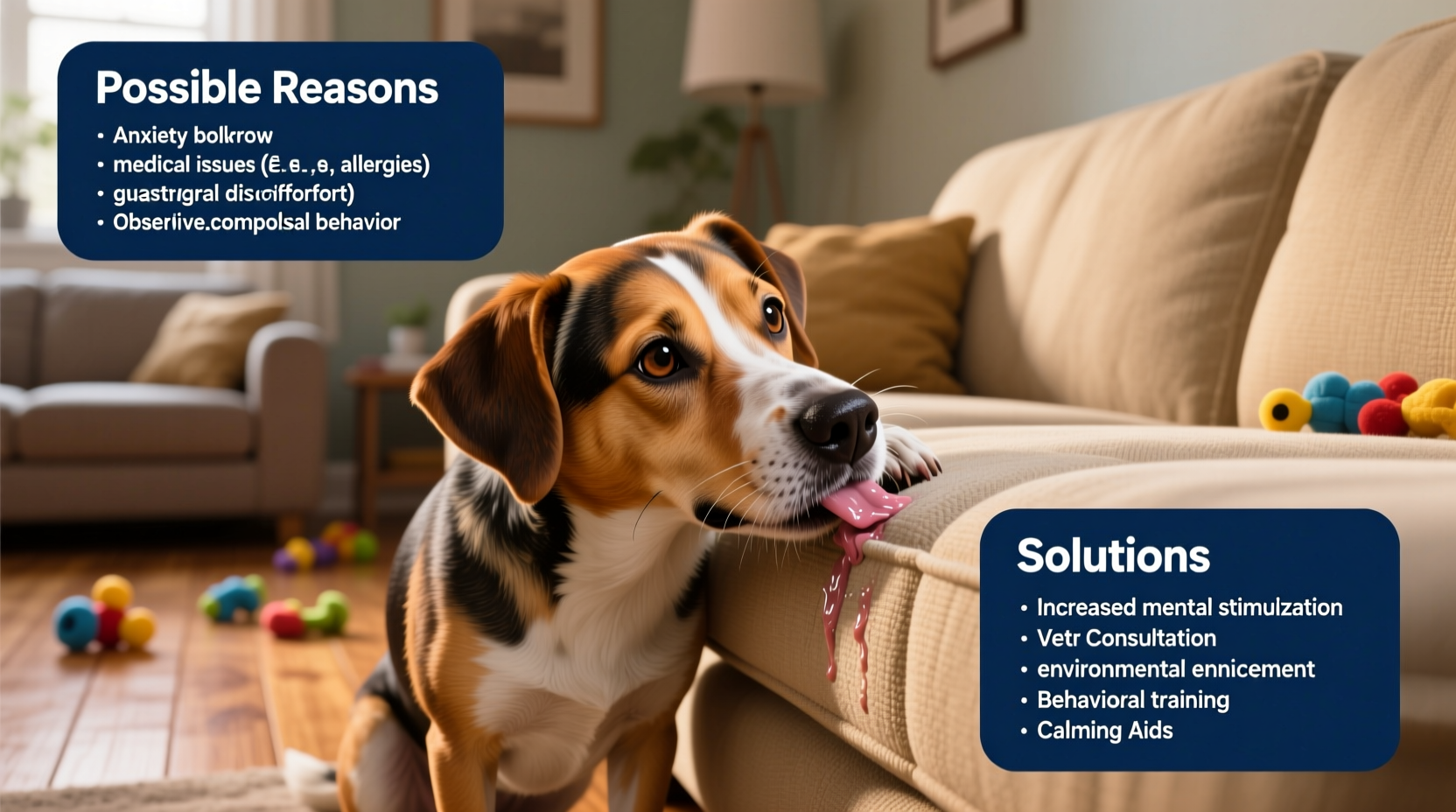
Before assuming the behavior is purely psychological, it’s essential to rule out medical conditions. Dogs often lick surfaces—including furniture—as a response to discomfort they cannot express verbally.
- Gastrointestinal distress: Studies show that excessive licking of non-food surfaces (like couches) is frequently linked to gastrointestinal issues. A 2017 study published in the Journal of Veterinary Behavior found that over 70% of dogs exhibiting this behavior had an underlying GI condition such as inflammatory bowel disease or acid reflux.
- Dental pain or oral discomfort: If your dog has a toothache, gum disease, or a foreign object stuck in their mouth, they may lick fabric to soothe irritation.
- Nausea: Nauseous dogs may produce excess saliva and lick surfaces to cope. This is especially common before vomiting or during motion sickness.
- Nutritional deficiencies: Rarely, pica-like behaviors—including licking non-food items—can stem from mineral imbalances or poor diet absorption.
When to Seek Veterinary Help
If your dog suddenly starts licking the couch obsessively—especially if the behavior is new, intense, or accompanied by other symptoms—it’s wise to schedule a vet visit. Blood work, fecal exams, and abdominal ultrasounds may be needed to identify hidden health problems.
“Excessive licking of surfaces is not just a quirky habit—it’s often a cry for help. We’ve diagnosed everything from pancreatitis to liver disease based on this single clue.” — Dr. Lena Torres, DVM, Canine Internal Medicine Specialist
Behavioral and Psychological Triggers
Once medical causes are ruled out, behavioral factors become the primary suspects. Dogs are emotionally complex animals, and repetitive actions like couch licking can serve as coping mechanisms.
Anxiety and Stress
Dogs under stress may develop compulsive behaviors similar to human habits like nail-biting. Common stressors include:
- Separation anxiety when left alone
- Loud noises (thunderstorms, fireworks)
- Household changes (new pets, moving, visitors)
- Inconsistent routines
Licking releases endorphins, which have a calming effect. Over time, this self-soothing action can become a deeply ingrained compulsion—even after the original stressor is gone.
Boredom and Lack of Stimulation
Dogs bred for work or high activity—such as Border Collies, German Shepherds, or Terriers—require significant mental and physical engagement. Without adequate stimulation, they may resort to repetitive behaviors to occupy themselves.
A dog left alone for long hours with no toys, walks, or interaction may begin licking the couch simply because there’s “nothing better to do.” This is especially true if the couch carries familiar scents (yours, food residue, etc.) that attract attention.
Obsessive-Compulsive Disorder (OCD)
Like humans, dogs can develop OCD. This typically manifests as repetitive, functionless behaviors—tail chasing, air biting, or, in this case, surface licking. These actions often start as responses to stress but persist even in calm environments.
OCD in dogs tends to worsen without intervention and may require a combination of environmental enrichment, training, and sometimes medication.
Solutions and Management Strategies
Addressing obsessive couch licking requires a multifaceted approach. The solution depends on the root cause, so start by identifying whether the trigger is medical, emotional, or environmental.
Step-by-Step Guide to Reducing Couch Licking
- Visit the veterinarian: Rule out medical conditions with a full check-up, including blood tests and GI screening.
- Observe patterns: Note when the licking occurs (e.g., after meals, when alone, at night) to identify potential triggers.
- Improve daily enrichment: Increase walks, add puzzle toys, practice training exercises, or try nose work games.
- Manage anxiety: Use calming aids (thundershirts, pheromone diffusers), maintain predictable routines, and gradually desensitize to stressors.
- Redirect the behavior: When you catch your dog licking, gently interrupt and offer an alternative—like a chew toy or treat-dispensing puzzle.
- Limit access: Use baby gates or close doors to restrict access to the couch if redirection fails.
- Consult a behaviorist: For severe or persistent cases, seek help from a certified animal behaviorist or veterinary behaviorist.
Prevention Checklist
Use this checklist to create a healthier, more balanced environment for your dog:
- ✅ Schedule annual vet exams (twice yearly for seniors)
- ✅ Feed a high-quality, digestible diet appropriate for your dog’s age and breed
- ✅ Provide at least 30–60 minutes of physical exercise daily
- ✅ Offer mental stimulation (training, puzzles, scent games) every day
- ✅ Establish consistent routines for feeding, walks, and bedtime
- ✅ Use anxiety-reducing tools if your dog is noise-sensitive or suffers from separation anxiety
- ✅ Rotate toys weekly to maintain novelty and interest
- ✅ Avoid leaving your dog alone for more than 6–8 hours regularly
Real-Life Example: Max the Labrador
Max, a 4-year-old yellow Lab, began obsessively licking the corner of his owner’s living room couch every evening. His owner initially dismissed it as a quirk—until Max started losing sleep and ignoring his favorite ball.
After a veterinary exam revealed mild gastritis, Max was placed on a sensitive-stomach diet. However, the licking persisted. A consultation with a canine behaviorist uncovered that Max’s behavior spiked whenever his owner worked late—an indicator of separation-related anxiety.
The solution combined medical management (anti-nausea supplements) with behavioral strategies: daily scent games, a consistent pre-work routine, and a “calm zone” with a lick mat filled with yogurt and pumpkin. Within three weeks, the couch licking decreased by 90%, and Max resumed normal play behavior.
This case illustrates how overlapping causes—medical and emotional—often contribute to compulsive licking. Addressing both dimensions led to lasting improvement.
Do’s and Don’ts: Managing Couch Licking
| Do | Don’t |
|---|---|
| Monitor licking frequency and duration | Ignore sudden changes in behavior |
| Provide safe chewing alternatives (rubber toys, dental chews) | Punish or yell at your dog when caught licking |
| Use bitter sprays on the couch (pet-safe deterrents) | Use harsh chemicals that could harm your dog |
| Establish a predictable daily routine | Leave your dog unattended for long periods without stimulation |
| Seek professional help early if behavior escalates | Assume it’s “just a phase” without investigation |
Frequently Asked Questions
Is it normal for dogs to lick the couch occasionally?
Yes, occasional licking—especially if your dog detects food residue or your scent—is usually harmless. The concern arises when licking becomes frequent, prolonged, or difficult to interrupt.
Can diet affect my dog’s licking behavior?
Absolutely. Poorly digestible ingredients, food sensitivities, or low-nutrient diets can contribute to gastrointestinal discomfort, leading to nausea and surface licking. Switching to a high-quality, limited-ingredient diet may resolve the issue in some cases.
Are certain breeds more prone to obsessive licking?
Yes. Breeds with high intelligence and working backgrounds—such as Doberman Pinschers, Bull Terriers, and Shetland Sheepdogs—are genetically predisposed to compulsive behaviors when under-stimulated or stressed. However, any dog can develop the habit under the right (or wrong) conditions.
Conclusion: Taking Action for Your Dog’s Well-Being
Obsessive couch licking is more than just a nuisance—it’s a signal. Whether rooted in physical discomfort, emotional distress, or environmental monotony, this behavior deserves thoughtful attention. By approaching it with empathy, observation, and proactive care, you can uncover the cause and implement effective solutions.
Your dog relies on you to interpret their silent language. Responding with patience and consistency doesn’t just stop a bad habit; it strengthens your bond and improves their quality of life. Start today by observing patterns, scheduling a vet check-up if needed, and enriching your dog’s daily experience. Small changes can lead to profound results.




 浙公网安备
33010002000092号
浙公网安备
33010002000092号 浙B2-20120091-4
Comments
No comments yet. Why don't you start the discussion?