
Dogs communicate in ways that go far beyond barking and tail wagging. One of the most common yet misunderstood behaviors is the deep, audible sigh that often follows a dog settling into rest. You’ve likely seen it: your dog curls up on their favorite spot, lets out a long, drawn-out \"ahhh,\" and closes their eyes. Is this a sign of relief? Are they expressing happiness—or could it be something more concerning, like sadness or discomfort?
Understanding canine body language requires attention to context, tone, and accompanying behaviors. While a sigh may seem simple, it can carry multiple meanings depending on the situation. For pet owners, distinguishing between contentment and distress is crucial for ensuring their dog’s emotional and physical well-being.
The Science Behind Canine Sighing
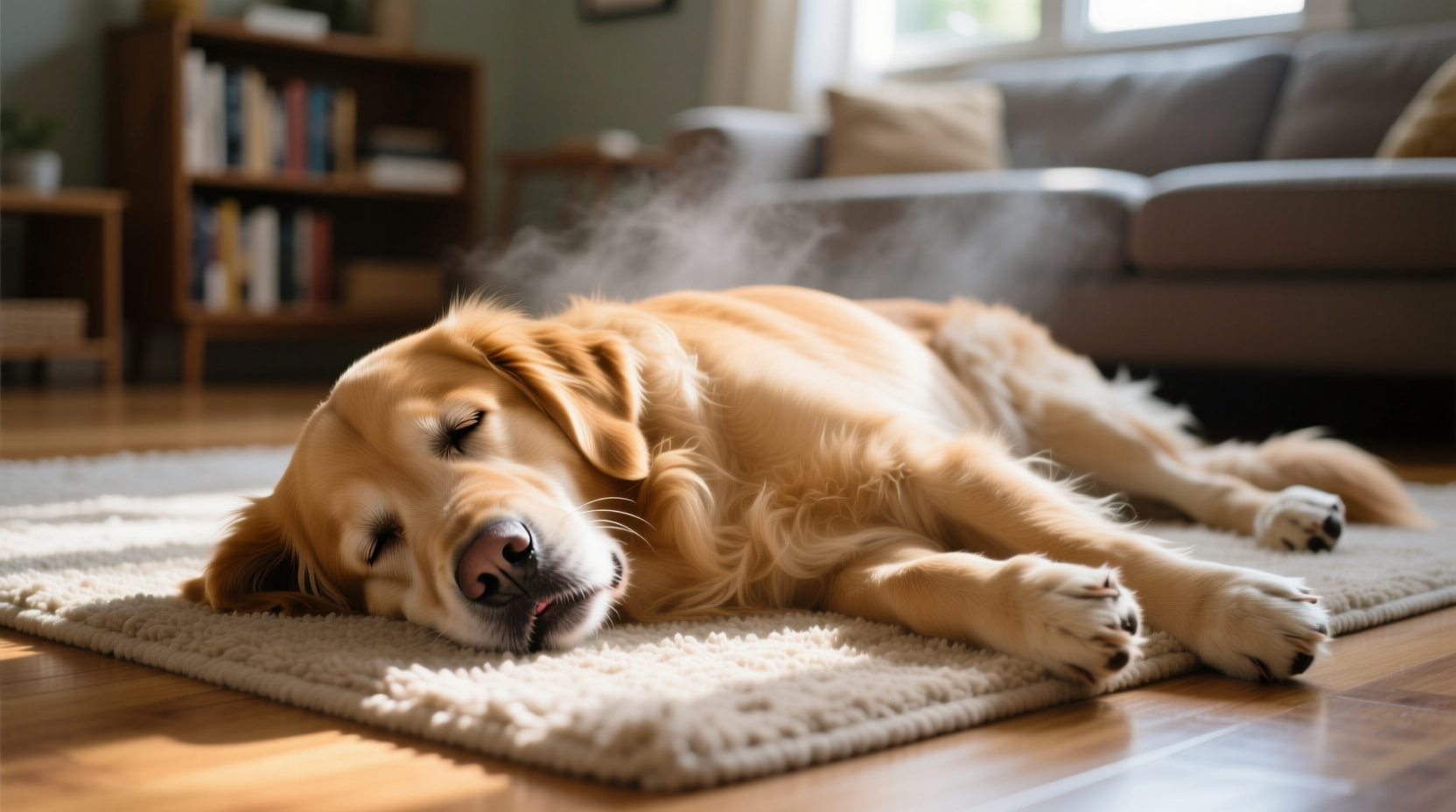
Sighing in dogs, much like in humans, is a natural respiratory behavior. It involves a deep inhalation followed by a slow exhalation, often louder than regular breathing. From a physiological standpoint, sighs help reinflate alveoli in the lungs—tiny air sacs that can collapse during shallow breathing. This keeps the lungs functioning efficiently and oxygen levels stable.
However, sighing isn’t purely mechanical. In behavioral science, it’s recognized as a form of non-vocal communication. Dogs use sighs not just to regulate breathing but also to express emotional states. The key lies in interpreting the sigh within the broader context of posture, environment, and recent activity.
Dr. Patricia McConnell, a renowned animal behaviorist, explains:
“Dogs use sighs as emotional punctuation. A deep exhale after lying down often signals the release of tension—a way of saying, ‘I’m done, I can relax now.’ It’s one of the clearest signs of contentment we see in relaxed dogs.” — Dr. Patricia McConnell, Ethologist and Canine Behavior Expert
Contentment: The Most Common Cause of Sighing
In the majority of cases, a dog’s sigh upon lying down reflects deep relaxation and satisfaction. Think of it as the canine equivalent of you sinking into a couch after a long day. When accompanied by certain physical cues, the sigh becomes a reliable indicator of emotional comfort.
Signs that your dog is sighing from contentment include:
- Slow blinking or closed eyes
- Loose, floppy body posture (e.g., legs stretched out, head resting on paws)
- A soft, slightly open mouth
- Tail resting calmly on the ground
- Occasional ear flicks or gentle shifts into a more comfortable position
This kind of sigh typically occurs after play, exercise, or receiving affection. It’s part of a sequence: the dog finishes an activity, chooses a resting spot, lies down, and then releases a slow breath. The sound is usually low-pitched and even, almost melodic.
When Sighing May Signal Discomfort or Sadness
While less common, sighing can sometimes reflect emotional or physical distress. Unlike contentment sighs, these are often sharper, more frequent, or occur in isolation without other relaxing behaviors.
Warning signs that a sigh might indicate sadness or discomfort include:
- Sighing while avoiding eye contact or turning away
- Accompanied by whining, trembling, or lip licking
- Repetitive sighing without settling into rest
- Lying down in isolated areas, away from family members
- Changes in appetite, energy levels, or daily routines
Dogs experiencing anxiety—such as separation distress or fear of loud noises—may sigh as a self-soothing mechanism. In these cases, the sigh functions like a human taking a deep breath to calm down. Similarly, older dogs or those with chronic pain may sigh when shifting positions due to joint stiffness or muscle soreness.
It’s important not to assume all sighs are negative. But if your dog begins sighing frequently in new contexts—especially if paired with withdrawal or behavioral changes—it’s worth investigating further.
Real-Life Example: Max, the Anxious Rescue Dog
Max, a three-year-old mixed breed, was adopted from a shelter after being found wandering alone. His new owner, Sarah, noticed he would often lie down and let out a series of short, sharp sighs—sometimes five or six in a row—despite appearing physically relaxed.
Concerned, she consulted a certified dog behavior consultant. After observing Max’s home environment, the consultant noted that the sighing occurred primarily when Sarah prepared to leave the house. Though Max didn’t bark or destroy furniture, his sighs were part of a subtle stress response. He had learned to suppress overt signs of anxiety, but the repeated sighing was a clue.
With a structured desensitization plan—gradually increasing time away, using calming pheromone diffusers, and building confidence through training—Max’s sighing decreased significantly within six weeks. The case illustrates how even quiet behaviors can reveal emotional states when viewed in context.
How to Tell the Difference: A Practical Guide
Distinguishing between contentment and distress relies on reading the full picture. Use this step-by-step approach to interpret your dog’s sighs accurately.
- Observe the timing: Does the sigh happen after play, petting, or feeding (positive)? Or during storms, vet visits, or when left alone (stressful)?
- Analyze body language: Look at ear position, tail carriage, facial muscles, and overall posture. Relaxed features suggest contentment; tense ones suggest discomfort.
- Note frequency: Occasional sighs during rest are normal. Frequent, repetitive sighs may signal underlying stress.
- Check for environmental triggers: Has anything changed recently—new pet, move, routine shift, loud construction?
- Monitor for additional symptoms: Loss of appetite, lethargy, panting, or clinginess can point to health or emotional issues.
If uncertainty persists, video record a few episodes and share them with your veterinarian or a certified animal behaviorist. Visual evidence provides valuable insight that words alone cannot convey.
Do’s and Don’ts of Responding to Your Dog’s Sighs
| Do | Don’t |
|---|---|
| Respond gently with calm voice and slow movements if the dog seems anxious | Overreact or overly comfort your dog during stress-related sighs, which may reinforce the behavior |
| Encourage relaxation with consistent routines and safe spaces | Force interaction if your dog is withdrawing—respect their need for space |
| Use sighing as a cue to assess overall well-being regularly | Assume all sighs mean sadness—most are actually signs of peace |
| Consult a vet if sighing coincides with coughing, labored breathing, or fatigue | Ignore sudden changes in behavior, especially in older dogs |
Medical Considerations: When to See a Veterinarian
While emotional causes are common, excessive or labored sighing can sometimes point to medical conditions. Respiratory issues such as bronchitis, heart disease, or tracheal collapse may manifest through altered breathing patterns. In older dogs, conditions like arthritis or cognitive dysfunction syndrome (similar to dementia in humans) can cause restlessness and frequent repositioning, often accompanied by sighs.
Red flags that warrant veterinary evaluation include:
- Sighing that sounds like wheezing or gasping
- Increased respiratory rate at rest (more than 30 breaths per minute)
- Coughing, gagging, or blue-tinged gums
- Difficulty lying down or getting up
- Nighttime restlessness or pacing
Your vet may recommend blood work, X-rays, or cardiac screening to rule out underlying illness. Never dismiss persistent behavioral changes as “just aging” without professional assessment.
Frequently Asked Questions
Is it normal for puppies to sigh when lying down?
Yes, it’s completely normal. Puppies often sigh after bursts of play or nursing, signaling exhaustion and contentment. As long as the puppy is active, eating well, and developing appropriately, sighing is a healthy part of their rest cycle.
Can dogs sigh when they’re bored?
While boredom isn’t typically expressed through sighing, some dogs may exhibit exaggerated resting behaviors—including dramatic sighs—when under-stimulated. However, true boredom is more likely to show as destructive chewing, barking, or pacing. Enrichment activities like puzzle toys and walks usually resolve these issues.
Do certain breeds sigh more than others?
There’s no scientific evidence that specific breeds sigh more, but brachycephalic dogs (like Bulldogs or Pugs) may produce louder or more frequent respiratory sounds due to their shortened airways. What sounds like a sigh could actually be snorting or labored breathing. Always monitor these breeds closely for signs of respiratory distress.
Action Plan: Supporting Your Dog’s Emotional Health
Whether your dog’s sighs reflect joy or unease, there are practical steps you can take to support their overall well-being.
- Create a Predictable Routine: Dogs thrive on consistency. Regular feeding, walking, and sleeping schedules reduce anxiety and promote relaxation.
- Design a Comfortable Rest Space: Provide a quiet, draft-free area with supportive bedding. Orthopedic mats benefit older dogs or those with joint issues.
- Engage in Calming Activities: Gentle massage, soft music, or scent enrichment (like lavender-infused sprays designed for pets) can enhance relaxation.
- Strengthen Bond Through Positive Training: Short, reward-based sessions build confidence and trust, reducing overall stress levels.
- Seek Professional Help When Needed: Certified trainers or veterinary behaviorists can address deeper emotional concerns with science-backed methods.
Conclusion: Listen Beyond the Sound
Your dog’s sigh is more than just a breath—it’s a window into their inner world. In most cases, it’s a beautiful expression of peace, a quiet “ahh” of relief after a moment of connection or activity. But occasionally, it can be a subtle cry for help, masked by stillness and silence.
By learning to read the full spectrum of your dog’s body language, you deepen your bond and become a more attuned caregiver. The next time your dog lies down and sighs, pause. Watch. Listen. Ask yourself: is this a sigh of joy, or a whisper of worry?
Small behaviors matter. And in understanding them, we give our dogs the gift of being truly seen.




 浙公网安备
33010002000092号
浙公网安备
33010002000092号 浙B2-20120091-4
Comments
No comments yet. Why don't you start the discussion?