
Dogs often perform small rituals before settling in for a nap—circling, pawing at the ground, or even spinning multiple times before finally lying down. While this behavior may seem odd or excessive to some owners, it’s deeply rooted in canine instinct and biology. Understanding why your dog spins before lying down can help you determine whether it’s a harmless habit or a sign of an underlying issue. More importantly, it guides whether intervention is necessary.
The Evolutionary Roots of Circling Behavior
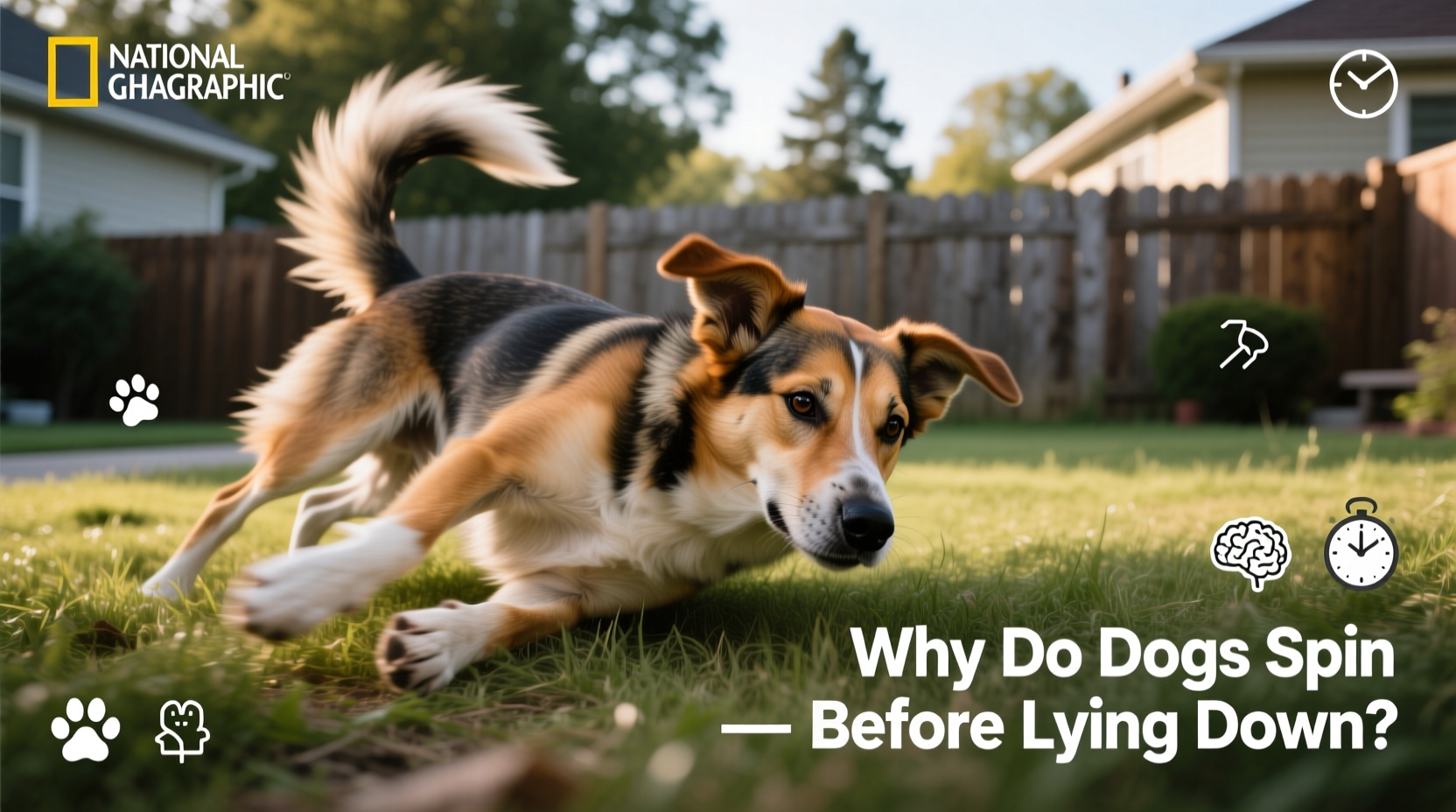
This spinning ritual traces back to your dog’s wild ancestors. In the wild, wolves and other canines didn’t have plush dog beds or climate-controlled homes. They slept on natural terrain—grassy fields, dirt, leaves, or snow. Before lying down, they would trample the ground to flatten tall grass, scare away insects, and check for hidden threats like snakes or sharp objects. This circling motion served as both a safety measure and a way to create a comfortable sleeping hollow.
Even today, domesticated dogs retain these instincts. Though they sleep on memory foam instead of forest floors, their brains still prompt them to “prepare” their resting spot. The number of spins varies—some dogs turn once, others three or more times—depending on breed, age, and individual temperament.
“Circling before lying down is a hardwired survival behavior passed down through generations. It’s not learned; it’s inherited.” — Dr. Lena Patel, Veterinary Ethologist
Is Spinning Normal? When It’s Harmless vs. Problematic
In most cases, spinning before lying down is completely normal. It becomes a concern only when the behavior changes suddenly, intensifies, or is accompanied by signs of distress.
Here are key indicators that the spinning is within the normal range:
- The dog completes the spin quickly (1–3 rotations).
- No visible pain or hesitation during movement.
- The behavior occurs consistently and predictably.
- The dog lies down calmly after spinning.
However, red flags include:
- Excessive spinning (more than 5–6 turns).
- Repetitive circling without lying down.
- Vocalizations like whining or growling during the act.
- Limping, stiffness, or reluctance to lie down after spinning.
- Sudden onset in an older dog with no prior history.
Medical Conditions That May Cause Excessive Spinning
While instinct explains most spinning, certain health issues can mimic or exaggerate this behavior. These conditions require veterinary evaluation.
Neurological Disorders
Diseases affecting the brain or vestibular system—such as canine cognitive dysfunction (similar to dementia), brain tumors, or inner ear infections—can cause disorientation and compulsive circling. Dogs with these issues may circle aimlessly, even in open spaces, and appear confused.
Pain or Orthopedic Issues
Dogs with arthritis, hip dysplasia, or spinal pain may spin repeatedly because they struggle to find a comfortable position. Each attempt to lie down causes discomfort, prompting them to readjust—or start over.
Compulsive Behavioral Disorders
Like humans, dogs can develop obsessive-compulsive behaviors. Repetitive spinning, especially if it occurs outside bedtime contexts (e.g., in crates or during stress), could indicate anxiety or OCD-like tendencies. Breeds such as German Shepherds and Bull Terriers are more prone to such disorders.
Vision or Hearing Loss
Senior dogs experiencing sensory decline might spin more due to spatial confusion. They rely less on visual cues and more on muscle memory, which can lead to repetitive movements before settling.
When Should You Intervene?
You should not stop your dog from spinning unless it poses a risk to their well-being. Interrupting natural behaviors can increase stress and confusion, especially if the dog feels they haven’t “completed” their routine.
Instead of stopping the behavior outright, consider modifying the environment or addressing potential causes:
- Assess comfort level: Provide orthopedic bedding if your dog has joint issues. A supportive surface reduces the need for constant repositioning.
- Check flooring: Slippery surfaces like hardwood or tile can make dogs insecure. Add rugs or non-slip mats to give better traction during spinning.
- Monitor changes: Sudden shifts in behavior warrant a vet visit. Early detection of medical problems improves outcomes.
- Avoid punishment: Never scold or interrupt your dog mid-spin. This can create anxiety around rest, leading to sleep disruption.
- Rule out pain: If your dog yelps, hesitates, or avoids lying down, consult your veterinarian for a physical exam and possible imaging.
| Behavior | Normal? | Action Recommended |
|---|---|---|
| 1–3 spins before lying down | Yes | None needed |
| Spins 5+ times but lies down comfortably | Potentially normal; monitor | Observe for changes; assess comfort |
| Circles without lying down | No | Veterinary evaluation |
| Spins only in one direction | Rarely normal | Neurological assessment |
| New onset in senior dog | Concerning | Schedule vet appointment |
Real-Life Example: Max the Golden Retriever
Max, a 9-year-old Golden Retriever, had always spun once before lying down. His owner, Sarah, noticed he began spinning four to five times and sometimes wouldn’t lie down at all. He also started pacing at night. Concerned, she took him to the vet.
After a thorough exam, Max was diagnosed with early-stage osteoarthritis. The vet explained that lying down was becoming painful, so Max kept trying to find a position that minimized pressure on his hips. With anti-inflammatory medication and a new orthopedic bed, Max’s spinning reduced to one or two turns, and his nighttime rest improved significantly.
This case highlights how subtle behavioral changes can signal physical discomfort. Without attentive observation, Max’s condition might have worsened before being addressed.
How to Support Your Dog’s Natural Routine
Respecting your dog’s instincts doesn’t mean ignoring their needs. You can support healthy spinning behavior while ensuring their long-term comfort.
Provide a Consistent Resting Environment
Dogs thrive on predictability. Keep their bed in the same quiet location, away from drafts or loud noises. Familiar surroundings reduce anxiety and help them settle faster.
Use Orthopedic or Memory Foam Beds
Especially for older dogs or large breeds, high-quality bedding supports joints and reduces the need for repeated adjustments. Look for washable covers and non-slip bottoms.
Encourage Gentle Exercise
Regular walks and low-impact play keep muscles strong and joints flexible. A tired dog is more likely to lie down comfortably after minimal spinning.
Consider Anxiety Triggers
If your dog spins excessively in certain locations (e.g., near windows or during storms), environmental stressors may be involved. Calming aids like pheromone diffusers or background noise can help.
Frequently Asked Questions
Why does my puppy spin more than my adult dog?
Puppies are still refining their motor skills and routines. They may overshoot or spin too many times as they learn body awareness. As they mature, the behavior typically stabilizes. However, if spinning persists past 18 months or seems frantic, consult your vet.
Can I train my dog to stop spinning?
Not safely or humanely. Training a dog to suppress natural instincts can lead to frustration or anxiety. Instead, focus on making their resting experience easier. If the spinning is due to discomfort, address the root cause rather than the symptom.
Do all dog breeds spin before lying down?
Most do, but the frequency varies. Herding breeds like Border Collies and livestock guardians like Great Pyrenees often exhibit strong circling instincts. Toy breeds may show minimal spinning. Some dogs skip it entirely—this is also normal, as individual personalities differ.
Final Thoughts: Trust the Process, Watch for Changes
Your dog’s pre-sleep spin is more than a quirky habit—it’s a window into their evolutionary past and current well-being. In nearly all cases, it’s a self-limiting, functional behavior that requires no correction. What matters most is consistency and context.
By understanding the reasons behind the spin, you’re better equipped to distinguish between normal canine behavior and potential health alerts. Small changes in routine, mobility, or energy levels can speak volumes about your dog’s quality of life.
Keep observing. Keep caring. And remember: sometimes the most meaningful insights come not from dramatic events, but from the quiet moments before a dog closes its eyes.




 浙公网安备
33010002000092号
浙公网安备
33010002000092号 浙B2-20120091-4
Comments
No comments yet. Why don't you start the discussion?