
Dogs are creatures of routine, and many of their behaviors—no matter how peculiar they may seem—are rooted in deep evolutionary history. One such behavior is spinning in tight circles before settling down to rest. While it might appear whimsical or even obsessive at first glance, this action is far from random. It’s a well-preserved ritual passed down from wild ancestors, serving both practical and psychological purposes. Understanding why dogs spin before lying down offers insight into their instincts, physical needs, and emotional state.
This behavior, often dismissed as mere habit, actually reflects a complex interplay between survival mechanisms, environmental awareness, and comfort-seeking. Whether your dog makes one full rotation or three quick turns, each spin carries meaning shaped by thousands of years of adaptation.
The Evolutionary Roots of Circling Behavior
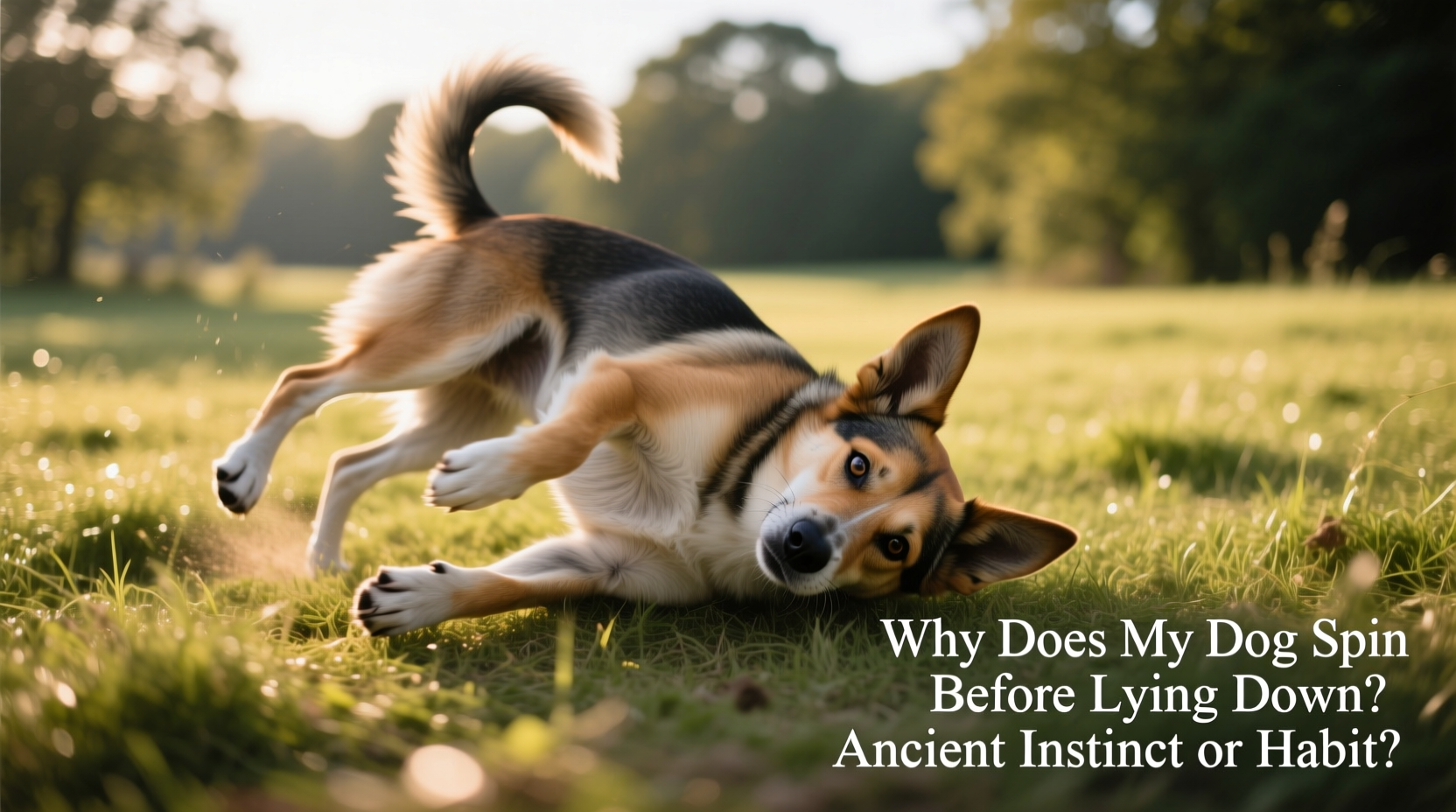
To understand circling, we must look back to the origins of domesticated dogs. Modern canines share a common ancestor with wolves, animals that lived in diverse environments—from dense forests to open grasslands. In the wild, safety and comfort were not guaranteed. Choosing a resting spot required caution.
Before lying down, wild canids would trample down tall grass, leaves, or snow to create a level, insulated surface. This flattening process served multiple functions: it removed sharp objects, exposed hidden pests like snakes or insects, and helped regulate body temperature by minimizing contact with cold or damp ground. The circular motion was an efficient way to compact the area evenly around them.
Dr. Karen Overall, a renowned veterinary behavioralist, explains:
“Circling is a displacement behavior rooted in self-preservation. Even in safe indoor environments, dogs retain these ancestral routines because they are hardwired into their nervous systems.” — Dr. Karen Overall, DVM, PhD, DACVB
This ingrained sequence became part of a pre-sleep ritual—like humans fluffing pillows or adjusting blankets. Over generations, despite living in climate-controlled homes, dogs continue to perform this act. It’s not learned; it’s inherited.
Practical Functions Beyond Instinct
While the primary driver of circling is instinctual, modern dogs also use this behavior for secondary, functional reasons:
- Temperature Regulation: By turning, dogs position themselves relative to airflow or heat sources. Many will align their bodies perpendicular to drafts or face away from direct sunlight.
- Scent Marking: Paw pads contain scent glands. As dogs step in a circle, they subtly mark their chosen spot, reinforcing territorial ownership—even indoors.
- Spinal Alignment: The twisting motion may help loosen joints and prepare muscles for rest, especially in older dogs or breeds prone to back issues like dachshunds.
- Environmental Scanning: A final turn allows the dog to visually confirm there are no immediate threats, satisfying their vigilance instinct before vulnerability sets in during sleep.
When Circling Crosses the Line: Behavioral vs. Medical Concerns
Normal circling typically involves one to three rotations followed by lying down. However, when the behavior becomes repetitive, prolonged, or accompanied by signs of distress, it may indicate underlying problems.
Excessive spinning without settling can stem from:
- Pain or discomfort: Arthritis, hip dysplasia, or spinal injuries can make lying down difficult, prompting repeated attempts to find a comfortable position.
- Anxiety or OCD: Some dogs develop compulsive behaviors due to stress, lack of stimulation, or genetic predisposition (common in breeds like Dobermans or German Shepherds).
- Cognitive Dysfunction: Older dogs with canine cognitive dysfunction syndrome (CCD) may pace or circle aimlessly, sometimes even while sleeping.
- Neurological Issues: Conditions affecting the vestibular system or brain function can cause disoriented movement patterns.
A key differentiator is intentionality. Normal circling is purposeful and brief. Abnormal circling is often frantic, directionally fixed (e.g., always clockwise), and unresponsive to distractions.
Mini Case Study: Max the Border Collie
Max, a 7-year-old Border Collie, began spinning five to six times before lying down—up from his usual two. His owner initially dismissed it as quirky behavior. But over weeks, Max started pacing at night and seemed reluctant to lie on hard floors. A vet visit revealed early-stage hip dysplasia. After starting anti-inflammatory medication and switching to orthopedic bedding, Max’s circling returned to normal within a month. This case illustrates how subtle changes in instinctive behavior can signal physical discomfort long before overt limping occurs.
Do’s and Don’ts of Responding to Circling Behavior
| Do’s | Don’ts |
|---|---|
| Allow your dog time to complete their natural routine without interruption. | Never punish or scold your dog for circling—it’s an involuntary instinct. |
| Provide supportive bedding, especially for older or large-breed dogs. | Don’t force your dog to lie down immediately if they’re still moving. |
| Monitor changes in frequency, duration, or intensity of spinning. | Avoid assuming all circling is “just a habit” without considering health factors. |
| Ensure the resting area is free of clutter, noise, or foot traffic that could increase anxiety. | Don’t ignore other symptoms like whining, trembling, or reluctance to move. |
How Environment Influences the Behavior
The surroundings play a significant role in how—and how much—a dog circles. Dogs are highly sensitive to tactile feedback from surfaces. On plush carpet, they may need fewer turns to feel secure than on slick tile or hardwood, where slipping is a concern.
Outdoor settings amplify the instinct. Grass, dirt, or mulch invite more vigorous trampling. Even kenneled dogs in shelters exhibit increased circling when placed on unfamiliar substrates, suggesting the behavior helps them gain sensory control over their space.
Interestingly, some dogs adapt their routine based on familiarity. At home, a dog might spin once and drop. In a new environment—like a hotel room or friend’s house—they may circle more deliberately, indicating heightened alertness and a need to re-establish security.
Step-by-Step Guide to Assessing Your Dog’s Circling Pattern
If you're concerned about your dog’s spinning behavior, follow this structured approach to determine whether it's normal or warrants professional evaluation:
- Observe Frequency and Duration: Count how many times your dog spins before lying down. Note if it’s consistent or increasing.
- Check for Physical Discomfort: Watch for stiffness, yelping, or hesitation when lowering hips. Gently press along the spine and legs to identify sore spots.
- Evaluate the Resting Surface: Test different textures—carpet, mat, tile—to see if circling decreases on softer or grippier materials.
- Monitor Sleep Quality: Does your dog stay asleep once down? Frequent waking or shifting suggests poor comfort or pain.
- Rule Out Anxiety Triggers: Consider recent changes—new pets, loud noises, travel—that might heighten vigilance.
- Consult Your Veterinarian: If spinning increases suddenly or is paired with other odd behaviors, schedule a check-up to rule out medical causes.
FAQ: Common Questions About Canine Circling
Is circling before lying down a sign of illness?
Not necessarily. Occasional spinning is completely normal. However, if your dog circles repeatedly without lying down, appears distressed, or shows other symptoms like loss of appetite or lethargy, consult a veterinarian. Persistent circling, especially in one direction, can indicate neurological or musculoskeletal issues.
Do all dog breeds circle before lying down?
Most do, but the extent varies. Herding and working breeds tend to display more pronounced rituals, possibly due to higher instinctual drive. Toy breeds may spin minimally or skip the behavior altogether, particularly if raised exclusively indoors. Puppies often learn the pattern by mimicking adults, so early exposure influences expression.
Can I train my dog to stop spinning?
You shouldn't try to eliminate this natural behavior. Instead, focus on addressing potential causes of excessiveness. For example, providing better bedding or managing anxiety may naturally reduce the number of rotations. Training should never suppress instinctive actions unless they become compulsive and harmful.
Supporting Your Dog’s Natural Routines
Respecting your dog’s instincts isn’t just about tolerance—it’s about enrichment. When we allow dogs to express species-typical behaviors like circling, digging, or sniffing, we support their mental well-being. These acts fulfill deep-seated needs that cannot be replaced by toys or treats alone.
Consider enhancing your dog’s resting environment to complement their natural tendencies:
- Use elevated or orthopedic beds for joint support.
- Add washable covers that mimic natural textures (e.g., faux grass mats for outdoor kennels).
- Rotate bedding locations occasionally to satisfy exploratory drives.
- Incorporate daily sniff walks to reduce overall anxiety, which may indirectly calm bedtime rituals.
“The more we honor a dog’s innate behaviors, the more balanced and confident they become.” — Dr. Ian Dunbar, Veterinarian and Animal Behavior Specialist
Conclusion: Honoring the Legacy in Every Spin
The simple act of a dog spinning before lying down is a quiet echo of the wild—a living remnant of survival strategies honed over millennia. Far from being meaningless, this behavior connects modern pets to their ancestors, revealing the depth of their instincts and the sophistication of their routines.
By observing this small ritual with curiosity rather than confusion, pet owners gain valuable insights into their dog’s comfort, health, and emotional state. Rather than questioning or discouraging the spin, embrace it as a testament to your dog’s heritage and a window into their inner world.




 浙公网安备
33010002000092号
浙公网安备
33010002000092号 浙B2-20120091-4
Comments
No comments yet. Why don't you start the discussion?