
Dogs often perform curious rituals before settling down for a nap. One of the most common—and endearing—is spinning in tight circles before flopping onto their side. While it may seem random or even comical, this behavior is deeply rooted in instinct. Far from being arbitrary, circling before lying down is an inherited survival mechanism passed down from wild ancestors. Understanding this habit offers insight into canine psychology, evolutionary biology, and even your dog’s current health and comfort.
This article decodes the science and history behind this widespread behavior, explores its modern implications, and helps you distinguish between normal instincts and potential red flags.
The Evolutionary Roots of Circling Behavior
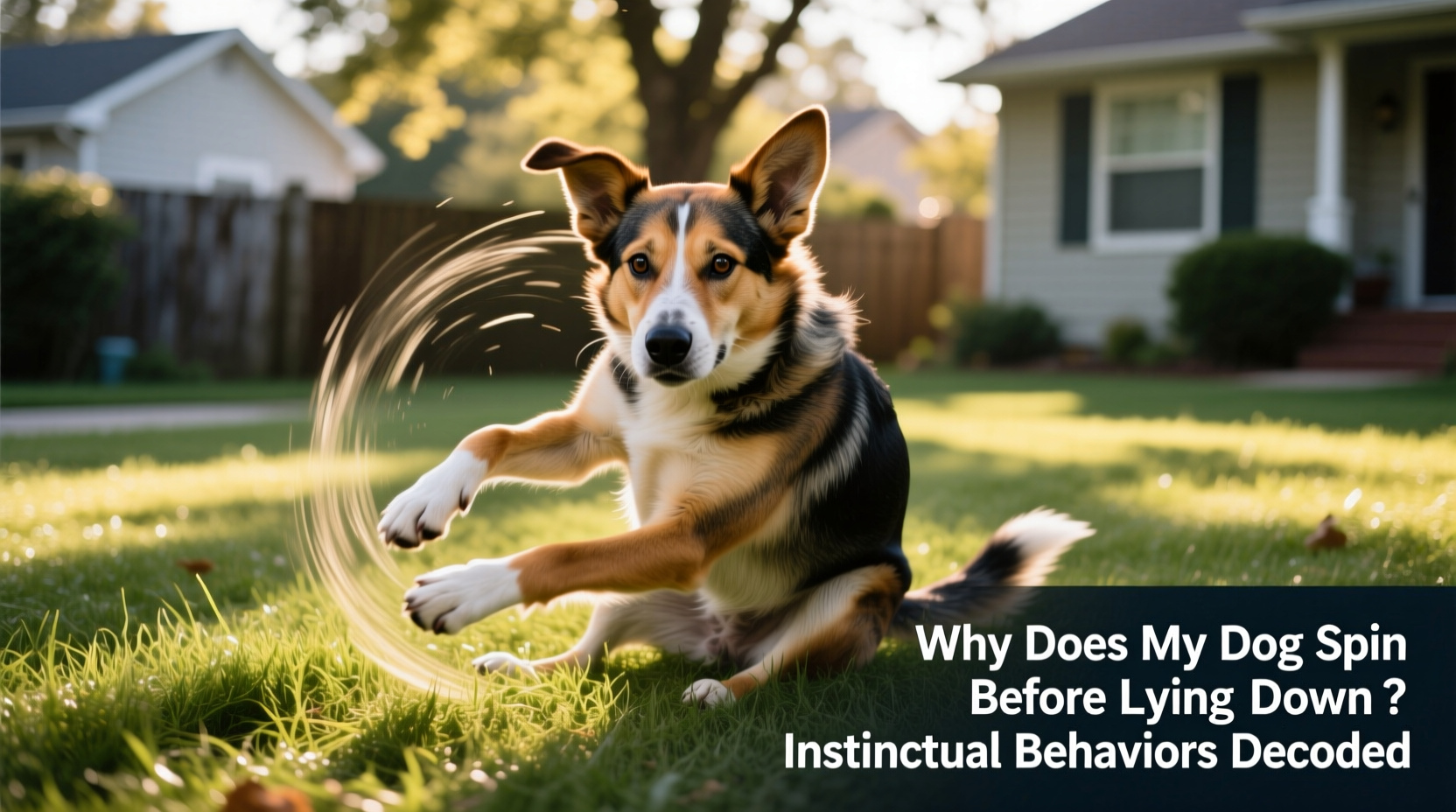
In the wild, dogs’ ancestors—wolves and early canids—had no luxury of plush beds or climate-controlled shelters. Their resting spots were often on uneven terrain, covered in tall grass, or exposed to the elements. To ensure safety and comfort, they developed a series of pre-sleep routines, one of which was circling.
By walking in circles, ancestral canines would:
- Flatten vegetation – Trampling down tall grass or underbrush created a makeshift nest, offering better visibility and protection from hidden threats like snakes or insects.
- Check for predators – The act of turning allowed them to scan their surroundings one final time before vulnerability set in during sleep.
- Regulate body temperature – In colder climates, circling helped pack snow or dirt into a compact bed, providing insulation. In warmer areas, dogs might dig or circle to expose cooler soil beneath the surface.
- Mark territory – Paw pads contain scent glands. As dogs circle, they release pheromones into the ground, subtly marking their chosen spot as “theirs.”
This routine became hardwired over generations. Even today’s domesticated dogs, sleeping on orthopedic memory foam, retain this ancestral programming. It’s not learned behavior—it’s instinct embedded in their DNA.
“Circling is a vestigial behavior, but that doesn’t make it irrelevant. It reflects a deep-seated need for environmental control and safety—a trait still valuable even in safe homes.” — Dr. Lena Torres, Canine Ethologist, University of Colorado
How Circling Supports Physical Comfort and Safety
Beyond evolutionary history, circling serves practical functions in a dog’s daily life. Even in a secure home, dogs rely on sensory feedback to assess their environment. Spinning allows them to fine-tune their resting position in ways humans might overlook.
When a dog circles, they are:
- Testing surface stability – Uneven floors, slippery rugs, or soft cushions may prompt multiple turns until balance feels right.
- Aligning their body – Some dogs prefer facing a certain direction (e.g., toward the door or away from drafts), and circling helps them achieve optimal orientation.
- Relieving joint tension – Older dogs or those with arthritis may use small circular motions to loosen stiff muscles before lying down.
- Creating a “nest” effect – Especially in breeds with strong denning instincts (like terriers or herding dogs), circling mimics the act of burrowing or arranging bedding.
When Circling Might Signal a Health Concern
While occasional circling is normal, excessive or obsessive spinning can indicate underlying medical or behavioral problems. It’s essential to recognize when instinct crosses into dysfunction.
Red flags include:
- Circling repeatedly without lying down
- Spinning in one direction only (especially clockwise)
- Pacing instead of settling
- Vocalizing during or after the behavior
- Sudden onset in older dogs
These symptoms may point to conditions such as:
| Condition | Symptoms | Recommended Action |
|---|---|---|
| Vestibular Disease | Loss of balance, head tilt, nausea, circling persistently | Veterinary exam; often treatable with supportive care |
| Canine Cognitive Dysfunction (CCD) | Disorientation, nighttime pacing, confusion, repetitive behaviors | Behavioral assessment; possible medication or diet changes |
| Orthopedic Pain (e.g., hip dysplasia, arthritis) | Limping, reluctance to lie down, stiffness | X-rays and pain management plan from vet |
| Anxiety or OCD | Repetitive actions, restlessness, avoidance of rest | Behavior modification training; consult veterinary behaviorist |
A sudden change in circling behavior—especially in senior dogs—should never be dismissed as “just getting old.” Early diagnosis can significantly improve quality of life.
Mini Case Study: Max, the 10-Year-Old Labrador
Max, a normally calm Labrador Retriever, began spinning five to six times before lying down—up from his usual one or two rotations. His owner also noticed he was bumping into furniture at night. A vet visit revealed early-stage vestibular disease. With anti-nausea medication and balance therapy, Max’s circling decreased within two weeks. His case highlights how subtle shifts in instinctual behavior can be early warning signs.
Environmental and Behavioral Influences on Circling
Your dog’s surroundings play a significant role in how often and how intensely they circle. Even minor changes in routine or space can influence this behavior.
Factors that affect circling frequency:
- Flooring type – Dogs may spin more on slippery surfaces (tile, hardwood) than on carpeted or textured mats.
- Bed quality – Poorly supportive beds may prompt repeated adjustments.
- Household stress – New pets, loud noises, or rearranged furniture can increase vigilance and pre-sleep rituals.
- Light and noise levels – Dogs may circle more in bright or noisy environments where they feel less secure.
Interestingly, some dogs develop location-specific habits. For example, a dog might spin three times on the living room rug but skip the ritual on their favorite outdoor patio mat. This suggests that context—not just instinct—shapes the behavior.
Expert Insight: Scent Marking and Territory
The role of scent in canine communication is often underestimated. When dogs circle, they’re not just preparing a physical space—they’re chemically claiming it.
“Every step a dog takes deposits scent from their paw glands. Circling amplifies this signal, creating a personal olfactory boundary. It’s like leaving a ‘do not disturb’ sign written in smell.” — Dr. Alan Reeves, Animal Communication Researcher, UC Davis
This territorial aspect explains why some dogs circle more intensely when introduced to new spaces or when other animals are present.
Step-by-Step Guide to Assessing Your Dog’s Circling Behavior
If you're concerned about your dog’s spinning habits—or simply want to understand them better—follow this timeline to evaluate and respond appropriately:
- Observe frequency and duration – Note how many times your dog circles before lying down. Is it consistent? Has it increased recently?
- Record the context – Location, time of day, flooring, presence of other pets, and recent household changes all matter.
- Watch for completion – Does your dog lie down after circling, or do they walk away frustrated?
- Check for physical discomfort – Look for limping, whimpering, or hesitation when lowering to the ground.
- Monitor for additional symptoms – Dizziness, head tilting, loss of appetite, or disorientation require immediate attention.
- Consult your veterinarian – If circling seems excessive or is accompanied by any red flags, schedule a check-up.
- Optimize the sleeping environment – Provide non-slip mats, supportive bedding, and quiet zones to reduce anxiety-driven circling.
FAQ: Common Questions About Canine Circling
Is it normal for puppies to spin before lying down?
Yes. Puppies as young as eight weeks old exhibit circling behavior. It emerges early because it’s instinctual, not learned. However, they may be less efficient at it initially and take longer to settle.
Why does my dog spin and then not lie down?
This could mean the spot isn’t comfortable, the surface is too cold or hot, or there’s an environmental distraction (noise, light, smell). It may also indicate pain or anxiety if the pattern persists.
Do all dog breeds circle before lying down?
Most do, but the intensity varies. Breeds with strong working or hunting backgrounds (e.g., German Shepherds, Border Collies) often show more pronounced circling. Brachycephalic breeds (like Bulldogs) may skip it due to physical limitations, but this doesn’t mean they’re less alert—they’ve adapted differently.
Action Checklist: Supporting Healthy Pre-Sleep Behavior
To ensure your dog’s circling remains a natural ritual rather than a symptom of distress, follow this checklist:
- ✅ Provide a supportive, orthopedic dog bed—especially for seniors
- ✅ Use non-slip mats under beds or in resting areas
- ✅ Keep sleeping zones quiet, dark, and free from drafts
- ✅ Monitor for sudden changes in frequency or coordination
- ✅ Schedule annual vet exams to catch age-related issues early
- ✅ Avoid scolding or interrupting the behavior—it’s instinctive and not within their control
- ✅ Consider calming aids (e.g., pheromone diffusers) if anxiety seems to drive excessive circling
Conclusion: Honoring Instinct While Prioritizing Well-Being
The simple act of spinning before lying down connects your dog to a lineage stretching back thousands of years. It’s a testament to evolution’s precision—how survival strategies become ingrained habits, long after their original purpose has faded. But as responsible pet owners, we must look beyond tradition and observe with intention.
When circling is smooth, brief, and followed by peaceful rest, it’s a sign of a dog fulfilling a natural ritual. When it becomes erratic, prolonged, or painful, it’s a call for compassion and care. By understanding the why behind the spin, you deepen your bond with your pet and become a more attuned guardian of their health.




 浙公网安备
33010002000092号
浙公网安备
33010002000092号 浙B2-20120091-4
Comments
No comments yet. Why don't you start the discussion?