
Dogs often display behaviors that seem mysterious to their owners—tilting their heads, circling before lying down, or suddenly freezing mid-walk. One of the more tender yet puzzling habits is when a dog locks eyes with their human just as they're drifting off to sleep. This quiet gaze can feel deeply meaningful, but it also raises questions: Is this a sign of trust? A behavioral quirk? Or could it signal something else entirely?
Understanding canine behavior requires looking beyond surface-level actions and into the emotional, instinctual, and social drivers behind them. The act of staring during sleep onset isn’t uncommon, and in most cases, it’s not only normal—it reflects a strong bond between dog and owner. However, context matters. When combined with other signs like restlessness or whining, prolonged eye contact before sleep might point to underlying anxiety or health concerns.
This article explores the science and psychology behind why dogs stare at their humans while falling asleep, examines when it’s a healthy expression of connection versus a potential red flag, and offers practical guidance for interpreting and responding to this behavior appropriately.
The Emotional Connection: Bonding Through Eye Contact
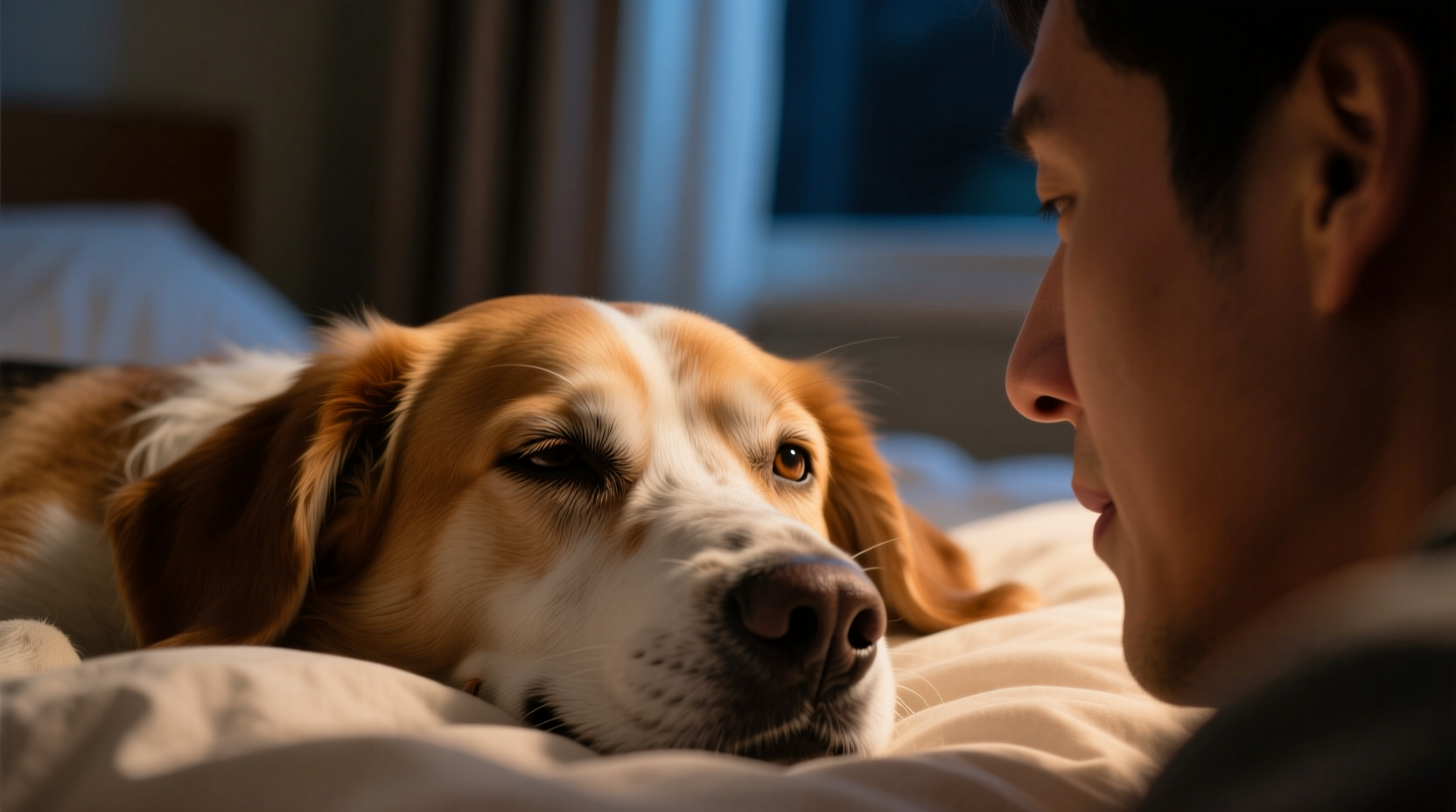
One of the most widely accepted explanations for a dog’s bedtime stare is emotional bonding. Unlike wild canines, who typically avoid prolonged eye contact as a sign of dominance or threat, domesticated dogs have evolved to use eye contact as a form of communication with humans. In fact, research has shown that mutual gazing between dogs and their owners triggers the release of oxytocin—the so-called “love hormone”—in both species.
A landmark 2015 study published in *Science* found that when dogs and their owners engaged in extended eye contact, oxytocin levels rose significantly in both parties, mirroring the hormonal bonding seen between mothers and infants. This biological response suggests that your dog’s sleepy stare may be an unconscious expression of affection and attachment.
“Dogs have developed the ability to read human emotions and respond with behaviors that strengthen social bonds. Staring before sleep is one such behavior—it’s a silent way of saying ‘I feel safe with you.’” — Dr. Emily Sanford, Canine Behavior Researcher, University of Lincoln
For many dogs, especially those raised in close proximity to their owners from puppyhood, the moment before sleep is a time of vulnerability. By maintaining visual contact until they drift off, they may be seeking reassurance that their guardian is still present and attentive. It’s not unlike a child asking for a nightlight or one last hug before bed—not because they’re afraid, but because the presence of a loved one provides comfort.
Instinctual Roots: Pack Dynamics and Security
Beyond emotional bonding, the behavior can also be traced back to ancestral pack instincts. In the wild, canines rely on group cohesion for survival. Sleeping is a passive state where awareness drops, making individuals more susceptible to threats. Therefore, choosing a sleeping location—and confirming the safety of nearby pack members—is critical.
Your dog may stare at you before falling asleep as a way of confirming your position within the “pack.” This visual check-in ensures that the leader (you) is nearby and vigilant. Once satisfied, the dog can relax fully. This is particularly common in breeds with strong herding or guarding instincts, such as Border Collies or German Shepherds, who are naturally attuned to the movements and attention of their human companions.
Additionally, dogs are highly sensitive to routines. If you regularly sit nearby, pet them, or speak softly as they fall asleep, they may associate your gaze with the onset of rest. Over time, they begin to initiate eye contact as part of their personal pre-sleep ritual—a learned behavior reinforced by positive outcomes.
When Staring May Signal Anxiety or Discomfort
While most instances of pre-sleep staring are benign, there are situations where this behavior warrants closer attention. Persistent, unblinking eye contact accompanied by physical tension, pacing, or panting could indicate underlying anxiety. Dogs experiencing separation distress may fixate on their owner as a way of delaying disconnection, even if the owner remains in the room.
Similarly, older dogs or those with cognitive dysfunction syndrome (CDS)—a condition similar to dementia in humans—may exhibit unusual behaviors before sleep, including prolonged staring, confusion, or vocalization. These dogs often lose their sense of time and spatial awareness, leading them to seek constant reassurance through visual cues.
Pain or discomfort can also disrupt normal sleep patterns. A dog suffering from arthritis, gastrointestinal issues, or dental pain may hesitate to lie down fully and instead remain partially alert, watching their owner for help or comfort. In these cases, the stare is less about bonding and more about unmet needs.
| Behavior | Normal Sign | Potential Concern |
|---|---|---|
| Soft, blinking gaze | Relaxation, trust | None |
| Rigid posture with fixed stare | Rare | Anxiety or hypervigilance |
| Staring + whining or pacing | Unlikely | Pain or cognitive decline |
| Gradual eye closure after contact | Healthy transition to sleep | None |
| Staring without settling | Occasional | Environmental stress or illness |
Mini Case Study: Max, the Rescue Terrier
Max, a four-year-old Jack Russell Terrier adopted from a shelter, began staring intently at his owner, Lisa, every night before bed. At first, she found it endearing. But over time, Max started trembling slightly during these episodes and would take over an hour to finally close his eyes.
After consulting a veterinary behaviorist, Lisa learned that Max had likely experienced neglect in his early months. His fixation wasn’t purely affectionate—it was a coping mechanism rooted in insecurity. The behaviorist recommended a structured wind-down routine: dimming lights, playing calming music, and using a pheromone diffuser. Within three weeks, Max’s stare softened, and he began falling asleep more quickly, often turning away peacefully once relaxed.
This case illustrates how context transforms interpretation. What appears to be a simple bonding gesture may, in some dogs, reflect deeper emotional needs shaped by past experiences.
How to Respond: Supporting Healthy Sleep Habits
Responding appropriately to your dog’s bedtime stare depends on the underlying cause. For most dogs, minimal intervention is needed. However, fostering a calm, predictable environment can reinforce positive associations with sleep and reduce dependency on constant visual reassurance.
Step-by-Step Guide to Encouraging Calm Bedtime Behavior
- Establish a consistent pre-sleep routine. Feed, walk, and play at the same times daily to regulate your dog’s internal clock.
- Create a designated sleeping area. Use a comfortable bed in a quiet, low-traffic zone to promote independence.
- Engage in calming activities. Gentle brushing, soft talking, or puzzle toys filled with treats can ease the transition to rest.
- Limit overstimulation before bed. Avoid vigorous play or loud noises one hour before sleep time.
- Respond gently to staring. Offer a soft word or brief touch, then gradually reduce engagement to encourage self-soothing.
Over time, this approach helps dogs learn to relax without relying solely on human presence. It’s especially useful for puppies or rescue dogs still building confidence.
Checklist: Is Your Dog’s Staring Normal?
- ✅ The gaze is soft, with occasional blinking
- ✅ Your dog lies down comfortably after eye contact
- ✅ They fall asleep within minutes
- ✅ No signs of tension, panting, or vocalization
- ✅ Behavior occurs consistently and doesn’t escalate
- ✅ Your dog eats, plays, and behaves normally during the day
If all these apply, the staring is almost certainly a sign of trust and comfort. If several items are unchecked, consider a veterinary evaluation to rule out medical or psychological causes.
Frequently Asked Questions
Is it bad to stare back at my dog when they’re falling asleep?
Direct, prolonged eye contact from humans can be perceived as threatening by some dogs, especially those with timid temperaments or limited socialization. While a brief, gentle return gaze is usually fine, avoid intense staring. Instead, use soft vocal tones or a slow blink—often called a “dog kiss”—to signal friendliness and relaxation.
Why does my dog only stare at me and not other family members?
This typically indicates a stronger emotional bond with you. Factors like who feeds them, takes them for walks, or provides the most comfort influence attachment. It doesn’t mean they don’t love others—they simply see you as their primary source of security.
Should I be worried if my senior dog suddenly starts staring before sleep?
Yes, sudden changes in behavior in older dogs warrant attention. New-onset staring, especially if paired with disorientation, accidents indoors, or altered sleep cycles, could indicate cognitive dysfunction. Schedule a vet visit to assess brain health and discuss management options like diet, medication, or environmental enrichment.
Conclusion: Trust, Watch, and Act with Care
Your dog’s habit of staring at you as they fall asleep is, in most cases, a touching testament to the bond you share. Rooted in both evolution and emotion, this quiet moment reflects trust, attachment, and a deep-seated need for connection. It’s a behavior that speaks volumes without uttering a sound.
But as with any animal behavior, context is key. When peaceful and fleeting, the stare is nothing to worry about. When persistent, tense, or accompanied by other changes, it may be a subtle cry for help. By learning to read the full picture—body language, routine, and overall well-being—you empower yourself to support your dog not just as a pet owner, but as a compassionate companion.




 浙公网安备
33010002000092号
浙公网安备
33010002000092号 浙B2-20120091-4
Comments
No comments yet. Why don't you start the discussion?