
Dogs are full of quirks—tail wags, zoomies, and yes, staring intently at their owners during some of life’s most private moments. If you’ve ever noticed your dog locking eyes with you mid-poop, you’re not alone. This seemingly odd behavior is surprisingly common, and while it might make you chuckle or feel a bit uncomfortable, it’s rarely cause for concern. In fact, it can actually be a sign of deep trust, instinctual survival mechanisms, and even communication. To truly understand why your dog stares at you while defecating, we need to explore canine psychology, evolutionary history, and the unique emotional connection between dogs and humans.
The Vulnerability Factor: Safety in Numbers
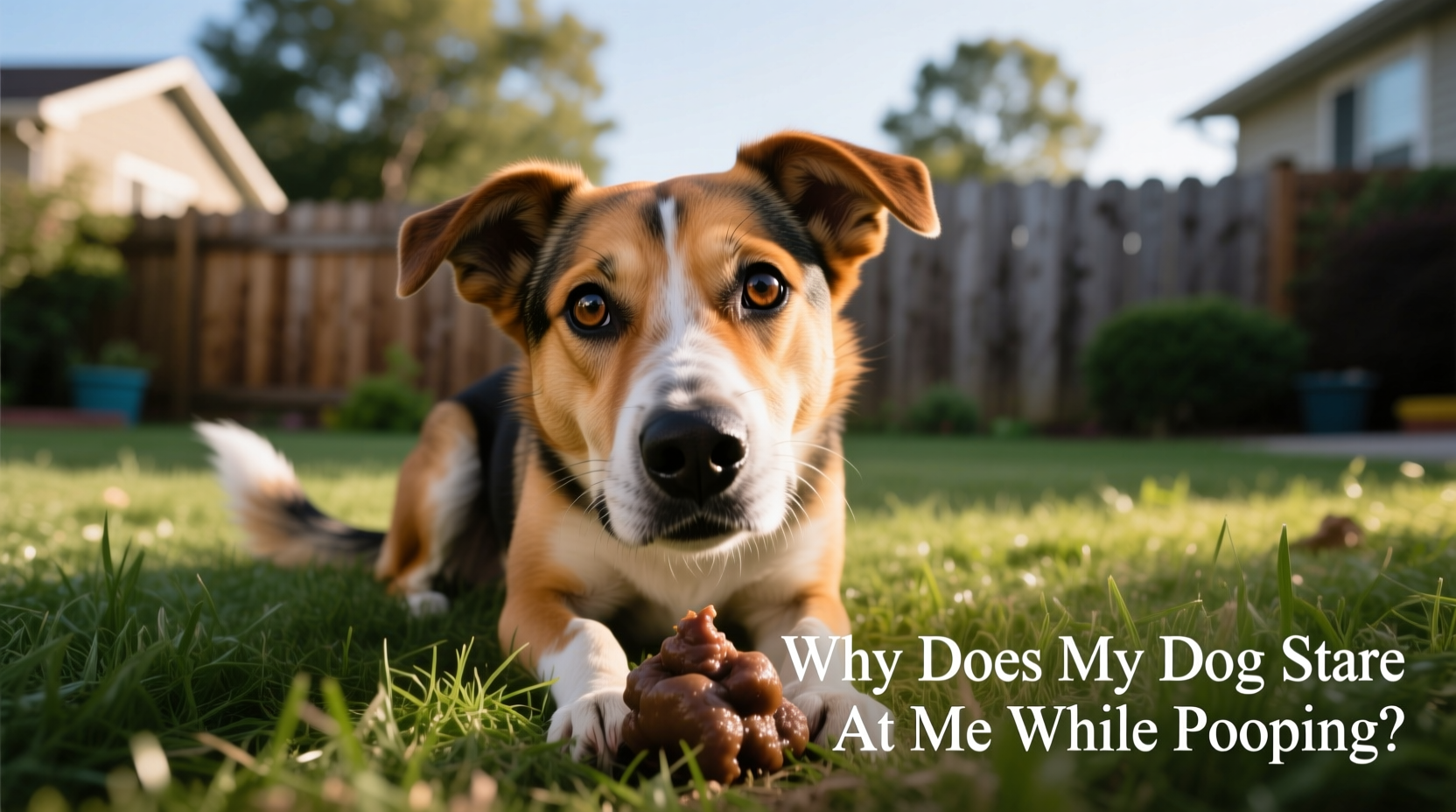
Defecation is one of the most vulnerable acts a dog performs. In the wild, being caught off guard in a crouched position could mean becoming prey. Even though domesticated dogs no longer face immediate threats from predators, that instinct remains hardwired. When your dog squats to relieve himself, he enters a physically compromised state—bent over, focused on the task, and unable to run or fight quickly.
In this moment, your dog looks to you—their trusted guardian—for reassurance. The stare is a silent plea: “Are we safe? Are you watching my back?” By maintaining eye contact, your dog confirms your presence and seeks confirmation that the environment is secure. This behavior is especially common in anxious dogs or those who have experienced trauma or unstable environments in the past.
“Dogs are pack animals. When they’re in a vulnerable state, they naturally look to their leader for cues about safety.” — Dr. Karen Becker, Integrative Veterinarian
This reliance on human vigilance underscores just how deeply dogs view their owners as part of their social structure. You’re not just a food dispenser; you’re the alpha, the protector, and the emotional anchor.
Eye Contact as Communication
Dogs use eye contact differently than humans. While prolonged staring between people can be seen as aggressive, in dog-human relationships, mutual gaze is often a bonding behavior. Studies have shown that when dogs and owners look into each other’s eyes, both experience a rise in oxytocin—the so-called “love hormone”—similar to what occurs between mothers and infants.
So when your dog stares at you during elimination, he may not only be checking for danger—he could also be reinforcing his emotional connection with you. It’s a quiet, intimate moment of trust. He’s saying, “I’m doing something personal, and I want you to be part of it.” This kind of behavior is more common in dogs with strong attachments to their owners, particularly those raised from puppyhood or rescued later in life.
Interestingly, dogs don’t typically stare at strangers or less familiar people during bathroom breaks. The behavior is usually reserved for trusted individuals, further supporting its role in emotional bonding.
Why Some Dogs Don’t Stare
Not all dogs exhibit this behavior, and that doesn’t mean they love you any less. Temperament, breed tendencies, and early socialization play a big role. For example:
- Independent breeds like Shiba Inus or Basenjis may avoid eye contact altogether, viewing elimination as a private act.
- Nervous or submissive dogs might glance briefly but then look away to avoid appearing confrontational.
- Highly trained working dogs often focus entirely on the task, having been conditioned to eliminate on command without distraction.
The absence of staring isn’t a red flag—it simply reflects individual personality and learned behavior.
Instinct Meets Domestication: The Evolutionary Lens
To fully grasp this behavior, we must consider the journey from wolf to household companion. Wild canids, including wolves and coyotes, often defecate away from their den sites to avoid attracting predators or contaminating living areas. During this process, subordinate pack members may keep an eye on dominant ones—not necessarily for protection, but to reinforce hierarchy and maintain group cohesion.
Domestication has flipped this dynamic. Instead of looking to an alpha within the pack, dogs now look to humans. Your dog isn’t checking if you’re dominant—he already knows you are. He’s confirming that the dominant member of his pack is alert and capable of defending him if needed.
This shift highlights how profoundly dogs have adapted to human environments. They’ve repurposed ancient survival instincts to fit modern life. The poop-stare isn’t primitive; it’s a sophisticated blend of instinct and learned trust.
Do All Dogs Do This?
No—but many do. A 2020 observational study conducted by the University of Veterinary Medicine in Vienna found that approximately 68% of pet dogs made visual contact with their owners during outdoor elimination. Indoor-only dogs showed lower rates (around 42%), likely due to greater perceived safety and fewer environmental variables.
| Dog Type | % Who Stare During Pooping | Primary Reason Cited |
|---|---|---|
| Outdoor Walkers | 68% | Vigilance & bonding |
| Indoor/Pee Pad Users | 42% | Habit or attention-seeking |
| Rescue Dogs | 75% | Anxiety & dependency |
| Multipet Households | 58% | Distraction or competition |
The data suggests that environment and emotional security significantly influence this behavior. Rescue dogs, for instance, are more likely to stare, possibly because they’ve learned to rely heavily on human cues for safety.
When Staring Signals Something Else
While most cases of poop-staring are normal, there are times when it could indicate underlying issues. If your dog’s gaze is accompanied by signs of distress—whining, pacing, straining, or frequent glancing—it may point to physical discomfort or anxiety.
Consider these possible causes:
- Digestive problems: Constipation or diarrhea can make elimination painful, prompting your dog to seek comfort or assistance.
- Urinary tract infection (UTI): Frequent squatting with little output and intense staring may signal a medical issue.
- Environmental stress: Loud noises, unfamiliar dogs, or new walking routes can heighten anxiety, increasing dependency on your presence.
- Behavioral fixation: Some dogs develop compulsive behaviors, especially if rewarded inadvertently (e.g., getting treats or praise after pooping).
Mini Case Study: Max, the Anxious Terrier
Max, a 3-year-old Jack Russell Terrier, was adopted from a shelter at eight months old. His owner, Sarah, noticed that during walks, Max would begin to squat, then immediately lock eyes with her, holding the gaze until she said, “You’re okay, go ahead.” Only then would he finish.
Concerned, Sarah consulted a canine behaviorist. After observation, the expert concluded that Max wasn’t sick—he was seeking permission. Likely due to inconsistent routines in his early life, Max had learned to look to humans for cues in uncertain situations. The behavior wasn’t harmful, but it highlighted his need for predictability.
The solution? A consistent pre-poop cue (“Go potty”) paired with calm reinforcement. Over six weeks, Max became more confident, and the intense staring decreased by 70%. He still checks in occasionally, but now it’s a quick glance, not a prolonged stare.
This case illustrates how context shapes behavior—and how small adjustments can foster independence without breaking trust.
How to Respond: Supporting Your Dog Without Reinforcing Anxiety
Your reaction matters. While it’s tempting to talk soothingly or reward the behavior with treats, doing so may unintentionally reinforce dependency. Instead, aim for calm, neutral support.
- Stay present but passive: Stand nearby without hovering. Avoid making direct eye contact unless your dog initiates it.
- Use a consistent cue: Say a simple phrase like “Do your business” before walks to set expectations.
- Avoid punishment: Never scold or rush your dog. This increases stress and may lead to holding it in.
- Build confidence gradually: Practice in low-distraction areas first, then slowly introduce busier environments.
- Rule out medical issues: If the behavior starts suddenly or worsens, consult your vet.
“Confidence comes from consistency. Dogs thrive when they know what to expect.” — Ian Dunbar, Veterinarian and Animal Behaviorist
Checklist: Is Your Dog’s Poop-Staring Normal?
- ✅ The stare is brief and relaxed
- ✅ Your dog finishes eliminating without hesitation
- ✅ No signs of pain, straining, or vocalizing
- ✅ Behavior occurs mostly outdoors or in unfamiliar places
- ✅ Your dog resumes normal activity immediately after
If all boxes are checked, your dog is likely just being a vigilant, affectionate companion. If several are unchecked, consider a veterinary or behavioral consultation.
Frequently Asked Questions
Is it normal for my dog to stare at me while pooping?
Yes, it’s very common and generally harmless. Most dogs do it out of trust, vulnerability, or a desire for reassurance. As long as there are no signs of distress, it’s a natural expression of your bond.
Should I look back at my dog when he’s pooping?
You can, but keep it calm and brief. Prolonged eye contact might excite or distract some dogs. A soft nod or quiet “okay” is often enough to signal safety without encouraging dependency.
My dog never used to stare, but now he does. Should I be worried?
Sudden changes in behavior can indicate discomfort. Consider recent environmental shifts—new pets, moves, loud construction—or health issues like gastrointestinal upset. If the change persists beyond a few days, consult your veterinarian.
Conclusion: Embracing the Quirks of Canine Connection
Your dog’s poop-stare isn’t weird—it’s a window into his mind. It reveals layers of instinct, emotion, and loyalty that have evolved over thousands of years. Far from being a bizarre habit, it’s a testament to the depth of your relationship. He trusts you enough to be vulnerable in front of you, and he values your presence even in the most mundane moments.
Instead of brushing it off or feeling awkward, recognize it for what it is: a quiet act of faith. With understanding and patience, you can support your dog’s confidence while honoring the unique bond you share. After all, love doesn’t always come in grand gestures—sometimes, it comes in the form of a long, soulful stare during a bathroom break.




 浙公网安备
33010002000092号
浙公网安备
33010002000092号 浙B2-20120091-4
Comments
No comments yet. Why don't you start the discussion?