
Dogs are masters of nonverbal communication, and one of the most common yet puzzling behaviors owners notice is their pet staring intently during mealtime. That fixed gaze—eyes locked, head slightly tilted, tail possibly wagging—can feel both endearing and unnerving. While it’s easy to assume your dog simply wants a bite of your sandwich, the truth is more layered. Canine staring is rarely just about food; it’s often a complex mix of instinct, learned behavior, social bonding, and sometimes even underlying anxiety. Understanding what drives this behavior helps you respond appropriately, reinforce good habits, and know when intervention is needed.
The Evolutionary Roots of Food-Related Staring
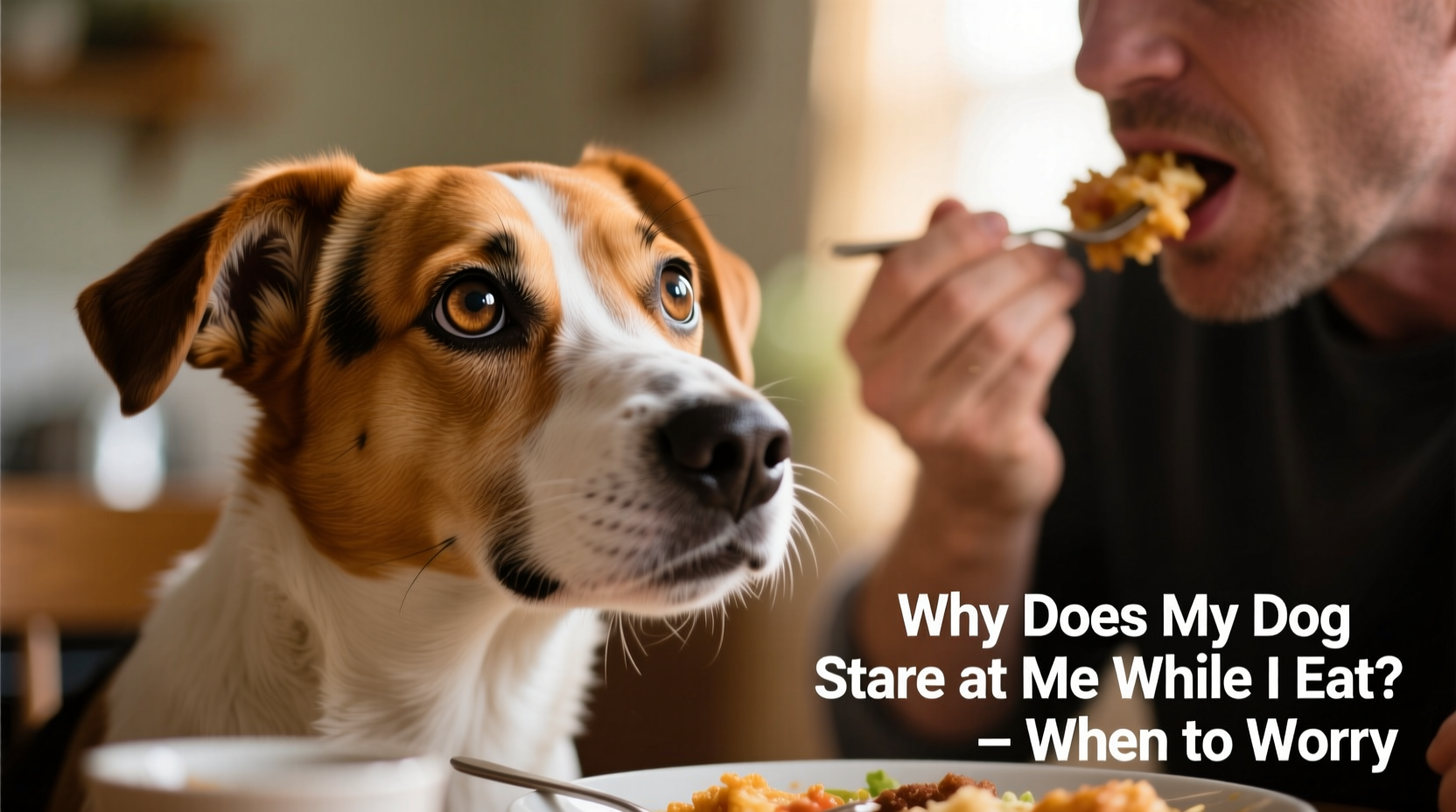
Dogs evolved from wolves, pack animals that relied on cooperative hunting and hierarchical feeding structures. In the wild, lower-ranking members would often observe dominant individuals eating, waiting for scraps or permission to approach. Though domesticated dogs no longer need to scavenge, those instincts remain embedded in their behavior. When your dog watches you eat, they may be acting on an ancient impulse: observing the “pack leader” to determine when food might become available.
This doesn’t mean your dog sees you as prey or views your plate as theirs by right. Rather, they’re scanning for cues—dropped crumbs, a tossed morsel, or even subtle body language that signals generosity. Over time, this observational behavior has been reinforced through positive outcomes. If your dog stares and eventually receives a scrap (even once), that action becomes powerfully linked to reward.
“Dogs are keen observers of human behavior. A single instance of being fed from the table can condition prolonged staring for months.” — Dr. Karen Becker, Veterinary Behaviorist
Common Reasons Your Dog Stares at You While You Eat
Not all staring is created equal. The context, body language, and history between you and your dog determine whether the gaze is benign, manipulative, or concerning. Below are the most frequent causes:
- Food anticipation: This is the most obvious reason. Dogs quickly learn routines and associate your meals with potential handouts. Even if you don’t feed them from the table, past experiences may have conditioned them to expect something.
- Bonding and attention-seeking: Dogs form strong emotional bonds with their humans. Staring can be a way of staying connected, especially if mealtimes are one of the few times you're stationary and accessible.
- Training reinforcement: If you’ve ever given your dog a treat while eating—even out of guilt or affection—you’ve inadvertently trained them to stare. They remember, and they’ll repeat the behavior hoping for a repeat performance.
- Anxiety or resource guarding concerns: Some dogs stare not because they want food, but because they’re uneasy about your possession of it. In rare cases, this can escalate into guarding behaviors, especially if the dog feels threatened or insecure.
- Curiosity: New foods, unusual smells, or different eating locations can pique a dog’s interest. Their stare may simply reflect fascination with what you’re doing.
When Staring Crosses the Line: Signs of Problematic Behavior
Occasional staring is normal. But when it becomes intense, persistent, or paired with other troubling signs, it may indicate deeper issues. Here’s how to tell the difference between harmless begging and problematic fixation:
| Normal Staring | Potentially Problematic Staring |
|---|---|
| Soft eyes, relaxed posture | Hard stare, stiff body, tense muscles |
| Breaks gaze when ignored | Persistent, unblinking focus |
| Wags tail gently or lies down nearby | Growls, whines, or blocks your path |
| Stops when redirected | Ignores commands or training cues |
| Only occurs during meals | Happens frequently, even without food present |
If your dog exhibits multiple red flags from the right column, the behavior may be rooted in anxiety, obsessive tendencies, or poor boundaries. In some cases, medical conditions like vision impairment or cognitive dysfunction in older dogs can also cause unusual fixation.
A Real Example: Max, the Labrador Who Wouldn’t Look Away
Take Max, a four-year-old Labrador Retriever. His owner, Sarah, noticed he began staring at her intensely every time she ate dinner. At first, it seemed cute—Max would sit politely by her side, eyes wide. But over time, the behavior escalated. He stopped responding to his name, wouldn’t lie down on command, and started nudging her arm when she didn’t offer food. One evening, he growled softly when her partner reached for a chip near Max’s line of sight.
Sarah consulted a veterinary behaviorist who diagnosed mild food-related anxiety compounded by inconsistent household rules. Max had been fed table scraps occasionally by one family member but scolded by another. This confusion led to obsessive monitoring of food sources. With structured training, a consistent no-table-food rule, and enrichment activities during mealtimes, Max’s staring decreased significantly within six weeks.
How to Respond: Practical Steps to Manage Mealtime Staring
Changing your dog’s behavior starts with changing your own. Dogs mirror our habits, so consistency is key. Follow this step-by-step guide to reduce unwanted staring:
- Establish a mealtime routine: Feed your dog before you eat. A full stomach reduces food motivation.
- Create a designated space: Train your dog to go to a mat, bed, or crate during your meals. Use a command like “place” or “settle” and reward compliance.
- Ignore the stare: Do not make eye contact, speak, or react. Any attention reinforces the behavior.
- Redirect with a toy or chew: Give your dog a long-lasting chew or puzzle toy filled with treats to keep them occupied.
- Reinforce alternative behaviors: Reward your dog for lying down quietly or looking away from you during meals.
-
Be consistent across all household members: Everyone must follow the same rules. Mixed signals confuse dogs and prolong unwanted behaviors.
“Consistency isn’t just helpful—it’s essential. Dogs thrive on predictability. If one person feeds from the table and another doesn’t, the dog learns to keep trying.” — Dr. Ian Dunbar, Dog Training Pioneer
Tips for Preventing Begging and Obsessive Staring
Checklist: Managing Your Dog’s Mealtime Behavior
- ☑ Feed your dog 30 minutes before your meal
- ☑ Prepare a chew toy or stuffed Kong before sitting down
- ☑ Designate a quiet zone (bed, crate, or mat) for your dog
- ☑ Train and practice “place” or “down-stay” commands
- ☑ Ensure all family members enforce the same rules
- ☑ Avoid eye contact or verbal engagement when your dog stares
- ☑ Reward calm, independent behavior after meals
When to Seek Professional Help
Most cases of mealtime staring can be resolved with consistent training and environmental management. However, certain situations warrant professional evaluation:
- Your dog shows aggression (growling, snapping, lunging) when near food.
- The staring is accompanied by pacing, panting, or trembling—signs of anxiety.
- Your senior dog has developed sudden fixation behaviors, which could indicate cognitive decline.
- Staring occurs around non-food items or in non-meal contexts, suggesting obsessive-compulsive tendencies.
A certified veterinary behaviorist or a force-free dog trainer can assess your dog’s overall temperament, identify triggers, and design a tailored modification plan. In some cases, anti-anxiety medication prescribed by a vet may support behavioral therapy.
Frequently Asked Questions
Is it harmful to let my dog watch me eat?
Occasional observation isn’t harmful, but allowing constant staring reinforces begging behavior. Over time, it can lead to frustration, anxiety, or boundary issues. It’s better to redirect your dog to a positive activity during your meals.
Can I ever give my dog food from the table?
It’s best to avoid it entirely. Even “just one bite” teaches your dog that persistence pays off. If you want to share safe human foods, do so outside of meal contexts—such as during training sessions—to prevent association with your eating.
My dog doesn’t beg but still stares silently. Should I be worried?
Not necessarily. Some dogs are naturally observant and use staring as a form of connection. As long as the body language is relaxed and the behavior doesn’t escalate, it’s likely a sign of attachment rather than demand.
Conclusion: Understanding, Not Judging, Your Dog’s Gaze
Your dog’s stare during meals is rarely malicious or manipulative in the human sense. It’s a behavior shaped by evolution, learning, and emotion. By understanding the motivations behind it—whether it’s hope for a treat, a desire for closeness, or quiet anxiety—you can respond with empathy and clarity. The goal isn’t to suppress natural canine behavior, but to guide it toward healthier expressions.
With patience, consistency, and the right strategies, you can enjoy your meals in peace while strengthening your bond with your dog. Redirect their focus, reinforce calm behavior, and maintain clear boundaries. Most importantly, recognize that your dog isn’t trying to disrupt your life—they’re simply communicating in the only way they know how.




 浙公网安备
33010002000092号
浙公网安备
33010002000092号 浙B2-20120091-4
Comments
No comments yet. Why don't you start the discussion?