
Dog owners often notice their pets doing strange things during bathroom breaks—sniffing in circles, kicking up dirt, or suddenly locking eyes with them mid-squat. One of the most puzzling behaviors is when a dog stares intently at their owner while defecating. It might seem odd, even slightly awkward, but this behavior is more common—and meaningful—than many realize. Far from being random, this gaze is rooted in instinct, trust, and social dynamics. Understanding why your dog does this can deepen your connection and help you interpret their needs more accurately.
The Evolutionary Roots of Canine Vulnerability
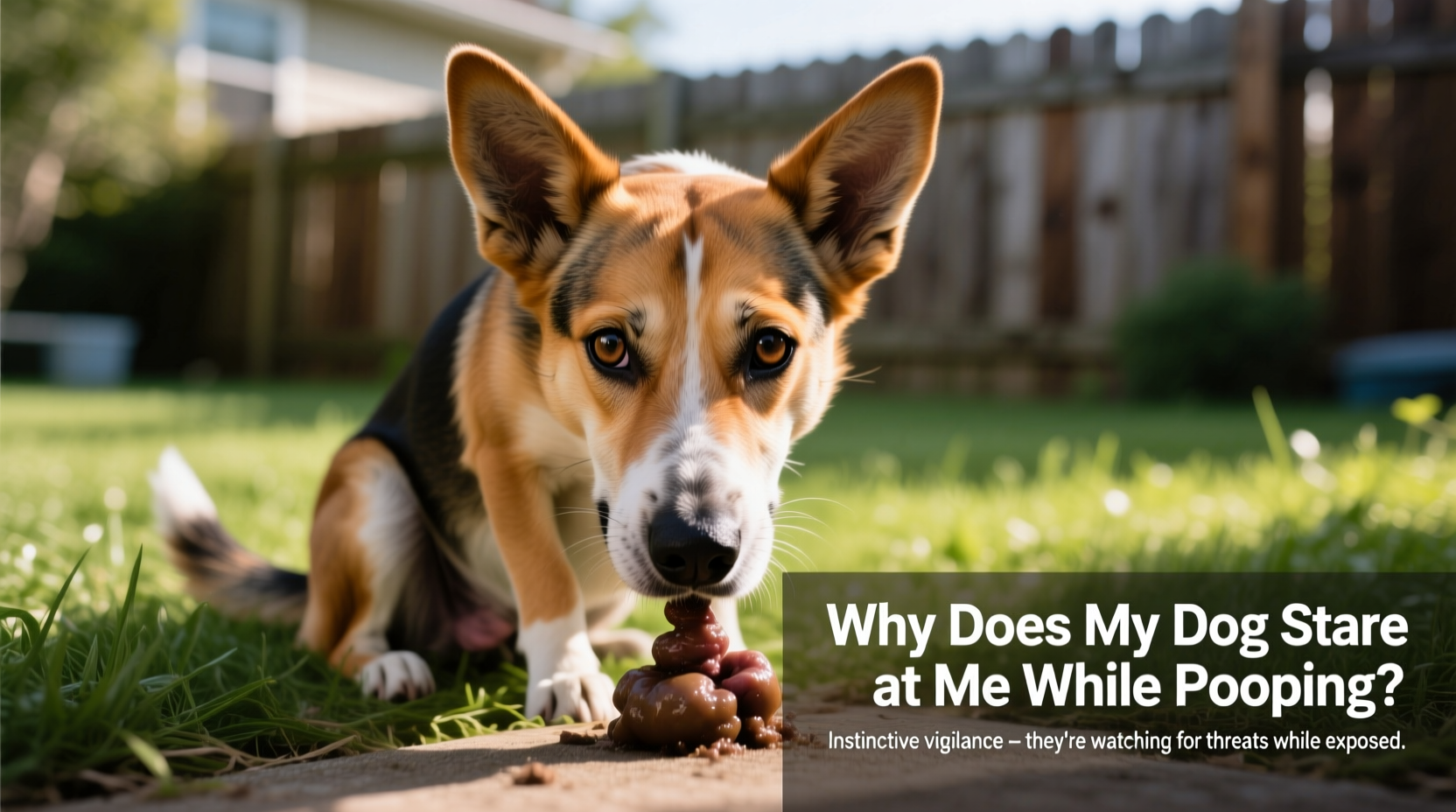
In the wild, animals are most vulnerable when eliminating. Defecation requires focus and physical relaxation, which makes it harder to respond quickly to threats. For pack animals like wolves—the ancestors of domestic dogs—this moment presents a real danger. A distracted individual could become prey. As a result, survival favored those who remained alert or had trusted companions watching their backs.
Domestic dogs retain this evolutionary sensitivity. Even though they no longer face predators in a backyard, the instinctual awareness of vulnerability persists. When your dog squats to poop, their body is in a compromised position—bent forward, muscles relaxed, attention diverted. In that moment, they may look to you not out of curiosity, but as a silent plea for reassurance: “Are we safe?”
Social Bonding and Trust Signals
Dogs are highly social creatures that form deep emotional bonds with their humans. The act of maintaining eye contact, especially during vulnerable moments, is a powerful indicator of trust. Unlike in some species where direct gaze signals aggression, in domesticated dogs, prolonged eye contact often signifies affection and attachment.
A 2015 study published in *Science* found that mutual staring between dogs and their owners increases oxytocin levels in both parties—the so-called \"love hormone\" associated with bonding. This biochemical response mirrors the mother-infant bond in humans. So when your dog stares at you while pooping, they’re not just checking for danger—they’re reinforcing an emotional connection.
“Eye contact during vulnerable acts like eating or eliminating is one of the clearest signs of trust a dog can show. It means they see you as part of their pack and rely on you for safety.” — Dr. Patricia McConnell, Certified Applied Animal Behaviorist
Environmental Awareness and Communication
Your dog’s stare may also serve as a form of environmental scanning. While they can’t turn their heads easily in a squatting position, their eyes can move independently. By locking onto your face, they gather visual cues about your reaction to their surroundings. Are you tense? Calm? Looking around? Your expressions and posture provide information about whether the environment feels safe.
This behavior is especially common in urban settings or unfamiliar areas. Dogs in busy parks or near traffic may glance at their owners more frequently, seeking confirmation that everything is under control. It’s a subtle but effective way for them to outsource vigilance. You become their lookout, allowing them to focus on the task at hand.
Real-Life Example: Max, the Apartment-Dwelling Terrier
Max, a 3-year-old Jack Russell Terrier living in a high-rise apartment, only relieves himself during scheduled walks. His owner, Sarah, noticed he always turns his head sideways to stare at her while pooping—sometimes holding the gaze for several seconds after finishing. Concerned, she consulted a canine behaviorist. The expert explained that Max likely associates elimination with stress due to limited opportunities and unpredictable street noise. His stare was a coping mechanism: by confirming Sarah’s presence and calm demeanor, he could relax enough to go. After implementing a consistent walking schedule and using verbal reassurance (“You’re okay, I’ve got you”), Max’s tension decreased, and the intense staring became less frequent.
Is the Stare a Sign of Anxiety?
While occasional staring during elimination is normal, persistent or intense fixation may indicate underlying anxiety. Dogs with separation distress, noise phobias, or past trauma may exhibit hyper-vigilant behaviors even in safe environments. If your dog appears tense, refuses to eliminate unless you’re directly facing them, or shows other signs like trembling or pacing, it could signal discomfort beyond natural caution.
Consider the context: Does the behavior occur only in certain locations? Only during specific times of day? With particular people present? These clues help determine whether the stare is adaptive or symptomatic of deeper issues.
Training and Routine Influence
How you respond to your dog during potty breaks shapes their future behavior. If you consistently praise, reward, or acknowledge them immediately after they eliminate, they may begin to associate eye contact with positive reinforcement. Over time, they learn: “When I look at my human after going, good things happen.”
This learned behavior becomes habitual. Some dogs even delay finishing until they’ve made eye contact, anticipating a treat or verbal cue. While not harmful, it can create dependency, especially in rescue dogs or those trained with high-reward systems.
Step-by-Step: Encouraging Confident Elimination Habits
- Establish a predictable routine: Take your dog out at the same times daily to reduce uncertainty.
- Choose a quiet elimination zone: Minimize distractions like loud noises or foot traffic.
- Use calm verbal cues: Say something neutral like “Go ahead” or “Do your business” in a soothing tone.
- Avoid hovering too closely: Stand a few feet away to give space while remaining visible.
- Reinforce after completion: Wait until they’re done and have moved away before offering praise or treats.
- Gradually phase out constant eye contact rewards: Acknowledge them without over-praising the stare itself.
Do’s and Don’ts of Responding to the Poop Stare
| Do’s | Don’ts |
|---|---|
| Maintain a calm, reassuring presence | Stare back intensely or make sudden movements |
| Speak softly if it helps your dog relax | Yell, pull the leash, or rush them |
| Respect their need for privacy if they look away | Force interaction if they seem uncomfortable |
| Observe patterns to detect changes in behavior | Ignore signs of distress or avoidance |
| Use positive reinforcement after elimination | Reward mid-process, which may interrupt them |
Medical Considerations Behind Behavioral Changes
Sudden shifts in bathroom behavior—such as increased staring, straining, reluctance to defecate, or vocalizing—can sometimes indicate medical problems. Conditions like gastrointestinal discomfort, anal gland issues, arthritis, or spinal pain may make elimination physically uncomfortable. In these cases, the stare might be a request for help rather than a social signal.
If your dog starts looking at you excessively during or after pooping—especially if accompanied by whining, circling, or incomplete bowel movements—it’s worth consulting a veterinarian. Pain-related behaviors often develop gradually, making them easy to miss until they escalate.
Frequently Asked Questions
Is it normal for my dog to stare at me every time they poop?
Yes, it’s completely normal for many dogs to make eye contact during elimination. It reflects trust, environmental awareness, and social bonding. As long as your dog appears relaxed and completes the process without hesitation, there’s no cause for concern.
Should I look back at my dog when they’re pooping?
Soft, non-threatening eye contact is fine, but avoid intense staring, which some dogs interpret as confrontational. A gentle glance or calm facial expression is sufficient to reassure them. Turning slightly away while remaining nearby can also mimic natural pack dynamics, where not all members maintain direct focus at once.
My dog won’t poop unless I’m watching. Is this a problem?
It may indicate dependence on your presence for security. While common, especially in anxious or highly bonded dogs, it can limit their independence. Gradual desensitization—like standing farther away or having another family member supervise—can help build confidence. Consult a trainer if it interferes with daily life.
Understanding Builds Connection
Dog behavior rarely exists in isolation. What seems like a quirky habit often reveals deeper layers of emotion, instinct, and relationship dynamics. The simple act of staring during elimination is not bizarre—it’s a window into your dog’s mind. They are assessing safety, expressing trust, and communicating in the only way they know how.
By recognizing these subtle signals, you become more attuned to your dog’s inner world. You shift from merely managing behaviors to truly understanding them. And in that understanding lies the foundation of a stronger, more empathetic bond.




 浙公网安备
33010002000092号
浙公网安备
33010002000092号 浙B2-20120091-4
Comments
No comments yet. Why don't you start the discussion?