
Dogs do many things that seem odd to humans, but few are as oddly specific—and strangely frequent—as staring intently at their owner while defecating. You’re standing there, perhaps scrolling on your phone or checking the time, when you notice your dog’s eyes locked onto yours mid-poop. It’s not aggressive, not playful—just… focused. What’s going through that furry little mind?
This behavior is more common than most owners realize, and while it might make you chuckle or feel mildly uncomfortable, it’s rarely a sign of something wrong. In fact, understanding why your dog stares at you during one of their most vulnerable moments can deepen your insight into canine psychology and strengthen your relationship with your pet.
The truth is, dogs don’t just act randomly. Their behaviors are rooted in instinct, social dynamics, and learned responses. The act of staring while eliminating is no exception. By unpacking the science and psychology behind this behavior, we can better appreciate our dogs’ emotional world—and respond with empathy and awareness.
Vulnerability and Trust: The Core of the Stare
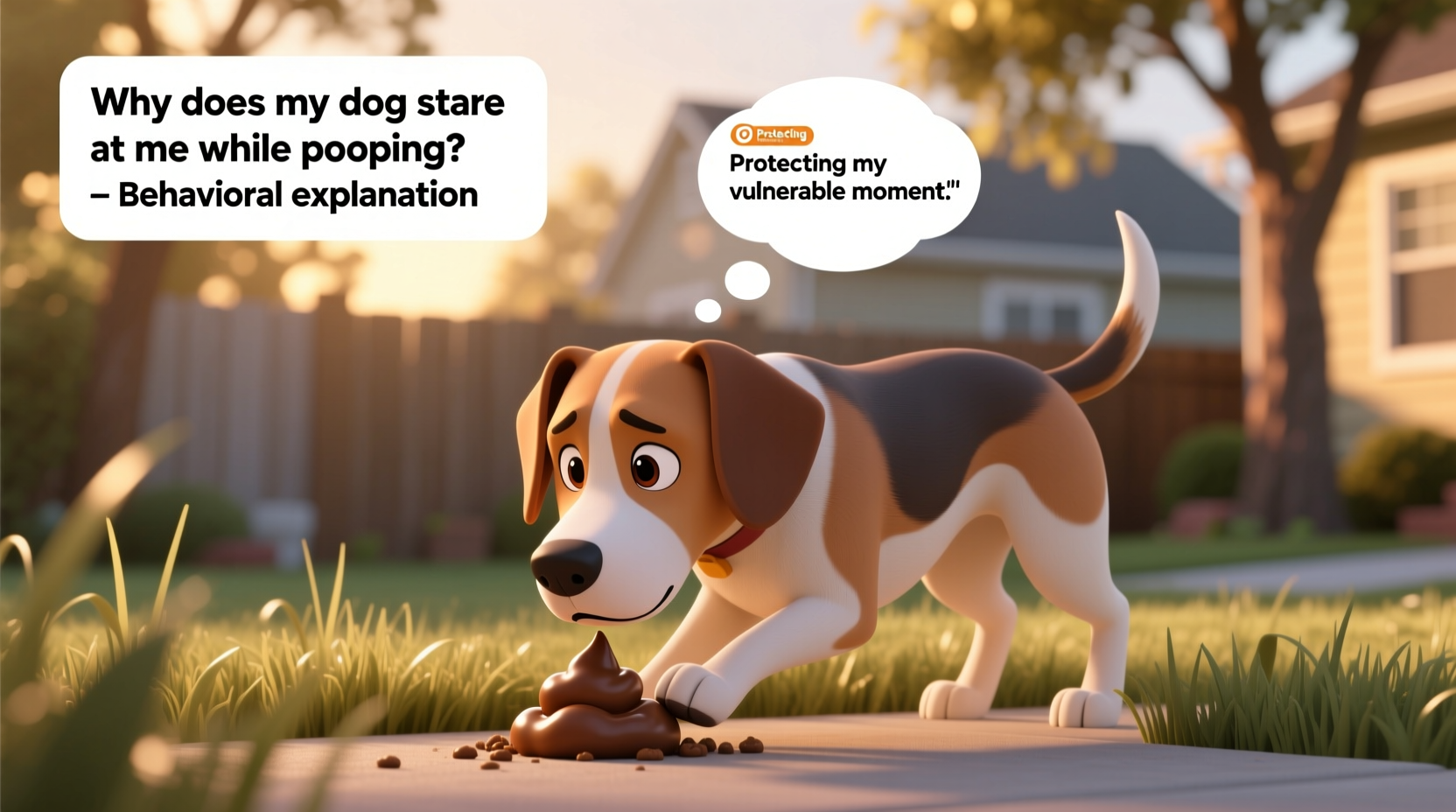
Defecation is a moment of physical vulnerability for any animal. During elimination, dogs are momentarily distracted, off-balance, and unable to flee or fight quickly. In the wild, such moments are high-risk—predators often target animals in these positions. Even though domesticated dogs live in safe homes, the instinctual awareness of vulnerability remains deeply embedded in their psyche.
When your dog stares at you while pooping, they may be seeking reassurance. That gaze is a silent communication: “I trust you to watch my back.” By maintaining eye contact, they confirm your presence and vigilance. It’s not about control or dominance—it’s about safety and connection.
Dr. Alexandra Horowitz, cognitive scientist and author of *Inside of a Dog*, explains:
“Dogs are highly attuned to their environment and to their human companions. A glance during a vulnerable act like defecation isn’t strange—it’s a calculated check-in. They’re confirming that you’re still there, still attentive, and still part of the pack.” — Dr. Alexandra Horowitz, Canine Cognition Researcher
This kind of behavior reflects the deep social bond between dogs and humans. Your dog doesn’t just see you as a food provider—they view you as a protector and ally. The stare is a quiet testament to that trust.
Attention-Seeking and Reinforcement
Another explanation lies in learned behavior. If your dog has ever received attention—positive or negative—for staring during elimination, they may have learned that this action gets results. For example, if you’ve ever laughed, spoken to them, or even just looked up when they stared, that tiny reaction could reinforce the behavior.
Dogs are masters of operant conditioning. They quickly learn which actions yield rewards. Even non-verbal cues—like a raised eyebrow or a shift in posture—can signal to your dog that they’ve successfully captured your focus. Over time, the stare becomes a habitual way to engage you, especially if elimination times are among the few consistent moments of direct interaction.
Consider this: if your dog spends much of the day alone or in another room, the walk outside becomes a prime opportunity for connection. The poop-stare might simply be their way of saying, “Hey, I’m here. Notice me.”
A Real-Life Example: Max the Terrier Mix
Take Max, a 4-year-old Jack Russell terrier mix adopted from a shelter. His owner, Sarah, noticed that Max would always stop mid-squat and lock eyes with her, sometimes holding the pose for several seconds. At first, she found it amusing and would say, “What? Do you need help?” Max would wag his tail slightly before finishing.
After consulting a trainer, Sarah realized she had unknowingly reinforced the behavior. Every time Max stared, she responded verbally. Once she began remaining neutral—looking away, avoiding speech or movement—the staring decreased significantly within two weeks. Max still occasionally checks in, but the intense, prolonged gaze has faded.
This case illustrates how quickly dogs associate actions with outcomes—and how small changes in human behavior can reshape canine habits.
Monitoring for Safety: A Pack Mentality Perspective
Dogs are pack animals by nature. Even solitary-seeming breeds retain social instincts from their wolf ancestors. In a pack, weaker or lower-ranking members often eliminate under the watchful eyes of others. Being observed isn’t necessarily stressful—it can be normal, even comforting.
When your dog stares at you while pooping, they may be engaging in reciprocal monitoring. Just as you keep an eye on them, they keep an eye on you. This mutual surveillance reinforces group cohesion and shared responsibility for safety.
Interestingly, some dogs will only defecate when their owner is present or within sight. This further supports the idea that elimination is a social act for many dogs—not purely biological. The presence (and attention) of their human provides the psychological security needed to relax fully.
Medical or Behavioral Red Flags: When to Be Concerned
While occasional staring during elimination is normal, certain patterns may indicate underlying issues. It’s important to distinguish between benign behavior and signs of discomfort or anxiety.
Watch for these red flags:
- Excessive straining or vocalizing during bowel movements
- Refusing to defecate unless you’re directly facing them
- Sudden onset of staring after years of indifference
- Pacing, whining, or attempting to hide before pooping
- Changes in stool consistency or frequency
If your dog shows signs of distress or develops obsessive behaviors around elimination, consult your veterinarian. Conditions like gastrointestinal pain, anal gland issues, or anxiety disorders could be contributing factors.
“Just because a behavior seems quirky doesn’t mean it’s harmless. Persistent fixation on the owner during bathroom breaks, especially when paired with other anxious behaviors, may point to insecurity or medical discomfort.” — Dr. Karen Becker, Integrative Veterinarian
Step-by-Step: How to Respond to the Poop-Stare
If you want to gently shape your dog’s behavior without damaging trust, follow this practical timeline:
- Observe First: Note how often the staring occurs and whether it’s accompanied by tension, hesitation, or excitement.
- Stay Calm and Neutral: During the next few walks, avoid eye contact, speaking, or reacting when your dog stares. Simply remain still and composed.
- Reinforce Completion: Once your dog finishes and moves away, offer praise or a treat. This shifts the reward from the stare to the completed act.
- Increase Bonding Elsewhere: Provide more structured play, training, or cuddle time indoors so bathroom breaks aren’t the primary source of attention.
- Monitor Progress: After two to three weeks, assess whether the staring has decreased. Adjust your approach if needed.
This method respects your dog’s emotional needs while guiding them toward less intrusive habits.
Do’s and Don’ts of Handling the Behavior
| Do | Don't |
|---|---|
| Maintain a calm presence during outdoor breaks | Laugh, scold, or overreact to the stare |
| Build trust through daily bonding activities | Force eye contact or try to “break” the stare aggressively |
| Rule out medical causes if behavior changes suddenly | Ignore persistent signs of discomfort or anxiety |
| Use positive reinforcement for relaxed elimination | Rush your dog or show impatience during potty time |
| Respect your dog’s pace and routine | Assume the behavior is “weird” or manipulative without context |
Frequently Asked Questions
Is it normal for my dog to stare at me every time they poop?
Yes, it’s quite common. Many dogs stare during elimination as a way of checking in for safety or seeking connection. As long as the behavior isn’t obsessive and your dog shows no signs of distress, it’s considered normal canine communication.
Should I look away when my dog is pooping?
If you're trying to reduce the staring behavior, yes—looking away neutrally can help. Avoid dramatic turns or punishment. Simply disengage without signaling disapproval. This teaches your dog that staring doesn’t influence your attention.
Can anxiety cause my dog to stare while pooping?
Yes. Dogs with separation anxiety or general insecurity may become hyper-vigilant during vulnerable acts. If your dog appears tense, takes a long time to go, or only eliminates when you’re directly watching, anxiety could be a factor. Consult a vet or certified behaviorist for support.
Understanding Builds Connection
Dog behavior is rarely random. Behind every quirk—from spinning before lying down to howling at sirens—lies a blend of instinct, emotion, and learning. The poop-stare is no different. Far from being silly or inappropriate, it’s a window into your dog’s inner world: their need for safety, their desire for connection, and their deep-rooted trust in you.
Instead of brushing it off as odd, consider what your dog is truly communicating. Are they asking for reassurance? Seeking attention they don’t get elsewhere? Or simply confirming that their pack leader is still on duty?
By responding with patience and insight, you honor that bond. You don’t need to change the behavior unless it bothers you or signals deeper issues. Sometimes, the best thing you can do is stand quietly, meet their gaze with a soft blink, and silently say, “I’ve got you.”




 浙公网安备
33010002000092号
浙公网安备
33010002000092号 浙B2-20120091-4
Comments
No comments yet. Why don't you start the discussion?