
Dogs are deeply social animals with complex communication habits. From tail wags to ear flicks, every movement carries meaning. One behavior that often puzzles owners is when their dog locks eyes during the most private moment: defecation. While it may seem odd—or even intrusive—this act is rarely random. Whether rooted in instinct, trust, or mild anxiety, a dog’s gaze during elimination offers a window into their emotional state and relationship with you. Understanding the reasons behind this behavior helps distinguish normal canine communication from potential health or psychological concerns.
The Evolutionary Roots of Canine Vulnerability
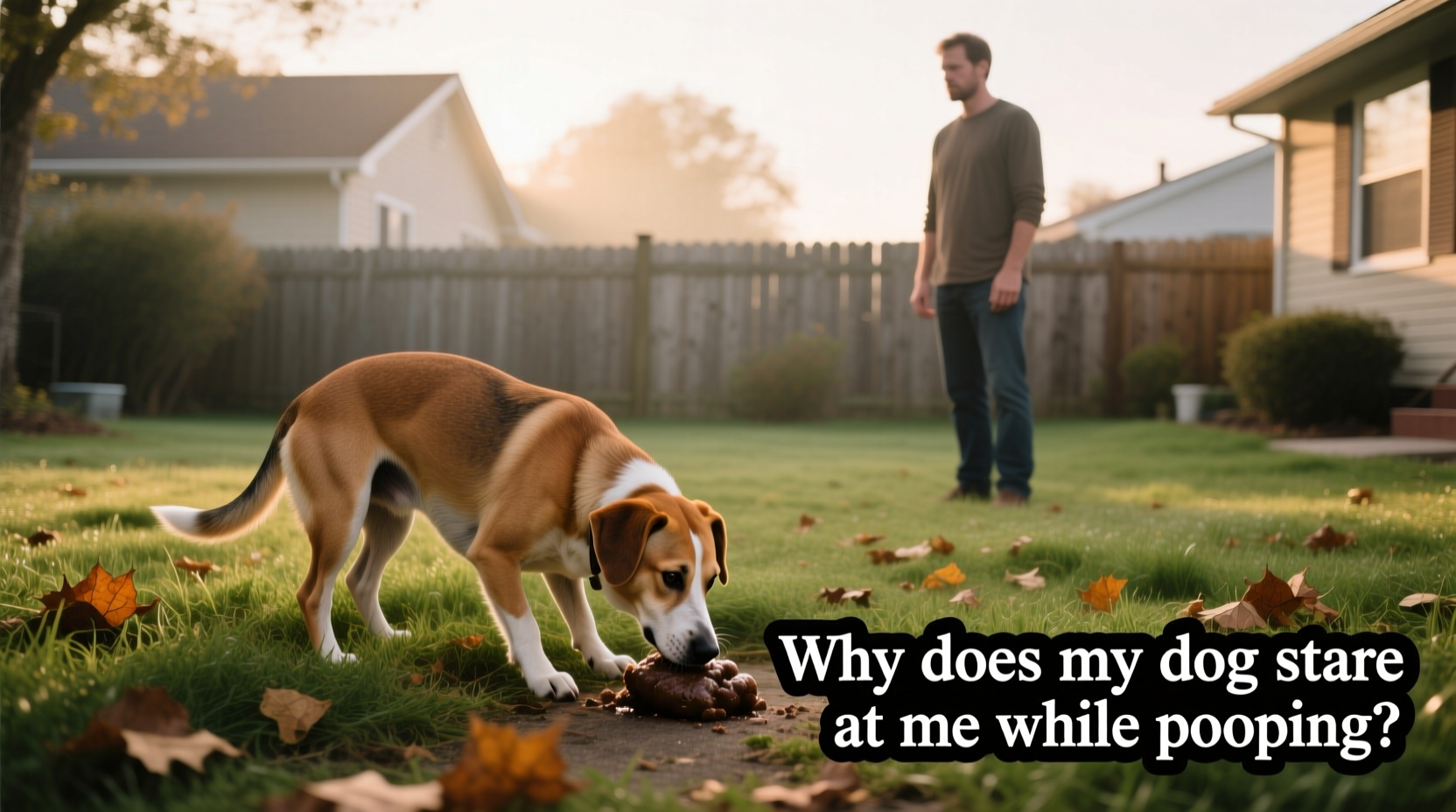
In the wild, canines avoid drawing attention during elimination. A squatting wolf is physically vulnerable, unable to flee or fight quickly. To minimize risk, wild dogs typically seek secluded spots, keep their heads low, and avoid eye contact with others. Domestic dogs, however, live under vastly different conditions. Their survival no longer depends on stealth or isolation. Instead, they rely on humans for safety, food, and companionship. This shift has altered how they perceive vulnerability—and where they direct their attention during bodily functions.
When a dog stares at you while pooping, it often reflects an evolved coping mechanism. Rather than turning away in fear, they look to you as their protector. This gaze isn’t about shame or embarrassment—it’s a silent request for reassurance. By maintaining eye contact, the dog confirms your presence and vigilance, effectively outsourcing their situational awareness to you.
“Eye contact during elimination is a profound sign of trust. The dog is saying, ‘I’m exposed, but I know you’ve got my back.’” — Dr. Karen Becker, DVM, Integrative Veterinary Specialist
Behavioral Explanations Behind the Stare
Several interconnected factors explain why your dog might fixate on you during bowel movements. These include social bonding, environmental assessment, and learned reinforcement.
Social Bonding and Trust
Dogs form strong attachments to their human caregivers. Eye contact plays a crucial role in reinforcing these bonds. Studies show that mutual gazing between dogs and humans increases oxytocin levels—the so-called “love hormone”—in both species. When a dog looks at you while defecating, they may be seeking emotional connection during a moment of physical vulnerability. It’s not unlike a child glancing back at a parent while walking down a dark hallway.
Environmental Surveillance
Dogs are constantly scanning their surroundings. Even in familiar yards, subtle sounds or movements—a rustling bush, a distant bark—can trigger alertness. By staring at you, your dog uses your reactions as a barometer. If you remain calm, they interpret the environment as safe. If you tense up or look alarmed, they may cut the process short or become anxious.
This behavior is especially common in rescue dogs or those with past trauma. A history of neglect or abuse can heighten sensitivity to perceived threats, making them more reliant on human cues during vulnerable moments.
Learned Attention-Seeking
In some cases, the stare becomes a conditioned response. If you’ve ever praised, laughed at, or interacted with your dog while they were eliminating, they may associate the act with positive attention. Over time, they begin to expect engagement and initiate eye contact to prompt a reaction. This is less about vulnerability and more about communication: “Hey, I’m doing what you want me to do out here—notice me!”
When the Stare Signals a Concern
While occasional eye contact during defecation is normal, certain patterns may indicate underlying issues. Prolonged staring combined with physical discomfort, hesitation, or vocalization could point to medical or behavioral problems.
| Behavior | Potential Cause | Action Step |
|---|---|---|
| Intense, unblinking stare with crouching | Anxiety or fear of surroundings | Assess environment; provide more privacy |
| Whining or pacing before/after poop | Digestive discomfort or pain | Consult veterinarian |
| Straining or frequent small deposits | Constipation, diarrhea, or anal gland issue | Schedule vet check-up |
| Avoiding eye contact, hiding to defecate | Shame, fear, or illness | Evaluate recent changes; rule out pain |
One key red flag is if the behavior changes suddenly. A dog that previously eliminated independently but now insists on staring may be reacting to a new stressor—such as a loud noise, a new pet, or a change in routine. Similarly, if the stare is accompanied by trembling, lip licking, or excessive panting, it may signal distress rather than trust.
Real-Life Example: Max, the Rescue Terrier
Max, a 4-year-old Jack Russell Terrier adopted from a rural shelter, exhibited intense staring during outdoor bathroom breaks. His new owner, Sarah, found it unsettling—especially since he’d freeze mid-squat if she looked away. A veterinary exam ruled out physical causes. A certified dog behaviorist suggested Max’s behavior stemmed from early life instability. In the shelter, he had limited access to safe outdoor spaces and was often scolded for indoor accidents.
The solution involved structured desensitization. Sarah began standing quietly at a distance during walks, gradually increasing space between them. She used a consistent cue (“Go potty”) and rewarded completion with treats—only after he finished and turned toward her. Within six weeks, Max still glanced her way, but the intensity decreased. He regained confidence in his environment and no longer required constant visual reassurance.
This case illustrates how context shapes behavior. What appeared to be odd fixation was actually a cry for stability from a dog learning to trust his new world.
How to Respond: A Practical Guide
Your reaction influences whether the behavior strengthens or fades. The goal is to support your dog’s confidence without reinforcing dependency. Follow this step-by-step approach:
- Stay Calm and Passive: Avoid talking, laughing, or making sudden movements while your dog eliminates. Your energy sets the tone.
- Maintain Soft Visual Presence: Stand nearby but don’t lock eyes. Glance occasionally to acknowledge them without creating pressure.
- Wait to Reward: Only offer praise or treats after they’ve finished and moved away. Immediate interaction may interrupt the process.
- Respect Privacy Needs: If your dog turns away or seeks a corner, let them. Forcing exposure can increase anxiety.
- Observe Patterns: Track frequency, duration, and body language. Sudden changes warrant investigation.
FAQ: Common Questions About Dogs Staring While Pooping
Is it normal for my dog to stare at me while pooping?
Yes, it’s common and usually indicates trust. Dogs view their humans as protectors and seek reassurance during vulnerable moments. As long as the behavior isn’t paired with distress signals, it’s generally harmless.
Should I look back at my dog when they’re pooping?
Soft, casual eye contact is fine, but avoid intense staring, which can be perceived as confrontational in canine language. A brief glance or neutral facial expression is best. Save direct engagement for after they finish.
Could staring while pooping mean my dog is in pain?
Not necessarily. However, if the stare is accompanied by straining, whining, crouching for long periods, or blood in stool, consult a veterinarian. Pain can cause hyper-vigilance, making dogs more dependent on human presence for comfort.
Checklist: Assessing Your Dog’s Elimination Behavior
- ✅ Observe body posture: relaxed vs. tense
- ✅ Note duration: typical vs. prolonged squatting
- ✅ Check for vocalizations: silence vs. whining
- ✅ Evaluate environment: busy street vs. quiet yard
- ✅ Monitor consistency: firm, well-formed stools vs. diarrhea or constipation
- ✅ Track frequency: regular schedule vs. sudden changes
- ✅ Assess eye contact: soft glances vs. intense, fixed stare with stress signs
If all items align with normal patterns, the stare is likely benign. If multiple red flags appear, seek professional evaluation.
Conclusion: Understanding Builds Better Bonds
Your dog’s stare during elimination isn’t strange—it’s significant. It reflects a deep-seated reliance on you for safety and emotional regulation. In recognizing this behavior as a form of communication rather than a quirk, you gain insight into your dog’s inner world. Most of the time, no intervention is needed beyond mindful presence. But when discomfort or anxiety underlies the gaze, your awareness becomes the first step toward relief.
Every interaction, even the most mundane, shapes the trust between you and your dog. By responding with patience and observation, you don’t just address a behavior—you strengthen a relationship built on mutual understanding.




 浙公网安备
33010002000092号
浙公网安备
33010002000092号 浙B2-20120091-4
Comments
No comments yet. Why don't you start the discussion?