
Dogs are masters of nonverbal communication. While they can't speak our language, their eyes, posture, and even timing convey volumes. One of the most curious—and surprisingly common—behaviors pet owners report is their dog locking eyes with them during one of life’s most vulnerable moments: defecation. It might seem odd, even comical, but your dog staring at you while pooping is not random. This behavior is rooted in evolutionary psychology, social bonding, and survival instincts that have been shaped over thousands of years.
Understanding why dogs do this requires looking beyond the surface. It's not just a quirk—it's a window into how your dog perceives safety, trust, and hierarchy within your shared environment. Far from being awkward or meaningless, this gaze is often a profound expression of reliance and emotional connection.
The Vulnerability Factor: A Moment of Weakness
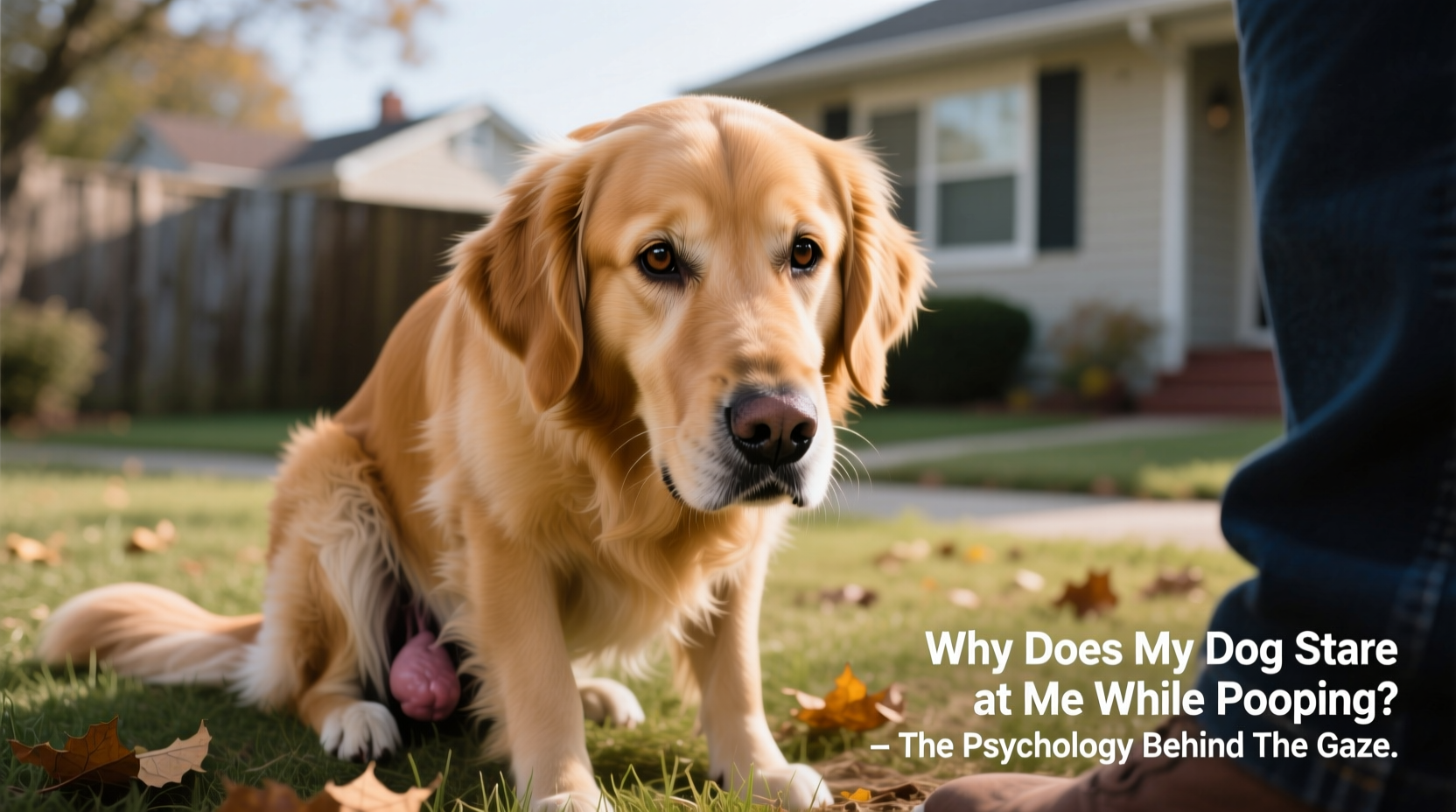
From an evolutionary standpoint, defecation is a moment of extreme vulnerability for animals. In the wild, predators target prey when they're distracted or physically compromised. Bowel movements require relaxation of muscles and focus inward, making an animal slower to react to threats. For pack animals like wolves—the ancestors of domestic dogs—this moment could be dangerous if not managed carefully.
Your dog, though safely indoors, still carries these ancestral instincts. When squatting, they’re aware they can’t run or fight as effectively. By maintaining eye contact with you during this act, your dog is essentially scanning for reassurance. They’re checking whether you’re alert, present, and ready to respond if danger arises. It’s not paranoia—it’s biological programming.
This behavior mirrors how subordinate wolves in a pack will position themselves near dominant members during vulnerable acts. The presence of a trusted leader provides psychological safety. In your home, you’ve assumed that leadership role—not through dominance, but through consistent care and protection.
Social Bonding and Trust: The Gaze That Connects
Eye contact between humans and dogs is a powerful tool for emotional bonding. Research has shown that mutual gaze triggers the release of oxytocin—the so-called “love hormone”—in both species. This neurochemical response strengthens attachment and reinforces social bonds, much like the connection between a parent and infant.
When your dog stares at you while pooping, they may be engaging in a deep form of trust-based communication. They’re choosing to be emotionally and physically open with you at a time when they’re most exposed. This isn’t passive observation; it’s active engagement. The look says: I know I’m vulnerable, but I feel safe because you’re here.
“Dogs use eye contact not just to communicate needs, but to affirm relationships. A stare during elimination is one of the purest forms of trust.” — Dr. Karen Becker, DVM, Animal Behavior Specialist
This kind of behavior is more common in dogs with strong attachments to their owners. Rescue dogs, for example, who have learned to distrust humans, often avoid eye contact altogether—even during routine walks. In contrast, a dog that confidently stares while pooping has likely developed a secure attachment style, viewing their human as a reliable source of safety.
Environmental Awareness and Pack Mentality
Dogs are highly attuned to their surroundings, especially during elimination. Unlike humans, who typically eliminate in private, predictable spaces, dogs rely on environmental cues to determine safety. Even in a familiar yard, your dog may scan for movement, sounds, or changes in scent before and during defecation.
In this context, staring at you serves a dual purpose: monitoring your reaction and using you as a reference point. Your body language tells them whether the environment is safe. If you’re calm and attentive, they interpret that as confirmation that all is well. If you appear distracted or tense, they may cut the process short or become uneasy.
This reflects the pack mentality ingrained in canine psychology. In a natural pack, subordinates look to alphas for behavioral cues in uncertain situations. You, as the perceived leader, become their anchor. Your presence—and your attention—validates their actions.
Do’s and Don’ts During Elimination Time
| Do | Don’t |
|---|---|
| Maintain calm, quiet presence | Stare back intensely or hover too closely |
| Use soft verbal cues like “good job” | Punish or rush your dog if they don’t go quickly |
| Stay observant for signs of discomfort | Use the moment to correct unrelated behaviors |
| Respect their need for privacy if they turn away | Force interaction if your dog avoids eye contact |
When Staring Indicates Anxiety or Medical Concerns
While most cases of staring during defecation are normal and healthy, there are instances where this behavior may signal underlying issues. Dogs experiencing pain, gastrointestinal discomfort, or anxiety may exhibit unusual behaviors during elimination. These can include prolonged staring, whining, pacing before or after going, or reluctance to defecate altogether.
For example, a dog with anal gland issues may look at you intently not out of trust, but in search of help. Their gaze becomes a plea: I’m uncomfortable, and I don’t know how to fix this. Similarly, dogs with separation anxiety may become hyper-vigilant during bathroom breaks, needing constant visual confirmation of your presence.
A useful way to differentiate between trust-based and stress-based staring is to observe the rest of the dog’s body language. Relaxed ears, loose tail, and smooth breathing indicate comfort. Tense muscles, tucked tail, or avoidance afterward suggest distress.
Mini Case Study: Max, the Rescue Terrier
Max, a three-year-old Jack Russell Terrier mix, was adopted from a rural shelter where he had lived in isolation for months. Initially, he refused to eliminate in front of his new owner, Sarah. He would pace, sniff, then retreat indoors. When he finally did go outside, he faced away from her, trembling slightly.
Over six weeks, Sarah implemented a routine: standing quietly five feet away, speaking softly, and offering praise only after he finished. Gradually, Max began turning his head toward her during elimination. Within two months, he consistently made eye contact while pooping—sometimes even wagging his tail mid-squat.
This shift wasn’t just behavioral—it was emotional. Max’s stare signaled that he no longer saw elimination as a dangerous act. He trusted Sarah enough to be vulnerable. His case illustrates how environment, patience, and consistency reshape instinctual responses into expressions of security.
How to Respond: Supporting Your Dog’s Emotional Needs
Knowing why your dog stares is only half the solution. How you respond shapes their long-term confidence and well-being. Here’s a step-by-step guide to fostering healthy elimination behavior:
- Stay Calm and Present: Stand nearby without looming. Avoid sudden movements or loud speech.
- Offer Quiet Reassurance: A soft “okay, buddy” or gentle nod can affirm safety without pressure.
- Avoid Direct Eye Contact: While your dog may stare, return the gaze briefly and softly. Prolonged staring from humans can feel confrontational.
- Wait Patiently: Never rush or pull on the leash. Let your dog finish at their own pace.
- Reinforce Afterward: Once done, offer praise or a treat. This builds positive associations.
- Observe Patterns: Track duration, posture, and frequency to catch health issues early.
- Adjust Environment if Needed: If your dog seems stressed, try a quieter location or different time of day.
These steps support both physical and emotional health. A dog that feels safe while eliminating is less likely to develop holding-related issues like constipation or urinary tract infections.
Checklist: Is Your Dog Comfortable While Eliminating?
- ✅ Eliminates within 5–10 minutes of arriving outside
- ✅ Maintains relaxed body posture (not crouched or rigid)
- ✅ Makes eye contact or shows awareness of your presence
- ✅ Doesn’t pace excessively or sniff without results
- ✅ Finishes without signs of pain (straining, vocalizing)
- ✅ Returns indoors calmly, not rushing or hiding
If multiple items are unchecked, consider consulting a veterinarian or certified canine behaviorist. Physical discomfort and psychological stress often overlap.
Frequently Asked Questions
Is it normal for my dog to stare at me while pooping?
Yes, it’s completely normal and often a sign of trust. Your dog is confirming your presence during a vulnerable moment. As long as the behavior is relaxed and not accompanied by distress signals, it indicates a healthy bond.
Should I look back at my dog when they stare during elimination?
Brief, soft eye contact is fine, but avoid intense staring, which dogs may interpret as threatening. A quick glance followed by looking away shows acknowledgment without challenge. Think of it as a subtle nod of approval.
What if my dog never makes eye contact when pooping?
Not all dogs stare, and that’s okay. Some prefer to face away, indicating they trust the environment enough to focus inward. Others may have personality traits or past experiences that make them more private. As long as elimination is regular and stress-free, lack of eye contact isn’t a concern.
Conclusion: Seeing Beyond the Surface
The next time your dog locks eyes with you while pooping, resist the urge to laugh or look away in embarrassment. That gaze is more than a funny moment—it’s a silent testament to the bond you’ve built. It reflects millions of years of evolution, layers of emotional intelligence, and a deep-seated need for safety in the presence of someone they love.
Dogs don’t perform for attention during elimination. They’re simply being honest about their feelings. By understanding the psychology behind the stare, you gain insight into your dog’s inner world. And with that knowledge comes the power to respond with empathy, patience, and care.




 浙公网安备
33010002000092号
浙公网安备
33010002000092号 浙B2-20120091-4
Comments
No comments yet. Why don't you start the discussion?