
Dogs exhibit a wide range of behaviors that can seem odd or even comical to their human companions. One such behavior—your dog locking eyes with you while defecating—is surprisingly common. While it may make you chuckle or feel slightly uncomfortable, this act is far from random. In fact, it's rooted in deep psychological, evolutionary, and emotional dynamics between dogs and their owners. Understanding why your dog stares at you during one of the most vulnerable moments of their day offers insight into their trust levels, social instincts, and perception of safety.
This behavior isn't a quirk or an accident—it’s a meaningful communication signal. By exploring canine body language, pack mentality, and emotional dependency, we can decode what your dog is truly saying when they look up at you mid-poop.
The Vulnerability Factor: Safety in Numbers
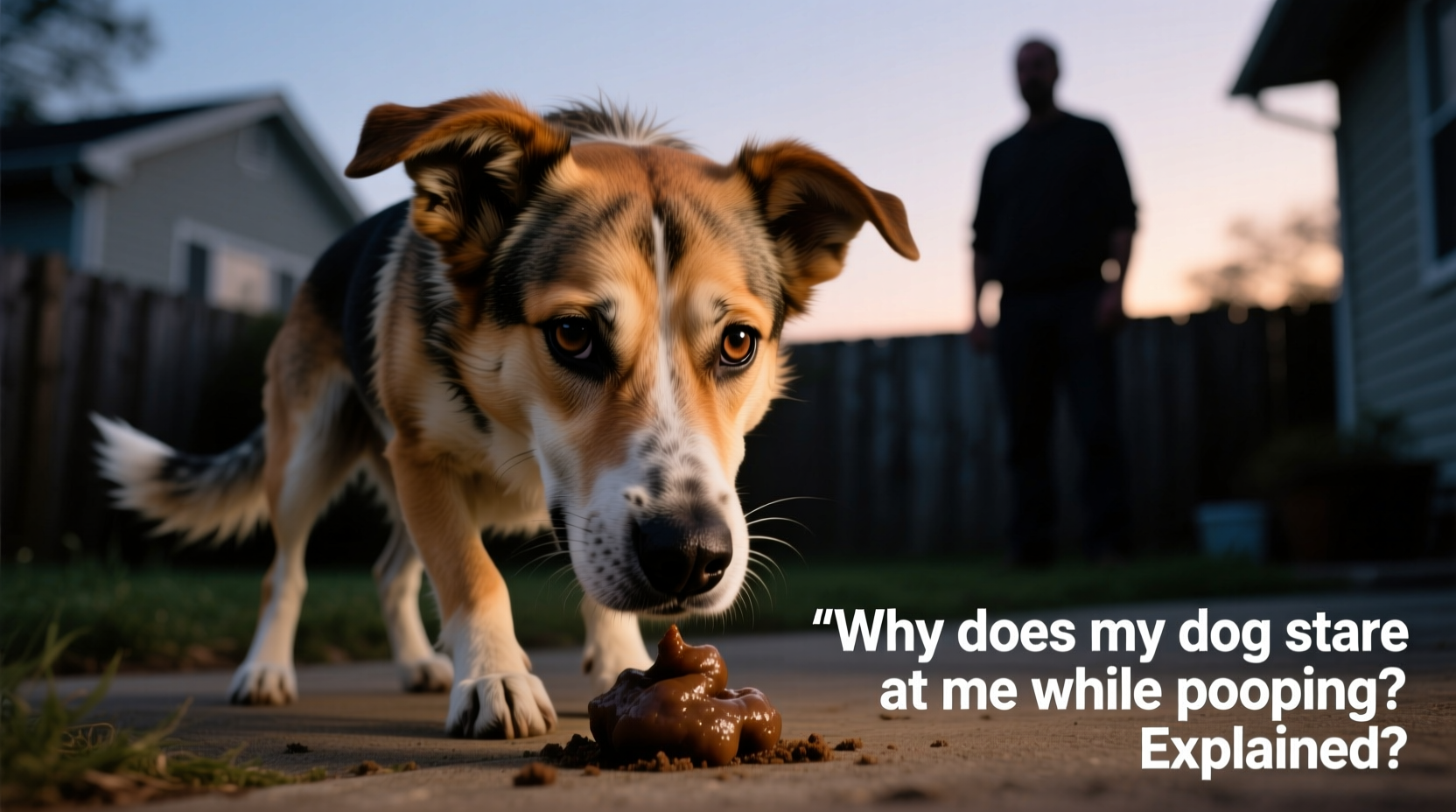
Defecation is a moment of physical vulnerability for dogs. In the wild, animals are more susceptible to predators when squatting or focused on elimination. This instinct hasn’t disappeared in domesticated dogs. Even though your living room or backyard poses no real threat, your dog’s brain still operates with survival mechanisms inherited from their ancestors.
When your dog stares at you while pooping, they’re checking in for reassurance. They want confirmation that you’re alert, watching their back, and ensuring nothing dangerous approaches. This gaze is not about shame or embarrassment—it’s about security. The eye contact serves as a silent plea: “I’m trusting you to keep me safe right now.”
Research in canine ethology supports this idea. Dr. Patricia McConnell, animal behaviorist and author of *The Other End of the Leash*, explains: “Dogs are highly attuned to their environment when they’re in compromised positions. Eye contact during elimination is a way of maintaining connection with someone they rely on.”
“Eye contact during vulnerable acts like eating, sleeping, or eliminating is a sign of deep social bonding in dogs. It means they see you as part of their functional pack.” — Dr. Karen London, Certified Applied Animal Behaviorist
Pack Mentality and Social Hierarchy
Dogs are social animals descended from wolves, which live in tightly knit family units governed by hierarchy and cooperation. While modern pets don’t hunt or sleep in dens together, many aspects of pack behavior remain embedded in their psyche.
In a pack setting, lower-ranking members often avoid drawing attention during bodily functions, whereas higher-status individuals may be more relaxed. However, domestic dogs have redefined the pack structure—they include humans as core members. When your dog looks at you while pooping, they may be acknowledging your role as the leader or protector of the group.
Alternatively, some experts suggest this behavior reflects equality in the relationship. Your dog doesn’t see you as dominant or subordinate but as a trusted companion who shares responsibility for mutual safety. This kind of egalitarian bond is increasingly common in households where dogs are treated as family members rather than pets.
Signs Your Dog Views You as Part of Their Pack
- Maintains eye contact during vulnerable activities (pooping, sleeping, grooming)
- Brings toys or \"gifts\" to you after outdoor time
- Positions themselves between you and strangers or perceived threats
- Follows you from room to room consistently
- Whines or checks in when out of sight
Attention-Seeking vs. Emotional Connection
Not all staring is created equal. Some dogs look at their owners during elimination simply because they’ve learned it gets a reaction. If you’ve ever laughed, spoken, or made a fuss when your dog looked up mid-poop, you’ve unintentionally reinforced the behavior.
Over time, your dog may associate eye contact during bathroom breaks with positive attention—even if that attention comes in the form of surprise or amusement. This creates a feedback loop: they stare, you respond, they repeat.
However, distinguishing between attention-seeking and genuine emotional signaling is crucial. A dog seeking attention will often break eye contact quickly, wag their tail playfully, or shift posture to engage further. In contrast, a dog seeking reassurance maintains steady, soft-eyed contact and remains focused on the act of elimination.
Do’s and Don’ts When Your Dog Stares While Pooping
| Do | Don’t |
|---|---|
| Remain calm and still to provide a sense of security | Laugh, shout, or make sudden movements that could startle them |
| Offer quiet verbal praise once they finish (“Good job”) to reinforce confidence | Stare back intensely, which can be interpreted as dominance or challenge |
| Respect their space—stand nearby but not directly over them | Pull on the leash or rush them before they’re done |
| Observe patterns—if staring increases with anxiety, consider behavioral support | Assume the behavior is weird or inappropriate; it’s natural for dogs |
A Real-Life Example: Max the Rescue Terrier
Max, a three-year-old mixed-breed terrier adopted from a rural shelter, had a habit of looking intently at his owner Sarah every time he defecated. At first, she found it amusing and would say, “Are you serious right now?” But over time, she noticed Max wouldn’t go at all unless she was standing within five feet and facing him.
Concerned, Sarah consulted a certified dog trainer. After observing several walks, the trainer noted that Max exhibited signs of past trauma—he flinched at loud noises and avoided unfamiliar people. His need for visual contact during elimination wasn’t quirky; it was a coping mechanism. He needed constant confirmation that he wasn’t alone.
The trainer recommended a gradual desensitization process. Instead of facing Max directly, Sarah began standing beside him, then slowly increased distance over weeks. She used calm verbal cues like “You’re safe” and rewarded successful eliminations with treats afterward. Within two months, Max gained enough confidence to relieve himself without needing direct eye contact—though he still glanced back occasionally, a sign of trust rather than dependence.
This case illustrates how seemingly odd behaviors often stem from deeper emotional needs. With patience and understanding, owners can help their dogs feel secure enough to relax even in vulnerable moments.
Medical and Behavioral Red Flags
While occasional staring during defecation is normal, certain patterns may indicate underlying issues. Pay close attention if your dog exhibits any of the following:
- Excessive straining or whining while trying to poop
- Sudden onset of intense eye contact when it wasn’t present before
- Refusal to eliminate unless you're in direct line of sight
- Signs of pain, trembling, or crouching abnormally
- Frequent accidents indoors despite regular outdoor access
These symptoms could point to medical conditions such as gastrointestinal discomfort, anal gland issues, urinary tract infections, or spinal problems. Alternatively, they might reflect heightened anxiety, especially in dogs with histories of abuse, neglect, or inconsistent routines.
If your dog suddenly becomes hyper-vigilant during bathroom breaks—or stops going altogether—consult your veterinarian. A full check-up can rule out physical causes and guide next steps, whether medical treatment or behavioral therapy.
Step-by-Step Guide: Building Bathroom Confidence
- Observe without reacting: For one week, note when and how your dog stares. Is it consistent? Does it happen only in certain locations?
- Stay calm and predictable: During potty breaks, maintain a relaxed posture. Avoid talking or moving until after elimination.
- Create a safe zone: Choose a quiet, familiar spot for bathroom breaks. Minimize distractions like traffic, other dogs, or loud sounds.
- Use positive reinforcement: After your dog finishes, offer a treat or gentle praise. This builds positive associations with the entire process.
- Gradually reduce proximity: Once your dog feels comfortable, slowly increase the distance between you during potty time. Reward calm behavior.
- Consult a professional if needed: If anxiety persists, seek help from a certified canine behaviorist or veterinary behaviorist.
FAQ: Common Questions About Dog Staring During Pooping
Is it normal for my dog to stare at me while pooping?
Yes, it’s completely normal. Many dogs look at their owners during elimination as a way of seeking reassurance or confirming their surroundings are safe. As long as there are no signs of distress or medical issues, this behavior is a healthy expression of trust.
Should I look back at my dog when they stare while pooping?
It’s best to avoid direct, prolonged eye contact, which can be perceived as confrontational in canine communication. Instead, keep your gaze soft and peripheral. A brief glance or nod is sufficient. Focus on being present without creating pressure.
My dog won’t poop unless I’m watching. Is this a problem?
It depends on the context. If your dog is otherwise confident and only checks in briefly, it’s likely just a sign of attachment. However, if they refuse to go unless under intense supervision, it may indicate separation-related anxiety or over-dependence. Gradual training and consistency can help build independence.
Conclusion: Trust, Bonding, and Everyday Moments
Your dog’s stare during one of life’s most basic functions might seem strange at first glance—but it’s actually one of the purest expressions of trust they can offer. In that moment, they’re not just relieving themselves; they’re inviting you into a private, vulnerable experience. That kind of openness doesn’t come lightly. It’s earned through daily care, consistency, and emotional safety.
Understanding this behavior transforms it from a curiosity into a meaningful window into your dog’s inner world. Rather than dismissing it or laughing it off, recognize it for what it is: a quiet testament to the bond you’ve built.




 浙公网安备
33010002000092号
浙公网安备
33010002000092号 浙B2-20120091-4
Comments
No comments yet. Why don't you start the discussion?