
Dogs are full of quirks—some endearing, others puzzling. One such behavior that leaves many pet owners scratching their heads is the intense eye contact a dog gives while defecating. You’re standing there, perhaps trying not to look directly at the act itself, when suddenly your dog locks eyes with you mid-poop. It’s awkward, unexpected, and strangely intimate. But far from being odd or concerning, this behavior is more common than you might think—and it often reveals a great deal about your dog’s emotional state, instincts, and relationship with you.
Understanding why dogs do this requires looking beyond the surface. It’s not just a random glance; it’s communication. Whether it’s about trust, vulnerability, or simply checking in, your dog’s stare carries meaning. In this article, we’ll explore the psychological, evolutionary, and behavioral reasons behind this curious habit, helping you interpret what your dog is really saying when they look at you during one of life’s most private moments.
The Vulnerability Factor: A Moment of Trust
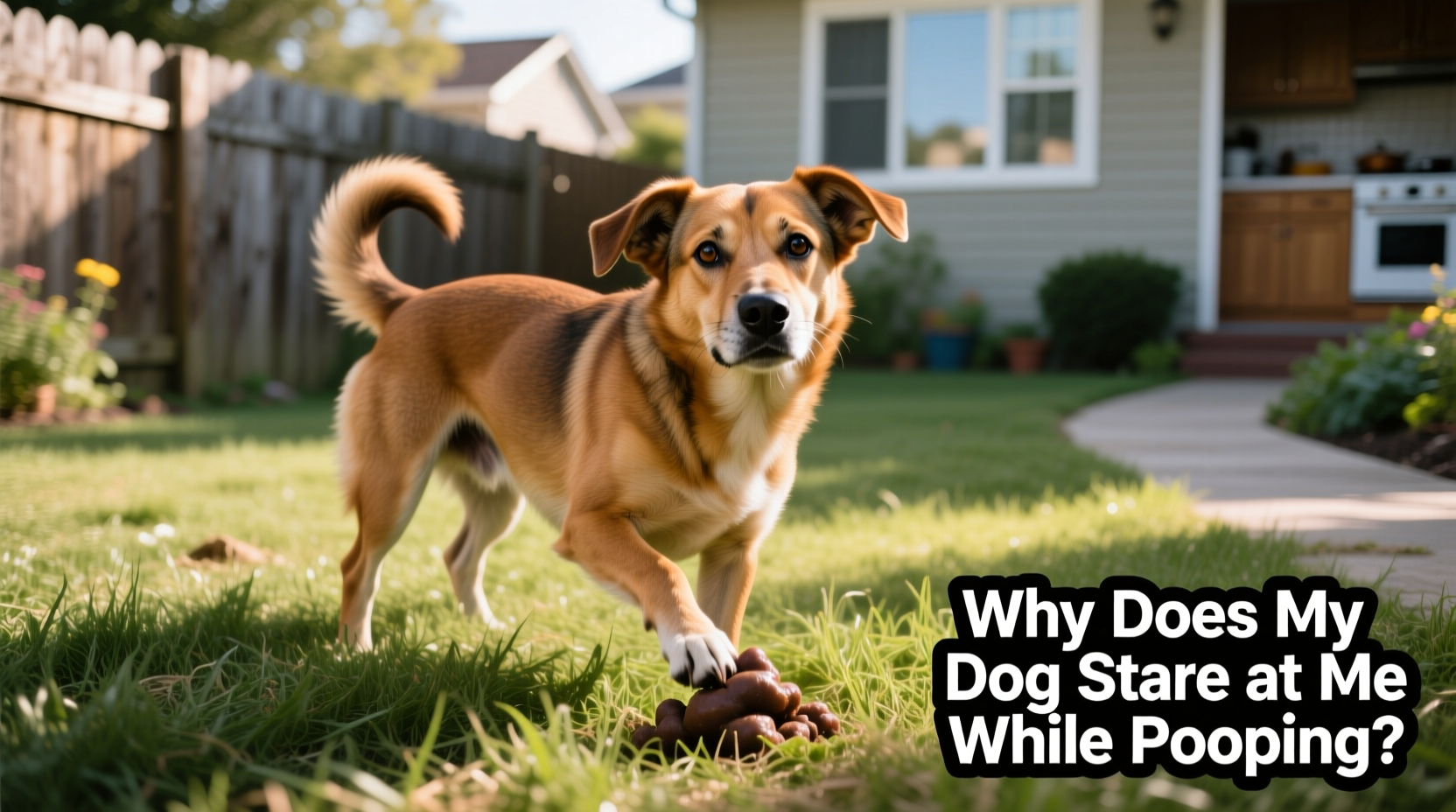
Defecation is a vulnerable activity for any animal, including dogs. In the wild, animals lower their guard physically and mentally during elimination, making them easy targets for predators. Even though domesticated dogs no longer face the same survival threats, those primal instincts remain deeply embedded in their behavior.
When your dog stares at you while pooping, they may be doing so because they feel exposed. By maintaining eye contact, they’re silently asking, “Are you watching my back?” This isn’t paranoia—it’s an instinctual check-in. Your presence reassures them that the environment is safe, and your attention confirms that you’re on guard duty.
This behavior is especially common in dogs who have strong bonds with their owners. The stronger the attachment, the more likely a dog is to seek reassurance during vulnerable moments. It’s not unlike a child glancing back at a parent while crossing the street—just a quick confirmation that everything is okay.
Eye Contact as Communication: What Your Dog Is Saying
Dogs use eye contact strategically. Unlike wolves, who avoid prolonged eye contact as a sign of aggression, domesticated dogs have evolved to use gaze as a form of social bonding. Studies have shown that dogs and humans share a unique oxytocin feedback loop—when a dog looks into their owner’s eyes, both experience a rise in oxytocin, the so-called “love hormone.”
So when your dog stares at you while pooping, they’re not just scanning for danger—they may also be reinforcing the bond between you. That intense gaze could be their way of saying, “We’re in this together,” even in the most mundane of moments. It’s a subtle but powerful expression of connection.
However, context matters. A relaxed, soft-eyed stare is different from a tense, wide-eyed one. The former suggests comfort and trust; the latter may indicate anxiety or discomfort. Observing your dog’s overall body language—ears, tail position, breathing—can help you distinguish between affectionate communication and stress signals.
Reading the Signals: Body Language Cues During Elimination
- Relaxed posture: Loose shoulders, wagging tail, natural blink rate — indicates comfort and trust.
- Tense muscles: Stiff legs, tucked tail, rapid breathing — may suggest fear or environmental stress.
- Frequent glancing: Repeated eye contact without tension — likely a check-in behavior.
- Avoiding eye contact: Could mean overstimulation, submission, or feeling unsafe.
Instinct vs. Domestication: An Evolutionary Perspective
To fully understand this behavior, it helps to consider the journey from wolf to companion dog. Wild canids typically eliminate away from their den sites to avoid attracting predators. They don’t usually make eye contact with pack members during this process—silence and speed are key.
Domestication changed that. Over thousands of years, dogs evolved to rely on humans not just for food and shelter, but for emotional cues. Their survival became tied to understanding human behavior, which led to heightened social awareness. Modern dogs are experts at reading facial expressions, tone of voice, and body language—all tools they use to navigate their world.
In this context, staring during pooping isn’t defiance or oddity—it’s a learned strategy. Dogs have discovered that looking at their humans during vulnerable acts often results in positive reinforcement: soothing words, treats, or simply acknowledgment. Over time, this behavior becomes reinforced through routine and reward.
“Dogs don’t just see us as providers—they see us as partners in survival. When they look at you while eliminating, they’re treating you as part of their pack, relying on you for protection even in vulnerable states.” — Dr. Laura Bennett, Canine Behavior Specialist
Environmental Influences: Where and How Your Dog Poops Matters
The setting plays a major role in whether your dog will stare at you during elimination. A dog walking in a quiet neighborhood park may feel secure enough to go without much interaction. But in a busy dog park, near traffic, or in an unfamiliar yard, the need for reassurance increases.
Urban environments, in particular, can heighten a dog’s sense of exposure. Loud noises, sudden movements, and the presence of other animals create stress. In these situations, your dog may lock eyes with you more frequently—not out of habit, but out of necessity.
Additionally, if your dog is trained to eliminate on command (e.g., using cue words like “go potty”), they may look at you expecting a signal or reward. This learned behavior turns elimination into a shared task, further encouraging eye contact.
Mini Case Study: Max, the Apartment-Dwelling Terrier
Max, a 3-year-old Jack Russell Terrier, lives in a high-rise apartment with his owner, Sarah. He only goes outside for walks, using a nearby sidewalk strip for elimination. Sarah noticed that every time Max squatted, he’d turn his head and stare at her intensely.
At first, she found it strange—almost accusatory. But after consulting a trainer, she realized Max was scanning the environment: passing cyclists, barking dogs, and loud delivery trucks made him uneasy. By looking at Sarah, he was confirming she was still present and vigilant.
Sarah began using a calming phrase—“I’m right here”—each time Max looked up. Over several weeks, his gaze became less frantic, though he still checked in occasionally. The behavior didn’t disappear, but it shifted from anxious to habitual—a sign of trust rather than fear.
When Staring Might Signal a Problem
While staring during pooping is usually normal, it can sometimes point to underlying issues—especially if the behavior is new, excessive, or accompanied by physical signs.
Consider the following red flags:
- Straining or whimpering while defecating
- Looking at you and then back at their rear repeatedly
- Backing up excessively or scooting
- Refusing to defecate despite circling
These behaviors may indicate discomfort, constipation, impacted anal glands, or even spinal issues. In such cases, the stare isn’t about bonding—it’s a plea for help. Dogs can’t verbalize pain, so they use body language to communicate distress.
| Behavior | Normal? | Potential Concern |
|---|---|---|
| Occasional eye contact during pooping | ✅ Yes | None – typical bonding behavior |
| Staring with relaxed body language | ✅ Yes | None – shows trust |
| Repeated glancing with tense posture | ⚠️ Possibly | Anxiety or environmental stress |
| Staring and backing up or licking rear | ❌ No | Anal gland issue or pain |
| Crying or avoiding elimination | ❌ No | Medical problem – consult vet |
How to Respond: Building Confidence and Comfort
Your reaction to your dog’s stare can shape how they perceive elimination going forward. Here’s how to support them in a way that fosters confidence and reduces anxiety.
- Stay Calm and Present: Avoid turning away sharply or laughing, as this may confuse or unsettle your dog. Instead, maintain a relaxed stance and offer quiet reassurance.
- Use a Consistent Cue: If you use a verbal prompt like “go potty,” say it calmly during elimination. This creates predictability and strengthens communication.
- Avoid Rushing: Don’t pull on the leash or hurry your dog. Rushing increases stress and may lead to incomplete elimination or future holding-back.
- Choose Safe Spots: Whenever possible, take your dog to quiet, familiar areas for bathroom breaks. Predictable environments reduce anxiety.
- Observe Patterns: Note when and where the staring occurs most. Is it always in the same location? After certain activities? Tracking patterns helps identify triggers.
FAQ: Common Questions About Dogs Staring While Pooping
Is it normal for my dog to stare at me every time they poop?
Yes, it’s entirely normal, especially if your dog is closely bonded to you. Many dogs view elimination as a moment when they need backup, and your presence provides comfort. As long as the behavior isn’t paired with signs of distress, there’s no cause for concern.
Should I look back at my dog when they’re pooping?
You don’t need to maintain direct eye contact, but acknowledging your dog with a soft voice or gentle nod can be reassuring. Some dogs find prolonged staring intimidating, so a brief, calm response is often best.
Could this behavior mean my dog doesn’t feel safe?
Possibly. If your dog only stares in certain locations—like busy streets or near other dogs—it may reflect situational anxiety. Work on building confidence through gradual exposure and positive reinforcement in those environments.
Conclusion: Embrace the Quirks, Deepen the Bond
Dogs stare at their owners while pooping not because they’re strange, but because they’re thoughtful, perceptive, and deeply attuned to their relationships. That intense gaze is a blend of instinct, trust, and communication—a silent testament to the unique bond you share.
Rather than dismissing it as odd, consider it an invitation to understand your dog more deeply. Every glance, twitch, and tail wag holds meaning. By responding with patience and awareness, you don’t just address a quirky habit—you strengthen the foundation of trust that makes your companionship so special.




 浙公网安备
33010002000092号
浙公网安备
33010002000092号 浙B2-20120091-4
Comments
No comments yet. Why don't you start the discussion?