
Dogs do many things that seem odd to humans—spinning before lying down, sniffing every blade of grass on a walk, or suddenly sprinting across the yard for no apparent reason. But one of the more curious behaviors some owners report is their dog locking eyes with them while defecating. At first glance, it might appear comical or even slightly unsettling. Yet behind this seemingly bizarre act lies a complex interplay of instinct, vulnerability, trust, and social bonding.
Understanding why your dog stares at you during such a private moment isn’t just about decoding quirks—it offers insight into how dogs perceive safety, hierarchy, and emotional connection within their human-centered pack. This article explores the biological, psychological, and behavioral reasons behind this phenomenon, offering practical advice for interpreting and responding to your dog’s silent communication.
The Vulnerability Factor: A Moment of Weakness
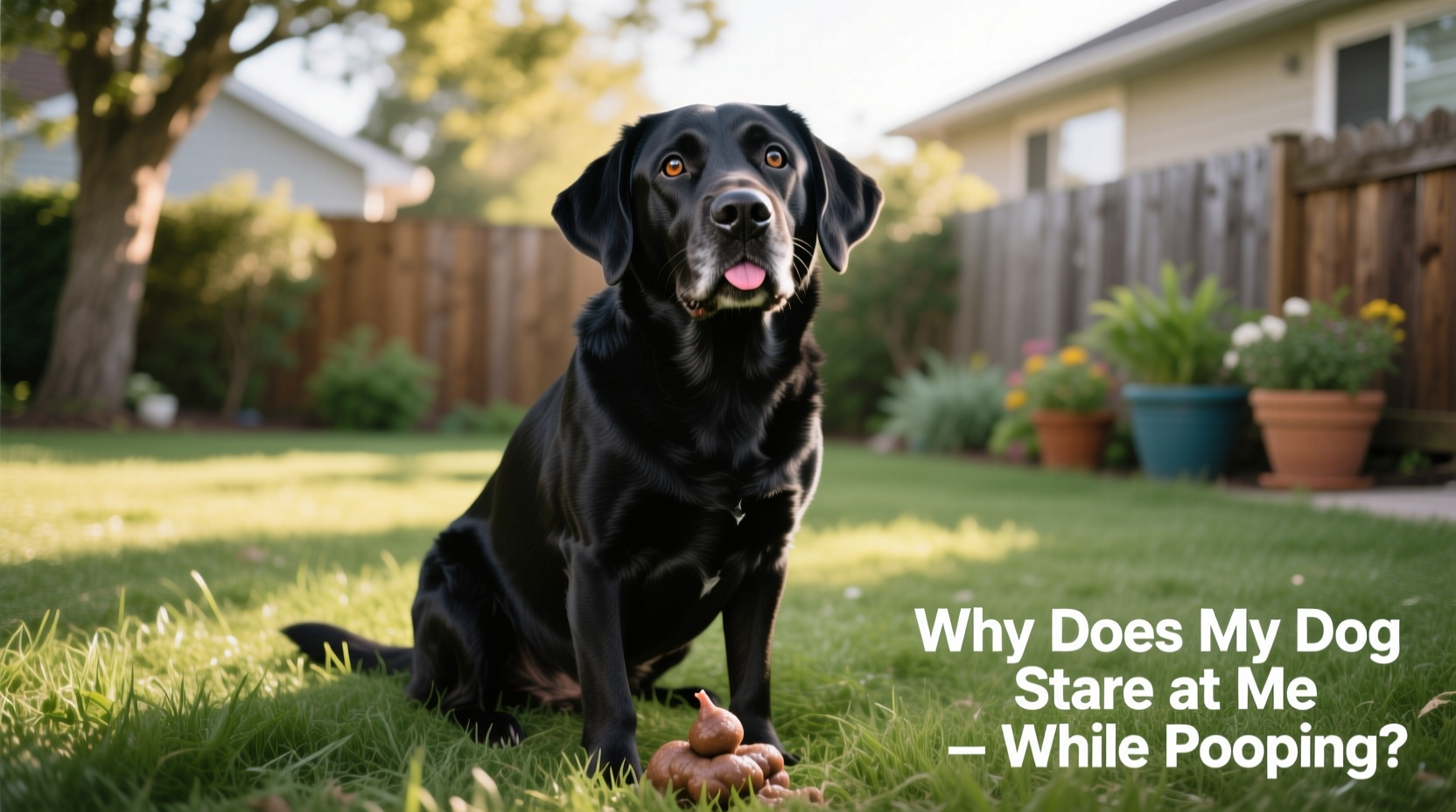
Defecation is a physically vulnerable state for any animal. In the wild, predators often target prey when they’re distracted or immobilized. For dogs—descendants of wolves—this instinctual awareness remains embedded in their psyche. Even domesticated dogs retain the evolutionary impulse to remain alert during elimination.
When your dog squats, muscles relax, balance shifts, and attention narrows to the task at hand. During these few seconds, they are less able to react quickly to threats. That’s where you come in. By staring at you, your dog may be checking whether you’re monitoring the surroundings. It’s not just eye contact—it’s a silent plea: “You’ve got my back, right?”
This behavior reflects deep-seated survival instincts. In a pack setting, subordinate members would eliminate under the watchful eyes of higher-ranking wolves who guarded against danger. Your dog sees you as part of its social unit—possibly even as a leader—and looks to you for reassurance that the environment is safe.
Trust and Bonding: The Emotional Connection
Eye contact between dogs and humans carries significant emotional weight. Unlike in wolf packs, where prolonged staring can signal aggression, dogs have evolved to use gaze as a tool for bonding. Studies show that mutual eye contact between dogs and their owners increases oxytocin levels—the so-called \"love hormone\"—in both species.
When your dog stares at you while pooping, it may not only be seeking protection but also reinforcing its emotional bond with you. This moment of shared attention becomes an intimate exchange, especially because it occurs during a time when the dog is exposed and dependent on its environment. The act of choosing to look at you, rather than away, signifies trust.
“Dogs don’t make eye contact lightly. When they do it during vulnerable moments like elimination, it’s a profound sign of attachment and reliance.” — Dr. Sarah Bennett, Canine Behavior Researcher, University of Edinburgh
This kind of behavior is more common in dogs with strong attachments to their owners. Rescue dogs, for example, may take months or even years to reach this level of comfort. Once achieved, these small gestures become meaningful indicators of progress in building trust.
Communication and Attention-Seeking
Some dogs stare simply because they’ve learned it works. If you’ve ever reacted—by laughing, talking, or giving treats—when your dog looked at you mid-poop, you’ve inadvertently reinforced the behavior. Dogs are masters of operant conditioning: they repeat actions that yield positive outcomes.
In households where owners are highly attentive, dogs may use elimination time as another opportunity to engage. They know you’re watching (because you usually are), and they seize the moment to connect. For some dogs, it’s less about vulnerability and more about inclusion: “I’m doing something important—don’t I deserve your attention?”
This doesn’t diminish the emotional significance; it simply adds a layer of learned behavior atop instinctual drives. Like waving a paw or tilting the head, staring during defecation can become a ritualized way of saying, “Notice me.”
Common Triggers for Staring Behavior
- Owner presence during bathroom breaks
- Highly bonded relationships
- Past experiences of insecurity or trauma
- Reinforcement through verbal praise or physical affection
- Unfamiliar environments or perceived threats
Environmental Awareness and Pack Dynamics
Dogs are acutely aware of their surroundings, and their elimination habits reflect this sensitivity. Whether in your backyard or on a city sidewalk, your dog assesses risk constantly. Factors like noise, movement, other animals, or unfamiliar scents can heighten alertness.
In such situations, staring at you serves as a dual-purpose signal: it communicates distress (“This place feels unsafe”) and requests guidance (“What should I do?”). You become the decision-maker, the protector, the alpha figure in the dog’s mental framework.
A well-socialized dog in a familiar, quiet space may not stare at all—instead opting to finish quickly and move on. But in uncertain conditions, the gaze intensifies. This variation underscores that the behavior is context-dependent, shaped by both internal temperament and external stimuli.
| Environment | Likelihood of Staring | Reason |
|---|---|---|
| Familiar backyard | Low to moderate | Dog feels secure; may still check in briefly |
| Busy urban street | High | Heightened vigilance due to noise and foot traffic |
| New hiking trail | Moderate to high | Unfamiliar terrain increases need for reassurance |
| Veterinary clinic | Very high | Stress amplifies dependency on owner |
Mini Case Study: Max, the Rescue Terrier Mix
Max, a three-year-old terrier mix adopted from a rural shelter, exhibited extreme anxiety during outdoor potty breaks. His new owner, Lisa, noticed he would begin to squat, then immediately stop and lock eyes with her, trembling slightly. He rarely completed the process outside unless she stood directly beside him and spoke softly.
After consulting a certified dog behaviorist, Lisa learned that Max had likely endured neglect and unpredictable environments early in life. His staring wasn’t just habit—it was a survival mechanism. He needed confirmation that his surroundings were safe before allowing his body to fully relax.
Using a structured desensitization plan, Lisa began taking Max to the same quiet corner of a park daily, staying calm and still while he eliminated. Over six weeks, she gradually increased distance and reduced verbal cues. Eventually, Max stopped staring intensely and began eliminating more confidently, glancing at her only briefly before resuming his walk.
The transformation highlighted how staring can serve as both a symptom of insecurity and a bridge toward healing—with patience and consistency.
When Staring Signals Discomfort or Health Issues
While most instances of staring during defecation are normal, persistent or intense gaze combined with physical strain could indicate underlying problems. Dogs experiencing constipation, anal gland issues, or gastrointestinal discomfort may delay elimination or exhibit unusual postures. In these cases, staring may be accompanied by whining, pacing, or repeated squatting without results.
It’s essential to distinguish between behavioral staring and signs of distress. If your dog shows any of the following, consult a veterinarian:
- Straining for more than 30 seconds without success
- Blood or mucus in stool
- Visible pain during elimination
- Sudden change in frequency or consistency of bowel movements
- Obsessive licking of the rear area
Actionable Checklist: Responding to Your Dog’s Staring Behavior
To support your dog emotionally and behaviorally, follow this checklist:
- Stay Calm and Present: Avoid sudden movements or loud noises when your dog is eliminating.
- Maintain a Predictable Routine: Go to the same spot at consistent times to build confidence.
- Scan the Environment: Look around deliberately to signal vigilance and protection.
- Minimize Distractions: Keep leashes loose and avoid pulling or tugging during potty breaks.
- Reinforce Successfully: Praise quietly after completion—never during the act itself.
- Rule Out Medical Causes: Schedule a vet check if behavior changes abruptly.
- Build Confidence Gradually: Use positive reinforcement training to reduce anxiety in new environments.
Frequently Asked Questions
Is it normal for my dog to stare at me every time he poops?
Yes, especially if your dog is closely bonded to you. As long as the behavior isn’t paired with signs of stress or physical difficulty, it’s likely a normal expression of trust and environmental awareness.
Should I look back at my dog when he stares while pooping?
Soft, non-threatening eye contact is fine. However, avoid intense staring, which some dogs may interpret as confrontational. A gentle glance followed by a scan of the surroundings sends the message: “I’m watching out for us.”
My dog never used to stare, but now he does. Should I be concerned?
A sudden change in behavior warrants attention. Consider recent environmental shifts—new pets, moves, construction, or traumatic events. If no obvious cause exists, consult a vet or behaviorist to rule out pain or anxiety disorders.
Conclusion: Seeing Beyond the Quirk
The next time your dog locks eyes with you mid-squat, resist the urge to laugh or look away. That gaze is more than a funny moment—it’s a window into your dog’s mind. It speaks of dependence, trust, and the deep-rooted need for security within a social group. What might seem like a strange habit is, in fact, a testament to the unique relationship you share.
By recognizing the meaning behind these subtle interactions, you strengthen the bond with your pet and become a more attuned caregiver. Pay attention not just to what your dog does, but to why they do it. In those quiet, unguarded moments, the true depth of canine loyalty reveals itself.




 浙公网安备
33010002000092号
浙公网安备
33010002000092号 浙B2-20120091-4
Comments
No comments yet. Why don't you start the discussion?