
Dogs are creatures of instinct, emotion, and profound loyalty. Their behaviors often reflect a complex blend of evolutionary history and personal relationship with their human companions. One such behavior that puzzles many pet owners is the intense eye contact some dogs maintain while defecating. At first glance, it may seem odd or even comical—a dog squatting in the grass, yet locking eyes with its owner as if seeking approval or reassurance. But this moment is far from trivial. It reveals a deeper layer of canine psychology rooted in vulnerability, trust, and social bonding.
To understand this behavior, we must move beyond human assumptions about privacy and instead consider the world through a dog’s sensory and emotional lens. In the wild, canines do not have the luxury of private restrooms. Every act of elimination carries risk, especially when it leaves them physically exposed and momentarily immobile. For domesticated dogs, staring at their human during such moments is not just habit—it’s communication. It’s an unspoken dialogue that says, “I’m relying on you to keep me safe.”
The Vulnerability of Elimination
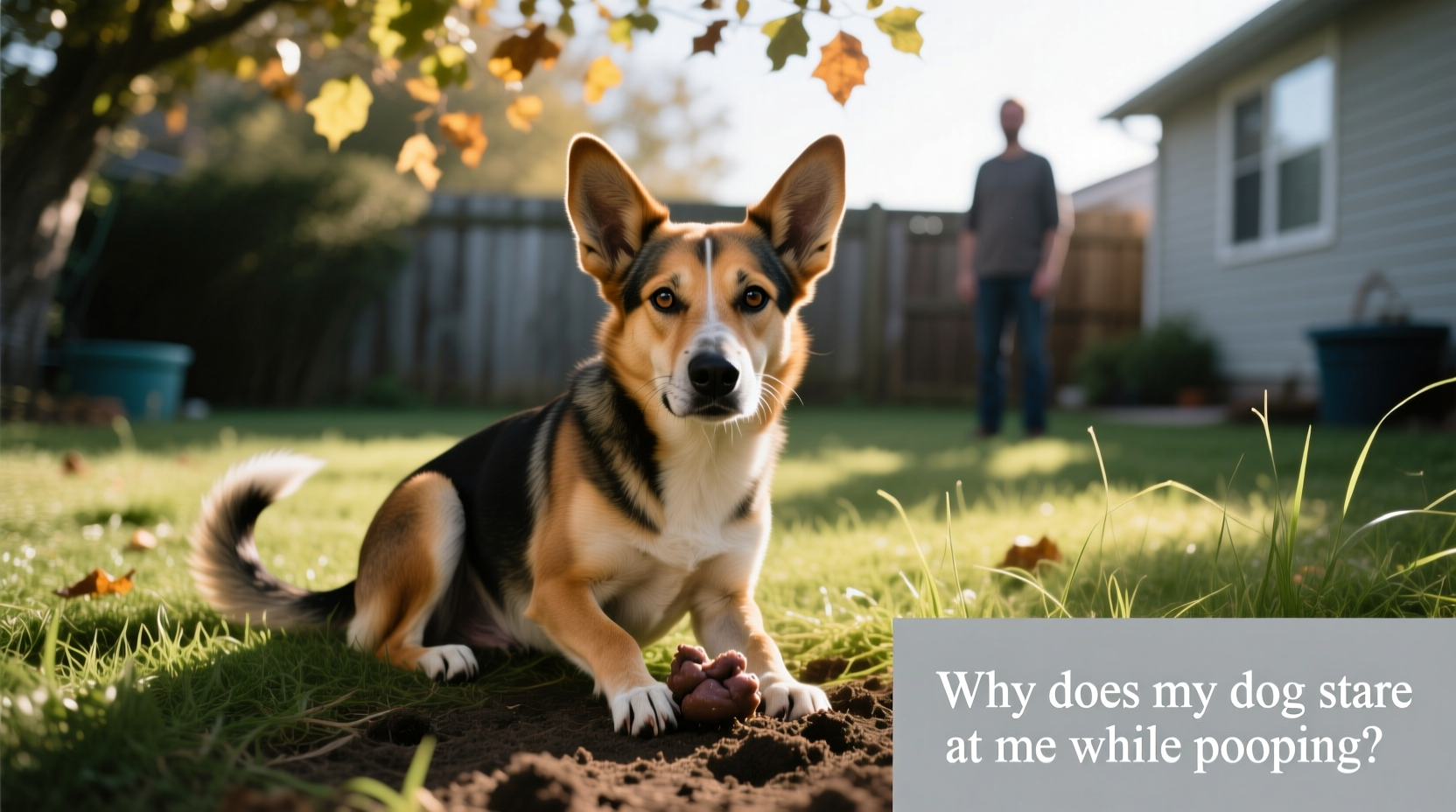
In nature, few acts are as dangerous for animals as defecation. Predators often target prey during vulnerable states: sleeping, eating, or eliminating waste. Even among pack animals like wolves—the ancestors of modern dogs—individuals lower their guard only when they feel secure within the group. A wolf will typically choose a discreet location to relieve itself and remain alert, scanning the surroundings for threats. However, domestic dogs have adapted to rely heavily on humans for protection, altering how they experience these instinctual moments.
When your dog squats in the backyard or pauses during a walk, its body is in a compromised position. Balance is reduced, mobility is limited, and attention is diverted. This physical vulnerability triggers a primal need for environmental awareness. By maintaining eye contact, your dog is essentially conducting a real-time threat assessment—using you as its lookout.
Trust as a Survival Mechanism
Dogs don’t form bonds lightly. Over thousands of years of domestication, they’ve evolved to read human facial expressions, tone of voice, and body language with remarkable precision. This ability isn’t just social—it’s survival-based. A dog that trusts its human implicitly knows it doesn’t have to monitor every direction for danger. Instead, it outsources vigilance to the person it views as its leader.
Eye contact during elimination is one of the clearest demonstrations of this trust. Unlike cats, who typically seek solitude when using the litter box, dogs often prefer company. This preference stems from their pack mentality. In a healthy pack dynamic, members take turns being on alert while others eat, sleep, or relieve themselves. Your dog sees you as part of its pack—and possibly even the alpha. When it looks at you mid-poop, it’s delegating responsibility: “You watch for trouble; I’ll handle this.”
“Dogs use eye contact not just to communicate affection but also to assess safety. That stare during vulnerable moments is a sign of deep reliance.” — Dr. Karen Becker, Veterinary Behaviorist
Why Some Dogs Stare and Others Don’t
Not all dogs exhibit this behavior, and that variation is entirely normal. Several factors influence whether a dog will maintain eye contact while eliminating:
- Breed tendencies: Herding breeds (like Border Collies) and working dogs (such as German Shepherds) are more likely to look to humans for cues due to their genetic predisposition toward cooperation.
- Socialization history: Dogs raised in stable, nurturing environments tend to develop stronger attachment behaviors, including seeking reassurance during vulnerable acts.
- Individual personality: Just like people, dogs have distinct temperaments. Some are naturally more independent; others crave constant connection.
- Training background: Dogs trained with positive reinforcement often associate their owners with support and guidance, making them more likely to check in during uncertain moments.
| Factor | Likely to Stare? | Reason |
|---|---|---|
| Highly bonded dog | Yes | Seeks emotional security from owner |
| Poor early socialization | No or infrequent | Lacks trust in human reliability |
| Confident, independent breed | Rarely | Self-reliant by nature |
| New environment | Frequently | Heightened anxiety increases need for reassurance |
Decoding the Gaze: What Your Dog Is Trying to Say
The stare isn’t uniform across contexts. Subtle differences in duration, intensity, and accompanying body language can reveal what your dog truly needs in that moment.
A soft, prolonged gaze usually indicates contentment and trust. The dog feels safe enough to relax physically and emotionally. In contrast, a rapid, darting glance followed by a return to scanning the environment suggests underlying anxiety. This type of look-in-and-away pattern means your dog wants confirmation that everything is okay before fully committing to the act.
Other signals to observe include:
- Ears forward: Attentive, possibly waiting for feedback.
- Tail low or tucked: Nervousness or discomfort in the setting.
- Pausing mid-squat: Distraction or perceived threat.
- Whining or nudging: Active request for reassurance.
If your dog frequently hesitates or avoids defecating in certain areas despite needing to go, it may be signaling discomfort with the environment—too noisy, too open, or lacking a sense of cover. In urban settings, concrete sidewalks and heavy foot traffic can heighten stress levels, making the need for human support even greater.
Real-Life Example: Max the Rescue Terrier
Max, a three-year-old Jack Russell Terrier mix, was adopted after spending his first year in a rural shelter with minimal human interaction. His new owner, Sarah, noticed he would begin to squat on walks but immediately stop if she turned her head or checked her phone. He wouldn’t finish until she looked directly at him and spoke calmly.
After consulting a canine behavior specialist, Sarah learned that Max’s past lack of consistent care had made him hyper-aware of attention withdrawal. To him, being ignored—even briefly—meant potential danger. The therapist recommended building trust through structured routines and verbal affirmations during vulnerable moments.
Within six weeks of practicing steady eye contact and saying soothing phrases like “I’ve got you” during bathroom breaks, Max began defecating without constant visual checks. The change wasn’t overnight, but the progress showed how deeply trust influences even basic biological functions.
How to Support Your Dog During These Moments
You don’t need to dramatically alter your routine to help your dog feel safer. Small, consistent actions build confidence over time. Here’s a practical step-by-step approach:
- Stay present: Avoid distractions like phones or conversations when your dog is eliminating. Stand quietly nearby.
- Maintain calm eye contact: Offer a soft gaze in return. Don’t stare intensely, which can be intimidating.
- Use a reassuring phrase: Develop a short cue like “You’re safe” or “Go ahead,” said in a gentle tone.
- Respect their pace: Never rush or pull on the leash during elimination. Allow time for full relaxation.
- Choose appropriate locations: Pick spots with partial visual cover—near bushes or walls—where your dog feels less exposed.
- Reinforce success: After your dog finishes, offer quiet praise or a treat to reinforce the positive experience.
Checklist: Building Elimination Confidence
- ✅ Minimize distractions during potty breaks
- ✅ Practice relaxed standing posture near your dog
- ✅ Speak softly or use a consistent reassurance phrase
- ✅ Choose quieter, sheltered areas when possible
- ✅ Reward completion with calm praise or treats
- ✅ Observe body language for signs of stress
- ✅ Be patient with rescue or shy dogs—they may take longer to trust
Frequently Asked Questions
Is it normal for my dog to stare at me while pooping?
Yes, it’s completely normal and often a sign of trust. Many dogs look to their owners for reassurance during vulnerable activities. As long as the behavior isn’t accompanied by distress or avoidance, it reflects a healthy bond.
Should I look back at my dog when they’re pooping?
Yes—maintaining soft, non-threatening eye contact helps your dog feel monitored and protected. Avoid intense staring, which can be perceived as confrontational. A gentle, periodic glance is sufficient.
What if my dog won’t poop unless I’m watching?
This dependency is common, especially in anxious or recently rescued dogs. While it shows strong attachment, you can gradually encourage independence by staying nearby without direct eye contact, then slowly increasing distance over time. Patience and consistency are key.
Conclusion: Honoring the Bond, One Glance at a Time
Your dog’s stare during elimination is more than a quirky habit—it’s a window into the depth of your relationship. In a world where dogs must navigate human rules, unfamiliar environments, and constant sensory input, moments of vulnerability become opportunities for connection. That silent gaze from your furry companion says, “I trust you with my weakest moment.”
By responding with patience, presence, and understanding, you strengthen not only their confidence but also the mutual respect that defines a true partnership. These small interactions accumulate into a lifetime of trust—one squat at a time.




 浙公网安备
33010002000092号
浙公网安备
33010002000092号 浙B2-20120091-4
Comments
No comments yet. Why don't you start the discussion?