
Dogs are naturally curious, expressive animals, and their behaviors often reflect their physical and emotional states. While occasional odd actions—like chasing shadows or barking at nothing—are usually harmless, a dog repeatedly staring at the wall can be unsettling for pet owners. This behavior may stem from something as simple as boredom or as serious as a neurological disorder. Understanding the underlying cause is essential to determine whether intervention is needed.
Unlike humans, dogs rely heavily on instinct, sensory input, and environmental cues. When they fixate on a blank wall, it’s rarely without reason—even if that reason isn’t immediately obvious to us. The key lies in observing patterns, frequency, and accompanying symptoms. Some causes are benign and easily corrected; others require prompt veterinary attention.
Common Behavioral Reasons for Wall Staring
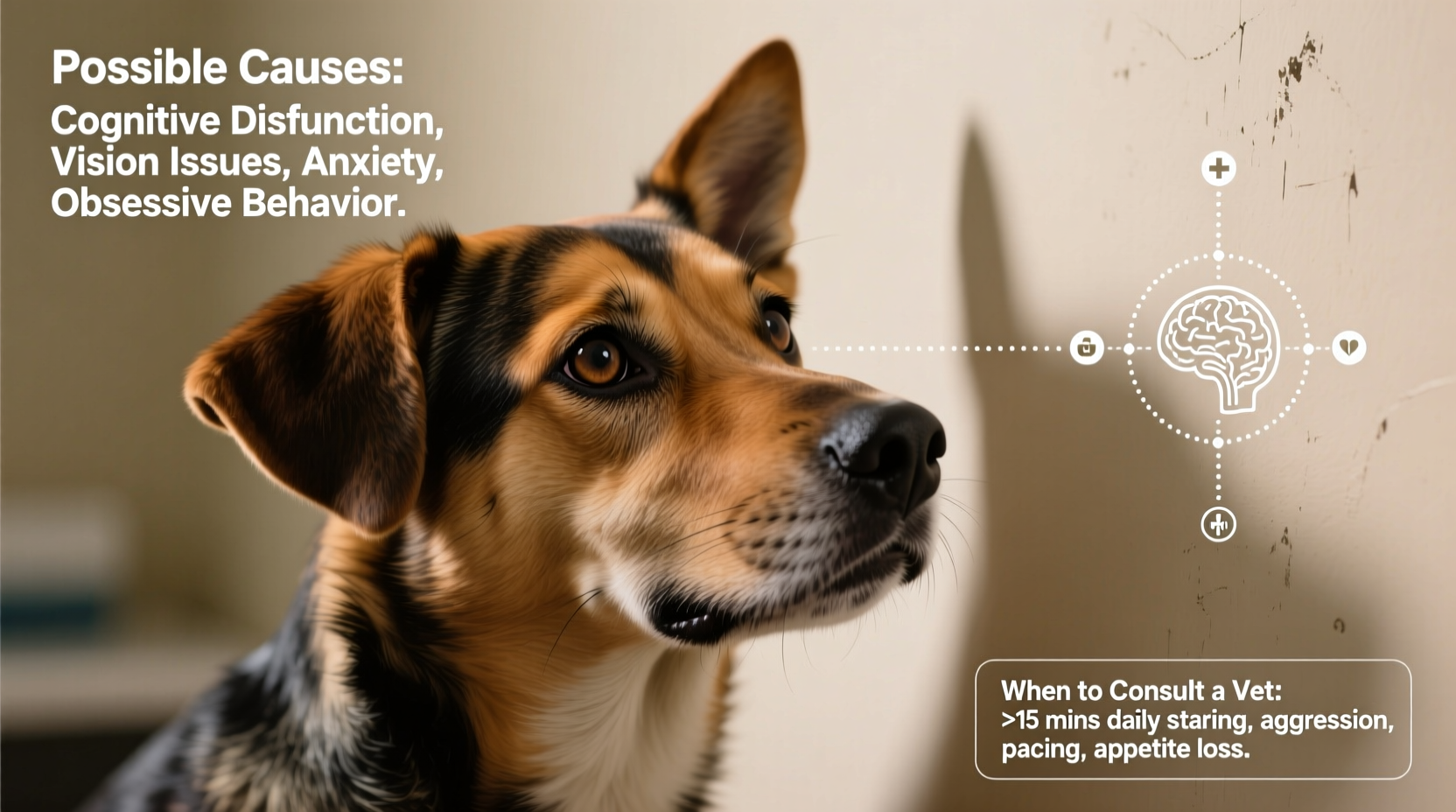
Not every instance of wall-staring signals a medical emergency. In many cases, the behavior stems from psychological or environmental factors. Dogs process stimuli differently than humans, and what seems like an empty wall might hold subtle interest for them.
- Boredom or lack of stimulation: Dogs left alone for long periods with no toys, exercise, or interaction may develop repetitive behaviors, including staring at walls, pacing, or licking surfaces.
- Attention-seeking: Some dogs learn that unusual behavior gets a reaction. If staring at the wall results in being spoken to or moved, the dog may repeat it to initiate interaction.
- Obsessive-compulsive tendencies: Repetitive actions such as tail-chasing, air-snapping, or wall-gazing can indicate canine compulsive disorder (CCD), especially in high-anxiety breeds like German Shepherds or Dobermans.
- Responding to subtle stimuli: A faint noise, shadow, draft, or even mold odor might capture a dog’s attention. Their superior hearing and smell mean they detect things we cannot.
Medical Causes That May Trigger Wall Staring
When behavioral explanations don’t fit—or when wall-staring is accompanied by other alarming signs—it’s important to consider medical conditions. Some of these are progressive and require early diagnosis for effective management.
Epilepsy and Seizure Activity
Dogs experiencing partial (focal) seizures may appear to stare into space or fixate on a wall. These episodes can last seconds to minutes and may be followed by disorientation, drooling, or uncoordinated movement. Unlike full-body seizures, focal seizures are subtle and often mistaken for daydreaming.
“Focal seizures in dogs can manifest as motionless staring, facial twitching, or repetitive blinking. Owners often overlook them until they become more frequent.” — Dr. Lena Torres, Veterinary Neurologist, DACVIM
Cognitive Dysfunction Syndrome (CDS)
Similar to dementia in humans, CDS affects older dogs (typically over 9 years). Symptoms include confusion, altered sleep cycles, soiling indoors, and vacant staring. A dog with CDS might stand motionless in a corner, seemingly unaware of surroundings.
Vision or Hearing Loss
Sensory decline can lead to misinterpretation of the environment. A dog losing vision may press its face against a wall, mistaking it for open space. Alternatively, hearing loss might make them hyper-focus on visual cues, leading to prolonged staring.
Brain Tumors or Lesions
While less common, structural brain abnormalities can cause abnormal behaviors. Tumors affecting the frontal or temporal lobes may result in fixation, aggression, or disorientation. These cases typically progress over weeks or months.
Pain or Discomfort
A dog in pain—especially chronic conditions like arthritis or dental disease—may adopt a fixed posture or gaze as a coping mechanism. They may also avoid movement, whine softly, or show changes in appetite.
When to Call the Vet: Red Flags to Watch For
Occasional wall-gazing isn’t necessarily concerning. However, certain patterns should prompt immediate veterinary evaluation. Early detection improves outcomes, particularly for neurological or cognitive conditions.
| Symptom | May Indicate | Action Step |
|---|---|---|
| Staring lasts more than 1–2 minutes | Focal seizure or disorientation | Record video and schedule neuro check |
| Accompanied by twitching, drooling, or falling | Seizure activity | Contact vet immediately |
| Occurs multiple times daily | Compulsive disorder or neurological issue | Begin behavior diary and consult vet |
| New onset in senior dogs (9+ years) | Cognitive dysfunction | Request CDS screening |
| Followed by aimless wandering or vocalization | Post-ictal phase or confusion | Monitor closely and seek evaluation |
Real Example: Max, the 10-Year-Old Border Collie
Max, a normally energetic Border Collie, began standing silently in the hallway each evening, staring at the same spot on the wall for nearly five minutes. His owner initially dismissed it as aging quirks. Over two months, the episodes increased in frequency and were followed by brief circling and confusion. A veterinary MRI revealed early-stage cognitive dysfunction. With a regimen of antioxidants, structured routines, and environmental enrichment, Max’s symptoms stabilized. His case underscores the importance of tracking changes—even subtle ones—in older pets.
Step-by-Step Guide to Assessing and Responding to Wall Staring
If your dog starts staring at the wall frequently, follow this timeline to determine the appropriate course of action:
- Observe and document: Note the time of day, duration, frequency, and any triggers (e.g., after naps, during storms). Record a video if possible.
- Check the environment: Look for drafts, noises, insects, or visual reflections that might attract attention. Clean the area to rule out odors.
- Assess overall health: Evaluate appetite, energy levels, bathroom habits, and mobility. Sudden changes warrant a vet visit.
- Enrich the environment: Introduce new toys, increase walks, or start training games. Monitor if the behavior decreases.
- Schedule a veterinary exam: If the behavior persists beyond a week or worsens, consult your vet. Blood work, neurological exams, or imaging may be recommended.
- Follow specialist recommendations: If a condition like epilepsy or CDS is diagnosed, adhere to treatment plans and track progress monthly.
Do’s and Don’ts: Managing Wall-Staring Behavior
| Do’s | Don’ts |
|---|---|
| Keep a behavior journal with dates, times, and descriptions | Ignore repeated or worsening episodes |
| Provide mental stimulation through training or puzzle toys | Yell at or punish your dog for staring |
| Consult your vet early, especially in senior dogs | Assume it’s “just old age” without evaluation |
| Use calming aids (e.g., pheromone diffusers) if anxiety is suspected | Self-diagnose or medicate without professional guidance |
| Ensure regular vet checkups, including hearing and eye exams | Delay seeking help due to fear of bad news |
Frequently Asked Questions
Is it normal for dogs to stare at walls occasionally?
Yes, brief moments of apparent fixation can be normal, especially if the dog responds quickly to distraction. However, repeated or prolonged staring—particularly if new or worsening—should be evaluated.
Can anxiety cause my dog to stare at walls?
Absolutely. Anxiety can manifest in repetitive behaviors. Dogs under stress may fixate on objects, lick walls, or pace. Common triggers include separation, loud noises, or changes in routine. Addressing the root cause often reduces the behavior.
What tests will the vet run if my dog stares at walls?
Your vet may begin with a full physical and neurological exam. Blood tests can rule out metabolic issues like liver disease. Advanced diagnostics might include MRI or CT scans to assess brain structure, especially if seizures or tumors are suspected.
Conclusion: Trust Your Instincts and Act Early
Dog behavior is a window into their well-being. While not every strange habit indicates illness, persistent wall-staring—especially when paired with other changes—deserves attention. Whether the cause is environmental, psychological, or medical, early intervention leads to better outcomes. You know your dog best. If something feels off, don’t wait for symptoms to escalate.
Taking action doesn’t always mean a diagnosis is dire. Sometimes, simple adjustments in routine or environment make all the difference. Other times, timely veterinary care can manage or slow progressive conditions. Either way, your awareness and responsiveness play a crucial role in your dog’s quality of life.




 浙公网安备
33010002000092号
浙公网安备
33010002000092号 浙B2-20120091-4
Comments
No comments yet. Why don't you start the discussion?