
Dog owners often find themselves pausing mid-sentence, not because they’ve forgotten their words, but because their dog has tilted its head—ears perked, eyes wide, expression full of curiosity. This universally recognized gesture tugs at heartstrings and sparks endless speculation. Is your dog trying to understand you better? Are they showing empathy? Or are they simply adjusting their ears to hear more clearly? The truth lies in a blend of anatomy, cognition, and emotional intelligence. Understanding the reasons behind this behavior offers more than just a cute explanation—it deepens the bond between human and pet by revealing how dogs interpret our world.
The Anatomy Behind the Tilt
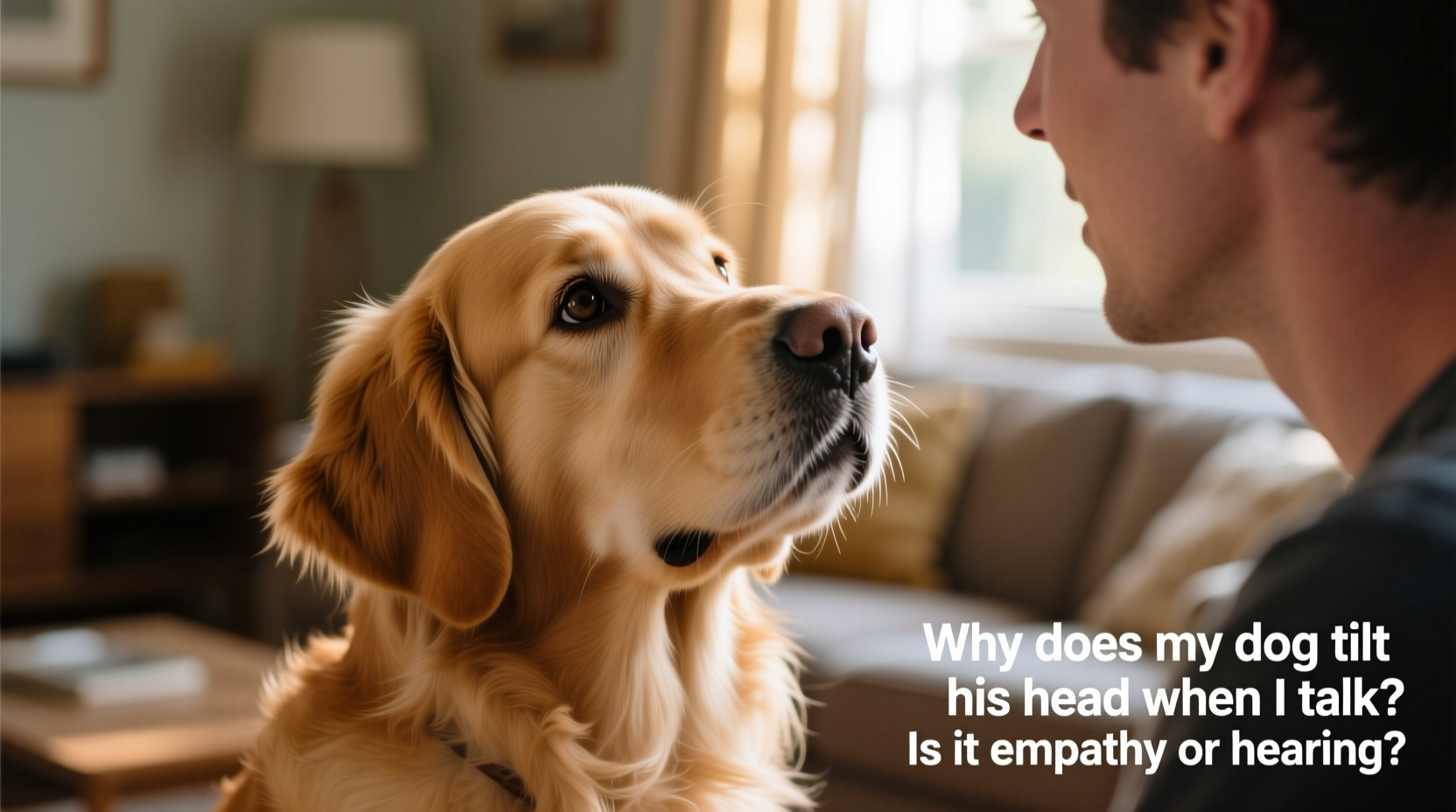
A dog’s skull structure and ear placement play a significant role in how they process sound. Unlike humans, who have forward-facing ears on either side of a relatively flat head, many dog breeds have muzzles that obstruct direct sound pathways. When a dog tilts its head, it subtly repositions its ears to better capture sound waves, especially those coming from lower frequencies or unfamiliar directions.
This adjustment helps bypass the physical obstruction of the muzzle. For dogs with long, floppy ears—like Basset Hounds or Cocker Spaniels—the tilt may also help shift the ear canal for improved auditory focus. Think of it as fine-tuning a satellite dish: small movements can make a big difference in signal clarity.
Studies using high-speed audio mapping have shown that dogs adjust their head position within milliseconds of hearing a new or soft sound. This reflexive action suggests that while the behavior may appear thoughtful, part of it is rooted in basic sensory optimization.
Hearing vs. Understanding: What Science Says
Researchers at the Family Dog Project at Eötvös Loránd University in Budapest have studied canine cognitive responses to human speech. Their findings suggest that dogs don’t just react to tone—they can distinguish between familiar words and nonsense syllables. When a dog hears a known command like “sit” or “treat,” brain activity increases in regions associated with reward processing. But when confronted with unfamiliar words, the head tilt becomes more frequent.
In one 2016 study, researchers played recordings of both meaningful and meaningless phrases to domestic dogs. They observed that head tilting occurred significantly more often during novel or ambiguous vocalizations. This supports the theory that the tilt is a behavioral response linked to auditory processing and attentional focus.
“Dogs use visual cues alongside auditory input to interpret human communication. The head tilt may be part of a multimodal strategy to extract meaning.” — Dr. Ádám Miklósi, Ethologist and Canine Behavior Researcher
However, hearing isn’t the only factor. Dogs also rely heavily on lip reading and facial expressions. By tilting their head, they reduce muzzle obstruction and gain a clearer view of your mouth movements. This dual-purpose motion enhances both auditory and visual comprehension, making it a smart adaptation rather than mere cuteness.
Empathy and Emotional Connection
Beyond mechanics, there’s growing evidence that the head tilt may reflect emotional engagement. Dogs are highly attuned to human emotions. MRI scans show that the canine brain responds to human laughter, crying, and affectionate tones in ways similar to how human brains do. When you speak softly or express concern, your dog may tilt their head not just to hear better—but to empathize.
Consider this: dogs are more likely to tilt their heads when spoken to in a high-pitched, emotionally expressive tone—commonly referred to as \"dog-directed speech\"—than in monotone commands. This selective response indicates that the behavior isn’t purely reflexive; it’s modulated by social context.
Moreover, dogs that live in emotionally responsive households exhibit more frequent head tilting during conversations. These animals seem to learn that the gesture often elicits positive feedback—smiles, treats, petting—which reinforces its use over time. In essence, the head tilt may begin as a functional movement but evolve into a communicative tool shaped by social learning.
Real Example: A Border Collie’s Reaction to Grief
Sarah, a therapist from Portland, noticed her Border Collie, Milo, began tilting his head consistently whenever she cried. Initially, she assumed it was coincidence. But after journaling his behaviors for several weeks, she realized the pattern was nearly automatic. Whenever her voice cracked or dropped in pitch, Milo would approach, sit close, and tilt his head—sometimes holding the position for over ten seconds.
When she mentioned it to her vet, she learned that dogs can detect subtle changes in respiratory rate, vocal tension, and even scent (stress hormones like cortisol are released through sweat). The head tilt, combined with focused eye contact and gentle paw touches, appeared to be Milo’s way of checking in—a nonverbal “Are you okay?”
This case illustrates how physiological and emotional triggers intertwine. While Milo may have started tilting to hear nuances in Sarah’s voice, the behavior became embedded in a broader empathetic repertoire.
Do All Dogs Tilt Their Heads?
No. Not all dogs display this behavior regularly, and some never do. Breed, ear shape, age, and individual personality influence frequency. Brachycephalic breeds like Pugs or Boston Terriers—with flatter faces and less muzzle obstruction—tilt less often. Conversely, long-nosed breeds like Greyhounds or German Shepherds may tilt more due to greater visual blockage.
Age also matters. Younger dogs tend to tilt their heads more frequently, possibly because they’re still learning language cues and refining sensory coordination. Older dogs, especially those with hearing loss, may tilt less—not because they’re disinterested, but because the auditory incentive diminishes.
| Breed Type | Likelihood of Head Tilting | Possible Reasons |
|---|---|---|
| Retrievers (Labrador, Golden) | High | High trainability, strong auditory focus, floppy ears |
| Herding Dogs (Border Collie, Australian Shepherd) | Very High | Attentiveness, need to interpret complex commands |
| Brachycephalic Breeds (Pug, Bulldog) | Low | Minimal muzzle obstruction, different skull angles |
| Sighthounds (Greyhound, Whippet) | Moderate to High | Long muzzles, acute hearing, cautious nature |
| Dogs with Hearing Impairment | Low or Absent | Reduced auditory motivation, reliance on visual cues |
When Should You Be Concerned?
While occasional head tilting is normal, persistent or uncontrolled tilting—especially if accompanied by circling, imbalance, or eye twitching—can signal a medical problem. Common causes include:
- Ear infections: Inflammation in the middle or inner ear disrupts balance and hearing.
- Vestibular disease: A condition affecting the inner ear or brainstem, often mistaken for a stroke.
- Tumors or polyps: Growths in the ear canal can press on nerves responsible for equilibrium.
- Toxic exposure: Certain medications or cleaning agents can damage the auditory system.
If your dog suddenly starts tilting their head without stopping, appears dizzy, or shows signs of pain when touching their ears, seek veterinary care immediately. Early diagnosis improves outcomes significantly.
Step-by-Step: How to Respond When Your Dog Tilts Their Head
Understanding the trigger helps determine your best response. Follow this simple guide:
- Observe the context: Are you speaking? Making a new sound? Showing a toy? Note what prompted the tilt.
- Check for repetition: Does the behavior happen every time you say a specific word or phrase?
- Assess duration: Brief tilts (1–3 seconds) are typical. Sustained tilting (over 30 seconds) warrants closer attention.
- Evaluate other symptoms: Look for scratching, odor, discharge, imbalance, or reduced responsiveness.
- Respond appropriately: If healthy, engage positively. If concerned, schedule a vet visit.
Frequently Asked Questions
Is head tilting a sign of intelligence in dogs?
Not directly. While intelligent breeds like Border Collies and Poodles often tilt their heads frequently, the behavior reflects attentiveness rather than IQ. It shows the dog is actively processing information, which is common in well-trained or socially engaged animals.
Can I train my dog to tilt their head on command?
Yes—many trainers use shaping techniques to teach the head tilt as a trick. Hold a treat slightly above and to the side of the dog’s head, prompting a natural tilt. Reward immediately. Over time, pair the motion with a verbal cue like “think.” Just ensure training doesn’t strain the neck or encourage obsessive behavior.
Do puppies tilt their heads more than adult dogs?
Generally, yes. Puppies are still developing auditory and motor coordination. As they grow, some refine their responses and tilt less. Others retain the habit due to reinforcement from owners who find it endearing.
Final Thoughts: More Than Just Cute
The head tilt is one of the most charming quirks in the canine world, but it’s far more than performative cuteness. It’s a window into how dogs navigate human communication—merging biology, learning, and emotion into a single graceful motion. Whether they’re sharpening their hearing, seeking clarity, or expressing concern, your dog’s tilt speaks volumes about their desire to connect.
Recognizing this behavior as both functional and emotional enriches your relationship. It reminds us that dogs don’t just live with us—they strive to understand us, often in silence, with nothing but a slight angle of the head to show their effort.




 浙公网安备
33010002000092号
浙公网安备
33010002000092号 浙B2-20120091-4
Comments
No comments yet. Why don't you start the discussion?