
Dog owners are often charmed by one of the most endearing behaviors in canines: the head tilt. When you speak, your dog might cock his head to the side, ears perked, eyes locked on yours, as if trying to decode every syllable. While it may seem like a simple trick for attention or an adorable quirk, this gesture is rooted in complex sensory, cognitive, and emotional processes. Scientists and animal behaviorists have studied this phenomenon for years, uncovering multiple plausible explanations. From auditory acuity to social bonding, the head tilt is more than just cute—it’s a window into how dogs perceive and interact with the human world.
The Auditory Advantage: Tuning Into Sounds
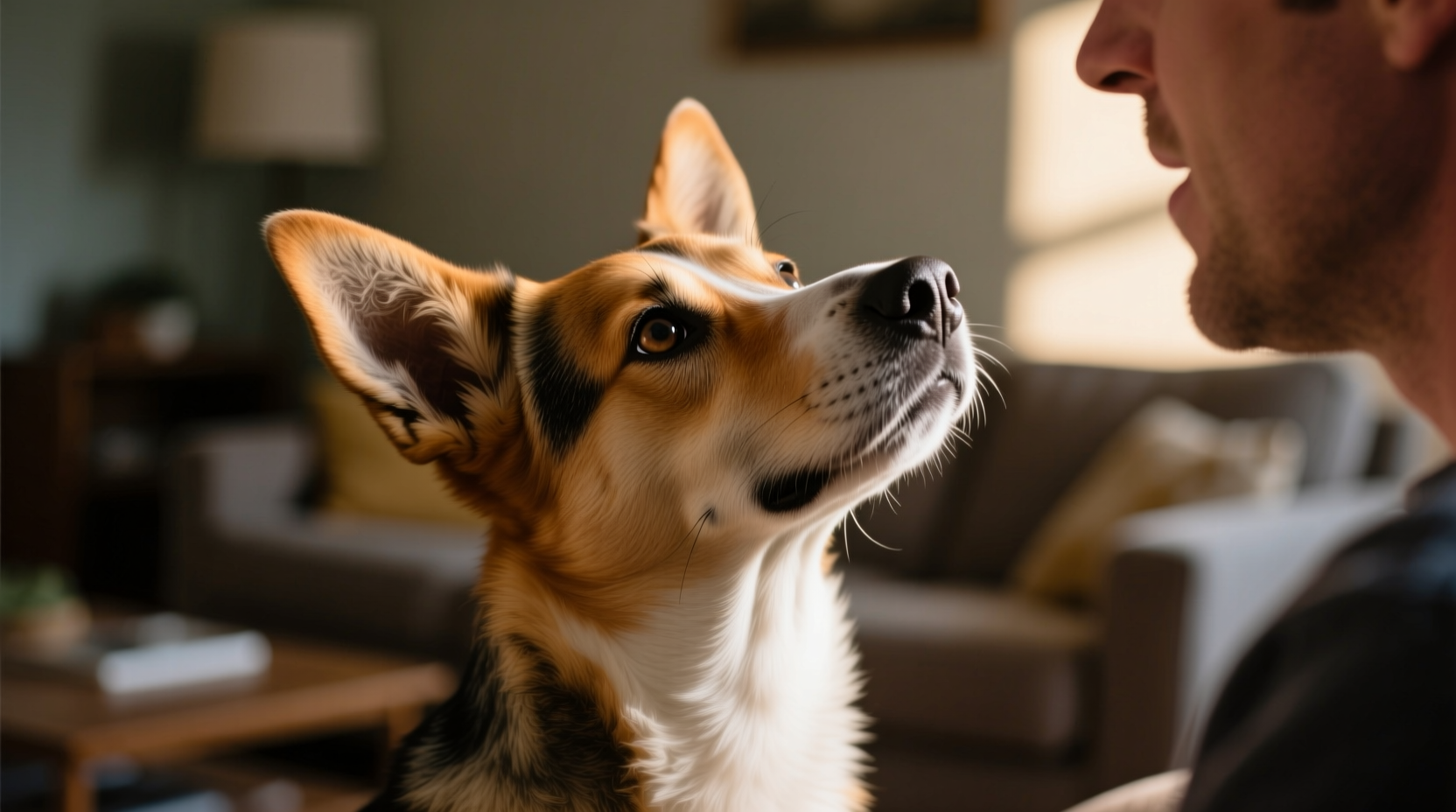
One of the most widely accepted theories behind head tilting involves hearing. Dogs rely heavily on their acute sense of hearing to interpret their environment. Unlike humans, who can often lip-read or rely on context alone, dogs use sound localization—the ability to determine where a noise originates—to make sense of communication.
When a dog tilts his head, he may be adjusting the position of his ears to better capture sound waves. This is especially true for breeds with long, floppy ears (like Basset Hounds or Cocker Spaniels), which can partially block auditory input. By shifting the head, dogs reposition their ear canals, allowing sounds—particularly high-pitched or unfamiliar ones—to enter more directly.
A 2018 study published in *Animal Cognition* observed that dogs were more likely to tilt their heads when hearing familiar words in unusual intonations. This suggests that the tilt isn’t random; it correlates with active listening and attempts to extract meaning from speech patterns. The brain engages auditory processing centers more intensely during these moments, prompting physical adjustments to enhance reception.
Social Bonding and Emotional Intelligence
Beyond hearing, the head tilt plays a significant role in canine-human communication. Dogs are highly attuned to human facial expressions, body language, and vocal tones. Over thousands of years of domestication, they’ve evolved to read us with remarkable accuracy. The head tilt may function as both a signal of attention and a tool for empathy.
When a dog tilts his head while you're speaking, he's not only processing what you’re saying—he’s also showing engagement. This behavior mimics curiosity and concern, much like a person leaning forward during a heartfelt conversation. It signals: “I’m listening. I care.” In response, humans often react positively, offering praise, affection, or treats. This reinforcement strengthens the behavior, making dogs more likely to repeat it.
“Dogs have developed nuanced ways to communicate with humans, and the head tilt appears to be a socially strategic behavior—one that deepens bonds and increases positive interactions.” — Dr. Brian Hare, Canine Cognition Researcher, Duke University
This feedback loop creates what scientists call \"socially facilitated learning.\" Dogs learn which behaviors elicit favorable responses from people and refine them over time. A well-timed head tilt becomes a powerful nonverbal cue in the dog’s emotional toolkit.
Anatomy and Breed Differences
Not all dogs tilt their heads equally. Some barely do it at all, while others perform the maneuver constantly. These differences are partly due to breed-specific anatomy. Facial structure, ear shape, muzzle length, and even eye placement influence how—and how often—a dog uses the head tilt.
| Breed Type | Likelihood of Head Tilting | Contributing Factors |
|---|---|---|
| Long-eared (e.g., Beagles, Spaniels) | High | Floppy ears obstruct sound; require repositioning for clarity |
| Brachycephalic (e.g., Pugs, Bulldogs) | Moderate to Low | Short muzzles provide wider field of view; less need to adjust angle |
| Dolichocephalic (e.g., Collies, Greyhounds) | High | Long snouts may block lower visual field; tilting improves sightline to mouth movements |
| Small companion breeds (e.g., Shih Tzus, Pomeranians) | Very High | Strong social motivation; frequent reinforcement from owners |
For instance, dogs with elongated muzzles may tilt their heads to see your face more clearly when you're seated or standing above them. The snout can obscure part of their visual field, particularly the lower half of your face where important cues like lip movement occur. Tilting shifts the line of sight upward, allowing them to watch your mouth and pick up on subtle expressions.
Cognitive Processing and Word Recognition
Recent research has revealed that some dogs possess an impressive capacity for understanding human language. Border Collies like Chaser and Rico demonstrated the ability to recognize hundreds of object names and follow complex commands. For such intelligent dogs, the head tilt may reflect active mental processing.
When presented with a novel word or command, a dog may tilt his head as his brain works to match the sound with stored knowledge. Neurological studies using fMRI scans show increased activity in the parietal lobe—associated with attention and problem-solving—during moments of uncertainty or focused listening.
In practical terms, this means the head tilt could indicate:
- Recognition of a known word in an unfamiliar context
- Attempt to recall associated actions (e.g., “leash” = walk)
- Confusion about tone versus content (e.g., playful scolding vs. real anger)
A mini case study illustrates this well:
Mini Case Study: Max the Border Collie Learns New Commands
Max, a four-year-old Border Collie, was trained using positive reinforcement methods. His owner noticed that Max consistently tilted his head when introduced to new verbal cues—especially those involving abstract concepts like “spin” or “find it.” During training sessions, the frequency of tilting decreased as Max mastered each command. Once learned, the behavior disappeared unless the word was spoken in a different tone or accent. This pattern suggests that the tilt was linked to cognitive effort rather than habit alone.
When to Be Concerned: Medical Causes of Head Tilting
While occasional head tilting during interaction is normal and healthy, persistent or involuntary tilting—especially when accompanied by other symptoms—can signal underlying medical issues. It’s essential to distinguish between communicative gestures and signs of neurological or vestibular dysfunction.
The inner ear plays a crucial role in balance and spatial orientation. Conditions such as ear infections, vestibular disease, or even tumors can disrupt this system, leading to a constant head tilt, loss of coordination, circling, or abnormal eye movements (nystagmus).
Common red flags include:
- Tilting present even when resting or sleeping
- Frequent stumbling or falling
- Discharge or odor from the ears
- Reluctance to eat or move the neck
- Changes in appetite or behavior
“If a dog suddenly starts tilting his head without social triggers, especially if it’s one-sided and persistent, a veterinary exam is warranted. Early diagnosis can prevent serious complications.” — Dr. Sarah Carter, DVM, Veterinary Neurologist
If you observe any of these warning signs, consult your veterinarian promptly. Diagnostic tools such as otoscopic exams, blood tests, or MRI imaging may be used to identify the root cause. Most treatable conditions—like ear infections—respond well to antibiotics or anti-inflammatory medication when caught early.
Actionable Tips for Dog Owners
To better understand and support your dog’s communication habits, consider the following checklist:
Dog Head Tilt Observation Checklist
- ✅ Note when the tilt occurs—is it during speech, sudden noises, or silence?
- ✅ Observe duration—is it momentary or prolonged?
- ✅ Check symmetry—does the dog always tilt to the same side?
- ✅ Monitor for additional symptoms like scratching, imbalance, or disorientation
- ✅ Record videos to share with your vet if concerned
- ✅ Reward attentive listening with treats or praise to reinforce positive engagement
Additionally, maintaining good ear hygiene can help rule out preventable causes. Clean your dog’s ears regularly using vet-approved solutions, especially after swimming or bathing. Avoid inserting cotton swabs into the ear canal, as this can cause injury.
Frequently Asked Questions
Is head tilting a sign of intelligence in dogs?
Not directly, but it can correlate with attentiveness and cognitive engagement. Intelligent breeds may tilt more frequently when learning because they’re actively processing information. However, all dogs—regardless of IQ—can develop this behavior through social reinforcement.
Do dogs tilt their heads to appear cuter on purpose?
They don’t consciously manipulate humans, but they quickly learn that the behavior results in positive outcomes like affection or treats. Over time, natural selection and domestication have favored dogs that display expressive, human-friendly behaviors—including the head tilt.
Should I discourage my dog from tilting his head?
No—if the behavior occurs in social contexts and resolves quickly, it’s perfectly normal. Only seek intervention if the tilt is constant, one-sided, or paired with other neurological symptoms. Otherwise, enjoy this unique expression of connection.
Conclusion: A Gesture Rooted in Connection
The head tilt is far more than a photogenic pose. It’s a multifaceted behavior shaped by evolution, anatomy, cognition, and emotion. Whether your dog is fine-tuning his hearing, seeking clarity, expressing empathy, or simply asking, “What’s next?”—this small motion speaks volumes about the depth of the human-canine bond.
Understanding the reasons behind the tilt allows us to respond more thoughtfully, strengthen communication, and ensure our pets’ well-being. So the next time your dog cocks his head mid-sentence, pause and appreciate it—not just as a charming habit, but as a testament to how deeply dogs listen, learn, and connect.




 浙公网安备
33010002000092号
浙公网安备
33010002000092号 浙B2-20120091-4
Comments
No comments yet. Why don't you start the discussion?