
It’s a moment pet owners know all too well: you say your dog’s name or begin speaking in a soft tone, and instantly, their ears perk up, eyes lock onto yours, and their head gently tilts to one side. This endearing gesture often triggers smiles and spontaneous cooing—but beyond its charm lies a deeper story. The head tilt isn’t just cute; it’s a window into your dog’s mind, revealing layers of attention, comprehension, and even empathy. While science hasn’t unlocked every secret behind this behavior, research and observation point to a blend of auditory processing, visual adaptation, learned responses, and emotional attunement that underscores the profound bond between dogs and humans.
The Science Behind the Tilt: Auditory and Visual Processing
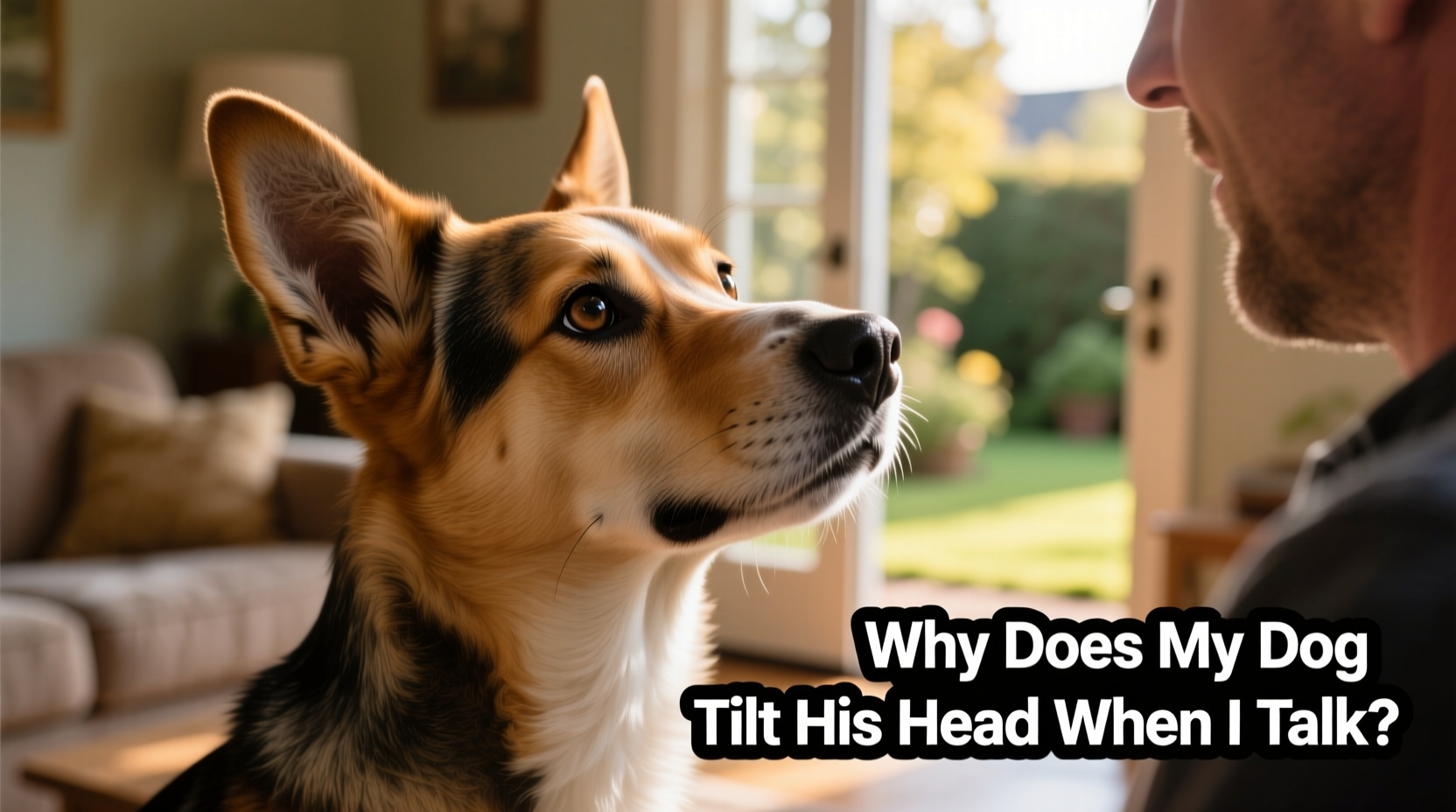
Dogs rely heavily on both hearing and sight to interpret their environment. When you speak, especially in higher-pitched tones common in pet-directed speech, your dog’s brain works quickly to decode sounds, locate their source, and determine meaning. The head tilt may serve as a physical adjustment to improve sound localization. By shifting their head, dogs alter the position of their ear canals, helping them pinpoint where a sound is coming from with greater accuracy.
This is particularly useful for dogs with long muzzles or floppy ears, which can partially obstruct sound waves. A 2019 study published in *Animal Cognition* found that dogs were more likely to tilt their heads when hearing familiar verbal cues—especially those associated with positive outcomes like walks or treats—suggesting the movement is linked to focused listening and memory retrieval.
Additionally, the tilt may enhance visual perception. Dogs have a muzzle that can block part of their forward field of view. By tilting their head, they shift their snout out of the way, gaining a clearer line of sight to your facial expressions. Since dogs are highly attuned to human faces—particularly around the mouth and eyes—this small motion could help them better read your emotions and intentions.
Learning and Conditioning: The Power of Positive Reinforcement
While biological factors explain part of the head tilt, learned behavior plays a significant role. Dogs are masters of social learning, constantly observing human reactions and adjusting their actions accordingly. If your dog has tilted their head in the past and received laughter, affection, or treats in response, they’re likely to repeat the behavior. It becomes a conditioned response—a subtle performance shaped by reward.
Consider this: you’re more likely to smile, raise your voice playfully, or reach for a treat when your dog performs an adorable head tilt. Over time, the dog associates the action with positive outcomes. This doesn’t make the behavior “fake,” but rather an intelligent adaptation. In essence, your dog has discovered a reliable way to engage you emotionally—and they use it wisely.
Some breeds appear to tilt their heads more than others. Breeds like Collies, Shelties, and German Shepherds, known for their high trainability and attentiveness, often display frequent head tilting. This may reflect not only their acute sensitivity to human communication but also their eagerness to respond appropriately.
Mini Case Study: Max the Border Collie
Max, a four-year-old Border Collie, lived with a retired teacher who spoke to him daily using full sentences and expressive intonation. His owner noticed that Max tilted his head almost exclusively during questions (“Do you want dinner?”) or emotionally charged statements (“I’m so proud of you!”). Intrigued, she began recording interactions and found that Max responded correctly to word-based commands 92% of the time when he tilted his head, compared to 76% when he didn’t. While correlation isn’t causation, the pattern suggested that the head tilt coincided with moments of heightened cognitive engagement. Over several weeks, she consciously avoided rewarding the tilt with extra praise, and within a month, the frequency decreased—confirming the role of reinforcement in sustaining the behavior.
Canine Empathy: Emotional Attunement in Action
Perhaps the most compelling explanation for the head tilt lies in the realm of emotion. Growing evidence suggests that dogs possess a form of empathy—specifically, emotional contagion and context-sensitive concern. They don’t just react to our words; they respond to our feelings.
When you speak in a soothing tone after a long day, or when your voice cracks with sadness, your dog notices. The head tilt in these moments may be less about sound or sight and more about emotional inquiry—an attempt to understand your internal state. Researchers at the University of Veterinary Medicine in Vienna found that dogs exposed to human crying were significantly more likely to approach the person with head lowered and ears back, often accompanied by a gentle tilt. These behaviors were rare when the same people hummed or remained silent, indicating that dogs distinguish emotional vocalizations and respond with concern.
“Dogs don’t just hear our words—they feel our emotions. The head tilt may be one of the clearest signs that a dog is trying to connect, not just respond.” — Dr. Brian Hare, Cognitive Neuroscientist and Founder of Duke Canine Cognition Center
This emotional intelligence evolved over thousands of years of domestication. Unlike wolves, even young puppies show a strong predisposition to look at human faces and follow gaze direction. This ability to \"read\" us gives dogs a unique advantage in forming bonds and navigating complex social environments.
Checklist: Signs Your Dog Is Showing Empathetic Behavior
- Tilting head when you speak in a soft or sad tone
- Approaching you quietly when you're upset
- Mirroring your energy (calm when you’re calm, alert when you’re tense)
- Resting their head on your lap without prompting
- Whining or pawing gently when you cry
- Staying close during stressful moments, even if not invited
When to Be Concerned: Medical Causes of Head Tilting
While occasional head tilting during conversation is normal and often benign, persistent or unexplained tilting—especially when accompanied by other symptoms—can indicate underlying health issues. A constant head tilt, loss of balance, circling, or disorientation may point to vestibular disease, ear infections, neurological disorders, or even tumors.
The vestibular system, located in the inner ear, controls balance and spatial orientation. Infections or inflammation in this area can disrupt signals to the brain, causing dogs to tilt their heads involuntarily. Older dogs are particularly susceptible to idiopathic vestibular disease, sometimes called “old dog vertigo,” which mimics stroke-like symptoms but often resolves on its own within days.
| Symptom | Possible Cause | Action Required |
|---|---|---|
| Occasional tilt during interaction | Normal behavior, attention-seeking | None—enjoy the moment! |
| Frequent or constant tilt | Ear infection, vestibular disorder | Veterinary exam recommended |
| Tilt + loss of balance | Neurological issue | Immediate vet consultation |
| Tilt + scratching or odor | Otitis externa (ear infection) | Clean ears, seek treatment |
| Tilt + eye twitching | Vestibular syndrome | Monitor and consult vet |
Step-by-Step Guide: Strengthening Communication Through the Head Tilt
You can leverage your dog’s natural tendency to tilt their head as a tool for deeper connection and training. Follow this sequence to enhance mutual understanding:
- Observe Patterns: Note when your dog tilts their head. Is it during specific words, tones, or emotional states? Keep a brief log for a week to identify triggers.
- Use Consistent Cues: Pair meaningful words (like “walk,” “treat,” or “vet”) with clear intonation. Over time, your dog will associate these with actions—and the head tilt may become a sign of anticipation.
- Respond Mindfully: Instead of automatically rewarding every tilt with praise, wait for moments of genuine focus. This encourages attentive listening over performative behavior.
- Encourage Eye Contact: Gently say your dog’s name and wait. When they look at you and tilt their head, mark the moment with a calm “yes” or clicker, then reward. This reinforces communication.
- Build Emotional Awareness: Speak in varied tones—happy, concerned, excited—and observe how your dog responds. You’ll begin to see how deeply they tune into your emotional landscape.
FAQ
Is head tilting a sign of intelligence?
Not directly, but it often correlates with attentiveness and problem-solving. Dogs that tilt their heads may be actively processing information, which reflects cognitive engagement. However, all dogs are intelligent in different ways—some express it through stillness, others through movement.
Do puppies tilt their heads too?
Yes, though less frequently than adult dogs. Puppies begin developing this behavior as they learn to associate human speech with meaning and rewards. By six months, many start showing consistent head-tilting responses, especially in breeds prone to high social sensitivity.
Should I be worried if my dog never tilts their head?
Not at all. Just like people, dogs have individual personalities. Some are more physically expressive, while others communicate through posture, tail movement, or proximity. Lack of head tilting doesn’t indicate lower empathy or understanding.
Conclusion: Listening Beyond Words
The head tilt is more than a quirk—it’s a multifaceted behavior rooted in biology, learning, and emotion. Whether your dog is fine-tuning their hearing, adjusting their view, seeking a treat, or silently asking, “Are you okay?” each tilt carries meaning. Understanding this gesture allows us to appreciate the depth of canine cognition and the quiet empathy they offer daily.
Dogs don’t need words to connect with us. They listen with their ears, watch with their eyes, and feel with their hearts. The next time your dog tilts their head, pause for a moment. Look back into those curious eyes and recognize what’s truly happening: a being fully present, trying to understand you. That simple act deserves more than a smile—it deserves reciprocity.




 浙公网安备
33010002000092号
浙公网安备
33010002000092号 浙B2-20120091-4
Comments
No comments yet. Why don't you start the discussion?