
Dogs have a remarkable way of communicating with humans, often using subtle body language to express curiosity, affection, or confusion. One of the most endearing behaviors pet owners witness is the head tilt—a slight lean to one side, ears perked, eyes locked on their human companion. While it’s easy to assume this gesture is simply cute, research and behavioral experts suggest it's rooted in deeper cognitive and sensory processes. Understanding why your dog tilts their head when you talk reveals not only how they perceive sound and language but also how they form emotional bonds with people.
This behavior, though charming, serves multiple functional purposes. From auditory processing to social reinforcement, the head tilt reflects a blend of instinct, learning, and emotional intelligence. By examining scientific studies, expert observations, and real-world interactions, we can uncover the layers behind this seemingly simple movement.
The Auditory Explanation: Adjusting for Better Hearing
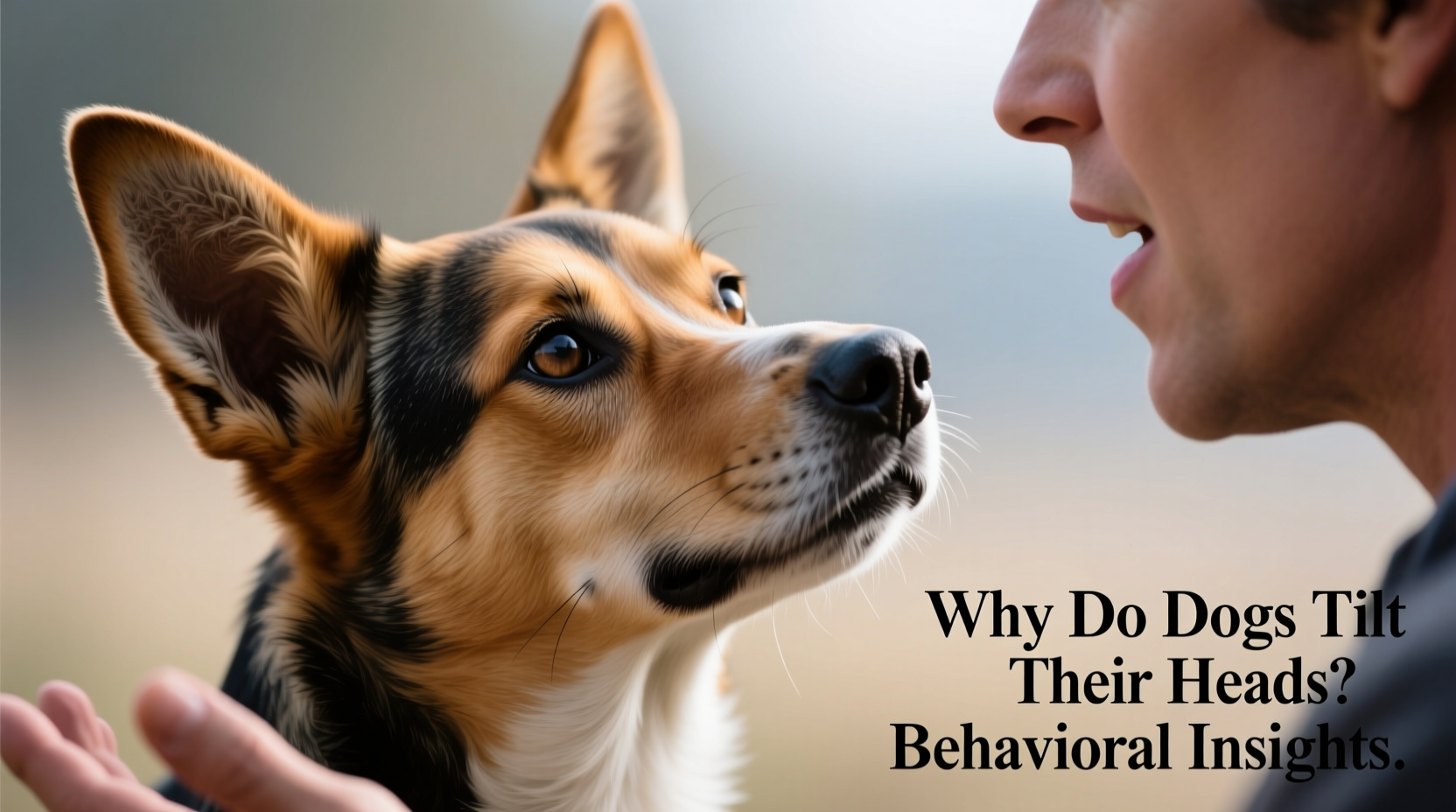
Dogs possess highly sensitive hearing, capable of detecting frequencies far beyond the human range. However, their ability to pinpoint the source and clarity of sounds depends on ear shape, head position, and environmental acoustics. When a dog tilts their head while you speak, they may be fine-tuning their auditory focus.
Canine ears vary widely across breeds—some upright, others floppy—which affects how sound waves travel into the ear canal. A head tilt can shift the position of the pinna (the external ear flap), altering how sound is collected and channeled. This adjustment helps dogs better localize where a voice or noise is coming from, especially if it’s unfamiliar or softly spoken.
Dr. Stanley Coren, a leading expert in canine psychology, explains that dogs use visual and auditory cues together to interpret human speech. “The head tilt may help reposition the ears to capture sound more effectively,” he notes, “especially when trying to distinguish between similar-sounding words like ‘sit’ and ‘stay.’” This suggests the tilt isn’t just passive—it’s an active effort to decode communication.
Cognitive Processing and Word Recognition
Beyond hearing mechanics, the head tilt may indicate mental engagement. Dogs don’t understand language the way humans do, but many learn to associate specific words with actions or outcomes through repetition and reinforcement. When you say “walk,” “treat,” or “bath,” your dog accesses stored memories linked to those sounds.
A 2016 study published in *Animal Cognition* examined border collies trained to retrieve named objects. Researchers observed frequent head tilting when novel or infrequently used words were introduced, suggesting the dogs were actively processing ambiguous auditory input. The tilt appeared more often during moments of uncertainty, implying it correlates with concentration rather than automatic response.
This aligns with the idea that dogs engage in problem-solving when faced with unclear signals. Just as a person might cock their head while listening to a muffled announcement, dogs use physical adjustments to support cognitive interpretation. Over time, repeated associations strengthen neural pathways, reducing the need for such intense focus—meaning well-trained dogs may tilt less when hearing familiar commands.
How Breed Influences Head Tilting Frequency
Not all dogs tilt their heads equally. Observational data suggest breed-specific tendencies influenced by skull structure, ear type, and temperament.
| Breed | Skull Shape | Ear Type | Tilt Frequency (Observed) |
|---|---|---|---|
| Golden Retriever | Moderate muzzle | Floppy | High |
| Poodle | Long muzzle | Floppy (often clipped) | Very High |
| Boxer | Brachycephalic (short face) | Erect or cropped | Low |
| German Shepherd | Long muzzle | Erect | Moderate |
| Shih Tzu | Brachycephalic | Floppy | Moderate |
Dogs with longer muzzles and drooping ears—like spaniels and retrievers—tend to tilt more often, possibly because their facial anatomy partially obstructs ear mobility. In contrast, brachycephalic breeds (e.g., bulldogs) may show fewer tilts due to structural limitations or reduced sensitivity to certain sound frequencies.
“Head tilting is not random. It’s part of a dog’s multimodal strategy to extract meaning from human communication.” — Dr. Patricia McConnell, Ethologist and Animal Behaviorist
Social Bonding and Positive Reinforcement
While biological and cognitive factors explain much of the head tilt, social dynamics play a crucial role. Dogs are exceptionally attuned to human reactions, and behaviors that elicit positive responses tend to be repeated. If your dog tilts their head and you respond with praise, laughter, or treats, they quickly learn this action gets attention.
This creates a feedback loop: the dog associates head tilting with reward, increasing its frequency even in non-essential contexts. Some trainers observe that dogs begin tilting preemptively—not because they’re confused, but because they’ve learned it makes their owners happy.
In households where people enthusiastically react to the head tilt (“Oh, are you thinking hard?” or “Who’s a clever boy?”), the behavior becomes both communicative and performative. It functions similarly to a child smiling during storytelling—not necessarily because they’re puzzled, but because they know it pleases the adult.
Mini Case Study: Max the Rescue Terrier
Max, a three-year-old mixed-breed terrier adopted from a shelter, initially showed little interest in verbal interaction. His new owner, Sarah, used hand signals and treats to build trust. After several weeks, she noticed Max would tilt his head whenever she spoke in a high-pitched, questioning tone—especially when asking, “Where’s your toy?”
Curious, Sarah began recording instances of the tilt. She found it occurred most often when she used novel phrases or changed her vocal rhythm. More importantly, every time Max tilted, she unconsciously smiled and praised him. Once she became aware of this pattern, she intentionally reinforced attentive behavior without over-praising the tilt itself. Within a month, Max responded faster to commands and exhibited fewer unnecessary head tilts—suggesting he had shifted from seeking approval to focusing on comprehension.
This case illustrates how emotional conditioning shapes canine behavior. What begins as a genuine attempt to understand can evolve into a socially rewarded gesture unless guided with intention.
When Head Tilting May Signal Health Concerns
While occasional head tilting is normal, persistent or uncontrolled tilting—especially when accompanied by other symptoms—can indicate medical issues. Owners should monitor for signs such as:
- Continuous head tilt at rest
- Loss of balance or coordination
- Nystagmus (rapid eye movement)
- Vomiting or disorientation
- Ear scratching or discharge
These could point to vestibular disease, ear infections, neurological disorders, or even tumors. Unlike the brief, responsive tilt seen during conversation, pathological tilting tends to be constant and unrelated to stimuli.
Veterinarians recommend prompt evaluation if the tilt lasts more than a few hours or appears suddenly in older dogs. Early diagnosis improves outcomes, particularly in cases involving inner ear inflammation or age-related vestibular syndrome.
Actionable Checklist: Supporting Healthy Communication
To foster clear, meaningful interactions with your dog—and ensure head tilting remains a natural, healthy behavior—follow this checklist:
- Use consistent verbal cues for common commands (e.g., always say “sit,” not “sit down” or “take a seat” interchangeably).
- Minimize background noise when training or issuing instructions to reduce auditory confusion.
- Observe context: Note whether the tilt happens during new phrases, high-pitched tones, or after rewards.
- Avoid over-rewarding the tilt unless paired with correct understanding or behavior.
- Schedule annual vet exams to rule out hearing loss or ear conditions affecting balance.
- Introduce name recognition games using toys or treats to strengthen word-object associations.
Frequently Asked Questions
Is head tilting a sign of intelligence in dogs?
Not directly. While the tilt often occurs during cognitive processing, it doesn’t measure intelligence. Smarter dogs may learn faster and thus tilt less over time, having already mastered common words. The behavior reflects attentiveness more than IQ.
Do dogs tilt their heads to see your face better?
Possibly. Some researchers believe the muzzle can obstruct a dog’s view of a speaker’s lower face. Tilting slightly may allow them to see mouth movements more clearly, aiding lip-reading. Since dogs observe facial expressions closely, this visual adjustment complements auditory input.
Should I be worried if my dog never tilts their head?
No. Lack of head tilting doesn’t indicate poor hearing or emotional detachment. Many dogs process sound efficiently without needing to adjust their posture. As long as your dog responds appropriately to verbal cues, there’s no cause for concern.
Conclusion: Listening Beyond the Tilt
The head tilt is more than a photogenic quirk—it’s a window into how dogs listen, think, and connect with us. Whether adjusting for sound, concentrating on meaning, or seeking connection, each tilt tells a story of adaptation and empathy. Recognizing these nuances deepens our relationship with our pets, transforming casual moments into opportunities for mutual understanding.
Next time your dog cocks their head inquisitively, take a moment to appreciate the complex interplay of biology, learning, and emotion at work. Respond not just with affection, but with clarity—using consistent language, positive reinforcement, and attentive care. In doing so, you honor the intelligence and sensitivity behind that unforgettable sideways glance.




 浙公网安备
33010002000092号
浙公网安备
33010002000092号 浙B2-20120091-4
Comments
No comments yet. Why don't you start the discussion?