
Dog owners often find themselves pausing mid-sentence, captivated by a sudden, endearing head tilt from their canine companion. It’s a gesture so common—and so charming—that many assume it’s just a quirky habit. But behind that lopsided look lies a complex network of auditory processing, social cognition, and evolutionary adaptation. The head tilt isn’t merely performative; it’s a window into how dogs interpret human speech, respond to emotional cues, and navigate their environment using both instinct and learned behavior.
Understanding this behavior requires more than affectionate speculation—it demands insight into canine neurology, sensory anatomy, and interspecies communication. Recent research has begun to unravel the neural mechanisms at play, revealing that the head tilt may serve multiple functional purposes, from sound localization to emotional decoding. This article explores the brain-behavior link behind the dog head tilt, examining scientific evidence, expert insights, and practical implications for pet owners.
The Anatomy Behind the Tilt: Ears, Skull, and Sound Processing
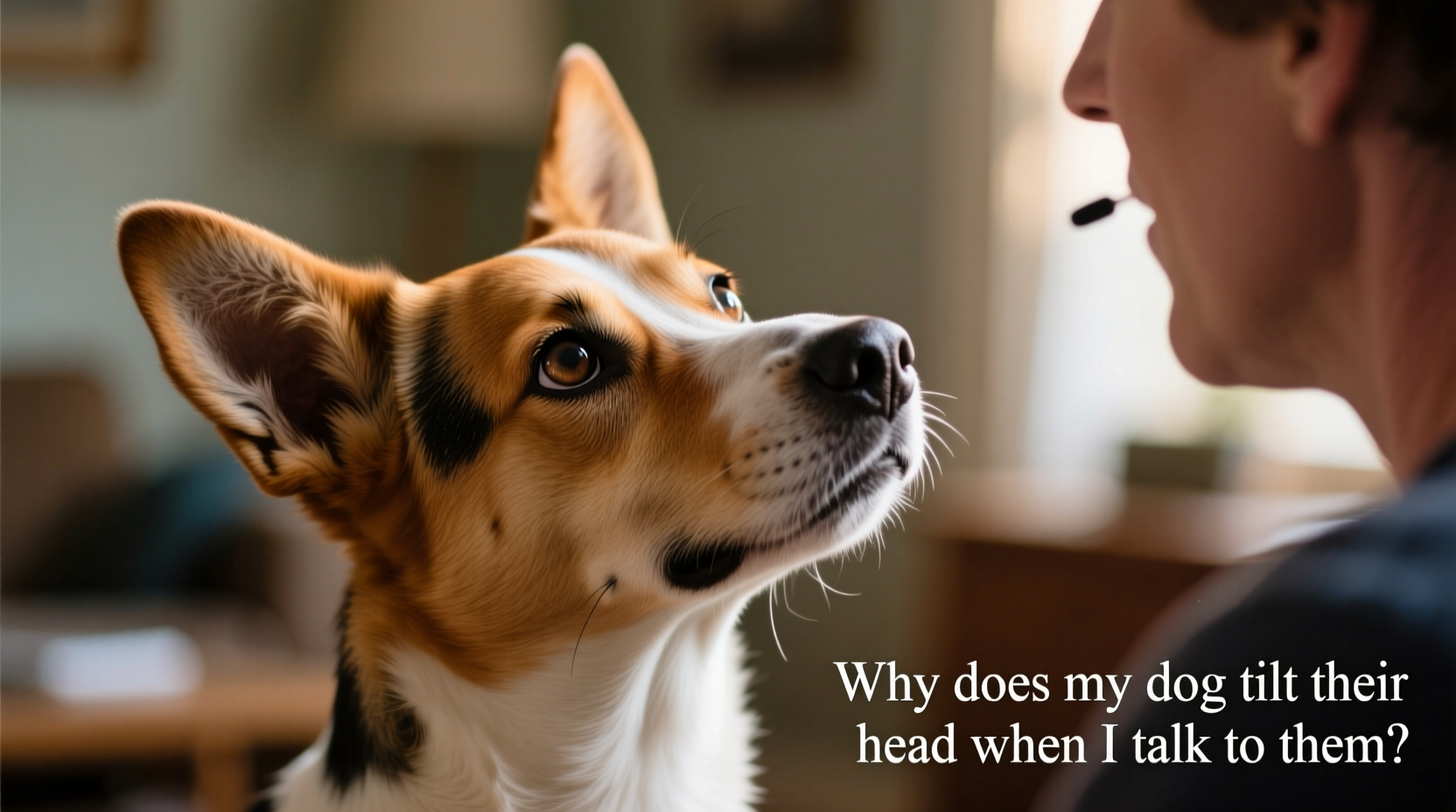
A dog’s ability to process sound is far superior to that of humans. Most breeds can hear frequencies up to 45,000–65,000 Hz (compared to our 20,000 Hz limit), making them highly sensitive to high-pitched tones. However, their physical ear structure—especially in dogs with floppy or long ears—can partially obstruct sound entry. When a dog tilts its head, it subtly repositions the pinnae (external ear flaps), adjusting the angle at which sound waves enter the ear canal.
This adjustment enhances directional hearing, helping dogs pinpoint the source of a sound more accurately. Think of it as fine-tuning an antenna. For instance, if your dog hears a crinkling bag behind the couch, a slight head tilt might help isolate whether the noise came from the left or right side. In the context of human speech, this micro-adjustment allows dogs to better capture subtle phonetic differences in tone, pitch, and volume.
Cognitive Interpretation: How Dogs Process Human Speech
It’s not just about hearing—it’s about understanding. A groundbreaking 2016 study published in Science used fMRI scans to show that dogs process words and intonation in brain regions analogous to those in humans. Specifically, the left hemisphere responds to the meaning of familiar words, while the right hemisphere processes emotional tone. This dual-processing system suggests that dogs don’t just react to our voices—they analyze them.
When you say “Do you want a treat?” in an upbeat tone, your dog isn’t only recognizing the word “treat”—they’re also decoding your enthusiasm. The head tilt may occur during this cognitive cross-referencing phase, as the dog attempts to reconcile verbal content with emotional context. Researchers believe the tilt could reflect mental effort, similar to how humans furrow their brows when concentrating.
“Dogs are not just responding to tone—they’re integrating vocabulary and emotion in ways once thought unique to humans.” — Dr. Attila Andics, Cognitive Neuroscientist, Eötvös Loránd University
Social Reinforcement and Learned Behavior
While neurological and anatomical factors explain the origin of the head tilt, social reinforcement plays a critical role in shaping how often it occurs. Many dogs quickly learn that tilting their head elicits positive reactions: smiles, laughter, treats, or extra attention. Over time, this behavior becomes conditioned—not because the dog is confused, but because it works.
This learning process follows classic operant conditioning principles. If every time Max cocks his head while you’re speaking he gets a “Good boy!” or a scratch behind the ears, he’s more likely to repeat the action. Some dogs even deploy the tilt strategically during moments of uncertainty, such as when hearing a new command or unusual sound, knowing it often leads to reassurance or rewards.
In essence, the head tilt evolves from a functional auditory adjustment into a communicative signal—one that strengthens the bond between dog and owner through mutual understanding and emotional feedback.
Real Example: Luna the Border Collie
Luna, a five-year-old Border Collie, was brought to a canine behavior clinic due to excessive head tilting—sometimes lasting over 30 seconds. Her owner feared neurological issues. After evaluation, veterinarians found no medical abnormalities. Instead, they observed that Luna primarily tilted her head when her owner said phrases like “Let’s go” or “Where’s the ball?”—commands associated with play.
Further analysis revealed that the owner consistently responded with excitement and treats whenever Luna tilted her head. The behavior had become self-reinforcing. By modifying responses—rewarding only correct actions, not the tilt itself—the frequency decreased significantly within three weeks. This case illustrates how a biologically rooted behavior can be amplified through unintentional human encouragement.
Emotional Intelligence and Empathetic Engagement
Dogs are remarkably attuned to human emotions. They can distinguish between happy, angry, and sad facial expressions and adjust their behavior accordingly. The head tilt may function as part of this empathetic repertoire—a nonverbal way of signaling engagement, curiosity, or concern.
For example, if you speak in a soft, melancholic tone, your dog might tilt their head while maintaining eye contact, seemingly trying to “read” your mood. This behavior mirrors human gestures of active listening, such as nodding or leaning forward. In doing so, the dog demonstrates what scientists call “social referencing”—using human emotional cues to guide their own responses.
Interestingly, dogs that live in highly interactive households tend to exhibit more frequent head tilts than those with limited human contact, suggesting that emotional intelligence develops through repeated social exposure.
Checklist: Is Your Dog’s Head Tilt Normal?
While occasional head tilting is typical, persistent or uncontrolled tilting may indicate underlying health concerns. Use this checklist to assess whether the behavior falls within normal ranges:
- ✅ Occurs occasionally during conversation or when hearing unfamiliar sounds
- ✅ Paired with alert posture, attentive eyes, and responsive behavior
- ✅ Stops after a few seconds and doesn’t interfere with balance
- ✅ More frequent in certain breeds (e.g., Shelties, Cavaliers, Poodles)
- ❌ Persistent tilting lasting minutes without cause
- ❌ Accompanied by circling, loss of balance, or disorientation
- ❌ Sudden onset in older dogs or changes in usual behavior
If any red flags apply, consult a veterinarian to rule out vestibular disease, ear infections, or neurological conditions.
Comparative Analysis: Breed Differences in Head Tilting Frequency
Not all dogs tilt their heads equally. Observational studies suggest that breed, ear shape, and trainability influence how often a dog exhibits this behavior. The table below summarizes key patterns based on veterinary and behavioral research.
| Breed | Ear Type | Typical Head Tilt Frequency | Possible Reasons |
|---|---|---|---|
| Golden Retriever | Floppy | Moderate | High sociability, strong desire to please |
| Shetland Sheepdog | Erect with feathering | High | Hyper-attentive, bred for responsiveness |
| Bulldog | Folded, low-set | Low | Anatomical limitation, less expressive movement |
| Poodle | Floppy, often groomed close | High | Intelligent, quick learners, socially engaged |
| German Shepherd | Erect | Low to Moderate | Natural sound localization reduces need |
These variations underscore that while the head tilt has biological roots, its expression is shaped by both genetics and environment.
When to Be Concerned: Medical vs. Behavioral Causes
Most head tilts are harmless, but in some cases, they signal medical problems. The vestibular system, responsible for balance and spatial orientation, can be disrupted by inner ear infections, tumors, or inflammation. A pathological head tilt usually presents differently from the conversational kind:
- Duration: Constant, not momentary
- Posture: Head held sideways even at rest
- Additional symptoms: Nystagmus (rapid eye movement), vomiting, stumbling
- Onset: Sudden, especially in senior dogs
Veterinarians differentiate between benign social tilting and clinical vestibular syndrome through physical exams and diagnostic imaging. If your dog begins walking in circles or appears dizzy, seek immediate care.
Step-by-Step Guide: Encouraging Healthy Communication Without Overstimulating the Tilt
You don’t need to stop your dog from tilting—it’s a natural and often joyful behavior. However, you can promote balanced communication by focusing on meaningful interaction rather than reinforcing every quirk. Follow these steps:
- Observe context: Note when the tilt happens—is it during commands, emotional speech, or random noises?
- Respond selectively: Praise attentive behavior (eye contact, sitting) rather than the tilt itself.
- Use clear cues: Pair verbal commands with hand signals to reduce ambiguity.
- Limit repetition: Avoid saying odd-sounding words just to trigger the tilt—it may confuse your dog.
- Monitor changes: Track frequency and duration over time to detect anomalies early.
This approach fosters genuine understanding without encouraging dependency on attention-seeking behaviors.
Frequently Asked Questions
Is head tilting a sign of intelligence in dogs?
Not directly. While intelligent breeds like Poodles and Border Collies often tilt their heads, the behavior reflects attentiveness and auditory processing, not IQ. However, dogs that frequently engage in problem-solving or command-following tasks may display more noticeable tilting due to heightened focus.
Can puppies learn to tilt their heads from older dogs?
Unlikely. The head tilt is primarily an individual response shaped by anatomy and experience. While puppies observe adult dogs, there’s no evidence of social mimicry for this specific behavior. It emerges naturally as part of auditory and cognitive development.
Should I be worried if my dog never tilts their head?
No. Many healthy dogs rarely or never tilt their heads. This doesn’t mean they’re less attentive or emotionally disconnected. Factors like ear structure, temperament, and breed tendencies play a larger role than individual awareness.
Conclusion: Listening Beyond the Tilt
The head tilt is more than a photogenic gesture—it’s a sophisticated intersection of biology, cognition, and relationship-building. From enhancing sound clarity to expressing emotional attunement, this small motion reveals the depth of canine perception and their unique ability to connect with humans across species lines.
By understanding the brain-behavior link behind the tilt, we gain not only insight into our dogs’ minds but also a greater appreciation for the silent conversations we share daily. The next time your dog cocks their head inquisitively, remember: they’re not just listening. They’re interpreting, feeling, and responding in ways that bridge two very different worlds.




 浙公网安备
33010002000092号
浙公网安备
33010002000092号 浙B2-20120091-4
Comments
No comments yet. Why don't you start the discussion?