
If you've ever noticed a crackling, popping, or clicking sound in your ear while chewing, you're not alone. This sensation can be startling, especially if it's new or accompanied by discomfort. While it might seem like the issue lies within the ear, the real culprit is often much closer — your temporomandibular joint (TMJ), the hinge that connects your jaw to your skull. Understanding the link between jaw movement and ear sensations is key to determining whether this is normal or a sign of an underlying condition.
The human body is intricately connected, and the proximity of the jaw joint to the ear canal means that mechanical changes in one area can easily affect the other. In this article, we’ll explore the anatomy behind this phenomenon, identify common causes, differentiate between harmless and concerning symptoms, and provide practical steps for relief and prevention.
Anatomy of the Jaw and Ear Connection
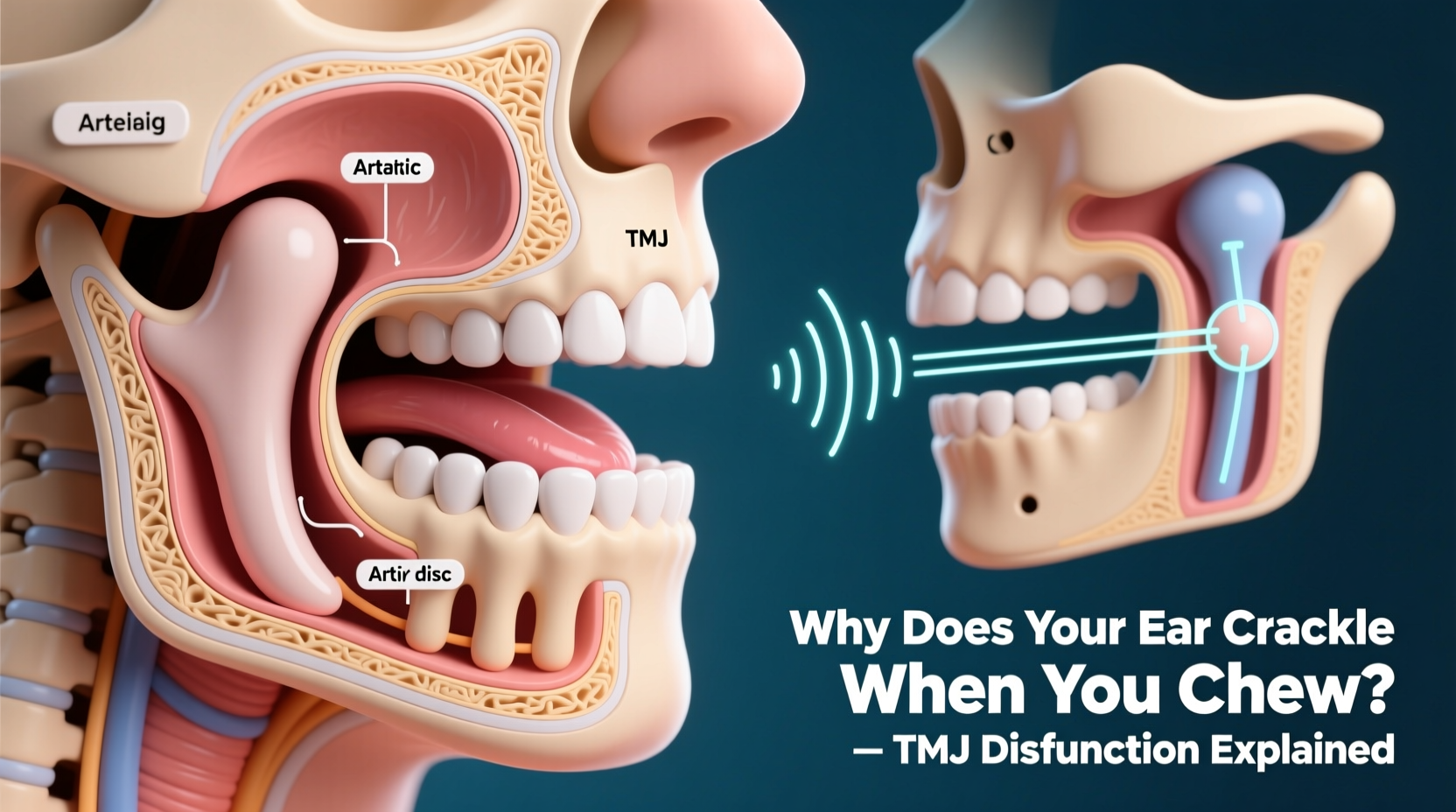
The temporomandibular joint (TMJ) is one of the most complex joints in the body. Located just in front of each ear, it allows for the sliding and rotational movements needed for talking, yawning, and chewing. The joint consists of the mandible (lower jaw), the temporal bone of the skull, a small articular disc that cushions movement, and surrounding muscles, ligaments, and nerves.
What makes the TMJ particularly relevant to ear symptoms is its close anatomical relationship with the ear structures. The external auditory canal is separated from the TMJ by only a thin layer of bone and tissue. As a result, vibrations, pressure changes, or misalignments in the jaw joint can transmit directly into the ear, leading to sounds like crackling, popping, or even temporary hearing changes.
The trigeminal nerve, which innervates both the jaw muscles and parts of the ear, further links these two areas neurologically. This shared nerve pathway explains why pain or dysfunction in the jaw can sometimes be perceived as ear pain — a phenomenon known as referred pain.
Common Causes of Ear Crackling During Chewing
Not all jaw-related ear noises are cause for alarm. Many people experience occasional popping or clicking without pain or long-term issues. However, understanding the root causes can help determine when intervention is necessary.
- Normal Joint Movement: A small amount of noise during jaw movement can be entirely normal, especially if it’s infrequent and painless. The articular disc shifting slightly during motion can create a harmless pop.
- Temporomandibular Joint Disorder (TMD): When the TMJ becomes inflamed, injured, or misaligned, it can lead to persistent crackling, pain, limited jaw movement, or locking.
- Joint Degeneration: Arthritis affecting the TMJ — such as osteoarthritis or rheumatoid arthritis — can cause cartilage breakdown, leading to rough surfaces that produce grinding or crackling sounds.
- Muscle Tension and Bruxism: Clenching or grinding teeth, especially at night, increases pressure on the joint and surrounding tissues, potentially causing audible noises during function.
- Eustachian Tube Dysfunction: Although less directly related, Eustachian tube issues can mimic or exacerbate ear fullness and crackling, particularly when combined with jaw movement.
- Disc Displacement: The articular disc in the TMJ can become displaced, either temporarily or chronically. When this happens, the joint may click as the disc slips back into place during opening or closing.
“Up to 75% of adults report some form of TMJ noise during their lifetime, but only a fraction develop symptomatic TMD requiring treatment.” — Dr. Linda Harper, Orofacial Pain Specialist
When to Be Concerned: Red Flags to Watch For
While occasional ear crackling during chewing is usually benign, certain symptoms suggest the need for professional evaluation. These red flags indicate possible joint damage, inflammation, or progressive dysfunction.
| Symptom | May Indicate | Action Recommended |
|---|---|---|
| Pain in jaw, ear, or face during chewing | Inflammation or TMD | See dentist or TMJ specialist |
| Jaw locking or difficulty opening mouth fully | Disc displacement or muscle spasm | Seek immediate assessment |
| Consistent, loud crackling on one side | Joint degeneration or injury | Imaging (e.g., MRI) advised |
| Swelling near the ear | Infection or trauma | Medical consultation required |
| Hearing changes or dizziness | Rare; possible inner ear involvement | ENT evaluation recommended |
Chronic or worsening symptoms should never be ignored. Left untreated, TMJ disorders can lead to permanent joint changes, chronic pain, and reduced quality of life.
Real-Life Example: Sarah’s Jaw-Ear Connection
Sarah, a 34-year-old graphic designer, began noticing a persistent crackling in her right ear every time she chewed gum or ate crunchy foods. At first, she assumed it was an earwax issue and tried over-the-counter drops. When the sound didn’t go away — and started being accompanied by mild jaw pain — she consulted her dentist.
Upon examination, the dentist observed limited jaw opening and tenderness in the right TMJ. An MRI revealed a partially displaced articular disc. Sarah admitted to frequently clenching her jaw during long work sessions and grinding her teeth at night. With a custom night guard, physical therapy exercises, and stress management techniques, her symptoms improved significantly within eight weeks. The crackling diminished, and jaw pain resolved.
Sarah’s case illustrates how seemingly isolated ear symptoms can stem from jaw mechanics — and how early intervention prevents progression.
Step-by-Step Guide to Managing Jaw-Related Ear Crackling
If you’re experiencing jaw-induced ear noises, follow this structured approach to assess and manage the issue effectively:
- Self-Assessment: Note when the crackling occurs, whether it’s painful, and if any triggers (like hard foods or stress) make it worse.
- Reduce Jaw Strain: Avoid chewing gum, tough meats, or wide yawning. Cut food into small pieces to minimize jaw movement.
- Apply Warm Compresses: Use a warm towel on the affected side for 10–15 minutes twice daily to relax muscles and improve joint mobility.
- Practice Gentle Jaw Exercises: Perform controlled opening and closing motions, avoiding extreme stretches. A physical therapist can guide proper technique.
- Manage Stress and Bruxism: Incorporate relaxation techniques like deep breathing or meditation. Consider a dental night guard if you grind your teeth.
- Consult a Professional: See a dentist, oral surgeon, or TMJ specialist for diagnosis. Imaging may be needed to evaluate joint integrity.
- Follow Treatment Plan: Depending on severity, treatment may include splints, anti-inflammatory medications, physical therapy, or in rare cases, surgery.
Prevention Checklist: Protecting Your Jaw and Ears
Preventing TMJ strain reduces the risk of ear crackling and related discomfort. Use this checklist to maintain joint health:
- ✅ Avoid clenching your jaw during the day
- ✅ Limit chewing gum and hard foods
- ✅ Practice good posture, especially neck and head alignment
- ✅ Use a mouthguard if you grind your teeth
- ✅ Manage stress through mindfulness or exercise
- ✅ Stay hydrated to maintain joint lubrication
- ✅ Schedule regular dental checkups to catch issues early
Frequently Asked Questions
Can ear crackling from chewing be a sign of infection?
Typically, no. Ear infections usually present with pain, fluid drainage, fever, or hearing loss — not isolated crackling during chewing. However, if you have swelling, fever, or severe pain, consult a doctor to rule out infection or other conditions.
Is it normal for my jaw to pop when I wake up?
Occasional popping isn’t unusual, especially after prolonged jaw closure during sleep. However, if it’s painful or worsens over time, it may indicate bruxism or TMJ dysfunction and should be evaluated.
Can TMJ problems affect my hearing?
Direct hearing loss from TMJ issues is rare, but many patients report a feeling of fullness or muffled hearing due to shared nerve pathways and muscle tension affecting the Eustachian tube. These sensations usually resolve with TMJ treatment.
Conclusion: Listen to Your Body, Act Early
Crackling in the ear when chewing is more common than many realize, and in most cases, it’s not dangerous. But it’s your body’s way of signaling that something in the jaw joint may need attention. Whether it’s minor wear and tear or the early stages of TMJ disorder, proactive care can prevent long-term complications.
By understanding the connection between your jaw and ear, recognizing warning signs, and taking preventive steps, you can maintain comfort and function. Don’t dismiss persistent symptoms as “just noise.” Instead, use them as motivation to seek clarity and care.




 浙公网安备
33010002000092号
浙公网安备
33010002000092号 浙B2-20120091-4
Comments
No comments yet. Why don't you start the discussion?