
Ear popping during swallowing is a sensation most people have experienced at some point—whether during a flight, while eating, or even just going about their day. For many, it’s a brief, harmless occurrence that resolves quickly. But for others, persistent popping, pain, or fullness in the ear can raise concerns. Understanding the anatomy behind this phenomenon, what triggers it, and when it might signal an underlying issue is essential for maintaining ear health and overall comfort.
The human ear is a complex system designed not only for hearing but also for balancing pressure between the middle ear and the outside environment. When that balance is disrupted, the body has natural mechanisms to correct it—one of which involves swallowing. However, frequent or painful popping may indicate more than just a temporary pressure shift.
How the Ear Balances Pressure: The Role of the Eustachian Tube
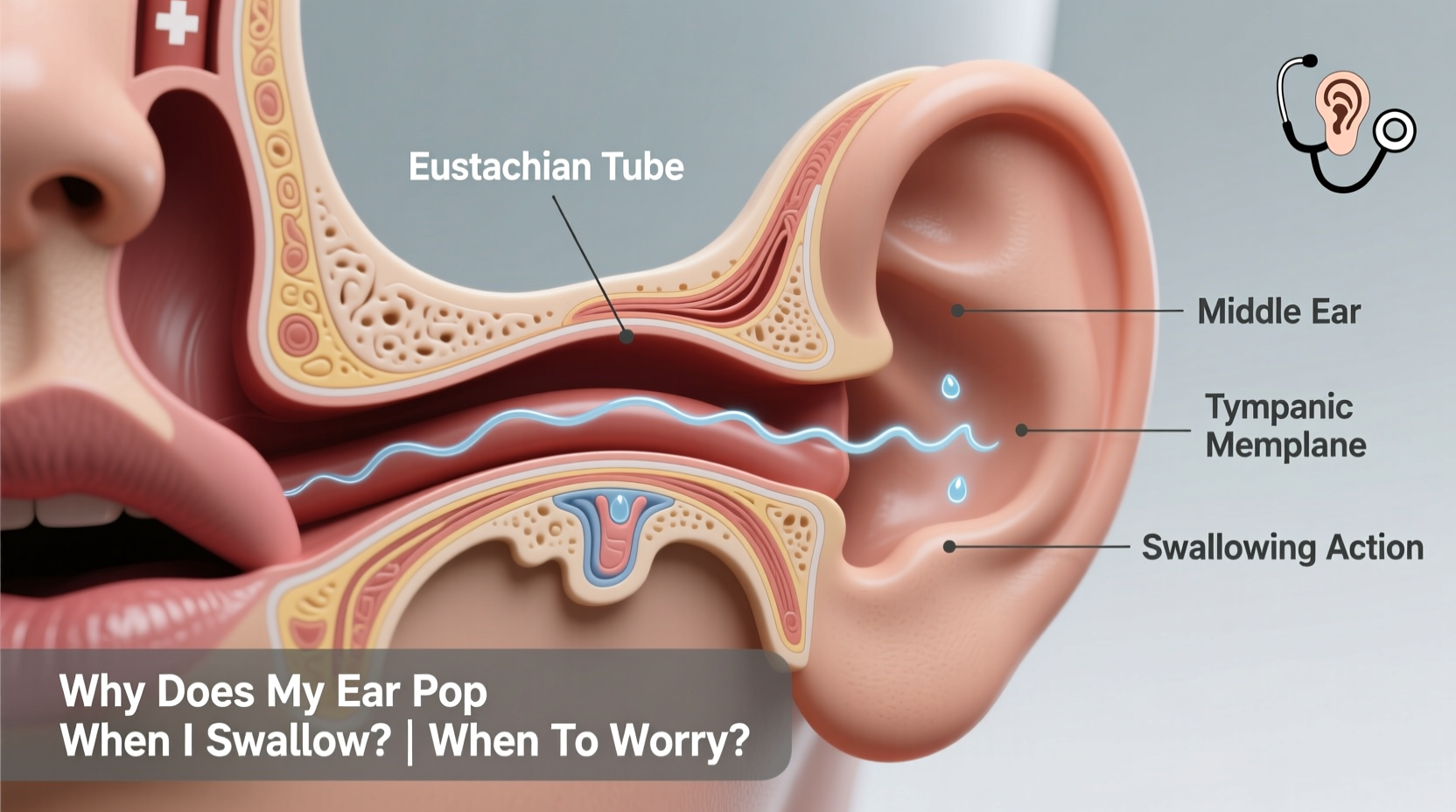
The key to understanding ear popping lies in a small but vital structure called the Eustachian tube. This narrow passageway connects the middle ear (the space behind the eardrum) to the back of the throat, near the nasal cavity. Its primary functions are:
- Equalizing air pressure on both sides of the eardrum
- Draining fluid from the middle ear
- Protecting the middle ear from bacteria and viruses
Under normal conditions, the Eustachian tube remains closed. It opens briefly during activities like swallowing, yawning, or chewing. When it opens, it allows air to flow in or out of the middle ear, equalizing pressure. This sudden movement of air is what creates the “pop” sensation.
This mechanism is especially noticeable during altitude changes—such as ascending or descending in an airplane, driving through mountainous regions, or riding elevators in tall buildings. The external air pressure shifts rapidly, and the Eustachian tube responds by opening to rebalance the pressure inside the ear.
“Swallowing-induced ear popping is usually a sign of healthy Eustachian tube function. It means your body is doing exactly what it should to maintain equilibrium.” — Dr. Lena Torres, Otolaryngologist
Common Causes of Ear Popping During Swallowing
While pressure changes are the most common reason for ear popping, several other factors can influence how often or intensely you experience it. Below are the most typical causes:
1. Altitude Changes
Rapid changes in elevation force the Eustachian tube to work harder to equalize pressure. As you ascend, external pressure drops, causing the air trapped in the middle ear to expand. As you descend, external pressure increases, creating a vacuum effect. Swallowing helps open the tube and relieve this imbalance.
2. Nasal Congestion
Colds, allergies, or sinus infections can cause swelling in the nasal passages and throat, which may block the Eustachian tube. Even mild congestion can impair its ability to open properly, leading to repeated attempts to pop the ears through swallowing, yawning, or nose-blowing.
3. Upper Respiratory Infections
Infections such as pharyngitis or laryngitis can inflame the tissues around the Eustachian tube opening, making it harder to open. This often results in a feeling of fullness, muffled hearing, and frequent popping—or sometimes no popping at all due to blockage.
4. Allergies
Seasonal or environmental allergies trigger histamine release, leading to mucosal swelling and increased mucus production. This can obstruct the Eustachian tube, especially in individuals with chronic allergic rhinitis.
5. Temporomandibular Joint (TMJ) Dysfunction
The jaw joint is located very close to the Eustachian tube. TMJ disorders—often caused by teeth grinding, jaw clenching, or injury—can create referred sensations in the ear, including popping, clicking, or pressure during swallowing.
When Ear Popping Becomes a Concern
Occasional ear popping is normal. However, certain symptoms suggest that the issue goes beyond routine pressure adjustment and may require medical evaluation.
You should be concerned if ear popping is accompanied by any of the following:
- Persistent ear pain lasting more than 48 hours
- Hearing loss or muffled hearing that doesn’t improve
- Fluid drainage from the ear (especially if yellow, bloody, or foul-smelling)
- Dizziness, vertigo, or balance problems
- A feeling of fullness that doesn’t resolve after several days
- Frequent popping without relief, even after trying pressure-equalizing techniques
These signs may point to conditions such as:
Eustachian Tube Dysfunction (ETD)
When the Eustachian tube fails to open or close properly, it can’t regulate pressure effectively. Symptoms include chronic ear fullness, popping, tinnitus, and hearing distortion. ETD often follows a cold or allergy flare-up but can become chronic in some individuals.
Otitis Media (Middle Ear Infection)
Bacterial or viral infections can cause fluid buildup behind the eardrum. Children are especially prone, but adults can develop it too. Pain, fever, and hearing loss are common indicators.
Barotrauma
This occurs when pressure differences damage the ear structures, typically during diving or flying. Severe cases can lead to eardrum rupture, bleeding, or permanent hearing changes.
Sinus or Nasal Polyps
Growth in the nasal passages can physically block the Eustachian tube, leading to chronic ear pressure and popping.
Tumors (Rare)
Though uncommon, growths in the nasopharynx (the upper part of the throat behind the nose) can obstruct the Eustachian tube. These are more likely in older adults or smokers and may present with unilateral ear symptoms, nasal obstruction, or blood-tinged discharge.
“If ear popping becomes one-sided, painful, or associated with hearing changes, don’t wait. Early diagnosis can prevent complications like chronic infection or structural damage.” — Dr. Arjun Patel, Head and Neck Surgeon
Practical Steps to Relieve and Prevent Ear Popping
Most cases of ear popping resolve on their own. However, proactive measures can speed recovery and reduce discomfort. Here’s a step-by-step guide to managing occasional ear pressure:
Step-by-Step Guide: Equalizing Ear Pressure
- Chew or swallow frequently: Activate the muscles that open the Eustachian tube naturally.
- Try the Valsalva maneuver: Gently pinch your nostrils shut, close your mouth, and blow softly as if trying to exhale through your nose. Stop immediately if you feel pain.
- Use the Toynbee maneuver: Pinch your nose and swallow simultaneously. This can help pull air into the middle ear.
- Yawn widely: This stretches the throat and encourages the Eustachian tube to open.
- Apply a warm compress: Place a warm towel over the affected ear to soothe discomfort and promote circulation.
- Stay hydrated: Thin mucus flows more easily, reducing blockages in the Eustachian tube.
- Use saline nasal spray: Helps clear nasal passages and reduce inflammation near the tube opening.
Do’s and Don’ts for Managing Ear Popping
| Do’s | Don’ts |
|---|---|
| Chew gum during altitude changes | Ignore persistent one-sided symptoms |
| Use decongestants before flying (if approved by doctor) | Insert cotton swabs or objects into the ear |
| Treat allergies promptly | Smoke or expose yourself to secondhand smoke |
| Stay hydrated to thin mucus | Blow your nose aggressively |
| Seek care if symptoms last over a week | Use over-the-counter ear drops without diagnosis |
Real-Life Example: A Frequent Flyer’s Experience
Sarah, a 34-year-old marketing consultant, travels weekly for work. After a particularly long-haul flight, she noticed her right ear wouldn’t stop popping when she swallowed—even days later. At first, she dismissed it as residual pressure. But when the popping was followed by muffled hearing and a dull ache, she consulted an ENT specialist.
Examination revealed mild Eustachian tube dysfunction due to undiagnosed seasonal allergies. Pollen exposure had caused low-grade inflammation, impairing the tube’s function. With a short course of nasal corticosteroids and antihistamines, her symptoms resolved within a week. Sarah now uses a saline spray before every flight and manages her allergies proactively.
Her case highlights how seemingly minor issues—like untreated allergies—can manifest in unexpected ways, including chronic ear popping.
FAQ: Common Questions About Ear Popping
Is it normal for my ear to pop every time I swallow?
Occasional popping is normal, especially during or after altitude changes. However, if it happens constantly—even at rest—or is accompanied by pain, fullness, or hearing changes, it could indicate Eustachian tube dysfunction or another condition requiring evaluation.
Can dehydration cause ear popping?
Yes. Dehydration thickens mucus in the nasal passages and Eustachian tube, making it harder for the tube to open and drain properly. Staying well-hydrated helps maintain normal mucosal function and reduces the risk of blockages.
Why does only one ear pop?
It’s common for one ear to be more affected than the other due to slight anatomical differences, unilateral congestion, or localized inflammation. Persistent one-sided popping, especially with hearing loss or pain, should be evaluated to rule out infection or growths.
Conclusion: Know Your Body, Trust Your Instincts
Ear popping when swallowing is usually a benign and natural response to pressure changes. It reflects the remarkable design of the human ear and its ability to self-regulate. By understanding the role of the Eustachian tube and recognizing the triggers—from flying to allergies—you can take practical steps to minimize discomfort.
However, persistent or painful symptoms are not something to ignore. Hearing is precious, and early intervention can prevent complications like chronic infections or structural damage. If home remedies don’t bring relief within a few days, or if you notice warning signs like fluid drainage or dizziness, consult a healthcare provider.
Your ears are more than just sound receptors—they’re barometers of your overall health. Listen to them, care for them, and don’t hesitate to seek help when something feels off.




 浙公网安备
33010002000092号
浙公网安备
33010002000092号 浙B2-20120091-4
Comments
No comments yet. Why don't you start the discussion?