
Elbow pain during extension is more common than many realize—especially among office workers, gym enthusiasts, and those engaged in repetitive manual tasks. The discomfort may start subtly: a twinge when reaching for your coffee mug, stiffness after a long typing session, or sharp pain when lifting groceries. Over time, if ignored, it can escalate into chronic discomfort that interferes with daily activities. Understanding the root causes is the first step toward effective relief and prevention.
The elbow joint, though smaller than the shoulder or knee, plays a critical role in arm function. It’s responsible for both flexion and extension, as well as forearm rotation. Pain specifically during extension often points to overuse, inflammation, or structural strain in tendons, ligaments, or nerves surrounding the joint. From prolonged keyboard use to improper weightlifting technique, multiple factors contribute to this issue.
Common Causes of Elbow Pain During Extension
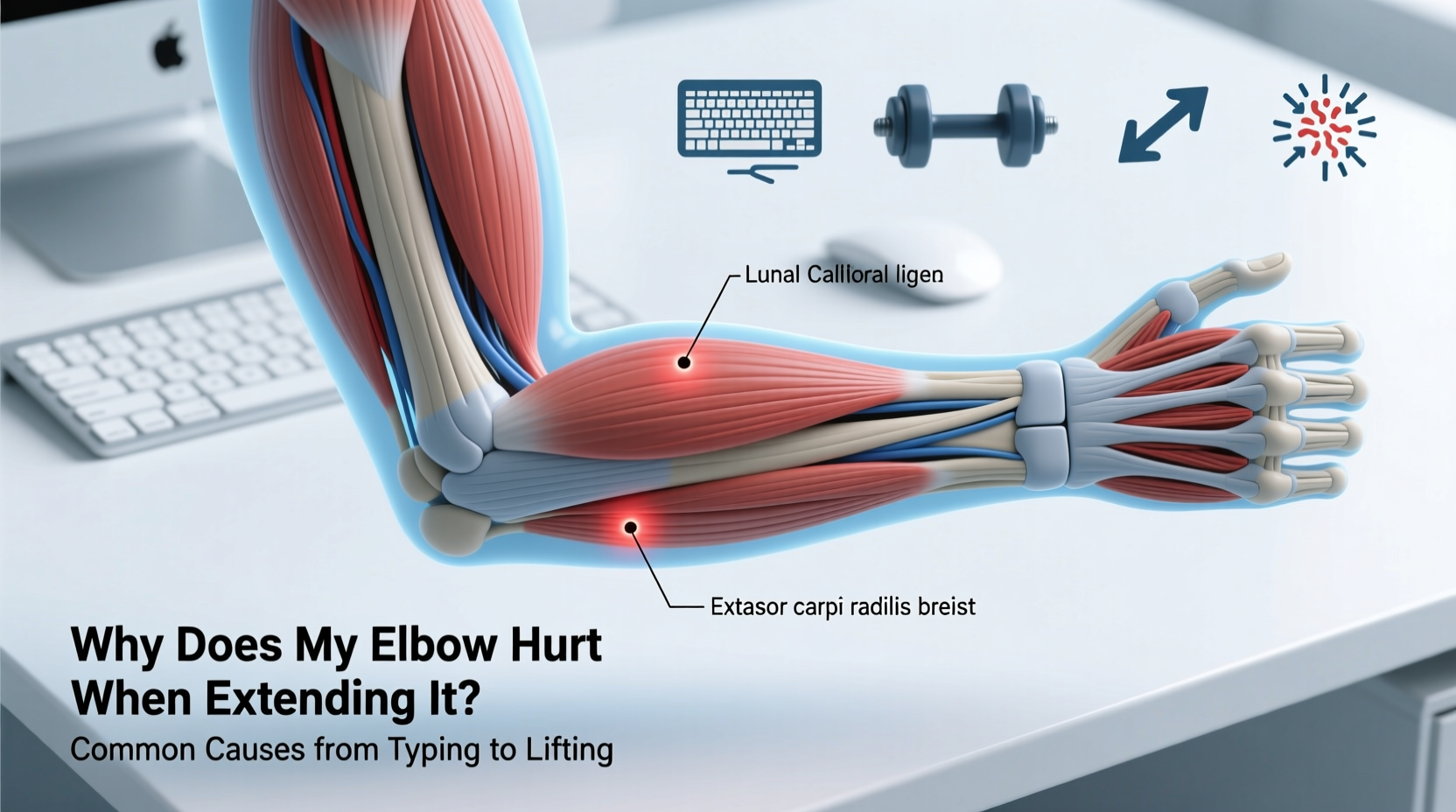
Several conditions can trigger pain when straightening the elbow. Most stem from repetitive stress or acute injury. Identifying the specific cause helps tailor treatment and avoid worsening symptoms.
Tennis Elbow (Lateral Epicondylitis)
Despite its name, tennis elbow affects far more non-athletes than players. It results from overuse of the extensor tendons in the forearm, particularly the extensor carpi radialis brevis. Repetitive wrist extension—common in typing, mouse use, or gripping tools—leads to microtears and inflammation near the lateral (outer) elbow. Pain intensifies when extending the arm or lifting objects, even lightweight ones.
Golfer’s Elbow (Medial Epicondylitis)
Similar to tennis elbow but affecting the inner side of the elbow, golfer’s elbow involves the flexor-pronator tendons. While often associated with swinging motions, it also arises from repetitive gripping, such as holding a hammer or using a computer mouse aggressively. Pain typically worsens with resisted wrist flexion or elbow extension against resistance.
Cubital Tunnel Syndrome
This condition stems from compression of the ulnar nerve as it passes through the cubital tunnel on the inner elbow. When the elbow is extended rapidly or held straight for long periods (e.g., while typing), the nerve can become irritated. Symptoms include pain, tingling, or numbness in the ring and little fingers, along with weakness in grip strength.
Olecranon Bursitis
The olecranon bursa is a small fluid-filled sac at the tip of the elbow. Trauma, pressure (like leaning on hard surfaces), or infection can inflame this bursa. While swelling is a hallmark sign, pain during full extension occurs due to increased tension on the swollen tissue.
Post-Injury Stiffness or Joint Capsule Tightness
After an elbow sprain, dislocation, or fracture, scar tissue can form within the joint capsule, limiting range of motion. Extension becomes painful because the stiffened tissues resist movement. This is common in people recovering from accidents or surgeries without proper rehabilitation.
How Typing Contributes to Elbow Pain
Modern work environments place significant strain on the upper limbs. Prolonged typing, especially with poor ergonomics, creates sustained tension in forearm muscles and tendons. The constant low-level contraction required to stabilize the wrist and fingers during keyboard use transfers stress up the arm to the elbow.
Key risk factors include:
- Non-neutral wrist position: Bent wrists increase tendon strain.
- Elevated elbows: Working at a desk that’s too high forces shoulders and elbows into awkward angles.
- Lack of breaks: Continuous typing without rest prevents tissue recovery.
- Mouse overuse: Clicking and dragging require fine motor control that fatigues extensor muscles.
A 2022 study published in the *Journal of Occupational Rehabilitation* found that office workers who typed more than four hours daily without ergonomic adjustments were three times more likely to develop lateral epicondylitis compared to those with optimized setups.
“Repetitive microtrauma from typing accumulates silently. By the time pain appears, significant tendon degeneration may already be present.” — Dr. Alan Reyes, Orthopedic Specialist
Weightlifting and Physical Activity: Hidden Triggers
Lifting weights improperly is a leading cause of elbow pain. Exercises like bench presses, tricep extensions, and pull-ups place high demand on elbow stabilizers. When form is compromised—such as flaring elbows during push-ups or using excessive weight—tendons endure uneven loads.
Common mistakes include:
- Overloading too soon: Rapid increases in weight don’t allow tendons to adapt.
- Poor scapular control: Unstable shoulders transfer excess force to the elbows.
- Insufficient warm-up: Cold tendons are less elastic and more prone to strain.
- Ignoring pain signals: Pushing through discomfort accelerates tissue damage.
Bodybuilders and CrossFit athletes frequently report posterior elbow pain during tricep-dominant movements. This often indicates posterior impingement or triceps tendonitis, where the triceps tendon becomes inflamed at its insertion point on the olecranon.
Mini Case Study: Office Worker Turned Weekend Lifter
Mark, a 34-year-old software developer, began experiencing sharp pain on the outside of his right elbow every time he straightened his arm. He worked eight hours daily at a standing desk with a mechanical keyboard and lifted weights three times a week. Initially dismissing it as muscle fatigue, he continued his routine. After six weeks, the pain radiated down his forearm and made typing unbearable.
An MRI revealed moderate lateral epicondylitis with early signs of tendon degeneration. His physical therapist identified two key contributors: a tilted monitor forcing neck and shoulder tension, and tricep kickbacks performed with too much weight. With ergonomic adjustments, eccentric strengthening exercises, and a six-week lifting modification plan, Mark regained full pain-free extension within three months.
Do’s and Don’ts: Managing Elbow Pain
| Do’s | Don’ts |
|---|---|
| Use an ergonomic keyboard and mouse | Lean on your elbows for extended periods |
| Take micro-breaks every 30 minutes | Ignore persistent pain beyond 5–7 days |
| Perform gentle stretching daily | Lift heavy weights with poor form |
| Apply ice after aggravating activities | Sleep with arms bent under pillows |
| Strengthen forearm muscles progressively | Use vibrating tools without gloves |
Step-by-Step Guide to Relief and Recovery
Whether your elbow pain is new or lingering, a structured approach improves outcomes. Follow this timeline for best results:
- Days 1–3: Reduce Aggravation
- Stop activities that cause pain (e.g., heavy lifting, prolonged typing).
- Apply ice for 15 minutes, 3–4 times daily.
- Consider over-the-counter NSAIDs (e.g., ibuprofen) if no contraindications.
- Days 4–7: Assess and Adjust Ergonomics
- Evaluate workspace setup: elbows should be at 90–110°, wrists neutral.
- Switch to a vertical mouse or split keyboard if needed.
- Begin gentle range-of-motion exercises: slow elbow bends in front of the body.
- Week 2: Begin Targeted Rehab
- Start eccentric wrist extensor exercises (for tennis elbow): Hold light weight (1–2 lbs), palm down, slowly lower wrist over edge of table.
- Add nerve gliding exercises if numbness is present (e.g., ulnar nerve sliders).
- Consult a physical therapist for manual therapy if progress stalls.
- Weeks 3–6: Reintroduce Activity Gradually
- Resume typing with frequent posture checks.
- Return to lifting with reduced weight and higher reps (12–15).
- Focus on controlled movement tempo (2 seconds up, 4 seconds down).
- After Week 6: Prevent Recurrence
- Incorporate forearm strengthening twice weekly.
- Maintain ergonomic habits consistently.
- Monitor for early warning signs: stiffness, localized tenderness.
When to See a Doctor
Most cases of elbow pain resolve with conservative care. However, seek medical evaluation if you experience:
- Severe pain or sudden swelling
- Loss of sensation or muscle weakness
- Inability to fully extend or bend the elbow
- Signs of infection (redness, warmth, fever)
Diagnostic tools like ultrasound or MRI can confirm tendon tears or nerve compression. Treatments may include corticosteroid injections (short-term relief), platelet-rich plasma (PRP) therapy, or, in rare cases, surgery for chronic tendon detachment.
FAQ
Can typing really cause long-term elbow damage?
Yes. Chronic overuse without ergonomic support or rest can lead to tendinopathy, which involves degenerative changes in the tendon structure. Early intervention prevents permanent damage.
Is it safe to keep lifting weights with elbow pain?
Not if the pain worsens during or after exercise. Continuing to load an inflamed tendon delays healing and risks rupture. Modify exercises temporarily and focus on form and mobility.
How long does it take for elbow pain to heal?
Acute cases may resolve in 2–6 weeks with rest and rehab. Chronic tendinosis (degenerated tendon) often takes 3–6 months of consistent treatment. Patience and adherence to therapy are crucial.
Prevention Checklist
Stay ahead of elbow pain with these proactive steps:
- ✅ Adjust chair height so elbows rest at 90–110° when typing
- ✅ Use padded armrests to reduce pressure on the ulnar nerve
- ✅ Perform daily forearm stretches (wrist flexor and extensor)
- ✅ Limit continuous typing to 45-minute intervals
- ✅ Warm up forearms before lifting (e.g., band pull-aparts, wrist circles)
- ✅ Strengthen grip and forearm muscles twice weekly
- ✅ Avoid locking elbows during push-ups or planks
“Elbow pain isn’t just a ‘sports injury’—it’s a modern lifestyle consequence. The solution lies in movement variety, not just rest.” — Dr. Lena Patel, Sports Medicine Physician
Conclusion
Elbow pain when extending the arm is rarely caused by a single dramatic event. Instead, it’s the cumulative result of repetitive strain, poor mechanics, and overlooked warning signs. Whether you're typing emails all day or pushing through intense workouts, your elbow health depends on balance—between activity and recovery, effort and awareness.
Understanding the underlying causes empowers you to make informed changes. Small adjustments in posture, equipment, and exercise habits can halt progression and restore pain-free movement. Don’t wait until discomfort becomes debilitating. Address the issue now, apply the strategies outlined here, and protect one of your body’s most essential joints.




 浙公网安备
33010002000092号
浙公网安备
33010002000092号 浙B2-20120091-4
Comments
No comments yet. Why don't you start the discussion?