
Sour espresso is one of the most common frustrations for home baristas. Instead of the rich, balanced shot you're aiming for, you're met with a sharp, acidic bite that lingers unpleasantly. While some acidity can be part of a coffee’s character—especially in light roasts—true sourness often signals under-extraction or another technical flaw. The good news? Most causes are easily correctable once identified. Understanding the science behind extraction, equipment behavior, and bean characteristics empowers you to diagnose and resolve the issue quickly.
Understanding Sourness in Espresso
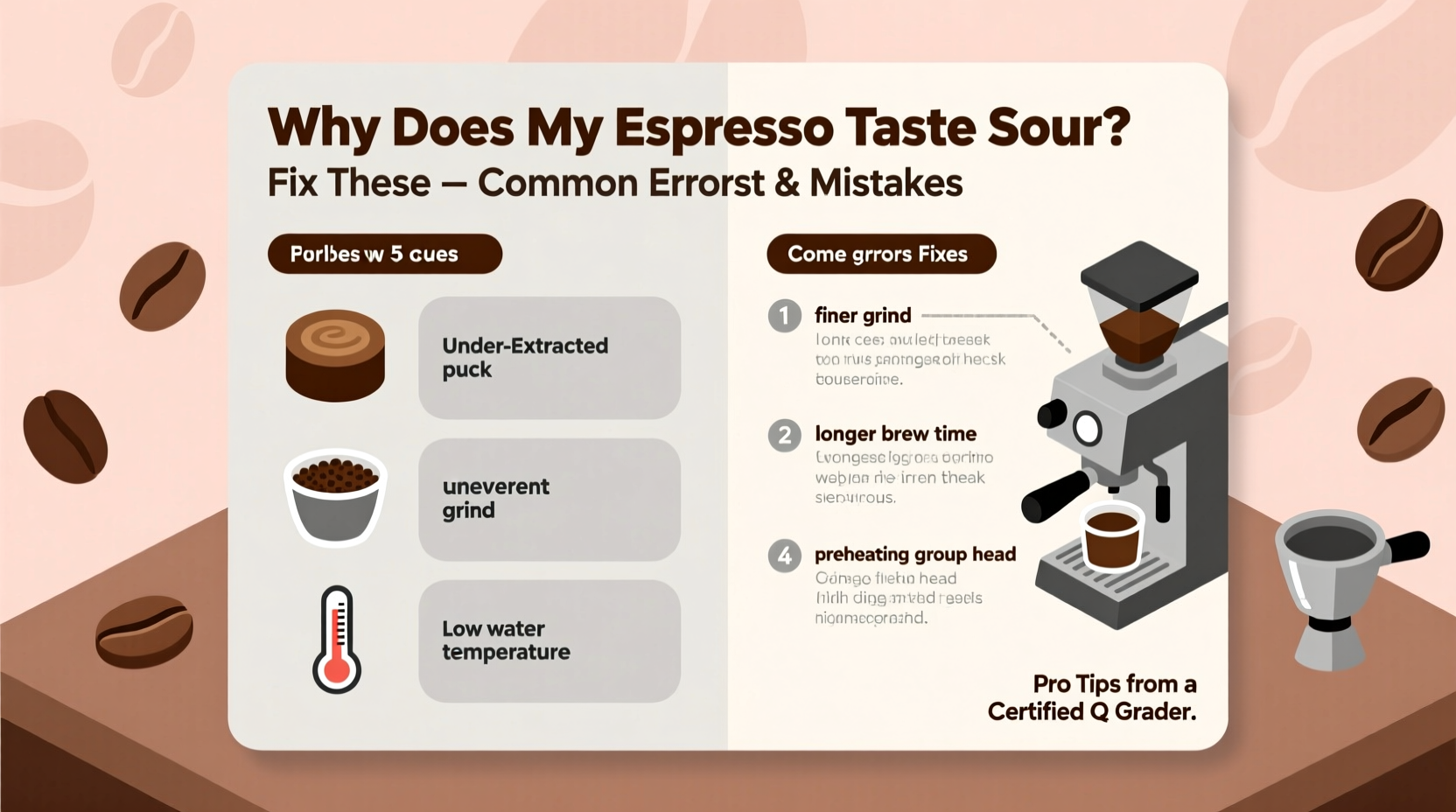
Sourness in espresso typically arises when the coffee grounds haven’t been sufficiently extracted during brewing. Under-extracted coffee releases organic acids early in the extraction process, while sugars and bitter compounds come later. If the shot ends too soon or the water doesn’t penetrate evenly, those bright, tart notes dominate the flavor profile.
This isn't about roast level alone. Even a well-roasted bean can produce sour shots if brewed incorrectly. Extraction is influenced by multiple variables: grind size, dose, yield, time, water temperature, machine stability, and tamping consistency. A single imbalance can shift the entire outcome.
“Sour espresso is rarely about the beans—it’s almost always about the method. Fix the process, and the flavor follows.” — Luca Marconi, Coffee Trainer & World Barista Championship Judge
Common Causes of Sour Espresso (and How to Fix Them)
1. Grind Size Too Coarse
The most frequent culprit behind sour shots is a grind setting that’s too coarse. When particles are large, water flows through the puck too quickly, extracting primarily acids before reaching the sweetness and body.
2. Low Brew Temperature
Water below 90°C (194°F) struggles to extract effectively. Many entry-level machines struggle to maintain stable temperatures, especially during back-to-back shots. If your machine lacks PID control, it may drop below optimal range.
Test your portafilter basket temperature with a digital thermometer before pulling a shot. Pre-infusion and preheating the group head thoroughly can mitigate this issue.
3. Insufficient Dose or Uneven Tamping
An underdosed portafilter or uneven tamp creates channeling—paths where water rushes through weak spots instead of flowing uniformly. This leads to both over- and under-extracted zones, with sourness dominating from the under-extracted portions.
Aim for consistent dosing (typically 18–20g for a double shot) and apply even pressure when tamping. Consider using a distribution tool like a NSEW or OCD to spread grounds evenly before tamping.
4. Short Shot Time
If your espresso pours out in under 25 seconds for a standard 1:2 ratio (e.g., 18g in, 36g out), it’s likely under-extracted. However, time alone isn’t the full story—yield matters just as much. A fast pour with high output may still be balanced, while a short time with low yield usually isn’t.
5. Old or Poorly Stored Beans
Freshness plays a critical role. Coffee degasses after roasting, but after 2–4 weeks, it begins losing solubles essential for balanced extraction. Stale beans extract poorly, often resulting in flat or sour flavors regardless of technique.
Store beans in an airtight container away from light, heat, and moisture. Avoid freezing unless necessary, and never refrigerate.
Troubleshooting Timeline: Step-by-Step Fix
Follow this sequence to systematically eliminate sources of sourness. Start at the beginning and work through each step until flavor improves.
- Verify Bean Freshness: Check roast date. Use beans within 3 weeks of roasting.
- Weigh Your Dose and Yield: Use a scale to confirm input (e.g., 18g) and output (e.g., 36g). Target a 1:2 ratio for starters.
- Time the Shot: Measure from pump start to stop. Ideal window: 25–30 seconds for a full extraction.
- Adjust Grind Finer: Make small adjustments upward on your grinder. Wait for burrs to clear old grounds.
- Check Water Temperature: Run a temperature check using a thermocouple or infrared gun on the empty portafilter.
- Improve Puck Preparation: Distribute grounds evenly, tamp with 30 lbs of pressure, and ensure levelness.
- Clean Equipment: Backflush the group head weekly. Clean shower screen monthly to prevent clogs affecting flow.
- Retaste and Evaluate: After each change, brew and assess. Note changes in mouthfeel, sweetness, and finish.
Do’s and Don’ts of Espresso Brewing
| Do | Don’t |
|---|---|
| Use freshly roasted, properly stored beans | Use beans older than 4 weeks |
| Weigh both dose and yield | Rely solely on volume or time |
| Preheat portafilter, cup, and group head | Pull a shot immediately after turning on the machine |
| Clean equipment regularly | Ignore residue buildup in group heads |
| Adjust one variable at a time | Change grind, dose, and time simultaneously |
Mini Case Study: From Sour to Sweet at Home
Jessica, a home barista in Portland, struggled for months with sour espresso despite using specialty beans from a local roaster. She followed recipes online but kept getting sharp, wine-like shots. Frustrated, she recorded her process: 17g dose, 32g yield in 24 seconds, medium-light roast, blade grinder.
The root cause was twofold: her grinder produced inconsistent particle sizes, and her yield-to-time ratio indicated under-extraction. Upgrading to a burr grinder allowed finer, uniform adjustments. She increased her dose to 18.5g, adjusted the grind finer, and extended shot time to 28 seconds with a 37g yield. The result? A sweeter, fuller-bodied espresso with balanced acidity—not sourness.
Her breakthrough wasn’t exotic gear—it was attention to detail and willingness to measure everything.
Essential Checklist for Balanced Espresso
- ✅ Confirm roast date is within 3 weeks
- ✅ Weigh input (dose) and output (yield)
- ✅ Aim for 25–30 second extraction time
- ✅ Use a burr grinder (not blade)
- ✅ Preheat all equipment
- ✅ Distribute grounds evenly before tamping
- ✅ Apply consistent tamp pressure (30 lbs)
- ✅ Backflush group head weekly (if possible)
- ✅ Clean shower screen monthly
- ✅ Adjust only one variable at a time
FAQ: Common Questions About Sour Espresso
Is sour espresso safe to drink?
Yes, sour espresso is safe. It’s not spoiled—it’s under-extracted. While unpleasant, it won’t harm you. However, consistently drinking highly acidic beverages may affect dental enamel over time.
Can light roasts be sour?
Light roasts naturally have higher perceived acidity due to preserved organic acids. But they should still be sweet and complex, not sharply sour. If a light roast tastes vinegary or unbalanced, the issue is likely under-extraction, not roast level.
Why does my espresso taste sour one day and fine the next?
Inconsistency often stems from environmental factors: humidity affects grind size, bean age progresses daily, and machine warm-up varies. Maintain a log of dose, yield, time, and grind setting to identify patterns. Seasonal changes in ambient temperature also impact extraction stability.
Making the Shift: From Error to Excellence
Mastering espresso isn’t about perfection on the first try—it’s about refinement through repetition. Sour shots aren’t failures; they’re feedback. Each variable you test builds intuition. Over time, you’ll recognize the signs of proper extraction not just by taste, but by sound, flow rate, and crema texture.
Invest in tools that support precision: a good scale with timer, a quality burr grinder, and a tamper with a level base. These aren’t luxuries—they’re foundational. And remember, even professional baristas tweak their settings daily. Coffee is alive. It responds to environment, equipment, and care.
The journey from sour to sublime starts with curiosity and ends with confidence. Every adjustment brings you closer to that ideal shot—the one that hums with balance, sweetness, and depth.




 浙公网安备
33010002000092号
浙公网安备
33010002000092号 浙B2-20120091-4
Comments
No comments yet. Why don't you start the discussion?