
As holiday seasons roll around, homes light up with festive cheer—strings of Christmas lights adorn trees, rooftops, and porches. But if you've noticed your extension cord growing warm—or worse, hot—while powering those twinkling displays, it’s time to pay attention. A heated cord isn’t just a minor inconvenience; it’s a potential warning sign of electrical overload or unsafe usage. Understanding why this happens and how to respond can protect your home, family, and holiday spirit.
Extension cords are temporary power solutions, not permanent wiring substitutes. Yet, during the holidays, they’re often asked to do heavy lifting: powering dozens of light strands, inflatables, and outdoor decorations. When used incorrectly, these cords can overheat, increasing the risk of short circuits, melted insulation, and even house fires. The U.S. Fire Administration reports that an estimated 200 fires each year are caused by decorative lighting, many tied to improper use of extension cords.
This article breaks down the science behind overheating cords, identifies common mistakes, and delivers actionable safety strategies so you can enjoy a bright—and safe—holiday season.
Why Extension Cords Overheat with Christmas Lights
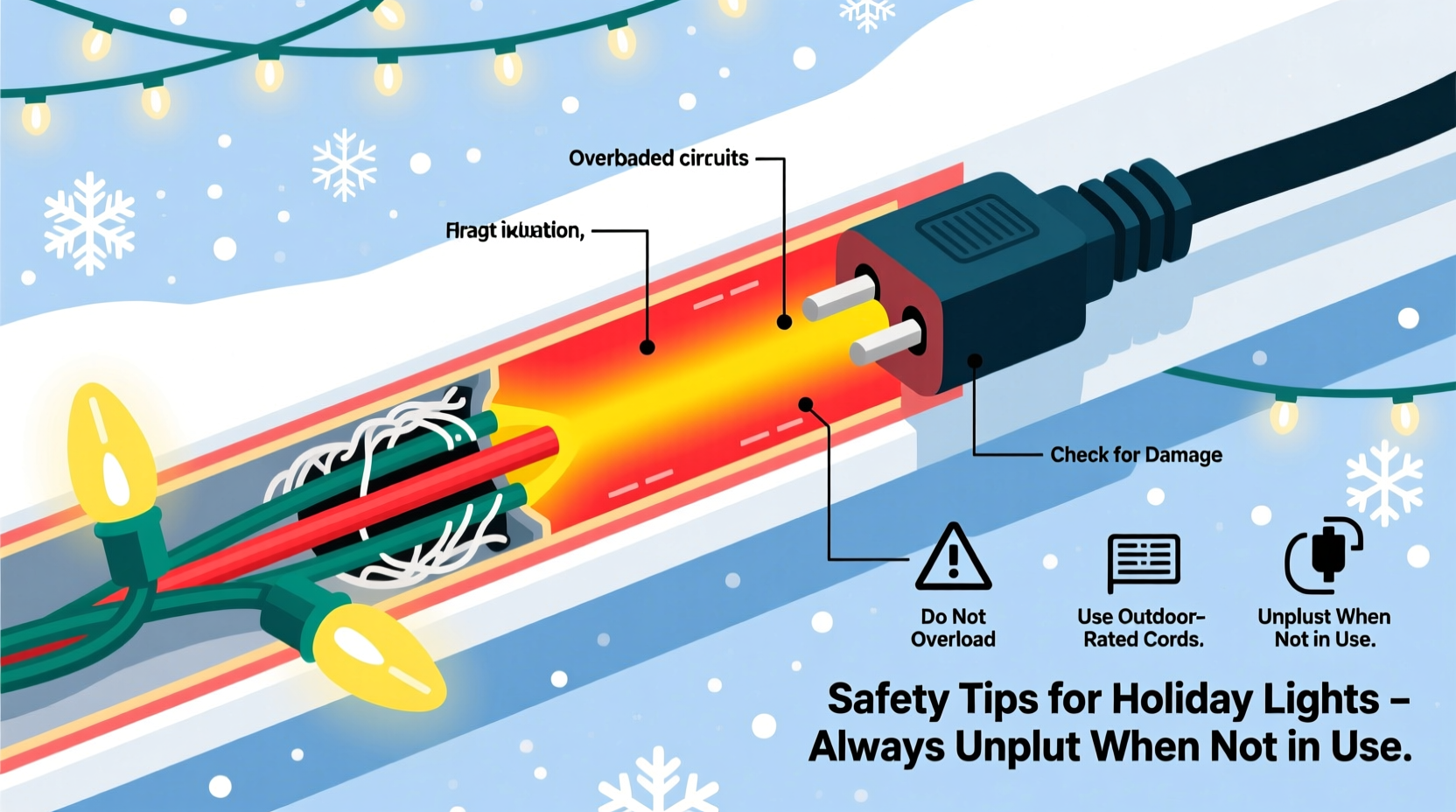
An extension cord heats up due to electrical resistance. As current flows through the wire, resistance converts some energy into heat. Under normal conditions, this heat dissipates safely. But when too much current is drawn, or the cord is undersized, heat builds faster than it can escape.
Christmas lights, especially older incandescent models, draw more power than people realize. A single strand might use 40 watts. Ten strands equal 400 watts—nearly a third of a standard 15-amp circuit’s capacity. Add in inflatables, timers, or additional lights, and demand climbs quickly.
Several factors contribute to cord overheating:
- Exceeding the cord’s wattage rating: Most indoor extension cords are rated for 13 amps (about 1,560 watts). Connecting too many devices pushes them beyond safe limits.
- Using lightweight or indoor cords outdoors: Indoor cords lack weather-resistant insulation and are thinner, making them prone to overheating in damp or cold conditions.
- Daisy-chaining multiple cords: Linking several cords increases resistance and reduces voltage delivery, forcing the system to work harder.
- Poor cord condition: Frayed wires, cracked insulation, or corroded plugs increase resistance and create hot spots.
- Coiling excess cord: Tightly wound cords trap heat, preventing proper dissipation and raising internal temperatures.
Choosing the Right Extension Cord for Holiday Lighting
Not all extension cords are created equal. Using the wrong type is one of the most common causes of overheating. To ensure safety, match the cord to your needs based on three key specifications: gauge, length, and rating.
Gauge (Wire Thickness): Measured in American Wire Gauge (AWG), lower numbers mean thicker wires and higher current capacity. For holiday lighting, especially outdoors or with multiple strands, use 16-gauge or lower (e.g., 14- or 12-gauge).
Length: Longer cords have higher resistance. A 100-foot 16-gauge cord may drop voltage significantly, causing lights to dim and the cord to heat. For runs over 50 feet, step up to 14-gauge or 12-gauge.
Rating: Look for labels like “UL Listed,” “For Outdoor Use,” and check the jacket for ratings such as SPT-2 (thicker insulation) versus SPT-1 (thinner, for indoor use only).
“Using an indoor-rated extension cord outside is one of the top electrical risks during the holidays. Moisture, temperature swings, and physical stress degrade thin insulation fast.” — James Reed, Certified Electrician and NFPA Safety Advocate
Extension Cord Selection Guide
| Use Case | Recommended Gauge | Max Length | Key Features |
|---|---|---|---|
| Indoor tree lights (few strands) | 18-gauge | 25 ft | SPT-1, indoor-rated |
| Indoor display (multiple strands) | 16-gauge | 50 ft | SPT-2, UL-listed |
| Outdoor lighting (roof, yard) | 14-gauge | 75 ft | Weather-resistant, grounded (3-prong) |
| Multiple inflatables + lights | 12-gauge | 100 ft | Heavy-duty, outdoor-rated, grounded |
Step-by-Step: How to Safely Power Christmas Lights with Extension Cords
Follow this sequence to minimize risk and ensure reliable performance throughout the season.
- Calculate total wattage: Add up the wattage of all connected lights and devices. Check labels or packaging. LED lights typically use 5–10 watts per strand; incandescent use 25–50 watts.
- Select the right cord: Based on wattage and distance, choose a cord with sufficient gauge and outdoor rating if needed.
- Plug into a GFCI outlet: Ground Fault Circuit Interrupter (GFCI) outlets cut power if a ground fault is detected—critical for outdoor setups.
- Lay cord safely: Run along edges, avoid foot traffic, don’t nail or staple. Keep away from water sources and sharp objects.
- Avoid daisy-chaining: Connect directly to the outlet or use a single, adequately sized cord. If extension is unavoidable, use the shortest possible link and never exceed two connections.
- Uncoil completely: Always unwind the entire cord before use to allow heat dispersion.
- Test before full deployment: Plug in all devices and run for 15–30 minutes. Touch the cord—warm is okay, hot is dangerous.
- Inspect regularly: Check weekly for heat, fraying, discoloration, or loose plugs.
Real-World Example: A Close Call in Suburban Ohio
In December 2022, a homeowner in Columbus, Ohio, installed over 1,200 incandescent Christmas lights across his roofline and front yard. He used three 50-foot indoor extension cords, daisy-chained together, running from a garage outlet. Within days, neighbors reported a burning smell.
The homeowner discovered the middle cord was blistering—the insulation had softened and darkened near the connection point. He unplugged everything immediately. A licensed electrician later confirmed the setup drew nearly 1,800 watts—well above the 16-gauge cord’s safe limit. The circuit was also shared with garage lighting, compounding the load.
Had the issue gone unnoticed, the risk of fire was significant. The fix? The electrician recommended installing two dedicated outdoor outlets, using 14-gauge cords, and switching to LED lights to reduce total load by 75%. The homeowner now runs twice as many lights with less heat and greater efficiency.
Safety Checklist: Preventing Overheating and Hazards
Before plugging in your holiday display, go through this checklist to ensure safety:
- ✅ Calculated total wattage of all connected devices
- ✅ Chose extension cord with appropriate gauge and length
- ✅ Confirmed cord is rated for outdoor use (if applicable)
- ✅ Used GFCI-protected outlet for outdoor connections
- ✅ Avoided daisy-chaining multiple cords
- ✅ Uncoiled cord fully before use
- ✅ Inspected cord for damage (frays, cracks, bent prongs)
- ✅ Kept cord away from water, snow, and high-traffic areas
- ✅ Installed no more than 80% of cord’s maximum load
- ✅ Scheduled weekly inspections during display period
Frequently Asked Questions
Is it normal for an extension cord to feel warm?
A slight warmth under load is normal, especially with longer runs or moderate usage. However, if the cord is too hot to touch, emits a burning smell, or shows discoloration, unplug it immediately. This indicates overload or damage.
Can I leave Christmas lights plugged in overnight?
It’s not recommended unless you’re using low-heat LED lights, quality extension cords, and a timer or smart plug. Even then, periodic checks are essential. The National Fire Protection Association advises turning off decorative lights when leaving home or sleeping.
Are LED Christmas lights safer than incandescent?
Yes. LEDs consume up to 90% less energy, generate far less heat, and reduce strain on extension cords and circuits. They also last longer and are less likely to cause overheating issues. Upgrading to LED is one of the safest upgrades you can make.
Expert Recommendations for Long-Term Safety
Seasonal decorations shouldn’t compromise year-round safety. Electrical professionals emphasize planning and prevention.
“The holidays bring joy, but also increased electrical demand. My advice: treat every extension cord like a temporary solution. If you’re using them year after year for outdoor lighting, consider having a licensed electrician install permanent, weatherproof outlets.” — Lisa Tran, Master Electrician and Safety Instructor at NECA
Other long-term strategies include:
- Installing outdoor outlets: Reduces reliance on extension cords and improves safety.
- Labeling circuits: Know which breaker controls holiday displays for quick shutdown if needed.
- Using timers: Automatically turn lights off during late-night hours.
- Upgrading to smart lighting: Many modern LED systems offer app control, scheduling, and energy monitoring.
Conclusion: Enjoy the Holidays Without the Risk
There’s no reason to sacrifice safety for sparkle. A hot extension cord is a clear signal that something in your setup needs adjustment—whether it’s the cord itself, the number of lights, or the way power is delivered. By understanding electrical basics, choosing the right equipment, and following proven safety practices, you can create a dazzling display without endangering your home.
The holidays are about gathering, celebrating, and creating memories—not emergency calls or repairs. Take a few extra minutes now to inspect your cords, calculate loads, and set up your lights responsibly. Your future self, and your family, will thank you when the season ends with joy, not incident.




 浙公网安备
33010002000092号
浙公网安备
33010002000092号 浙B2-20120091-4
Comments
No comments yet. Why don't you start the discussion?