
It’s a common holiday scene: you’ve strung up dozens of festive lights around the house, plugged them into an extension cord, and within minutes notice the cord is warm—or even hot—to the touch. While a slight warmth might seem normal, excessive heat is a serious warning sign. Understanding why this happens isn’t just about protecting your decorations—it’s about preventing electrical fires and ensuring your home remains safe.
Extension cords are temporary power solutions, not permanent wiring substitutes. When overloaded—especially with multiple strands of lights—they can overheat due to electrical resistance, inadequate wire gauge, or poor design. This article breaks down the science behind cord heating, identifies risk factors, and provides actionable steps to use lights safely without endangering your home.
The Science Behind Heat in Extension Cords
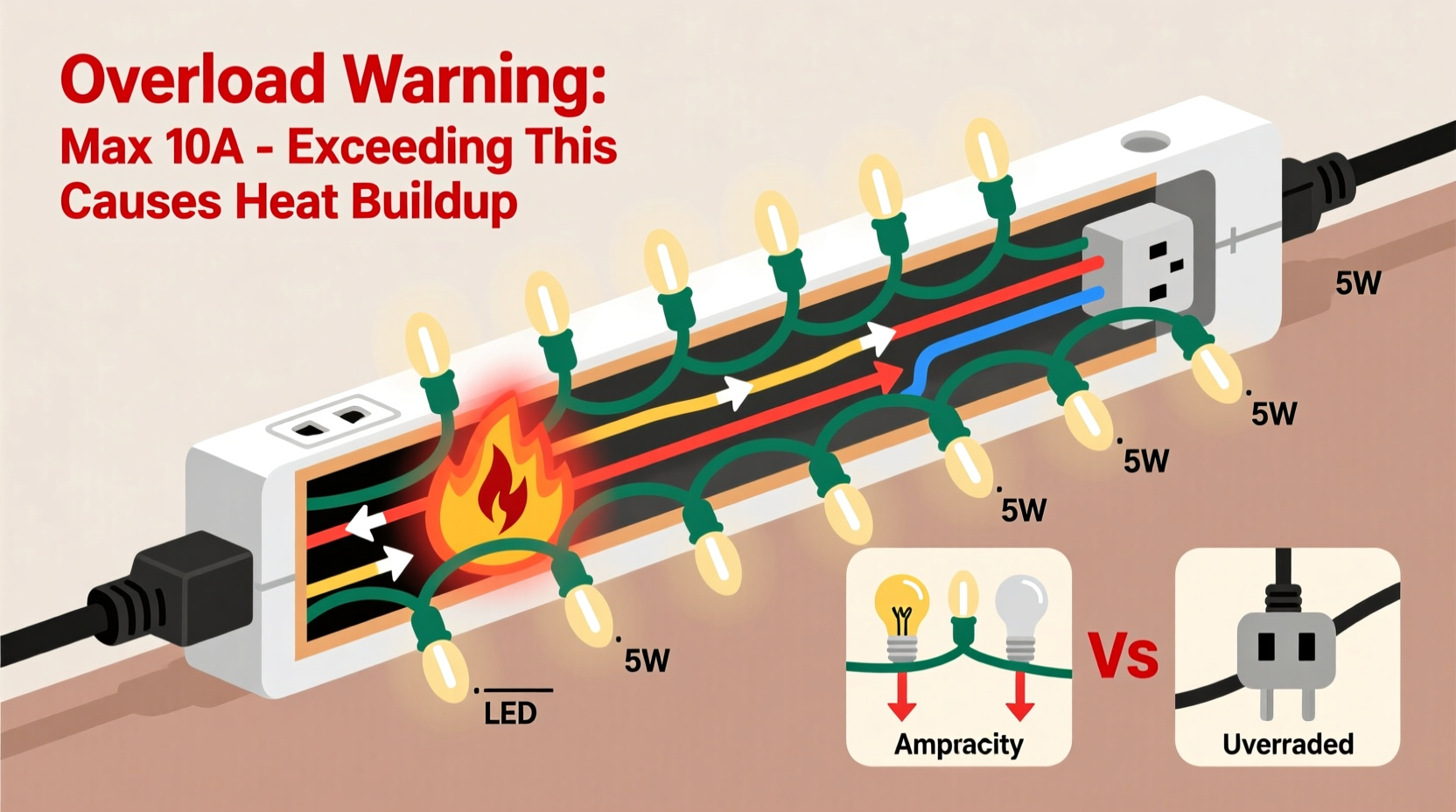
When electricity flows through a conductor—like the copper wires inside an extension cord—it encounters resistance. This resistance converts some electrical energy into heat, a phenomenon known as Joule heating. The higher the current (measured in amperes or amps), the more heat is generated. Under normal conditions, this heat dissipates quickly and doesn’t pose a threat. But when too many devices draw power from one cord, the current increases beyond what the cord can safely handle, leading to dangerous temperature rises.
Light strands, particularly older incandescent models, may seem harmless individually, but their combined load adds up. For example, a single strand of 50 incandescent mini-lights can draw about 0.3 amps. Plug ten strands into a single cord, and suddenly you’re pulling 3 amps—well beyond the safe capacity of many lightweight extension cords.
Heat buildup is exacerbated by environmental factors. Cords coiled tightly, buried under rugs, or enclosed in insulation retain heat instead of releasing it. This trapped thermal energy further raises internal temperatures, increasing the risk of melted insulation, short circuits, or fire.
“Any noticeable warmth in an extension cord is a red flag. These cords aren’t designed to operate under continuous high loads. If it’s hot, it’s being overused.” — James Leland, Licensed Electrician and NFPA Safety Consultant
Common Causes of Overheating with Multiple Light Strands
Several interrelated factors contribute to extension cord overheating when powering multiple light strings. Recognizing these causes is the first step toward prevention.
Exceeding the Cord’s Amperage Rating
All extension cords have a maximum current rating based on wire gauge (thickness). Thinner wires (higher gauge numbers like 18 AWG) offer more resistance and less current capacity. A typical indoor decorative cord rated at 16 AWG can safely carry up to 10 amps, but many inexpensive cords used for holiday lights are only 18 AWG—rated for 5 amps or less.
When multiple light strands exceed this limit, the cord overheats. Always check both the cord’s label and the total amp draw of connected devices.
Daisy-Chaining Too Many Light Strings
Many light sets are designed to be daisy-chained—plugged end-to-end—but manufacturers specify a maximum number (often 3–4 strands for incandescent, up to 10 for LEDs). Exceeding this limit increases the load on the first cord in the chain, which becomes the bottleneck.
The initial plug and first few feet of wiring bear the cumulative current of all downstream lights. This concentration of power flow is where overheating most commonly begins.
Poor-Quality or Damaged Cords
Cheaper extension cords often use undersized conductors, thin insulation, and substandard connectors. Over time, wear and tear—cracks, fraying, bent prongs—further increase resistance at connection points, creating localized hot spots.
Even minor damage can significantly reduce a cord’s ability to handle its rated load, especially under prolonged use.
Using Indoor Cords Outdoors or in Enclosed Spaces
Indoor-rated cords lack weather-resistant insulation and are not designed to dissipate heat efficiently in damp or confined environments. Placing them under mulch, snow, or carpet traps heat and accelerates degradation.
How to Calculate Your Load and Choose the Right Cord
Preventing overheating starts with understanding electrical load. Use this simple process to ensure your setup stays within safe limits.
Step 1: Determine Total Wattage of Connected Lights
Check the packaging or label of each light strand for wattage. Add them together.
- Example: 10 strands × 40 watts each = 400 watts total
Step 2: Convert Watts to Amps
Use the formula: Amps = Watts ÷ Volts. In North America, standard voltage is 120V.
- 400W ÷ 120V = 3.33 amps
Step 3: Match Amps to Cord Capacity
Select an extension cord rated for at least 20% more than your calculated load. For 3.33 amps, aim for a cord rated at 5 amps or higher.
Refer to the following table for common wire gauges and their capacities:
| Wire Gauge (AWG) | Typical Cord Type | Max Safe Amps | Suitable For |
|---|---|---|---|
| 18 AWG | Light-duty indoor | 5 amps | 1–2 LED strands or small decor |
| 16 AWG | Medium-duty indoor/outdoor | 10 amps | Multiple LED strands or 3–4 incandescent sets |
| 14 AWG | Heavy-duty outdoor | 15 amps | Long runs, multiple incandescent strings, or mixed loads |
| 12 AWG | Commercial-grade | 20 amps | Large displays, professional setups |
For 400 watts (3.33 amps), a 16 AWG cord is sufficient—but if you plan to expand, stepping up to 14 AWG provides headroom and cooler operation.
Mini Case Study: The Overloaded Porch Display
In suburban Chicago, Mark installed 15 strands of incandescent Christmas lights across his porch railing. Each strand drew 40 watts (0.33 amps), totaling 6.75 amps. He used a coiled 18 AWG indoor extension cord routed under a garden mat to hide it.
Within two hours of turning the display on, the cord became too hot to touch. The next morning, he noticed melted insulation near the plug. An electrician later explained that the 18 AWG cord was only rated for 5 amps—Mark had exceeded it by 35%. The coil and covered placement prevented heat dissipation, accelerating the damage.
The fix? Mark replaced the cord with a 14 AWG outdoor-rated model, uncoiled it fully, and switched half the strands to LEDs. The new setup draws only 4.5 amps and runs cool even after 12 hours.
Safety Checklist: Preventing Extension Cord Overheating
Follow this checklist before powering any multi-light setup:
- ✅ Check the total wattage and amp draw of all connected light strands.
- ✅ Verify the extension cord’s wire gauge and amp rating (look for labels on the jacket).
- ✅ Use only outdoor-rated cords for exterior lighting, even if partially sheltered.
- ✅ Avoid daisy-chaining more than the manufacturer allows (check light packaging).
- ✅ Never run cords under carpets, rugs, doorways, or through windows.
- ✅ Keep cords uncoiled and laid out straight to allow heat dissipation.
- ✅ Inspect cords for damage—fraying, cracked insulation, loose plugs—before use.
- ✅ Plug directly into a wall outlet when possible; avoid using power strips with extension cords.
- ✅ Turn off lights when leaving home or sleeping.
- ✅ Consider switching to LED lights, which use up to 80% less power and generate far less heat.
FAQ: Common Questions About Hot Extension Cords
Is it normal for an extension cord to get warm?
A slight warmth under moderate load is normal, especially after hours of use. However, if the cord is too hot to touch, emits a burning smell, or shows discoloration, it’s dangerously overloaded and must be disconnected immediately.
Can I use multiple extension cords together?
Daisy-chaining extension cords is strongly discouraged. Each added connection increases resistance and the risk of overheating or failure. Instead, use a single, properly sized cord long enough for your needs. If distance is an issue, consider installing a permanent outdoor outlet.
Are LED lights safer than incandescent for extension cords?
Yes. LED light strands typically use 10–20% of the energy of incandescent bulbs. A strand that draws 40 watts in incandescent form may only draw 4–6 watts as LED. This dramatically reduces strain on the cord and lowers fire risk.
Expert Recommendations for Long-Term Safety
Professional electricians and fire safety organizations emphasize proactive measures over reactive fixes. The National Fire Protection Association (NFPA) reports that between 2014 and 2018, U.S. fire departments responded to an average of 7,700 home structure fires per year involving decorative lighting. Most were caused by electrical distribution failures, including improper use of extension cords.
“The safest extension cord is the one you don’t need. For seasonal lighting, consider dedicated outdoor outlets or low-voltage landscape systems with built-in transformers.” — Sarah Nguyen, NFPA Electrical Safety Division
For homeowners with recurring large displays, investing in permanent electrical solutions pays off in safety, convenience, and reliability. GFCI-protected outdoor outlets eliminate the need for long cord runs and reduce trip hazards.
If permanent wiring isn’t feasible, adopt a “layered power” approach: use multiple shorter, heavy-gauge cords to distribute the load across different circuits rather than concentrating everything on one cord and one outlet.
Conclusion: Stay Bright, Stay Safe
Your holiday lights should bring joy—not danger. A hot extension cord is not a minor inconvenience; it’s a clear signal that your electrical system is under stress. By understanding the causes of overheating, calculating your actual power needs, and choosing the right equipment, you can enjoy a vibrant, safe display without risking your home or family.
Start today: unplug your current setup, inspect every cord, calculate your total load, and upgrade where necessary. Small changes—like switching to LEDs or using a 14 AWG cord—can make a life-saving difference. Electricity demands respect, but with informed choices, you can celebrate safely for years to come.




 浙公网安备
33010002000092号
浙公网安备
33010002000092号 浙B2-20120091-4
Comments
No comments yet. Why don't you start the discussion?