
It starts subtly—a faint flutter in the corner of your eye that you notice while looking in the mirror or reading an email. Within hours, it becomes harder to ignore. You blink more, hoping it will stop, but the twitch persists. Eye twitching, medically known as myokymia, is a common experience that affects most people at some point. While usually harmless, it can be frustrating, distracting, and sometimes a sign of something more serious. Stress and caffeine are two of the most frequent triggers, but understanding the full picture—what causes it, how lifestyle plays a role, and when medical attention is necessary—is key to managing it effectively.
Understanding Eye Twitching: What’s Happening in Your Eyelid?
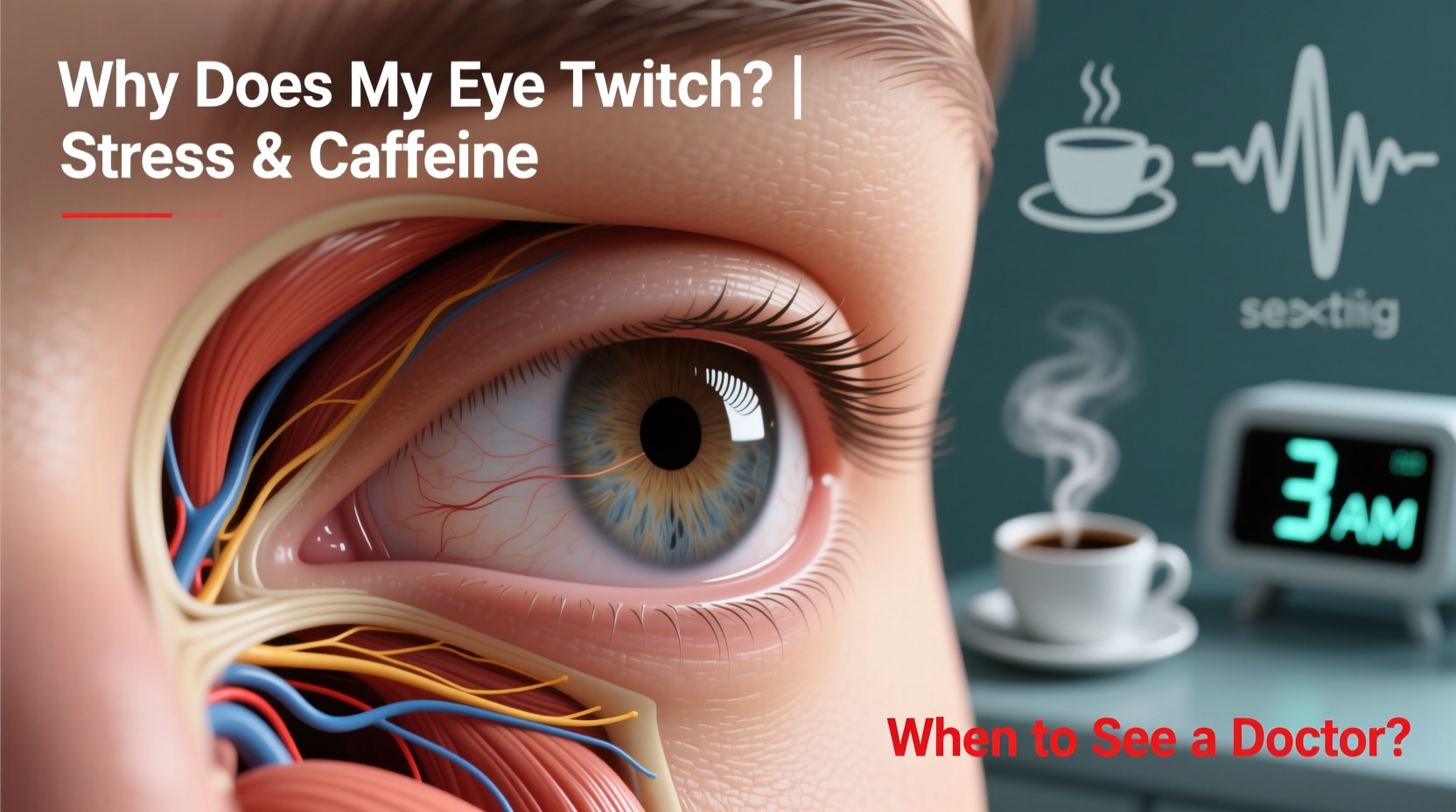
Eye twitching occurs when the orbicularis oculi muscle—the muscle around the eye—contracts involuntarily. These contractions are typically brief, rhythmic, and localized. They may affect the upper or lower eyelid and usually last a few seconds to minutes. In most cases, they come and go without any underlying neurological condition.
The nervous system controls muscle movement through electrical impulses. When nerve signals become overactive or misfire due to fatigue, chemical imbalances, or irritation, they can trigger spontaneous muscle twitches. The eyelids are particularly sensitive because of their high concentration of nerve endings and fine motor control.
There are three main types of eyelid twitching:
- Benign essential blepharospasm: A rare, progressive condition causing chronic bilateral twitching that can interfere with vision.
- Hemifacial spasm: Involuntary contractions on one side of the face, often starting near the eye and spreading downward—usually linked to nerve compression.
- Occasional myokymia: The most common form—mild, temporary twitching often triggered by lifestyle factors like stress, lack of sleep, or excessive caffeine.
Most people experiencing eye twitching fall into the third category. It's annoying but not dangerous. However, recognizing when occasional twitching crosses into a more concerning territory is essential.
Stress and Eye Twitching: The Mind-Muscle Connection
Stress is one of the top contributors to eye twitching. When under psychological pressure, your body activates the sympathetic nervous system—the “fight-or-flight” response. This increases levels of cortisol and adrenaline, heightens muscle tension, and accelerates neural firing. Over time, this hyperaroused state can cause minor neuromuscular disturbances, including eyelid spasms.
Chronic stress disrupts neurotransmitter balance, particularly affecting gamma-aminobutyric acid (GABA), which helps regulate nerve activity. Low GABA levels are associated with increased excitability in the brain, making muscles more prone to involuntary contractions.
A 2021 study published in *The Journal of Clinical Neuroscience* found that individuals reporting high stress levels were 2.3 times more likely to experience recurrent eye twitching than those with low stress. Work deadlines, financial strain, relationship issues, or even constant digital stimulation can all contribute.
Managing stress isn’t just about feeling better mentally—it directly impacts physical symptoms like eye twitching. Techniques such as mindfulness meditation, diaphragmatic breathing, and regular physical activity help reset the nervous system and reduce muscle hyperactivity.
“Stress doesn’t just live in the mind—it manifests physically. Chronic tension can express itself in subtle ways, like eye twitching, long before more serious symptoms appear.” — Dr. Lena Patel, Neurologist at Boston Medical Center
Caffeine’s Role in Triggering Eyelid Spasms
Caffeine is a central nervous system stimulant. It works by blocking adenosine receptors, chemicals in the brain that promote sleep and suppress arousal. By inhibiting adenosine, caffeine increases alertness—but also raises neuronal excitability throughout the brain and peripheral nerves.
While moderate caffeine intake (up to 400 mg per day, roughly four cups of coffee) is generally safe, excess consumption can lead to jitteriness, anxiety, insomnia, and yes—eye twitching. High doses amplify nerve signaling, increasing the likelihood of erratic muscle contractions.
Beyond coffee, many people overlook hidden sources of caffeine: energy drinks, certain sodas, dark chocolate, pre-workout supplements, and some over-the-counter medications (like migraine relievers). Consuming these throughout the day can result in cumulative stimulation that exceeds the body’s threshold for stability.
Moreover, caffeine disrupts sleep quality even if you fall asleep quickly. Poor REM cycles impair muscle recovery and neurological regulation, creating a cycle where fatigue leads to more caffeine use, which worsens twitching.
| Caffeine Source | Average Caffeine Content (mg) | Potential Impact on Eye Twitching |
|---|---|---|
| 8 oz Brewed Coffee | 95 | High – especially if consumed late in the day |
| 12 oz Energy Drink | 150–250 | Very High – rapid absorption increases risk |
| 1 oz Dark Chocolate (70% cocoa) | 20–30 | Moderate – cumulative effect with other sources |
| 8 oz Black Tea | 40–70 | Low to Moderate – slower release than coffee |
| Over-the-Counter Pain Relievers (e.g., Excedrin) | 65 per tablet | Often overlooked – contributes to total load |
Other Common Causes of Eye Twitching
While stress and caffeine are leading culprits, several other factors can trigger or exacerbate eyelid spasms:
- Sleep deprivation: Less than 6–7 hours of quality sleep impairs nervous system regulation.
- Dry eyes or eye strain: Prolonged screen time reduces blink rate, leading to ocular surface irritation that may signal nearby muscles to twitch.
- Nutritional deficiencies: Low levels of magnesium, potassium, or vitamin B12 can affect nerve function.
- Allergies: Histamine release from allergic reactions can cause itching and twitching around the eyes.
- Alcohol and tobacco use: Both substances alter neurotransmitter activity and dehydrate tissues.
Digital eye strain, increasingly common in remote work environments, deserves special attention. Staring at screens for extended periods forces the ciliary and extraocular muscles to remain engaged, contributing to fatigue and micro-spasms. The blue light emitted by devices may further stimulate retinal pathways connected to motor neurons.
Mini Case Study: Sarah’s Persistent Twitch
Sarah, a 34-year-old project manager, began noticing her right eye twitching after transitioning to a fully remote role. Initially mild, the twitch worsened over two weeks. She was drinking three large coffees daily, working 10-hour stretches with minimal breaks, and sleeping poorly due to anxiety about deadlines. She tried eye drops, thinking it was dryness, but saw no improvement.
After consulting her primary care physician, she learned that her caffeine intake exceeded 600 mg/day when accounting for her morning lattes and afternoon energy drink. She also averaged only 5.5 hours of sleep nightly. Her doctor recommended reducing caffeine, implementing the 20-20-20 rule (every 20 minutes, look at something 20 feet away for 20 seconds), and practicing evening relaxation techniques.
Within five days of cutting caffeine and improving sleep hygiene, Sarah’s eye twitch resolved completely. Her case illustrates how multiple lifestyle factors can converge to trigger a seemingly isolated symptom.
When to See a Doctor: Red Flags to Watch For
Most eye twitching resolves on its own within days or weeks. However, certain signs indicate the need for professional evaluation:
- Twitching persists for more than three weeks
- The spasm spreads to other facial areas
- Eyes begin to close involuntarily during twitching
- Redness, swelling, or discharge accompanies the twitch
- The eyelid droops (ptosis)
- Both eyes are affected simultaneously and chronically
If any of these occur, consult a healthcare provider. You may need evaluation by a neurologist or ophthalmologist to rule out conditions like:
- Blepharospasm: A form of dystonia involving uncontrollable blinking and eye closure.
- Hemifacial spasm: Often caused by a blood vessel compressing the facial nerve.
- Multiple sclerosis or Parkinson’s disease: Rarely, eyelid twitching can be an early neurological sign.
- Essential tremor or Tourette syndrome: Though less common, these can present with facial tics.
Diagnostic tools may include a neurological exam, electromyography (EMG), or MRI to assess nerve integrity and brain structure.
Step-by-Step Guide to Managing Eye Twitching at Home
If your eye twitch is mild and recent, follow this practical timeline to address root causes:
- Day 1–2: Assess Triggers
Track your caffeine intake, sleep duration, screen time, and stress levels. Identify patterns. - Day 3: Reduce Stimulants
Cut caffeine gradually (to avoid withdrawal headaches). Switch to herbal tea or decaf. Avoid energy drinks. - Day 4–5: Improve Sleep Hygiene
Set a consistent bedtime. Limit screen exposure 1 hour before bed. Try a warm bath or light stretching. - Day 6–7: Support Eye Health
Use artificial tears if eyes feel dry. Follow the 20-20-20 rule during screen work. - Day 8–10: Incorporate Relaxation
Practice deep breathing (4-second inhale, 6-second exhale) for 5 minutes twice daily. - Day 11–14: Evaluate Progress
If twitching continues beyond two weeks despite changes, schedule a doctor’s visit.
Prevention Checklist: Stop Eye Twitching Before It Starts
Stay ahead of eye twitching with this actionable checklist:
- ☑ Limit caffeine to ≤400 mg per day and avoid it after 2 PM
- ☑ Aim for 7–8 hours of uninterrupted sleep each night
- ☑ Take screen breaks every 20 minutes using the 20-20-20 rule
- ☑ Use lubricating eye drops if you have dry eyes
- ☑ Practice daily stress-reduction techniques (meditation, walking, journaling)
- ☑ Eat a balanced diet rich in magnesium (leafy greens, nuts) and B vitamins (eggs, legumes)
- ☑ Stay hydrated—dehydration affects electrolyte balance critical for nerve function
Frequently Asked Questions
Can dehydration cause eye twitching?
Yes. Dehydration alters the balance of sodium, potassium, and magnesium—electrolytes essential for proper nerve signaling. Even mild dehydration can trigger muscle irritability, including eyelid spasms. Drinking adequate water throughout the day helps maintain neuromuscular stability.
Is eye twitching a sign of a stroke?
No, isolated eye twitching is not a sign of stroke. Stroke symptoms typically include sudden numbness, confusion, difficulty speaking, vision loss, dizziness, or trouble walking. However, if facial twitching is accompanied by weakness or drooping on one side of the face, seek immediate medical attention to rule out neurological emergencies.
Can eye twitching be cured?
In most cases, yes—especially when linked to lifestyle factors. Addressing root causes like stress, sleep, and caffeine usually resolves the issue. Chronic conditions like blepharospasm may require treatments such as Botox injections or medication but are manageable with proper care.
Conclusion: Listen to Your Body’s Subtle Signals
Eye twitching may seem trivial, but it’s your body’s way of signaling imbalance. Whether driven by too much coffee, poor sleep, or unmanaged stress, these spasms are often a call to slow down and reassess your habits. Ignoring them might not lead to serious harm in the short term, but repeated episodes suggest a deeper need for lifestyle adjustment.
By taking proactive steps—reducing stimulants, prioritizing rest, and managing stress—you’re not just stopping a twitch; you’re investing in long-term neurological and emotional health. If symptoms persist despite your efforts, don’t hesitate to seek medical advice. Early intervention can prevent minor issues from becoming chronic ones.




 浙公网安备
33010002000092号
浙公网安备
33010002000092号 浙B2-20120091-4
Comments
No comments yet. Why don't you start the discussion?