
It starts subtly—a faint flutter beneath your eyelid after a long day. Maybe it’s only lasted a few minutes at first. But as stress builds, so does the twitching. It becomes persistent, distracting, even embarrassing. You’re not imagining it: stress and eye twitching are deeply connected through a cascade of neurological and physiological responses in your body. Understanding the biology behind this common phenomenon is the first step toward meaningful relief.
Eye twitching, medically known as myokymia, is an involuntary spasm of the orbicularis oculi muscle—the small band of muscle that surrounds the eye. While usually harmless, it can be a signal from your nervous system that something is off-balance, especially when triggered by psychological or physical stress. This article explores the science linking stress to eye spasms, identifies key contributing factors, and provides actionable, evidence-based solutions to restore calm—both to your mind and your muscles.
The Neurological Connection Between Stress and Eye Twitching
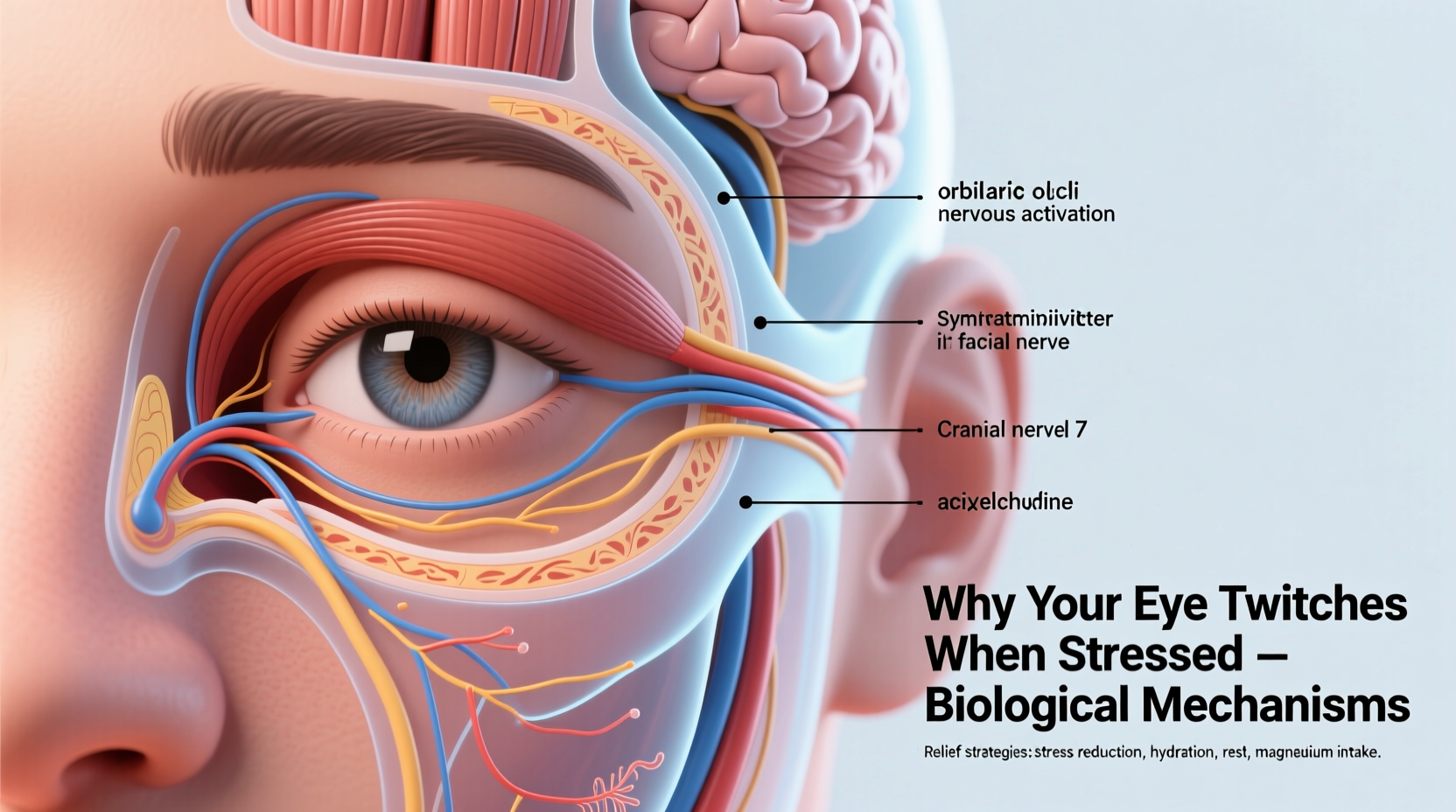
When you experience stress, your brain activates the hypothalamic-pituitary-adrenal (HPA) axis, triggering a chain reaction that floods your body with cortisol and adrenaline. These hormones prepare you for “fight or flight,” increasing heart rate, sharpening focus, and heightening muscle readiness. While beneficial in acute danger, chronic activation of this system disrupts normal neuromuscular function.
In particular, elevated cortisol levels interfere with electrolyte balance—especially magnesium, potassium, and calcium—which are essential for proper nerve signaling and muscle contraction. When these minerals fluctuate due to prolonged stress, nerves may fire erratically, causing localized muscle twitches like those around the eye.
Additionally, stress increases neural excitability in the basal ganglia and motor cortex, areas responsible for regulating movement. Overstimulation here can lead to misfiring signals sent to facial muscles via the facial nerve (cranial nerve VII), resulting in spontaneous contractions. The eyelid, being one of the most sensitive and frequently used muscle groups, often bears the brunt of this hyperactivity.
“Chronic stress doesn’t just affect mood—it rewires how your nervous system controls basic functions like blinking and muscle tone.” — Dr. Lena Torres, Neurologist and Autonomic Function Specialist
Biological Triggers That Amplify Stress-Induced Twitching
While stress sets the stage, several biological co-factors can intensify or prolong eye twitching. Recognizing these contributors allows for more targeted intervention.
Sleep Deprivation and Neural Fatigue
Lack of quality sleep impairs glymphatic clearance—the brain’s nightly cleanup process that removes metabolic waste. When this system falters, neurotoxins accumulate, increasing neuronal irritability. Sleep loss also reduces GABA (gamma-aminobutyric acid), a neurotransmitter that calms overactive nerves. Low GABA activity has been directly linked to muscle spasms, including ocular myokymia.
Caffeine and Stimulant Overload
Under stress, many people increase their intake of coffee, energy drinks, or sugary sodas to stay alert. However, excessive caffeine stimulates adenosine receptors and amplifies dopamine release, both of which heighten central nervous system activity. This overexcitation lowers the threshold for involuntary muscle contractions, making twitching more likely.
Nutritional Deficiencies
Magnesium deficiency is perhaps the most overlooked factor in stress-related twitching. Magnesium acts as a natural calcium blocker, helping muscles relax after contraction. Chronic stress depletes magnesium stores rapidly, creating a vicious cycle: low magnesium leads to increased muscle tension and twitching, which in turn raises perceived stress levels.
Other key nutrients involved include:
- Vitamin B12: Supports myelin sheath integrity; deficiency causes nerve misfiring.
- Potassium: Regulates membrane potential in nerve cells.
- Calcium: Essential for signal transduction but must be balanced with magnesium.
Effective Relief Strategies Backed by Science
Relief begins not with suppressing symptoms, but by addressing root causes. The following approaches combine clinical research with practical lifestyle adjustments to reduce both stress and its physical manifestations.
1. Prioritize Sleep Hygiene
Consistent, high-quality sleep resets the nervous system. Aim for 7–9 hours per night with a regular bedtime. Create a wind-down routine: dim lights an hour before bed, avoid screens, and consider using blue-light-blocking glasses if evening work is unavoidable.
Supplemental magnesium glycinate (200–400 mg nightly) can improve sleep onset and depth while supporting muscle relaxation.
2. Practice Diaphragmatic Breathing
Slow, deep breathing activates the vagus nerve, which counters the sympathetic \"fight-or-flight\" response. A simple technique: inhale for 4 seconds, hold for 4, exhale slowly for 6–8 seconds. Repeat for 5 minutes twice daily, especially during moments of acute stress.
This practice lowers heart rate variability (HRV), reduces cortisol, and decreases neural excitability linked to twitching.
3. Optimize Nutrient Intake
Diet plays a crucial role in stabilizing nerve-muscle communication. Focus on whole foods rich in B vitamins, magnesium, and antioxidants.
| Nutrient | Foods Rich In | Recommended Daily Intake |
|---|---|---|
| Magnesium | Spinach, almonds, avocado, black beans, dark chocolate | 310–420 mg (varies by age/sex) |
| Vitamin B12 | Salmon, eggs, dairy, fortified cereals | 2.4 mcg |
| Potassium | Bananas, sweet potatoes, coconut water, Swiss chard | 3,400 mg (men), 2,600 mg (women) |
| Omega-3 Fatty Acids | Fatty fish, flaxseeds, walnuts | 250–500 mg combined EPA/DHA |
4. Apply Warm Compresses
A warm (not hot) compress applied to closed eyes for 5–10 minutes promotes blood flow and relaxes tense muscles. Do this once or twice daily, particularly after screen use or stressful meetings.
5. Limit Digital Screen Exposure
Digital eye strain contributes to facial muscle fatigue. Follow the 20-20-20 rule: every 20 minutes, look at something 20 feet away for at least 20 seconds. Use artificial tears if eyes feel dry, and adjust screen brightness to match ambient lighting.
Step-by-Step Guide to Stopping Stress-Induced Eye Twitching
Follow this seven-day reset plan to interrupt the stress-twitch cycle:
- Day 1: Track triggers—note when twitching occurs, caffeine intake, sleep duration, and stress levels on a scale of 1–10.
- Day 2: Eliminate one source of stimulant (e.g., switch to decaf, cut energy drinks).
- Day 3: Begin diaphragmatic breathing twice daily for 5 minutes each session.
- Day 4: Add a magnesium-rich dinner (e.g., grilled salmon with sautéed spinach and quinoa).
- Day 5: Implement strict bedtime routine: no screens after 9 PM, read a book instead.
- Day 6: Apply warm compress and perform gentle eye massage for 5 minutes in the evening.
- Day 7: Reassess symptoms. If twitching persists beyond two weeks despite interventions, consult a healthcare provider.
When to Seek Medical Attention
Most cases of eye twitching resolve within days to weeks with lifestyle changes. However, persistent or worsening symptoms may indicate underlying conditions requiring professional evaluation.
Seek medical advice if you experience:
- Twitching lasting longer than three weeks
- Complete closure of the eyelid with each spasm
- Redness, swelling, or discharge from the eye
- Twitching spreading to other facial areas
- Drooping eyelid or facial weakness
Rarely, chronic twitching may be a sign of benign essential blepharospasm, hemifacial spasm, or neurological disorders such as multiple sclerosis. A neurologist or ophthalmologist can perform electromyography (EMG) or imaging studies if needed.
Mini Case Study: From Chronic Twitching to Full Resolution
Sarah, a 34-year-old project manager, began experiencing right-eye twitching during a high-pressure product launch. Initially sporadic, the twitch became constant after two weeks of late nights, increased coffee intake (up to 5 cups/day), and minimal downtime. She tried eye drops and rest, but symptoms persisted.
After consulting her primary care physician, she was advised to track her habits and begin a stress-reduction protocol. She replaced afternoon lattes with green tea, started daily breathing exercises, improved sleep hygiene, and added magnesium supplements. Within nine days, the twitching reduced significantly. By day 14, it had stopped entirely.
Follow-up bloodwork revealed borderline-low magnesium and elevated cortisol. With continued lifestyle adjustments, Sarah reported no recurrence over the next six months.
FAQ: Common Questions About Stress and Eye Twitching
Can anxiety cause only one eye to twitch?
Yes. Anxiety-induced neuromuscular hyperactivity often affects one side initially due to asymmetric nerve firing or localized muscle fatigue. Unilateral twitching is common and typically not a cause for concern unless other neurological symptoms develop.
Is eye twitching a sign of a serious neurological problem?
In the vast majority of cases, no. Isolated eyelid twitching related to stress, fatigue, or caffeine is benign. However, if twitching spreads, becomes severe, or is accompanied by facial weakness or vision changes, further evaluation is necessary to rule out rare conditions.
How long does stress-related eye twitching usually last?
Most episodes resolve within a few days to three weeks with proper rest and stress management. Persistent twitching beyond this window warrants medical consultation to identify secondary causes.
Checklist: Stop Eye Twitching Naturally
Use this checklist daily until symptoms subside:
- ☐ Reduced caffeine intake (max 200 mg/day)
- ☐ At least 7 hours of uninterrupted sleep
- ☐ Practiced deep breathing (2x daily)
- ☐ Consumed magnesium-rich foods or supplement
- ☐ Applied warm compress to eyes
- ☐ Took screen breaks every 20 minutes
- ☐ Avoided alcohol and nicotine (both exacerbate twitching)
- ☐ Engaged in 10+ minutes of mindfulness or light movement (e.g., walking)
Conclusion: Listen to Your Body’s Subtle Signals
Eye twitching is more than a minor annoyance—it’s a physiological message. Under stress, your body communicates through symptoms because words alone aren’t enough. Ignoring these signs risks deeper imbalance, whether in sleep, nutrition, or mental health. But by responding with awareness and care, you can transform a fleeting spasm into a catalyst for lasting well-being.
You don’t need perfection—just consistency. Start with one change: swap a coffee, take five deep breaths, or go to bed 20 minutes earlier. Small actions recalibrate your nervous system over time. And when the twitch fades, you’ll know you’ve restored not just peace to your eyelid, but to your entire being.




 浙公网安备
33010002000092号
浙公网安备
33010002000092号 浙B2-20120091-4
Comments
No comments yet. Why don't you start the discussion?