
It starts subtly—a faint flutter beneath the left or right eye, barely noticeable at first. Then, over hours or days, it intensifies into a persistent, involuntary spasm that draws attention and distracts focus. If you've ever experienced this during a high-pressure workweek, an emotional conversation, or a period of poor sleep, you're not alone. Eye twitching under stress is a common phenomenon, yet many dismiss it as mere coincidence or fatigue. In reality, it's a direct signal from your nervous system, rooted in measurable physiological changes.
This article explores the biological mechanisms behind stress-induced eye twitching, examining how neurotransmitters, muscle fibers, and autonomic regulation interact under psychological strain. You'll learn why seemingly minor stressors can trigger visible physical reactions, what role caffeine and sleep play, and—most importantly—how to address the root causes before symptoms escalate.
The Science Behind Eyelid Twitching: A Neurological Perspective
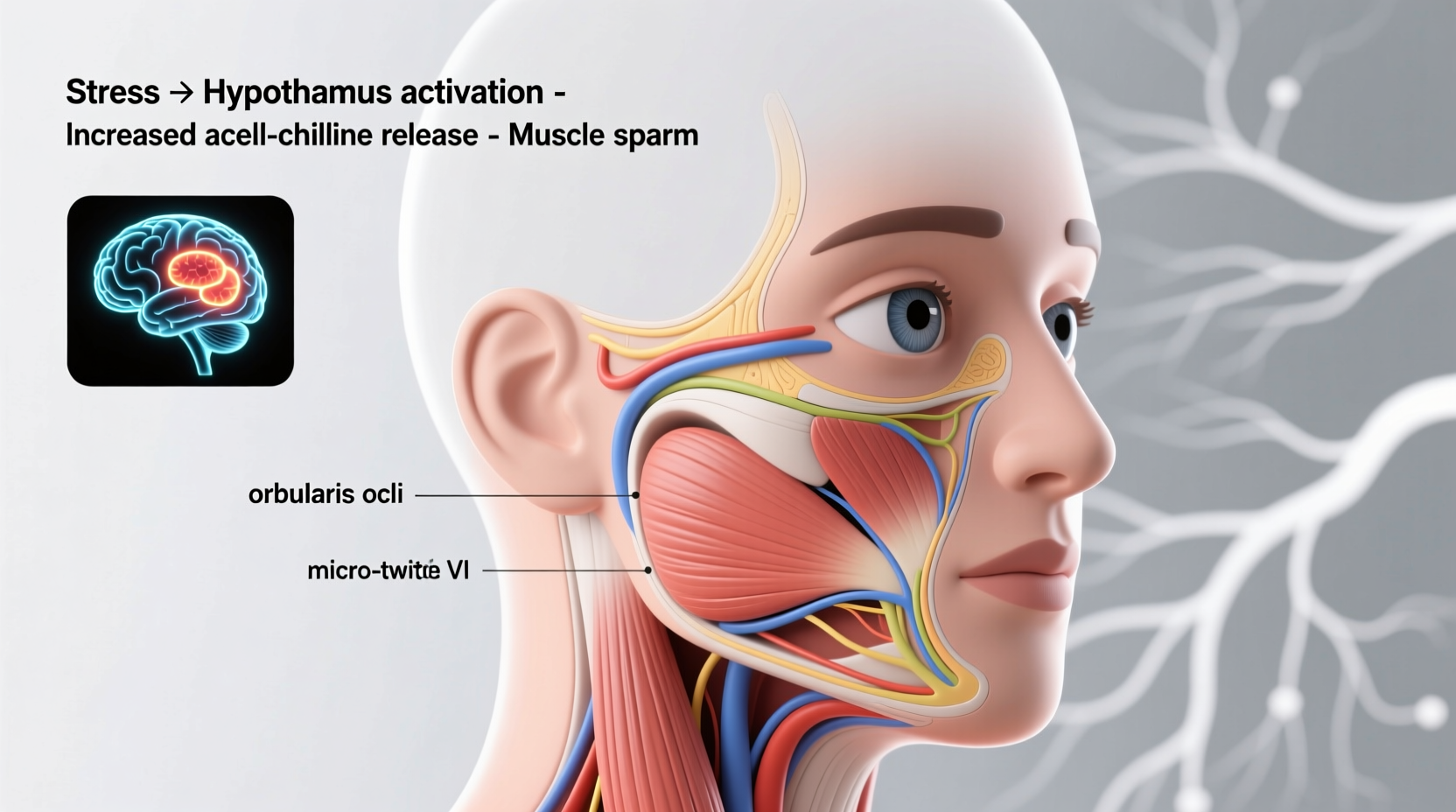
Medically known as *myokymia*, eye twitching refers to the spontaneous, fine quivering of small segments of muscle fibers in the orbicularis oculi—the muscle that surrounds the eye. Unlike full-blown muscle contractions or tics, myokymia appears as rippling movements within the muscle bundle, often lasting seconds to minutes and recurring unpredictably.
At the neurological level, each twitch originates from erratic firing of motor neurons in the facial nerve (cranial nerve VII). These neurons control voluntary and involuntary facial movements, including blinking. Under normal conditions, signals are regulated and synchronized. But when stress enters the equation, this balance is disrupted.
Stress activates the hypothalamic-pituitary-adrenal (HPA) axis, triggering a cascade of hormonal and neural responses. Cortisol and adrenaline surge through the bloodstream, increasing alertness but also heightening neuromuscular excitability. As a result, motor neurons become hyperresponsive, sending irregular impulses that cause localized muscle fasciculations—like those felt in the eyelid.
“Even mild psychological stress can alter peripheral nerve signaling. The eyelid, with its dense network of tiny muscles and sensory feedback loops, acts as a sensitive barometer for nervous system imbalance.” — Dr. Lena Patel, Clinical Neurophysiologist, Johns Hopkins Medicine
How Stress Triggers Muscle Hyperactivity
Stress doesn’t act in isolation. It interacts with lifestyle factors that compound its impact on neuromuscular function. Below are key pathways through which stress leads to eye twitching:
- Increased Acetylcholine Release: This primary neurotransmitter at neuromuscular junctions becomes more active under stress, promoting excessive muscle fiber stimulation.
- Electrolyte Imbalance: Chronic stress alters adrenal function, affecting sodium, potassium, and magnesium levels—minerals critical for stabilizing nerve membranes.
- Sleep Disruption: Poor sleep reduces GABA activity, the brain’s main inhibitory neurotransmitter, allowing unchecked neuronal firing.
- Autonomic Nervous System Shift: The sympathetic “fight-or-flight” response dominates, increasing baseline muscle tension—even in small ocular muscles.
These factors don’t require clinical pathology to produce symptoms. Even subclinical imbalances—common in modern life—are sufficient to initiate twitching.
Contributing Lifestyle Factors: A Closer Look
While stress is the primary catalyst, several co-factors determine whether twitching manifests—and how long it lasts. Understanding these allows for targeted intervention.
Diet and Nutrient Deficiencies
Magnesium deficiency is strongly linked to neuromuscular irritability. Magnesium acts as a natural calcium blocker, helping muscles relax after contraction. Low levels lead to prolonged muscle activation and micro-spasms. Similarly, deficiencies in vitamin B12 and vitamin D impair nerve conduction and myelin integrity.
Digital Eye Strain
Prolonged screen exposure contributes significantly. Focusing on digital devices reduces blink rate by up to 60%, leading to dry eyes and compensatory muscle tension. The brain responds by increasing motor neuron output to maintain eyelid lubrication, inadvertently promoting hyperactivity.
Caffeine and Stimulants
Coffee, energy drinks, and even dark chocolate elevate catecholamine levels, mimicking aspects of acute stress. For individuals already under pressure, additional stimulant intake pushes the nervous system past its threshold for stability.
| Factor | Effect on Eye Twitching | Recommended Adjustment |
|---|---|---|
| Caffeine (≥300mg/day) | Increases neuronal excitability | Limit to ≤200mg; avoid after noon |
| Sleep (<6 hours/night) | Reduces neural inhibition | Aim for 7–8 hours; prioritize consistency |
| Screen time (>8 hrs/day) | Causes ocular fatigue and dryness | Follow 20-20-20 rule; use artificial tears |
| Magnesium intake (<300mg/day) | Contributes to muscle instability | Incorporate leafy greens, nuts, seeds |
Real-World Example: Managing Stress-Induced Myokymia
Consider Sarah, a 34-year-old project manager preparing for a major client presentation. Over two weeks, she averaged five hours of sleep, consumed three large coffees daily, and spent 10+ hours in front of screens. Around day ten, she noticed her right eyelid beginning to twitch intermittently. Initially dismissing it, she soon found it distracting during meetings.
After consulting her physician, Sarah learned that no serious condition was present—but her lifestyle had created a perfect storm for myokymia. She implemented the following changes:
- Reduced caffeine to one morning coffee (approx. 95mg).
- Began using blue-light filters and took scheduled breaks every 20 minutes.
- Started magnesium supplementation (200mg nightly).
- Introduced a wind-down routine: reading instead of scrolling before bed.
Within six days, the twitching subsided completely. Her case illustrates how non-invasive adjustments can resolve symptoms when the underlying drivers are addressed systematically.
When to Be Concerned: Differentiating Benign vs. Serious Causes
Most stress-related eye twitching is benign and self-limiting, typically resolving within days to weeks. However, certain red flags warrant medical evaluation:
- Twitching spreads to other facial areas (e.g., mouth or cheek)
- Eyes begin to close involuntarily (blepharospasm)
- Redness, swelling, or discharge accompanies the spasm
- Symptoms persist beyond three weeks despite lifestyle changes
In rare cases, chronic twitching may indicate neurological conditions such as hemifacial spasm or early signs of dystonia. Imaging or electromyography (EMG) may be needed if abnormal patterns emerge.
“The vast majority of eyelid twitches are functional—not structural. They reflect overload, not damage. That’s good news: they’re reversible with the right approach.” — Dr. Rajiv Mehta, Neurologist, Cleveland Clinic
Practical Strategies to Reduce and Prevent Eye Twitching
Addressing eye twitching isn't just about symptom relief—it's about recalibrating your body's response to stress. The following checklist provides actionable steps grounded in neuroscience and clinical practice.
✅ Daily Prevention Checklist
- ✔ Limit caffeine to one or two servings before noon
- ✔ Practice the 20-20-20 rule: every 20 minutes, look at something 20 feet away for 20 seconds
- ✔ Consume magnesium-rich foods: spinach, almonds, avocado, black beans
- ✔ Maintain consistent sleep schedule—even on weekends
- ✔ Apply warm compress for 5 minutes if twitching occurs (helps relax muscle)
- ✔ Incorporate mindfulness: 5–10 minutes of deep breathing or meditation daily
Step-by-Step Recovery Plan (Over 7 Days)
- Day 1–2: Eliminate excess caffeine and assess current sleep quality. Track bedtime and wake time.
- Day 3: Introduce magnesium supplement (after consulting doctor if on medication).
- Day 4: Begin screen breaks using a timer; reduce evening device use.
- Day 5: Add a warm compress twice daily to soothe eye muscles.
- Day 6: Start a short breathing exercise (e.g., box breathing: 4 sec inhale, 4 sec hold, 4 sec exhale).
- Day 7: Evaluate symptoms. If improved, maintain new habits. If unchanged, consider medical consultation.
Frequently Asked Questions
Can anxiety cause eye twitching even without obvious stress?
Yes. Anxiety often operates below conscious awareness—known as \"background stress.\" Even without feeling overwhelmed, elevated cortisol and heightened autonomic tone can trigger neuromuscular instability, including eyelid spasms. Physical symptoms may appear before emotional ones.
Is eye twitching a sign of a vitamin deficiency?
It can be. Deficiencies in magnesium, vitamin B12, and vitamin D are all associated with increased nerve excitability and muscle twitching. Blood tests can confirm insufficiencies, especially if symptoms are recurrent or widespread.
How long does stress-related eye twitching usually last?
Typically, episodes last from a few minutes to several hours and resolve within 1–3 weeks once stressors are managed. Persistent twitching beyond this window should be evaluated by a healthcare provider to rule out neurological involvement.
Conclusion: Listening to Your Body’s Subtle Signals
Eye twitching is more than a minor annoyance—it’s a physiological message. When stress disrupts the delicate equilibrium of your nervous system, your body finds ways to communicate imbalance, often through subtle physical cues. The eyelid, with its intricate musculature and constant movement, becomes an early warning system.
By understanding the science behind these spasms, you gain power over them. Rather than masking symptoms, you can address their roots: sleep quality, nutrient status, mental load, and nervous system regulation. Small, consistent changes yield significant results—not only in stopping the twitch but in improving overall resilience.




 浙公网安备
33010002000092号
浙公网安备
33010002000092号 浙B2-20120091-4
Comments
No comments yet. Why don't you start the discussion?