
It starts subtly—a faint flutter beneath your right or left eye. At first, you might ignore it. But as the twitching persists, especially during high-pressure moments, it becomes hard to overlook. You're not imagining things: stress is one of the most common triggers for eye twitching. While usually harmless, persistent myokymia (the medical term for involuntary eyelid spasms) can be disruptive, distracting, and even a sign that your body is signaling overload.
This article explores the physiological connection between stress and eye twitching, identifies key contributing factors, and provides actionable strategies—some offering relief in minutes. Whether this is a recurring annoyance or a new symptom during a tough week, understanding the root cause is the first step toward lasting relief.
The Science Behind Stress-Induced Eye Twitching
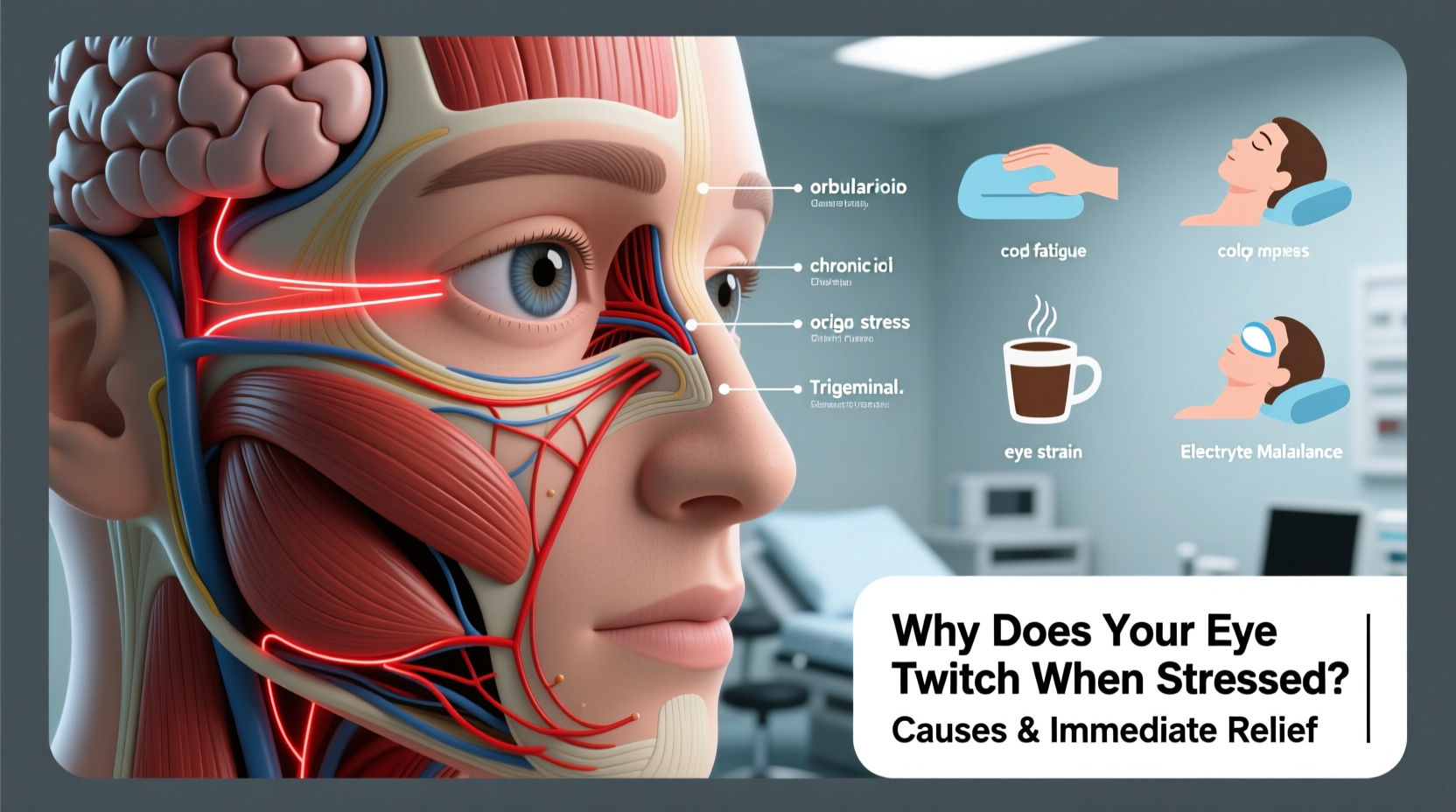
Eye twitching occurs when the orbicularis oculi muscle—the thin muscle surrounding the eye—contracts involuntarily. These contractions are typically benign and localized, meaning they don’t spread to other parts of the face or body. Under normal conditions, such muscles fire under precise neurological control. However, stress disrupts this balance.
When you’re stressed, your nervous system activates the \"fight-or-flight\" response. This increases levels of cortisol and adrenaline, which heighten overall neural excitability. As a result, nerve signals misfire more easily, leading to small, erratic muscle contractions—like those in the eyelid.
Dr. Lena Torres, a neurologist specializing in movement disorders, explains:
“Chronic stress doesn’t just affect mood—it alters neuromuscular communication. The eyelid muscles are particularly sensitive because they’re among the most frequently used facial muscles, with over 10,000 blinks per day.”
In addition to direct nerve stimulation, stress often leads to secondary behaviors that worsen twitching: poor sleep, excessive caffeine intake, eye strain from screen use, and dehydration—all of which amplify muscle irritability.
Common Triggers That Combine With Stress
Stress rarely acts alone. It compounds with lifestyle factors that further destabilize neuromuscular function. Recognizing these co-triggers helps identify why twitching may persist despite attempts to relax.
- Sleep Deprivation: Less than 6–7 hours of quality sleep impairs neurotransmitter regulation, increasing spontaneous muscle activity.
- Digital Eye Strain: Prolonged focus on screens reduces blink rate by up to 60%, drying out the eyes and irritating surrounding muscles.
- Nutrient Deficiencies: Low magnesium, potassium, or vitamin B12 can impair nerve-muscle signaling.
- Dehydration: Even mild fluid loss affects electrolyte balance, essential for proper muscle contraction.
- Excessive Caffeine or Alcohol: Both act as stimulants or diuretics, altering neural firing patterns and hydration status.
A real-world example illustrates this interplay: Sarah, a 34-year-old project manager, began experiencing persistent left-eye twitching during a product launch deadline. She was sleeping five hours a night, drinking three energy drinks daily, and working 12-hour stretches in front of her laptop. Her eye twitch lasted nearly two weeks until she addressed these overlapping stressors. Once she reduced caffeine, implemented screen breaks, and improved sleep hygiene, the twitch resolved within 48 hours.
How to Stop Eye Twitching Instantly: A Step-by-Step Guide
If your eye starts twitching during a meeting, presentation, or moment of anxiety, immediate relief matters. The following six-step protocol combines physiological reset techniques with environmental adjustments to interrupt the spasm cycle quickly.
- Pause and Breathe Deeply (1–2 minutes): Close your eyes and inhale slowly through the nose for four counts, hold for four, exhale for six. This activates the parasympathetic nervous system, counteracting stress-induced muscle tension.
- Apply Warm Pressure: Use clean fingertips to gently press a warm compress or your palm over the twitching eye for 30 seconds. Heat relaxes muscle fibers and improves local blood flow.
- Blink Slowly and Fully: Perform 10 deliberate, full blinks. Many people develop shallow blinking habits under stress, reducing tear film distribution and increasing irritation.
- Hydrate Immediately: Drink a full glass of water. Dehydration is a fast-acting trigger; rehydration can reduce twitch intensity within minutes.
- Reduce Visual Load: Step away from screens. Look at a distant object for 20 seconds (follow the 20-20-20 rule: every 20 minutes, look 20 feet away for 20 seconds).
- Check Posture and Jaw Tension: Clenching the jaw or tensing facial muscles can radiate to the eyes. Unclench your teeth, drop your shoulders, and soften your forehead.
This sequence takes less than five minutes but leverages multiple pathways—neurological, muscular, and circulatory—to calm overactive nerves. Repeat as needed throughout the day.
Long-Term Prevention: Lifestyle Adjustments That Work
While quick fixes help in the moment, preventing recurrence requires consistent habits. Think of eye twitching as an early warning system—an indicator that your body’s stress load is nearing capacity.
| Factor | Recommended Action | Expected Impact |
|---|---|---|
| Sleep Quality | Consistent bedtime, no screens 1 hour before sleep, cool dark room | Reduces baseline neural excitability |
| Caffeine Intake | Limited to 200mg/day (~1 coffee), avoided after 2 PM | Decreases adenosine receptor overstimulation |
| Screen Time | Use blue light filters, take hourly microbreaks | Lowers ocular fatigue and dryness |
| Diet & Hydration | Include leafy greens, nuts, bananas; drink 2L water daily | Supports magnesium and potassium levels |
| Stress Management | Daily mindfulness, walking, journaling, or therapy | Improves autonomic nervous system balance |
Magnesium deserves special attention. Studies show that supplementation (200–400mg of magnesium glycinate or citrate daily) can significantly reduce muscle twitches in individuals with suboptimal intake. Since modern diets are often low in magnesium-rich foods like spinach, pumpkin seeds, and almonds, a supplement may fill critical gaps.
When to See a Doctor: Red Flags to Watch For
Most cases of eye twitching resolve within days to weeks with self-care. However, certain symptoms suggest a need for medical evaluation:
- Twitching spreads to other facial areas (e.g., mouth or cheek)
- Eyes begin to close involuntarily (blepharospasm)
- Redness, swelling, or discharge accompanies the twitch
- Spasms last longer than three weeks without improvement
- Facial weakness or drooping occurs on one side
Persistent or worsening twitching could indicate underlying conditions such as:
- Blepharospasm: A focal dystonia causing uncontrollable blinking.
- Hemifacial Spasm: Often caused by blood vessel compression of the facial nerve.
- Neurological Disorders: Rarely, multiple sclerosis or Parkinson’s disease present with muscle twitching.
If any of these apply, consult a neurologist or ophthalmologist. Diagnostic tools like electromyography (EMG) or MRI may be used to assess nerve function.
“Recurrent eye twitching isn’t just annoying—it’s a signal. Listening to it early can prevent progression to more serious neuromuscular issues.” — Dr. Alan Zhou, Clinical Neurophysiologist
Prevention Checklist: Your Daily Defense Plan
To keep stress-related eye twitching at bay, integrate these actions into your routine:
- ☑ Morning:
- Drink a glass of water upon waking. Limit caffeine to one serving before noon.
- ☑ Midday:
- Take three 5-minute screen breaks using the 20-20-20 rule. Practice two rounds of deep breathing.
- ☑ Evening:
- Avoid bright screens 60 minutes before bed. Apply a warm compress if eyes feel tired.
- ☑ Weekly:
- Engage in 150 minutes of moderate exercise (e.g., brisk walking). Include magnesium-rich foods in meals.
- ☑ Monthly:
- Assess stress levels. Consider therapy or mindfulness apps if workload feels unmanageable.
Frequently Asked Questions
Can lack of sleep really cause my eye to twitch?
Yes. Sleep deprivation disrupts the brain’s ability to regulate motor neurons. During deep sleep, the nervous system recalibrates neurotransmitter levels. Without sufficient rest, nerve signals become hyperexcitable, increasing the likelihood of muscle spasms, including eyelid twitching.
Is eye twitching a sign of anxiety?
It can be. Anxiety produces chronic low-grade stress, elevating cortisol and keeping the nervous system in a heightened state. This sustained arousal makes minor muscle twitches more frequent and persistent. If twitching correlates with anxious thoughts or panic episodes, addressing mental health may provide long-term relief.
Are there any medications that cause eye twitching?
Yes. Certain drugs, including antipsychotics, antihistamines, decongestants, and asthma inhalers, list muscle spasms or tremors as potential side effects. Always review medication side effects with your doctor if twitching begins shortly after starting a new prescription.
Conclusion: Listen to Your Body’s Warning Signal
Your twitching eye isn’t just a random glitch—it’s a physiological message. Stress manifests in countless ways, and eye twitching is one of the most accessible clues your body offers before deeper imbalance sets in. By responding promptly with targeted relaxation techniques, hydration, and lifestyle adjustments, you can halt the spasm and reduce future occurrences.
More importantly, treating eye twitching as a symptom—not just a nuisance—empowers you to address the root causes of stress in your life. Whether it's reevaluating work boundaries, improving sleep, or seeking support, each step contributes to better overall well-being.




 浙公网安备
33010002000092号
浙公网安备
33010002000092号 浙B2-20120091-4
Comments
No comments yet. Why don't you start the discussion?