
It starts subtly—a faint flutter beneath the left or right eye, easy to ignore at first. But over time, the twitch grows more persistent, appearing during meetings, while reading, or just as you're trying to relax. You begin to wonder: Why does my eye twitch when I’m stressed?
This common phenomenon, known medically as *myokymia*, affects millions of people worldwide. While typically harmless, it can be disruptive and sometimes alarming. The connection between stress and eye twitching is well-documented, but it’s rarely the only factor at play. Understanding both the psychological and physical triggers behind this reflex reveals not just the root cause, but also practical ways to regain control.
The Science Behind Eye Twitching
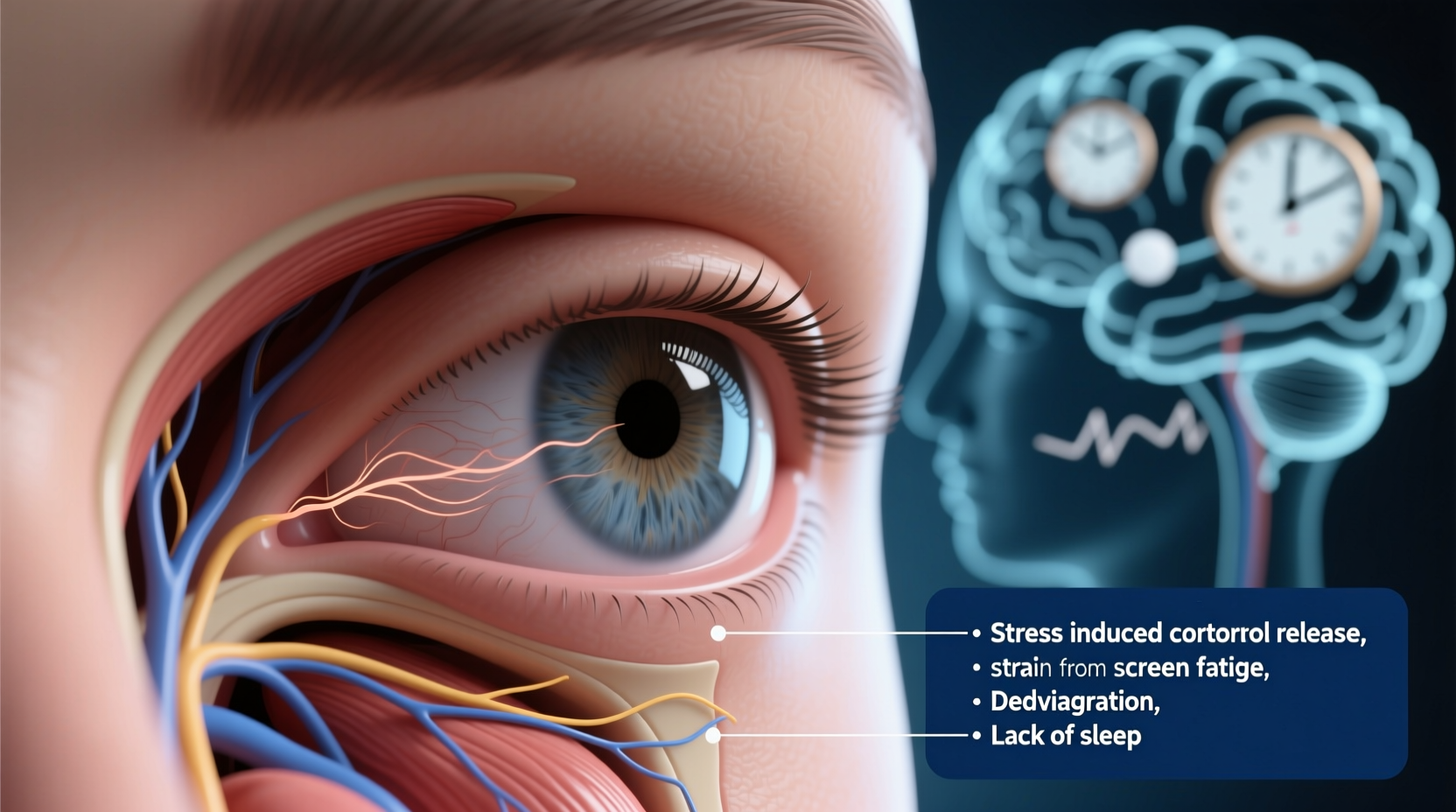
Eye twitching occurs when the orbicularis oculi muscle—the thin muscle surrounding the eye—fires involuntarily in rapid bursts. These micro-spasms are usually too small to close the eye completely but are noticeable as a rhythmic pulsing.
Unlike more serious neurological conditions such as blepharospasm (a rare form of dystonia) or hemifacial spasm, benign essential blepharospasm or simple myokymia is localized, temporary, and self-limiting. It often resolves without medical intervention.
Neurologically, these twitches stem from misfiring signals in the facial nerve (cranial nerve VII), which controls the muscles around the eyes. When the nervous system becomes hyperexcitable due to internal or external stressors, it increases the likelihood of erratic neural discharges—even minor ones that result in a twitch.
“Stress doesn’t just affect mood—it directly impacts neuromuscular stability. The eyelid is one of the most sensitive areas because of its high concentration of nerve endings and fine motor control.” — Dr. Lena Torres, Neurologist, Stanford Health Care
Psychological Triggers: How Stress Activates the Nervous System
When you experience stress—whether emotional, mental, or situational—your body activates the sympathetic nervous system, commonly known as the “fight-or-flight” response. This cascade includes the release of cortisol and adrenaline, increased heart rate, and heightened muscle tension.
In this state, even small amounts of neural noise can trigger involuntary movements. The eyelid, being one of the fastest-moving muscles in the body, is particularly susceptible. Chronic stress keeps the nervous system in a constant state of alertness, reducing the threshold for spontaneous muscle contractions.
- Anxiety and rumination: Persistent overthinking disrupts sleep and elevates baseline stress hormones, increasing twitch frequency.
- Work-related pressure: Long hours, tight deadlines, and digital screen exposure compound mental fatigue.
- Emotional distress: Grief, relationship conflicts, or financial worries can manifest physically through symptoms like eye twitching.
Physical Triggers That Amplify the Problem
While stress may light the fuse, physical factors often determine whether the twitch persists. Many people overlook lifestyle habits that strain the nervous and muscular systems. Key contributors include:
- Sleep deprivation: Less than 6–7 hours of quality sleep impairs neural regulation and increases muscle irritability.
- Caffeine overload: More than 400 mg of caffeine per day (about 4 cups of coffee) can overstimulate the central nervous system.
- Dry eyes: Prolonged screen use reduces blink rate, leading to ocular surface irritation that signals nearby muscles to react.
- Nutritional deficiencies: Low levels of magnesium, potassium, or vitamin B12 impair nerve conduction and muscle function.
- Dehydration: Even mild dehydration alters electrolyte balance, affecting neuromuscular communication.
A 2021 study published in the Journal of Clinical Neuroscience found that 68% of participants reporting chronic eye twitching also had at least two modifiable risk factors—most commonly poor sleep and excessive caffeine intake.
Common Physical Triggers Compared
| Trigger | Impact on Eye Twitching | How to Address |
|---|---|---|
| Caffeine | High – stimulates nerve excitability | Limit to 200–300 mg/day; switch to decaf after noon |
| Sleep Deficiency | Very High – disrupts neural recovery | Establish consistent bedtime; aim for 7–8 hours |
| Digital Eye Strain | Moderate to High – causes dryness and fatigue | Follow 20-20-20 rule; use lubricating drops |
| Magnesium Deficiency | Moderate – increases muscle spasms | Eat leafy greens, nuts; consider supplement if needed |
| Alcohol Consumption | Moderate – affects nerve signaling | Limit to 1–2 drinks; avoid before bed |
Real-Life Example: Sarah’s Story
Sarah, a 34-year-old project manager in Chicago, began noticing her right eye twitching during a particularly intense quarter at work. Deadlines piled up, she was averaging five hours of sleep, and her coffee intake climbed to five energy drinks a day. At first, she dismissed the twitch as fatigue—but after three weeks, it hadn’t stopped.
She visited an optometrist, who ruled out vision problems and dry eye disease. Then she consulted a neurologist, who asked about her lifestyle. After identifying sleep deprivation, high caffeine, and work stress as key culprits, Sarah made targeted changes: she cut caffeine by half, started using artificial tears during screen work, and committed to a 10 p.m. bedtime.
Within ten days, the twitching subsided. “I didn’t realize how much my body was screaming for rest,” she said. “Now I see the twitch as a warning sign—not something to fear, but something to listen to.”
Step-by-Step Guide to Reducing Eye Twitching
If you’re experiencing frequent eye twitching, especially under stress, follow this six-step plan to address both psychological and physical causes:
- Assess your stress levels: Use a journal or app to rate your daily stress from 1 to 10. Note when twitching occurs in relation to high-stress events.
- Reduce stimulants: Gradually decrease caffeine and nicotine over 5–7 days to avoid withdrawal headaches. Replace coffee with herbal tea or water.
- Improve sleep hygiene: Set a fixed bedtime, turn off screens 60 minutes before sleep, and keep your bedroom cool and dark.
- Hydrate and nourish: Drink at least 2 liters of water daily. Include magnesium-rich foods like spinach, almonds, and avocados.
- Practice eye relaxation: Every hour, close your eyes for 30 seconds. Try palming—rub your hands together to warm them, then gently place them over closed eyes for one minute.
- Introduce mindfulness: Spend 5–10 minutes daily on deep breathing, meditation, or progressive muscle relaxation to calm the nervous system.
When to Seek Medical Attention
In most cases, eye twitching resolves within days or weeks with lifestyle adjustments. However, certain red flags warrant professional evaluation:
- The twitch spreads to other parts of the face or causes the eye to close completely.
- You notice redness, swelling, or discharge from the eye.
- The twitch persists beyond three weeks despite making changes.
- One side of your face feels weak or droops.
These symptoms could indicate conditions like Bell’s palsy, cranial neuropathy, or dystonia, which require diagnosis and treatment by a neurologist or ophthalmologist.
Checklist: What to Do When Your Eye Starts Twitching
Use this actionable checklist the next time you feel a twitch coming on:
- ✅ Evaluate recent stressors: Have you had arguments, deadlines, or emotional strain?
- ✅ Check caffeine intake: Did you consume more than 300 mg today?
- ✅ Assess sleep quality: Did you get less than 7 hours last night?
- ✅ Blink consciously: Remind yourself to blink fully every few minutes if working on screens.
- ✅ Take a break: Step away from your desk for 5 minutes; practice slow breathing.
- ✅ Apply warmth: Use a clean, warm cloth over the eye for short relief.
- ✅ Hydrate: Drink a glass of water immediately.
Frequently Asked Questions
Can anxiety cause eye twitching?
Yes. Anxiety triggers the release of stress hormones like cortisol and adrenaline, which increase nerve sensitivity and muscle tension. This hyperarousal state makes involuntary twitches more likely, especially in highly innervated areas like the eyelid.
Is eye twitching a sign of a serious condition?
In the vast majority of cases, no. Most eye twitching is benign and temporary. However, if the twitching spreads, worsens, or is accompanied by facial weakness or vision changes, consult a healthcare provider to rule out neurological disorders.
How long does stress-induced eye twitching last?
Typically, a stress-related twitch lasts from a few days to three weeks. With proper rest, reduced stimulants, and stress management, most people see improvement within 7–10 days.
Conclusion: Listen to Your Body’s Signals
Your eye twitching isn’t random—it’s a physiological message. In a world where we push through fatigue, ignore mental strain, and normalize burnout, these small bodily cues are early warnings. Stress doesn’t just live in the mind; it expresses itself through the body in palpable ways.
By recognizing the interplay between psychological tension and physical triggers, you gain the power to respond proactively. Instead of waiting for symptoms to escalate, you can adjust your habits, restore balance, and prevent recurrence.
The next time your eye flutters, don’t panic—pause. Ask yourself what your body might be asking for: rest, hydration, stillness, or simply a moment of care. Healing often begins not with a dramatic intervention, but with awareness.




 浙公网安备
33010002000092号
浙公网安备
33010002000092号 浙B2-20120091-4
Comments
No comments yet. Why don't you start the discussion?