
If you've ever applied a sharp, elegant eyeliner in the morning only to find it smeared into a shadowy mess by lunchtime, you're not alone. Smudging is one of the most common makeup frustrations—especially for those with oily lids, humid climates, or long days ahead. The good news: smudging isn't inevitable. Understanding the root causes and applying targeted strategies can transform your eyeliner from fleeting to flawless for 12+ hours.
The key lies in recognizing that eyeliner longevity isn’t just about the product—it’s a combination of skin chemistry, technique, and environmental factors. Let’s break down exactly why your liner disappears and how to fix it for good.
Why Eyeliner Smudges: The Science Behind the Slide
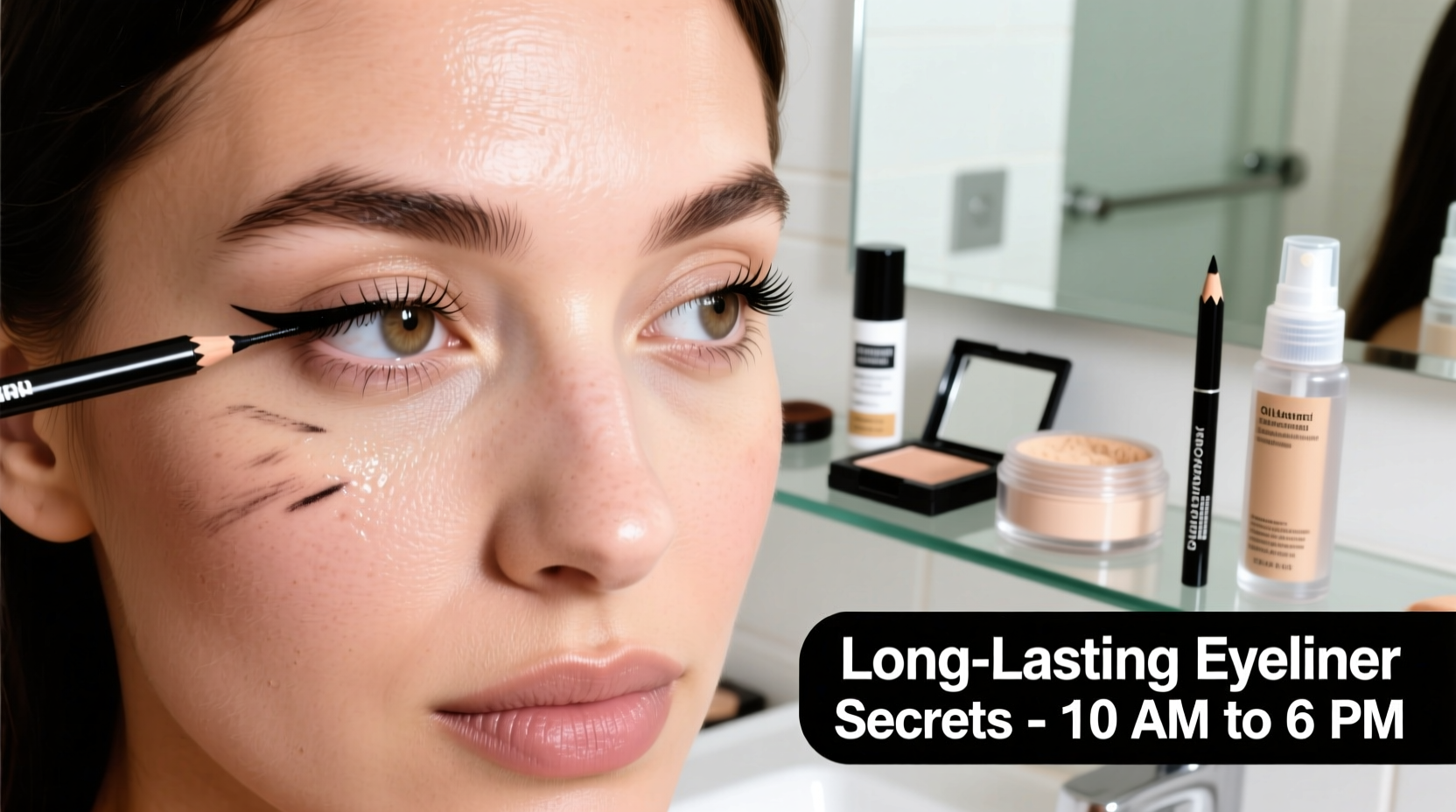
Smudging happens when eyeliner migrates from its original placement, typically downward along the lash line or into the crease. This movement is caused by a mix of natural oils, moisture, friction, and product compatibility issues.
The eyelid is one of the oiliest areas on the face due to a high concentration of sebaceous glands. These glands produce sebum, which helps protect the skin but also creates a slick surface over time. When eyeliner sits on this surface, especially if it's creamy or water-based, the oils gradually break down the formula, causing it to bleed or feather.
Humidity accelerates this process. In warm, moist environments, products soften more quickly, increasing transfer. Additionally, blinking—averaging 15–20 times per minute—creates constant micro-movement that pushes product around, particularly if there’s no stable base underneath.
Another overlooked factor is product layering. Applying eyeliner over moisturizer, sunscreen, or even certain eye creams without proper sealing invites migration. Without a stable foundation, even the most “long-wear” liners struggle to stay put.
The Role of Eyeliner Type in Longevity
Not all eyeliners are created equal when it comes to staying power. Your choice of formula plays a major role in whether your liner lasts until bedtime—or vanishes by noon.
| Formula | Longevity | Pros | Cons |
|---|---|---|---|
| Pencil | Low to moderate | Easy to apply, blendable, great for soft looks | Prone to smudging, softens in heat |
| Liquid (Brush Tip) | High | Sharp lines, waterproof options, long-lasting | Less forgiving, drying on eyes, can flake |
| Gel | High (with primer) | Customizable thickness, rich pigment, buildable | Requires brush, needs setting, can transfer if not sealed |
| Marker-Style (Felt Tip) | Moderate to high | Precise, convenient, dries quickly | Nib wears down, may skip on dry skin |
| Creamy Twist-Up | Low to moderate | No tools needed, hydrating feel | High transfer risk, melts easily |
For maximum staying power, dermatologist and cosmetic chemist Dr. Lily Chen advises,
“Waterproof liquid or gel liners applied over a primed lid offer the best defense against oil and motion. Pencils are ideal for beginners but require setting with powder to last.”
If you love the softness of pencil liner but hate the fade, consider using it as a base and then locking it in with a matching eyeshadow or translucent powder.
Step-by-Step: How to Apply Eyeliner That Lasts All Day
Lasting eyeliner starts long before the liner touches your lid. Follow this timeline-tested routine for maximum hold:
- Cleanse and prep: Start with freshly cleansed eyelids. Residual oils or leftover makeup create a slippery base. Use a gentle micellar water or foaming cleanser.
- Apply eye primer: Use a dedicated eyeshadow primer (e.g., Urban Decay Primer Potion, NARS Smudge Proof) on the entire lid and slightly above the crease. This creates a matte, grippy surface.
- Set with powder: Lightly dust translucent setting powder or a neutral eyeshadow over the primer. This absorbs excess oils and prevents tackiness.
- Choose the right liner: For all-day wear, opt for a waterproof gel or liquid liner. Dip an angled brush into gel liner for precision, or use a felt-tip liquid for speed.
- Apply close to the lash line: Draw as close to the roots as possible. Wobbly hands? Rest your elbow on a table and pull the skin taut gently with your free hand.
- Layer and set: After applying, lightly go over the line with a matching dark eyeshadow using a small brush. This “bakes” the liner into place and reduces shine that attracts oil.
- Final seal: Mist your face with a setting spray, or use a water-activated setting spray like MAC Fix+ to lock everything in without disturbing the line.
Common Mistakes That Cause Smudging
Even with the right products, small errors can sabotage your efforts. Watch out for these frequent pitfalls:
- Skipping primer: This is the number one mistake. Primer isn’t optional for long wear—it’s essential.
- Touching your eyes: Rubbing, adjusting glasses, or resting your chin in your hand transfers oils and physically moves the liner.
- Using expired products: Old liners, especially liquids and gels, can separate or grow bacteria, leading to poor texture and adhesion.
- Overlining the waterline: While tightlining (lining between lashes) is fine, coating the inner rim increases smudging because tears and mucus dissolve the product faster.
- Layering incompatible products: Mixing silicone-based primers with water-based liners can cause pilling or sliding.
A mini case study illustrates this: Sarah, a nurse working 12-hour shifts, struggled daily with her eyeliner melting into dark circles. She used a creamy pencil and skipped primer, citing “lack of time.” After switching to a 3-minute routine—primer, powder, liquid liner, and setting spray—her liner stayed intact through double shifts, sweat, and mask friction. The change wasn’t in the product alone, but in the system.
Proven Prevention Checklist
To ensure your eyeliner survives from sunrise to sunset, follow this actionable checklist every time:
- ✅ Wash eyelids with a mild cleanser before makeup
- ✅ Apply a thin layer of eyeshadow primer across lids
- ✅ Set primer with translucent powder or matching eyeshadow
- ✅ Choose a waterproof gel or liquid eyeliner
- ✅ Apply liner as close to lash roots as possible
- ✅ Go over the line with a matching eyeshadow to lock it in
- ✅ Avoid touching eyes throughout the day
- ✅ Carry blotting papers to remove excess oil without disturbing makeup
- ✅ Refresh with a light mist of setting spray if needed
- ✅ Replace eyeliner every 6 months to maintain hygiene and performance
This routine takes less than five minutes once practiced and delivers dramatically better results than winging it with a pencil and hope.
Frequently Asked Questions
Can I use concealer instead of eye primer?
You can, but it’s not ideal. Most concealers contain emollients that can break down eyeliner over time. A dedicated eye primer is formulated to be matte, long-lasting, and non-migrating. If you must substitute, set the concealer heavily with powder and choose a waterproof liner.
Is tightlining better than lining the waterline?
Yes. Tightlining deposits pigment between the lashes on the upper lid, creating fuller-looking lashes without direct contact with tears or mucous membranes. Lining the waterline (inner rim) often leads to faster smudging and irritation, especially with sensitive eyes or contact lenses.
How do I remove stubborn, long-wear eyeliner safely?
Use an oil-based or dual-phase makeup remover. Soak a cotton pad and press it gently onto the lash line for 10–15 seconds to dissolve the product before wiping. Avoid aggressive rubbing, which can cause eyelid sagging over time. Micellar water works for lighter formulas but struggles with waterproof liners.
Conclusion: Make Every Line Last
Smudged eyeliner isn’t a personal failing—it’s a solvable technical challenge. By understanding your skin, choosing the right products, and following a consistent, science-backed routine, you can achieve crisp, defined eyes that endure meetings, workouts, dates, and everything in between.
It’s not about perfection in the first stroke; it’s about building a system that supports longevity. Whether you’re a minimalist who loves a simple line or a bold liner enthusiast, the principles remain the same: prime, set, seal, and maintain.




 浙公网安备
33010002000092号
浙公网安备
33010002000092号 浙B2-20120091-4
Comments
No comments yet. Why don't you start the discussion?