
There’s nothing more frustrating than carefully applying eyeliner only to see it blurred, streaked, or vanished within minutes. Whether you're preparing for a full day at work, a special event, or a workout session, smudging eyeliner undermines both effort and confidence. The issue isn’t just about poor technique—it’s often tied to skin chemistry, product formulation, and environmental factors. Understanding the root causes of eyeliner migration is the first step toward achieving crisp, lasting definition that stays put from morning to night.
The Science Behind Eyeliner Smudging
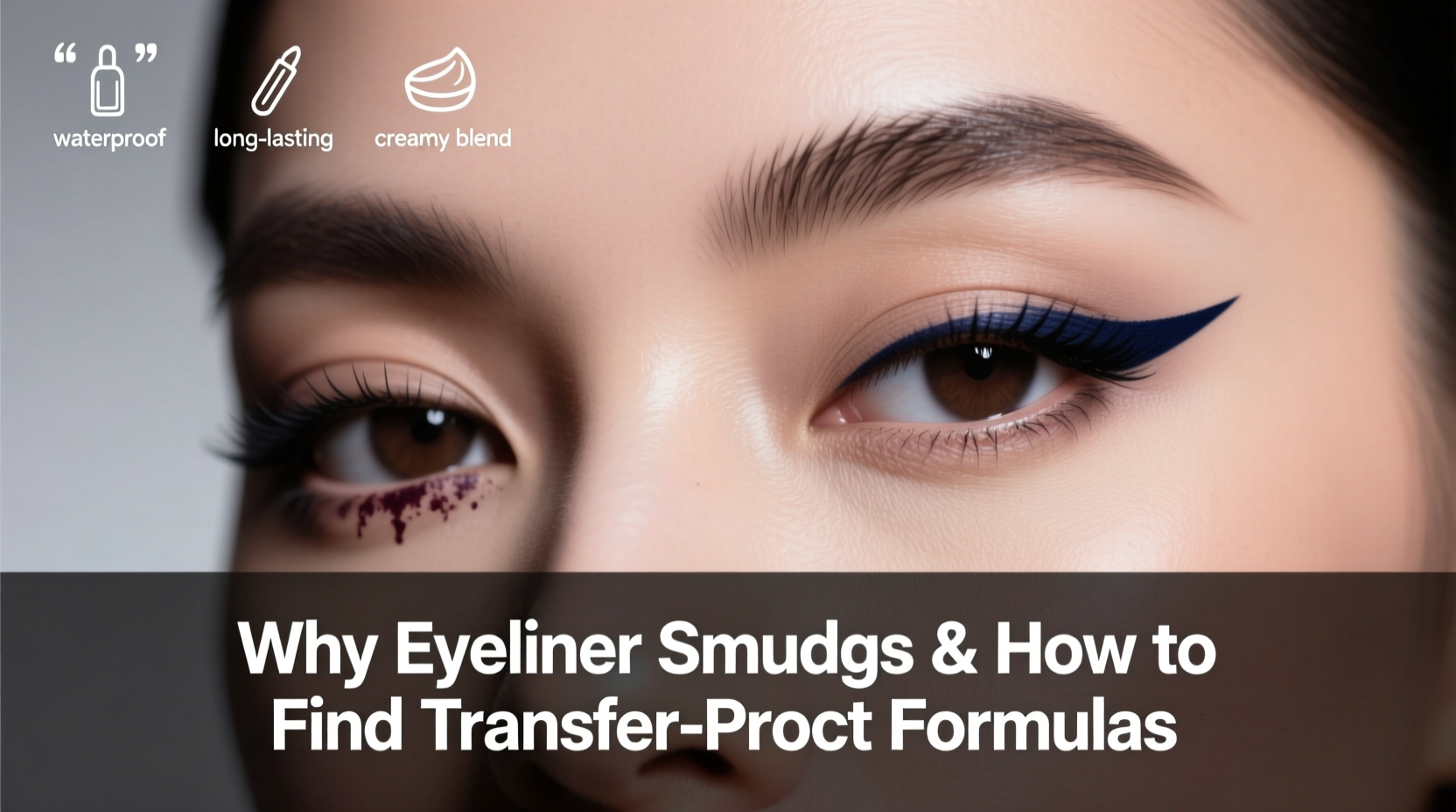
Smudging isn't random; it follows predictable patterns driven by biology and physics. The delicate skin around the eyes produces natural oils (sebum) and is prone to moisture from blinking, sweat, and even humidity. This combination creates a slippery surface where many eyeliners—especially creamy or poorly formulated ones—begin to break down almost immediately after application.
The eyelid itself moves constantly. Each blink redistributes warmth and friction across the lash line, pushing product into the crease or along the lower lid. This movement, combined with facial oils, accelerates transfer. Additionally, some people naturally have oilier eyelids, making them more susceptible to liner breakdown regardless of brand or price point.
Skin Chemistry and Product Interaction
Your skin’s pH level, sebum composition, and hydration status can all influence how makeup performs. For instance, high-pH skin may destabilize certain pigments, while acidic skin can cause oxidation that dulls color or changes texture. Some eyeliner ingredients react negatively when exposed to salt from sweat or minerals in tap water, leading to flaking or smearing.
This variability explains why a formula that works flawlessly for one person might fail completely on another. It's not always about quality—it's about compatibility.
Common Causes of Instant Smudging
- Oily eyelids: Excess sebum breaks down emollients in eyeliner, causing it to slide off.
- Poor primer adherence: Skipping an eyeshadow base leaves the liner vulnerable to movement.
- Humid environments: High moisture levels soften waxy or creamy liners.
- Incompatible formulas: Layering water-based and oil-based products can cause repulsion and pilling.
- Over-application: Thick lines take longer to dry and are more likely to transfer onto the opposite lid.
- Blinking friction: Constant motion wears down softer pencils and liquid wings alike over time.
“Transfer resistance starts with prep. Without proper priming, even the most advanced waterproof liner will struggle to last.” — Dr. Lena Torres, Cosmetic Chemist & Formulation Specialist
How to Identify Truly Transfer-Proof Eyeliners
Not all “long-wear” or “waterproof” claims are created equal. Many brands use these terms loosely, relying on marketing rather than performance testing. To cut through the noise, look beyond the label and examine ingredient lists, application method, and real-world reviews.
Key Ingredients That Enhance Longevity
Effective transfer-proof eyeliners typically contain polymers like acrylates or vinyl copolymers that form a flexible film on the skin. These create a barrier resistant to oil and moisture. Look for ingredients such as:
- Polyethylene – Provides structure and smooth glide without greasiness.
- Dimethicone – A silicone that helps seal the liner to the skin, reducing migration.
- Waxes (carnauba, beeswax, microcrystalline) – Offer hold and prevent melting in heat.
- Film-forming agents (PVP, styrene/acrylate copolymers) – Lock pigment in place for up to 12+ hours.
Avoid formulas heavy in lanolin, mineral oil, or coconut oil if you have oily lids—they may feel luxurious but often compromise longevity.
Liquid vs. Pencil vs. Gel: Which Lasts Longest?
| Type | Pros | Cons | Best For |
|---|---|---|---|
| Liquid (felt-tip/brush) | Sharp lines, fast-drying, highly pigmented | Can crack or flake if too thick; less forgiving on hooded eyes | Defined wings, oily lids |
| Gel (pot + brush) | Customizable thickness, blendable when wet | Requires steady hand; needs setting powder or spray | Smoky looks, beginners learning precision |
| Pencil (twist-up or sharpenable) | Easy to apply, portable, soft finish | Most prone to smudging unless set; softer formulas melt easily | Daily wear, tightlining, sensitive eyes |
Step-by-Step Guide to Smudge-Proof Application
Even the best product fails without the right technique. Follow this tested routine to maximize eyeliner retention throughout the day.
- Cleanse and prime: Wash your face and gently pat the eye area dry. Apply a lightweight eye primer (or translucent powder) to absorb excess oil and create a smooth canvas.
- Set the lid: Lightly dust translucent setting powder over the entire eyelid, including the lash line. This prevents oils from rising to the surface.
- Choose the right tool: Use a fine-tipped liquid liner for sharp wings or a smudge-proof gel with an angled brush for versatility.
- Apply in thin layers: Start with a thin line close to the lashes. Allow it to dry for 20–30 seconds before adding thickness. Building gradually prevents clumping and improves adhesion.
- Seal the deal: After the liner dries completely, lightly press a matching black or brown eyeshadow over the top using a flat shader brush. This sets the edge and fills any gaps.
- Mist with setting spray: Hold a facial mist or dedicated makeup fixer 8–10 inches away and spritz once across closed eyes. This melts powders slightly, creating a seamless, bonded layer.
Avoid These Common Mistakes
- Applying liner before moisturizer has fully absorbed.
- Using expired or dried-out products that skip and drag.
- Touching your eyes frequently after application.
- Layering cream products under liquid liner without setting in between.
Real-World Case Study: From Frustration to Flawless
Sophia, a nurse working 12-hour shifts in a warm hospital environment, struggled daily with her eyeliner disappearing by mid-morning. She tried multiple high-end and drugstore brands but saw no improvement. After consulting a dermatologist and reviewing her routine, she discovered two key issues: she was using a creamy pencil liner on naturally oily lids, and she skipped primer entirely due to time constraints.
She switched to a matte, transfer-resistant liquid liner (KVD Beauty Tattoo Liner) and began using a 30-second eye primer (Urban Decay Primer Potion). She also started setting her liner with a pressed black shadow. The result? Her eyeliner stayed intact for her entire shift—even through handwashing, mask-wearing, and emotional moments with patients.
“It sounds small,” Sophia said, “but having my makeup stay put gives me one less thing to worry about during a chaotic day. I feel more put together, which boosts my confidence.”
Checklist: How to Choose a Transfer-Proof Eyeliner
Use this checklist before purchasing or applying any eyeliner:
- ✅ Check the ingredient list for film-forming polymers and low oil content.
- ✅ Verify user reviews specifically mentioning “no transfer,” “on oily lids,” or “through sweating.”
- ✅ Test the formula on your actual eyelid—not the back of your hand—for 4+ hours.
- ✅ Pair with an eye primer compatible with the liner type (e.g., silicone-based primers work best with liquid liners).
- ✅ Store pencils and gels in a cool, dark place to prevent softening.
- ✅ Replace liquid liners every 3–6 months to avoid bacterial growth and drying out.
Frequently Asked Questions
Does waterproof mean transfer-proof?
No. Waterproof means the product resists water (like tears or sweat), but it may still rub off onto the eyelid or pillow. Transfer-proof formulations are designed to resist physical contact and oil migration, which requires different technology. Always check for “transfer-resistant” labeling and reviews confirming minimal creasing.
Can I make my current eyeliner last longer without buying new products?
Yes. Try setting it with a matching eyeshadow and translucent powder. Apply a small amount of loose powder over the liner using a flat brush, then mist with setting spray. Avoid touching your eyes throughout the day. While this won’t transform a weak formula into a miracle worker, it can extend wear by several hours.
Are there specific brands known for true transfer resistance?
Several brands consistently perform well in independent tests and consumer reports. Top performers include KVD Vegan Beauty Tattoo Liner, Stila Stay All Day Liquid Eye Liner, Maybelline Hyper Easy Line Express, and Bobbi Brown Long-Wear Gel Eyeliner. These use advanced polymer systems and undergo rigorous wear testing.
Final Tips for Long-Lasting Definition
Longevity isn’t just about the product—it’s about preparation, application, and maintenance. Reevaluate your entire eye routine, not just the eyeliner itself. Consider switching to non-comedogenic skincare around the eyes to reduce oil interference. If you wear glasses, clean the nose pads regularly to prevent liner transfer from frame pressure.
For those with extremely oily lids, consider using a mattifying eye primer or even a tiny dab of concealer set with powder as a base. Just ensure each layer is fully dry before moving to the next.
Conclusion: Take Control of Your Eyeliner Game
Smudging doesn’t have to be inevitable. With the right knowledge, you can identify formulas that align with your skin type and lifestyle. Focus on compatibility, not just brand reputation. Invest time in prepping your lids, refining your technique, and building a routine that supports long-wear results. Once you find the perfect combination of primer, liner, and setting method, you’ll wonder why you ever accepted blurry mornings and touch-up anxiety.




 浙公网安备
33010002000092号
浙公网安备
33010002000092号 浙B2-20120091-4
Comments
No comments yet. Why don't you start the discussion?