
If you’ve ever applied a mattifying primer in the morning only to find your T-zone glistening like a mirror by lunchtime, you’re not alone. Many people struggle with persistent facial oiliness that seems impervious to even high-performance makeup products. The frustration is real: you follow every step of your routine, use the right tools, and still end up blotting sheets deep into your bag. But the truth is, oil production isn’t just about surface-level skincare—it’s deeply tied to biology, environment, and product compatibility. Understanding the root causes can transform how you manage shine and help you build a more effective, long-term strategy.
The Science Behind Facial Oil Production
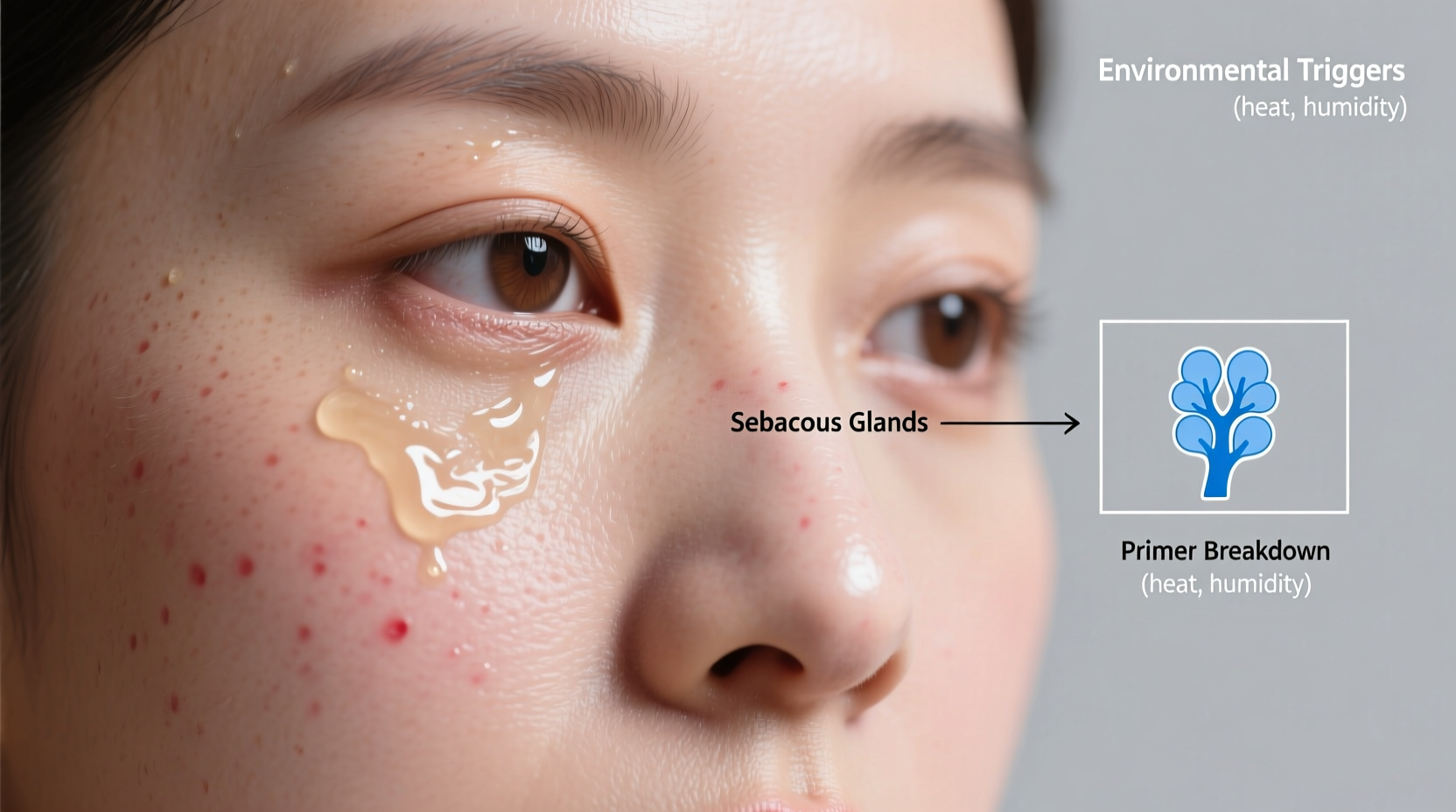
Sebum—the oily substance produced by sebaceous glands—is essential for skin health. It forms a protective barrier, retains moisture, and defends against environmental aggressors. However, overproduction leads to visible shine, clogged pores, and makeup breakdown. Sebaceous glands are most concentrated on the face, especially the forehead, nose, and chin—the classic T-zone.
Oil production is influenced by several factors:
- Hormones: Androgens like testosterone stimulate sebum synthesis. Fluctuations during puberty, menstruation, pregnancy, or stress can spike oil levels.
- Genetics: If your parents had oily skin, you’re more likely to inherit it. Some ethnicities naturally have higher sebum output.
- Climate: Heat and humidity increase gland activity. In humid environments, sweat mixes with oil, accelerating shine.
- Diet: High-glycemic foods (sugars, refined carbs) and dairy may trigger inflammation and hormonal shifts that boost oil.
- Skincare Habits: Over-cleansing or using harsh products can strip the skin, prompting rebound oil production as a defense mechanism.
Mattifying primers work by absorbing or diffusing oil temporarily, but they don’t stop sebum at the source. Think of them as a band-aid, not a cure. When glands continue to produce oil beneath the surface, it eventually rises through makeup layers—especially after 4–6 hours.
“Primer can create an illusion of control, but if the underlying triggers aren’t addressed, oil will win by midday.” — Dr. Lena Park, Board-Certified Dermatologist
Why Mattifying Primer Isn’t Enough
Mattifying primers typically contain ingredients like silica, clay, or dimethicone to absorb oil or create a smooth, non-reflective base. While effective initially, their limitations become apparent over time:
- Saturation Point: Absorbent ingredients can only hold so much oil before reaching capacity. Once saturated, excess sebum sits on top.
- Migration: As facial expressions shift throughout the day, primer and foundation can slide, concentrating in creases and pooling in oily zones.
- Incompatibility: Some primers react poorly with moisturizers or sunscreen underneath, causing pilling or uneven texture that worsens the appearance of oil.
- Overuse: Applying too much primer can clog pores and trap sweat, ironically increasing congestion and shine.
Moreover, many “mattifying” products focus only on appearance—not regulation. They mask oil rather than modulate its production. Without supporting habits, relying solely on primer is like mopping a flooded floor without turning off the tap.
Common Mistakes That Worsen Midday Shine
Even with the best intentions, everyday habits can sabotage your efforts. Here are frequent missteps that amplify oiliness:
- Using Foaming Cleansers Twice Daily: Harsh sulfates strip natural oils, triggering the skin to overcompensate with more sebum.
- Skipping Moisturizer: Believing that oily skin doesn’t need hydration leads to dehydration, which signals glands to produce more oil.
- Over-Blotting: Excessive use of blotting papers irritates the skin and can spread bacteria, potentially leading to breakouts.
- Layering Too Many Products: Thick serums, heavy sunscreens, and multiple makeup layers trap heat and encourage sweating and oil mixing.
- Touching Your Face: Throughout the day, hands transfer oils, dirt, and bacteria, stimulating additional sebum production.
A mini case study illustrates this well:
💬 Mini Case Study: Sarah’s Midday Meltdown
Sarah, a 28-year-old marketing executive, used a popular mattifying primer every morning. By noon, her foundation would separate, especially around her nose and chin. She blamed the product—until she tracked her routine. She was using a strong acne cleanser twice daily, skipping moisturizer, and reapplying primer at her desk. A dermatologist pointed out that her skin was dehydrated and over-stimulated. After switching to a gentle cleanser, adding a lightweight gel moisturizer, and using blotting papers only once midday, her shine decreased significantly—even with the same primer.
Building an Effective Anti-Shine Routine
Long-term oil control requires a layered approach. Consider this step-by-step timeline for managing oil from morning to night:
🕒 Step-by-Step Guide: All-Day Oil Control Timeline
| Time | Action | Purpose |
|---|---|---|
| Morning (7:00 AM) | Cleanse with a gentle, pH-balanced foaming wash | Remove overnight oil without stripping |
| 7:05 AM | Apply hydrating toner with niacinamide (5%) | Regulate sebum and prep skin |
| 7:10 AM | Use an oil-free, gel-based moisturizer | Hydrate without heaviness |
| 7:15 AM | Apply broad-spectrum SPF 30+ (matte finish) | Protect without greasiness |
| 7:20 AM | Prime T-zone only with a silica-based formula | Target oil zones without overuse |
| Lunch (12:30 PM) | Blot gently; set with translucent powder | Reset shine without layering |
| Afternoon (3:00 PM) | Use oil-absorbing sheet once if needed | Minimal intervention |
| Evening (8:00 PM) | Double cleanse (oil-based then water-based) | Remove makeup and excess sebum |
| 8:15 PM | Apply treatment serum (e.g., salicylic acid or retinoid 2–3x/week) | Exfoliate pores and regulate oil long-term |
This routine balances immediate control with long-term regulation. Key ingredients to look for include:
- Niacinamide: Reduces sebum production and strengthens the skin barrier.
- Salicylic Acid: Penetrates oil to exfoliate inside pores.
- Clay (Kaolin, Bentonite): Absorbs surface oil in masks or spot treatments.
- Retinoids: Normalize cell turnover and reduce gland size over time.
Product Checklist: What to Look For (and Avoid)
To optimize your routine, use this checklist when selecting products:
✅ Do’s
- Choose water-based, non-comedogenic moisturizers
- Opt for matte or gel-cream sunscreens labeled \"oil-free\"
- Use primers with silica, perlite, or volcanic ash for absorption
- Include a weekly clay mask to deep-clean pores
- Use lukewarm water to cleanse—hot water increases oil flow
❌ Don’ts
- Don’t use alcohol-heavy toners—they dry and irritate
- Never skip moisturizer, even if skin feels oily
- Avoid creamy concealers or foundations in oily zones
- Don’t layer multiple mattifying products—they can pill and clog
- Resist the urge to scrub or over-exfoliate
Frequently Asked Questions
Can drinking more water reduce oily skin?
While hydration supports overall skin function, drinking water alone won’t stop sebum production. However, dehydrated skin can signal glands to produce more oil, so maintaining internal hydration is part of a balanced approach. Pair adequate water intake with external moisturizing for best results.
Is oily skin more prone to aging?
Interestingly, oily skin tends to show signs of aging later than dry skin. Sebum helps maintain elasticity and protects against transepidermal water loss. However, untreated oiliness can lead to enlarged pores and uneven texture, which affect skin appearance over time.
Should I see a dermatologist for oily skin?
If over-the-counter products fail and oiliness is accompanied by frequent breakouts, redness, or thickened skin, a dermatologist can offer prescription solutions like topical retinoids, oral contraceptives (for hormonal regulation), or spironolactone. These target oil at the hormonal level and provide longer-lasting control.
Conclusion: Rethink Oil, Not Just Cover It
Oily skin isn’t a flaw—it’s a biological reality for millions. But constant shine doesn’t have to be inevitable, even if you're using a mattifying primer. Lasting control comes from understanding your skin’s needs, avoiding counterproductive habits, and building a routine that works with your biology, not against it. Instead of fighting oil with increasingly heavy products, focus on balance: cleanse gently, hydrate wisely, treat strategically, and set realistically.
The goal isn’t to eliminate oil completely—that would damage your skin’s protective barrier—but to manage it effectively so you feel confident from morning meetings to evening plans. With consistent care, the right ingredients, and a little patience, midday shine can go from unavoidable to occasional.




 浙公网安备
33010002000092号
浙公网安备
33010002000092号 浙B2-20120091-4
Comments
No comments yet. Why don't you start the discussion?