
By midday, many people find themselves reaching for blotting papers or powder as their forehead, nose, and chin glisten under the office lights or sunlight. This isn’t just a cosmetic nuisance—it’s a sign that your skin’s sebum production is outpacing your control strategy. While oil is essential for maintaining hydration and protecting the skin barrier, excess sebum can lead to clogged pores, breakouts, and an unwanted glossy finish. Understanding the root causes of midday oiliness and learning how to manage it—without stripping your skin—are critical steps toward balanced, healthy skin.
The Science Behind Midday Oil Production
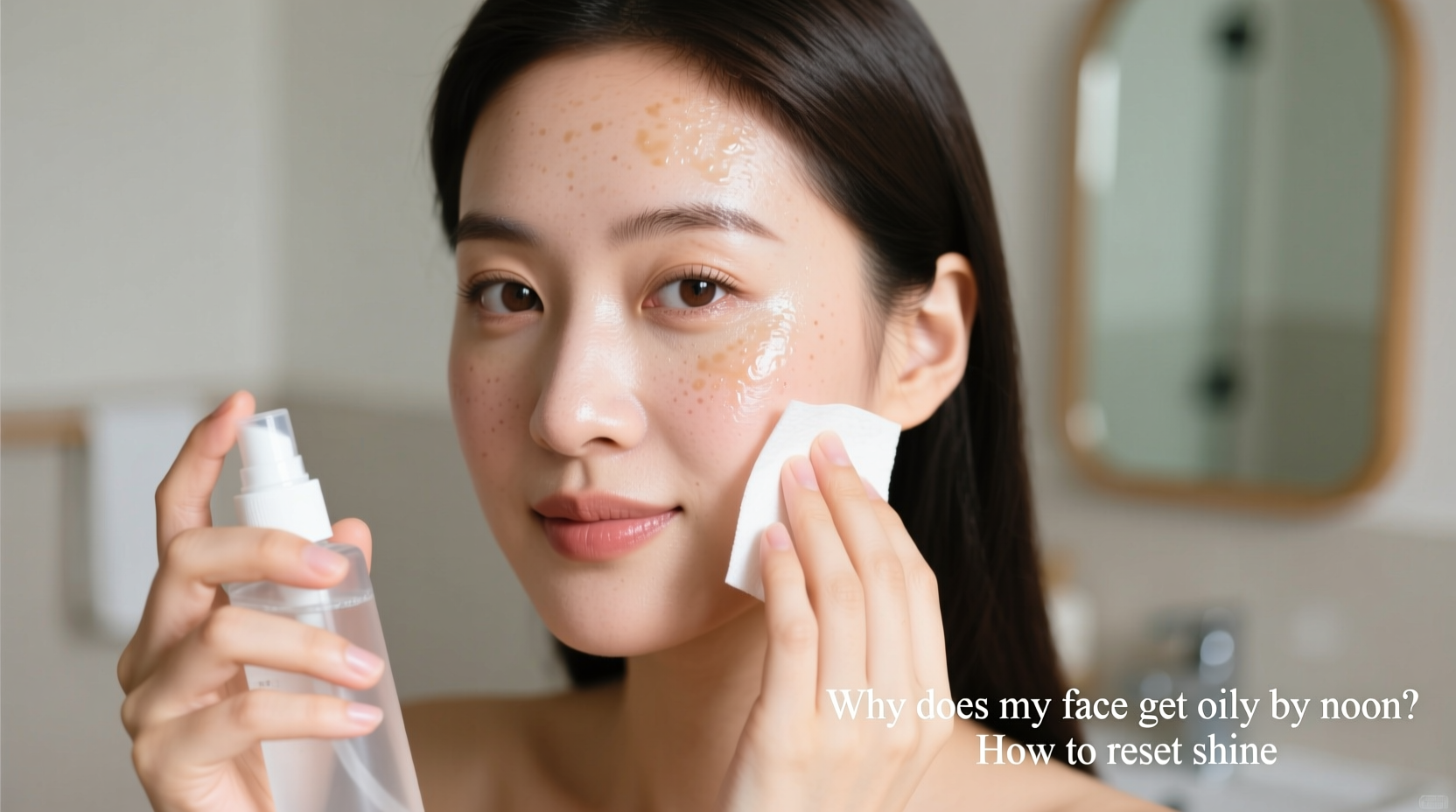
Sebum, the natural oil produced by sebaceous glands in the skin, plays a vital role in keeping your complexion moisturized and shielded from environmental aggressors. These glands are most concentrated in the T-zone—forehead, nose, and chin—which explains why oil tends to accumulate there first. But why does oil become so noticeable specifically by noon?
Several factors converge throughout the morning to accelerate sebum buildup:
- Circadian rhythm influence: Sebum production naturally peaks in the early afternoon due to hormonal fluctuations tied to your body’s internal clock.
- Morning skincare choices: Over-cleansing or using harsh products can trigger rebound oiliness as the skin tries to compensate for lost moisture.
- Environmental exposure: Heat, humidity, and even indoor heating systems stimulate oil glands.
- Tactile habits: Touching your face, resting your chin on your hand, or wearing masks increase friction and transfer oils and bacteria.
Dermatologists note that while genetics play a foundational role in oil production, lifestyle and product misuse often exacerbate the issue. “It’s not about eliminating oil,” says Dr. Lena Patel, board-certified dermatologist. “It’s about regulating it. A completely matte face may mean you’ve disrupted your skin barrier, which leads to more problems down the line.”
Common Mistakes That Worsen Midday Shine
Many well-intentioned routines backfire by aggravating oil production. Here are frequent errors that sabotage your efforts:
- Using alcohol-based toners daily: These may give an instant matte feel but damage the skin barrier over time, increasing sensitivity and oil output.
- Over-washing the face: Cleansing more than twice a day strips natural lipids, prompting the skin to overcompensate with excess oil.
- Skipping sunscreen: UV exposure thickens the skin and increases sebum production. Many avoid sunscreens because they feel greasy, but non-comedogenic, mattifying formulas exist.
- Layering heavy creams: Rich emollients may be too much for oily skin types, especially during warmer months.
- Blotting too aggressively: Rubbing blotting papers can spread oil around rather than absorbing it cleanly.
These habits create a cycle: strip oil → skin dries → glands overproduce → shine returns faster. Breaking this loop requires a balanced approach focused on regulation, not elimination.
How to Reset Shine Without Damaging Skin
When your face starts to gleam around lunchtime, the goal isn’t to wipe away every trace of oil but to absorb excess without disturbing the skin’s equilibrium. Here’s a practical, step-by-step method to reset shine efficiently and safely:
Step-by-Step Guide: The 5-Minute Midday Refresh
- Wash hands thoroughly: Prevent transferring bacteria to your face.
- Use a gentle micellar water wipe or facial mist: Lightly refresh the skin. Avoid wipes with alcohol or fragrance.
- Blot strategically: Press (don’t rub) a blotting paper onto oily zones. Replace after each press if heavily saturated.
- Apply a mattifying primer or translucent powder: Use a small amount with a fluffy brush. Focus on the T-zone only.
- Mist with a hydrating toner spray: Rebalances pH and prevents tightness. Look for ingredients like niacinamide or aloe vera.
This routine takes less than five minutes and avoids the pitfalls of over-drying. It resets appearance while supporting skin health.
| Action | Do | Avoid |
|---|---|---|
| Blotting | Press gently, use fresh paper each time | Rubbing, reusing same sheet |
| Midday cleansing | Use micellar water or water rinse | Harsh foaming cleansers |
| Makeup touch-up | Translucent powder, minimal layers | Heavy foundation reapplication |
| Hydration | Fine-mist sprayer with soothing ingredients | Thick creams or occlusives |
“Resetting shine isn’t about aggression—it’s about precision. Think of it like resetting a thermostat, not turning off the heat.” — Dr. Arjun Mehta, Cosmetic Dermatologist
Long-Term Strategies to Reduce Midday Oiliness
While quick fixes help in the moment, lasting change comes from consistent, intelligent skincare. The following checklist outlines key actions to regulate oil production over weeks and months:
- ✔ Use a gentle, pH-balanced cleanser twice daily
- ✔ Incorporate niacinamide (5%) serum morning and night
- ✔ Apply oil-free, non-comedogenic moisturizer every day
- ✔ Wear broad-spectrum SPF 30+ even indoors
- ✔ Exfoliate 2–3 times weekly with salicylic acid or lactic acid
- ✔ Change pillowcases every 3–4 days
- ✔ Minimize face-touching and clean phone screens regularly
- ✔ Stay hydrated and monitor diet (high-glycemic foods may worsen oil)
Niacinamide has emerged as one of the most effective ingredients for controlling sebum. Clinical studies show that consistent use of 2–5% niacinamide reduces oiliness by up to 60% within four weeks. It also strengthens the skin barrier and minimizes pore appearance.
For those with persistent shine despite good habits, prescription options like topical retinoids or oral spironolactone (for hormonal acne/oiliness) may be recommended by a dermatologist. These work by normalizing cell turnover and reducing gland activity.
Real-Life Example: Sarah’s Shine Control Journey
Sarah, a 28-year-old marketing executive in Miami, struggled with midday oiliness that ruined her makeup by 1 p.m. Despite washing her face three times a day and using strong astringents, her skin remained shiny—and she started breaking out frequently.
After consulting a dermatologist, she overhauled her routine: switched to a cream cleanser, added a niacinamide serum, began using a lightweight gel moisturizer, and applied a mattifying sunscreen. She also started carrying blotting papers and a setting spray for midday touch-ups.
Within three weeks, her oiliness decreased significantly. Her skin looked smoother, and makeup lasted past 5 p.m. “I used to think oily skin meant I needed to dry it out,” she said. “Now I realize I was making it worse by stripping it. Balance is everything.”
FAQ: Your Oily Skin Questions Answered
Does drinking more water reduce facial oil?
While hydration supports overall skin health, drinking water alone won’t stop sebum production. However, dehydrated skin can signal oil glands to work harder, so staying hydrated helps maintain balance. Pair internal hydration with external moisturizing for best results.
Can diet affect how oily my face gets?
Yes. High-glycemic foods (like white bread, sugary snacks, and soda) cause insulin spikes that may stimulate sebaceous glands. Dairy, particularly skim milk, has also been linked to increased oil and breakouts in some individuals. Reducing these and focusing on whole grains, vegetables, and omega-3-rich foods may improve skin clarity over time.
Are blotting papers bad for your skin?
No, when used correctly. Blotting papers are made of absorbent materials that lift excess oil without disturbing makeup or irritating skin. Just avoid pressing too hard or using them excessively—more than 3–4 times a day may irritate sensitive skin.
Conclusion: Take Control of Shine, Not Sacrifice Health
Oily skin by noon doesn’t have to be inevitable. With the right understanding of what drives sebum production and a thoughtful approach to care, you can significantly reduce shine while preserving your skin’s integrity. The key is consistency, balance, and avoiding the trap of over-drying. Whether through strategic midday resets, long-term ingredient integration, or simple habit changes, sustainable results are within reach.
Your skin isn’t flawed because it produces oil—it’s doing its job. The goal is to guide it, not fight it. Start today by evaluating your current routine, replacing harsh products with smarter alternatives, and adopting one new habit at a time. Healthy, shine-controlled skin isn’t about perfection—it’s about harmony.




 浙公网安备
33010002000092号
浙公网安备
33010002000092号 浙B2-20120091-4
Comments
No comments yet. Why don't you start the discussion?