
Fish swimming at the surface can be a normal behavior or a serious warning sign. While some species naturally spend time near the top—like bettas or gouramis—others doing so may indicate poor water conditions, particularly low oxygen. Understanding the reasons behind this behavior and knowing how to assess dissolved oxygen levels empowers you to maintain a healthy aquatic environment. This guide breaks down the science, symptoms, and practical steps to diagnose and resolve oxygen deficiency before it becomes fatal.
Why Fish Swim at the Surface: Natural vs. Emergency Behavior
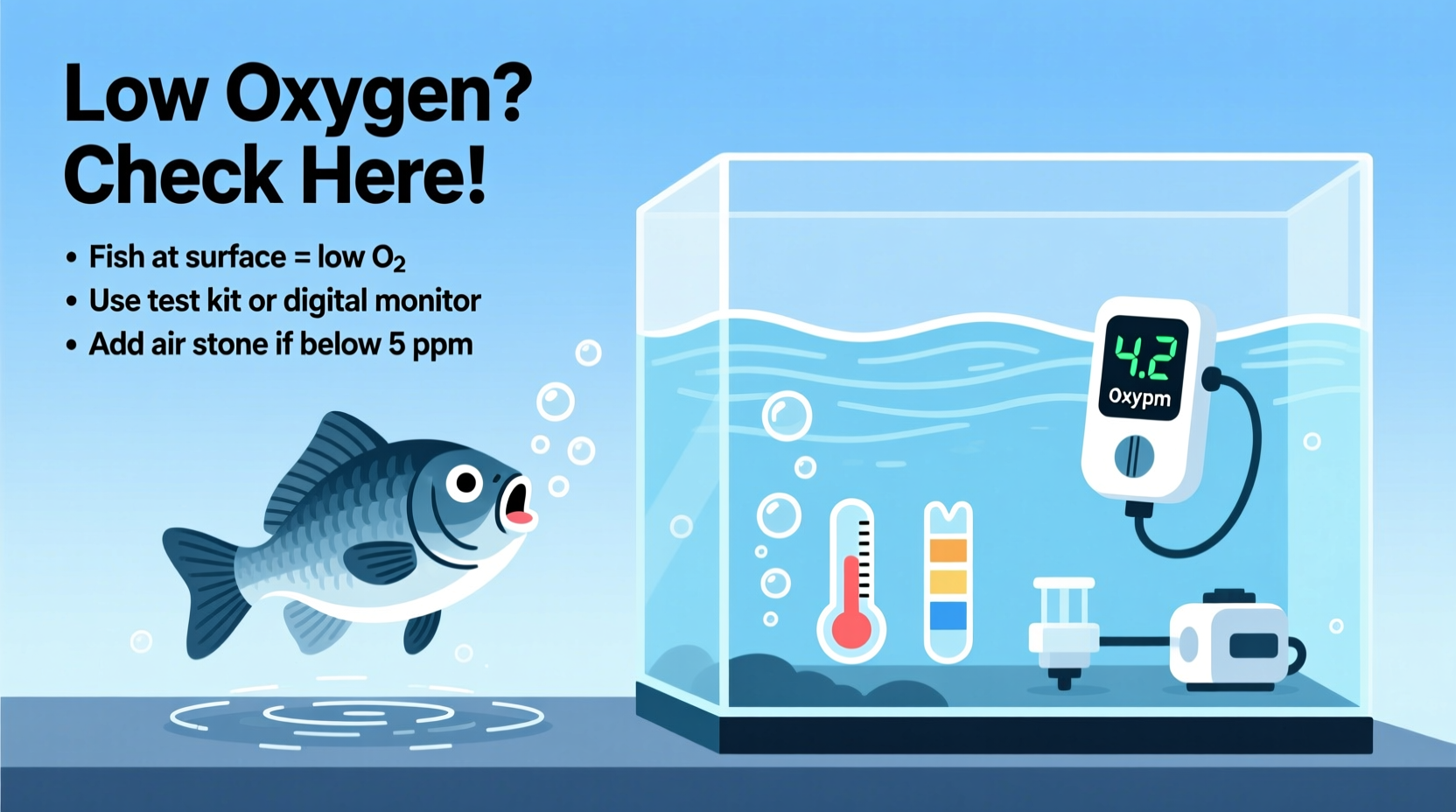
Fish behavior varies widely by species, but surface swimming often raises concern. In many cases, fish come up for air because they’re struggling to extract enough oxygen from the water through their gills. However, not all surface activity is cause for alarm.
Labyrinth fish, such as bettas, paradise fish, and gouramis, have a special organ that allows them to breathe atmospheric air directly. These fish routinely rise to the surface to gulp air, even in well-oxygenated tanks. For them, this behavior is perfectly natural and necessary for survival.
In contrast, most common aquarium fish—including tetras, goldfish, corydoras, and angelfish—rely entirely on dissolved oxygen in the water. If these species are frequently seen gasping at the surface, especially with rapid gill movement or lethargic swimming, it’s a strong indicator of hypoxia (low oxygen).
Common Causes of Low Oxygen in Aquariums
Oxygen depletion doesn’t happen overnight. It’s usually the result of cumulative stressors that reduce gas exchange or increase biological demand. Key contributors include:
- Overstocking: Too many fish consume more oxygen than the tank can replenish.
- Poor water circulation: Stagnant water limits surface agitation, reducing oxygen diffusion.
- High water temperature: Warm water holds less dissolved oxygen than cooler water.
- Algae blooms: While algae produce oxygen during the day, they consume it at night, potentially causing dangerous drops after dark.
- Decomposing organic matter: Rotting plants, uneaten food, and waste increase bacterial load, which consumes oxygen during decomposition.
- Inadequate aeration: Lack of air stones, filters, or surface skimmers reduces oxygen transfer.
“Fish gasping at the surface is one of the clearest signs of environmental distress. Immediate action can prevent mass mortality.” — Dr. Lena Patel, Aquatic Veterinarian
How to Check Oxygen Levels Easily and Accurately
While observing fish behavior provides clues, it’s not definitive. To confirm oxygen levels, you need objective measurement. Fortunately, several accessible methods exist—even without expensive lab equipment.
1. Use a Dissolved Oxygen Test Kit
The most accurate way for hobbyists to measure oxygen is with a liquid-based test kit or digital meter. Liquid kits use chemical reagents to determine oxygen concentration via titration. Digital meters offer instant readings but require regular calibration.
Aim for dissolved oxygen (DO) levels between 6–8 mg/L (ppm) for most freshwater aquariums. Levels below 5 mg/L stress fish; below 3 mg/L can be lethal.
2. Monitor Water Temperature and Its Impact
Temperature directly affects oxygen solubility. As water warms, its capacity to hold oxygen decreases. For example:
| Water Temperature (°C) | Dissolved Oxygen Saturation (mg/L) |
|---|---|
| 15°C (59°F) | ~9.1 mg/L |
| 20°C (68°F) | ~8.3 mg/L |
| 25°C (77°F) | ~7.5 mg/L |
| 30°C (86°F) | ~6.5 mg/L |
If your tank runs above 28°C (82°F), especially in summer, oxygen levels may dip into dangerous ranges even with good filtration.
3. Perform the Surface Agitation Test
You don’t always need a test kit. A quick observational method involves checking surface movement. Oxygen enters water primarily through gas exchange at the surface, which requires turbulence.
Place your hand just above the water. If you feel little to no ripple or disturbance, oxygen exchange is likely insufficient. A gentle ripple across the entire surface indicates adequate agitation.
Step-by-Step Guide to Restoring Oxygen Levels
If your fish are gasping and tests confirm low oxygen, act immediately. Follow this sequence to stabilize conditions:
- Turn off aquarium lights – Reduce photosynthetic demand if algae are contributing to nighttime oxygen drops.
- Perform a partial water change (25–30%) – Fresh, dechlorinated water introduces oxygen and dilutes organic pollutants.
- Add an air stone or bubble wand – Connect to an air pump to increase surface agitation and gas exchange.
- Improve surface movement – Reposition filter output or add a powerhead to circulate water vertically.
- Reduce bioload temporarily – If overstocked, consider relocating some fish until conditions improve.
- Lower water temperature gradually – Use a fan or chiller to cool the tank by 1–2°C per hour if above 28°C.
- Test again after 1–2 hours – Confirm oxygen has risen above 6 mg/L before assuming the crisis is over.
This protocol can reverse acute oxygen deprivation within hours. However, long-term prevention requires ongoing management.
Preventive Checklist for Healthy Oxygen Levels
Maintaining optimal oxygen isn’t about reacting—it’s about consistency. Use this checklist weekly to avoid future issues:
- ✅ Ensure filter outflow disturbs the water surface
- ✅ Clean filter media monthly to maintain flow rate
- ✅ Avoid overfeeding; remove uneaten food within 5 minutes
- ✅ Trim excessive plant growth to prevent decay
- ✅ Keep tank lid partially open or use mesh covers to allow gas exchange
- ✅ Monitor temperature daily, especially in warm climates
- ✅ Run air pumps at night if you have dense plant coverage
- ✅ Limit stocking density to 1 inch of fish per gallon (for small species)
Real Example: A Goldfish Tank Crisis
Mark, a beginner aquarist, noticed his two goldfish spending increasing time near the surface, mouths opening rapidly. The tank was a 20-gallon glass aquarium with live plants and a standard hang-on-back filter. He assumed the fish were curious or playful—until one died overnight.
After consulting a local fish store, he tested the water. Ammonia and nitrites were safe, but dissolved oxygen read 3.8 mg/L. The culprit? A combination of factors: high room temperature (29°C), a tightly sealed hood limiting air exchange, and overpopulation (he had added two more goldfish weeks prior).
He took immediate action: installed an air stone, cracked open the hood, performed a 30% water change, and moved the tank away from direct sunlight. Within four hours, oxygen rose to 7.2 mg/L, and the remaining fish resumed normal swimming patterns.
Mark now checks oxygen weekly and keeps a battery-powered air pump on hand for emergencies. His experience highlights how subtle changes can cascade into life-threatening conditions—and how simple tools can prevent disaster.
Do’s and Don’ts: Managing Oxygen in Your Aquarium
| Do’s | Don’ts |
|---|---|
| Use air stones or sponge filters for additional aeration | Overcrowd your tank beyond recommended limits |
| Keep surface clear of scum or biofilm | Run protein skimmers or filters that create foam without addressing root causes |
| Cool the tank gradually during heatwaves | Add ice cubes directly into the aquarium (causes thermal shock) |
| Observe fish behavior daily, especially at dawn | Ignore early signs like clustering at the top or rapid gilling |
| Test oxygen when adding new fish or increasing feeding | Rely solely on visual cues without verification |
Frequently Asked Questions
Can plants replace the need for an air pump?
During daylight, live plants produce oxygen through photosynthesis. However, at night, they consume oxygen. In heavily planted tanks, oxygen levels can drop dangerously low after dark. Therefore, plants should complement—not replace—aeration systems, especially in densely stocked setups.
Is surface jumping always related to oxygen?
Not always. Some fish jump due to stress from poor water quality (high ammonia), parasites, or aggression. However, if multiple fish are gasping at the surface simultaneously, oxygen deficiency is the most likely cause. Always test water parameters to rule out other issues.
How often should I test dissolved oxygen?
For stable, well-maintained tanks, monthly testing is sufficient. However, test immediately if you notice gasping, after heatwaves, when adding new livestock, or if running CO₂ injection systems. Emergency situations warrant hourly monitoring until resolved.
Conclusion: Stay Alert, Act Early, Save Lives
Fish swimming at the surface is a signal—one that demands attention. Whether it's a routine gulp from a betta or a desperate gasp from a tetra, understanding the context saves lives. Oxygen levels are invisible, but their impact is unmistakable. By combining observation with simple testing and proactive maintenance, you create a resilient ecosystem where fish thrive from bottom to surface.
Don’t wait for a death to prompt action. Equip yourself with a basic test kit, optimize surface agitation, and stay vigilant. A few minutes of daily awareness can prevent catastrophe and ensure your aquarium remains a vibrant, balanced world beneath the surface.




 浙公网安备
33010002000092号
浙公网安备
33010002000092号 浙B2-20120091-4
Comments
No comments yet. Why don't you start the discussion?